Artwork
Hora de la Aninoasa
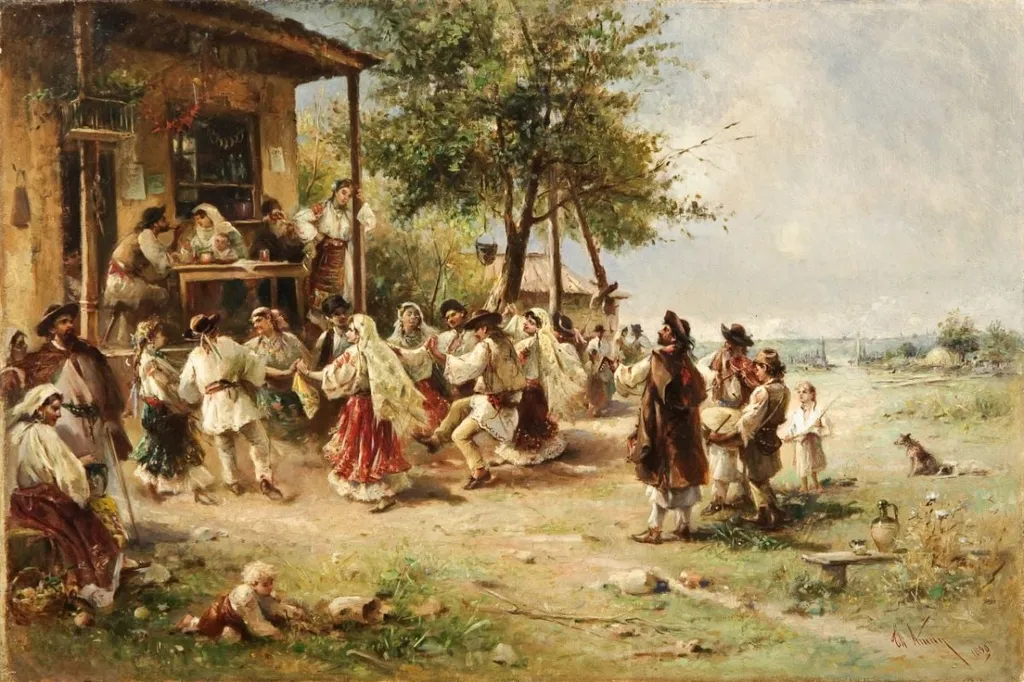
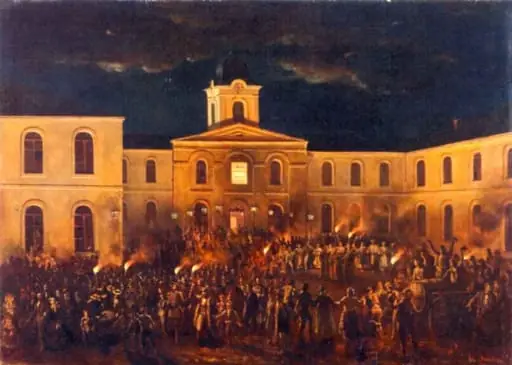
Hora de la Aninoasa is a print by the Impressionist artist Theodor Aman. It dates from 1890 and is held in the collection of the National Museum of Art of Romania.
About this work
Overview
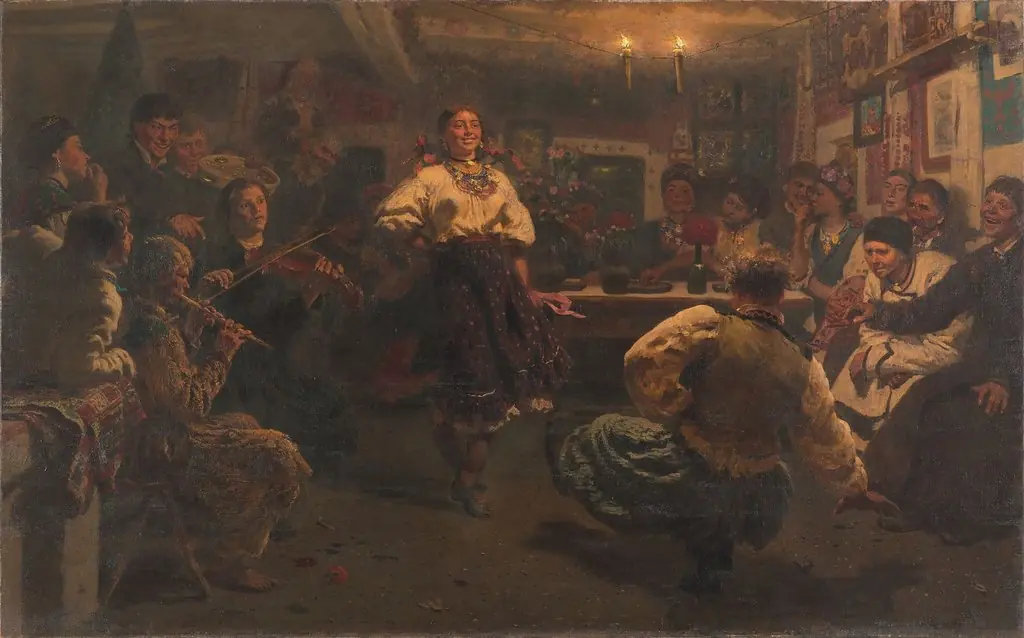
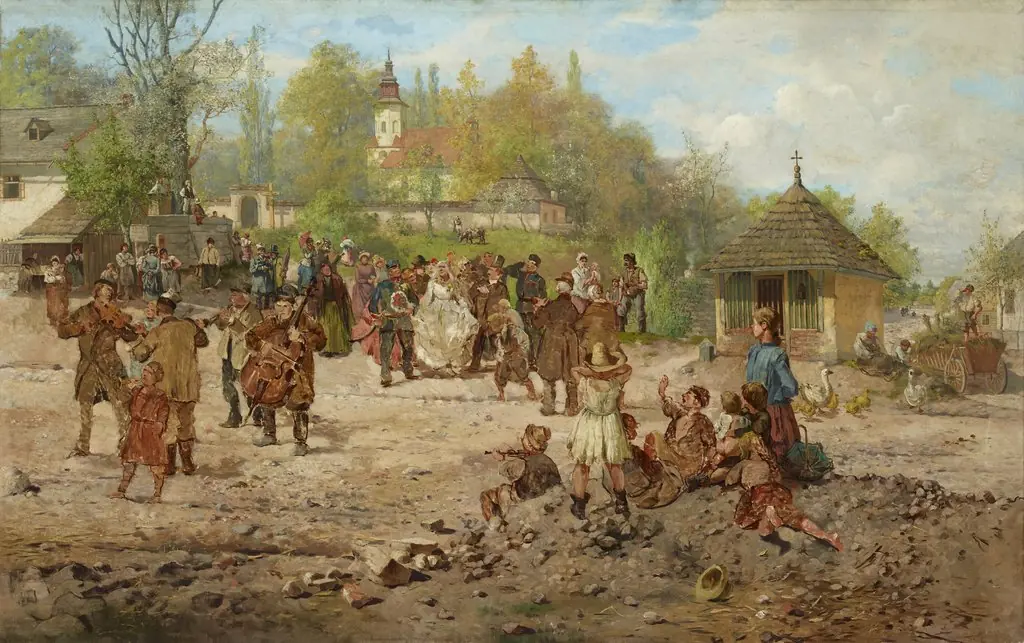
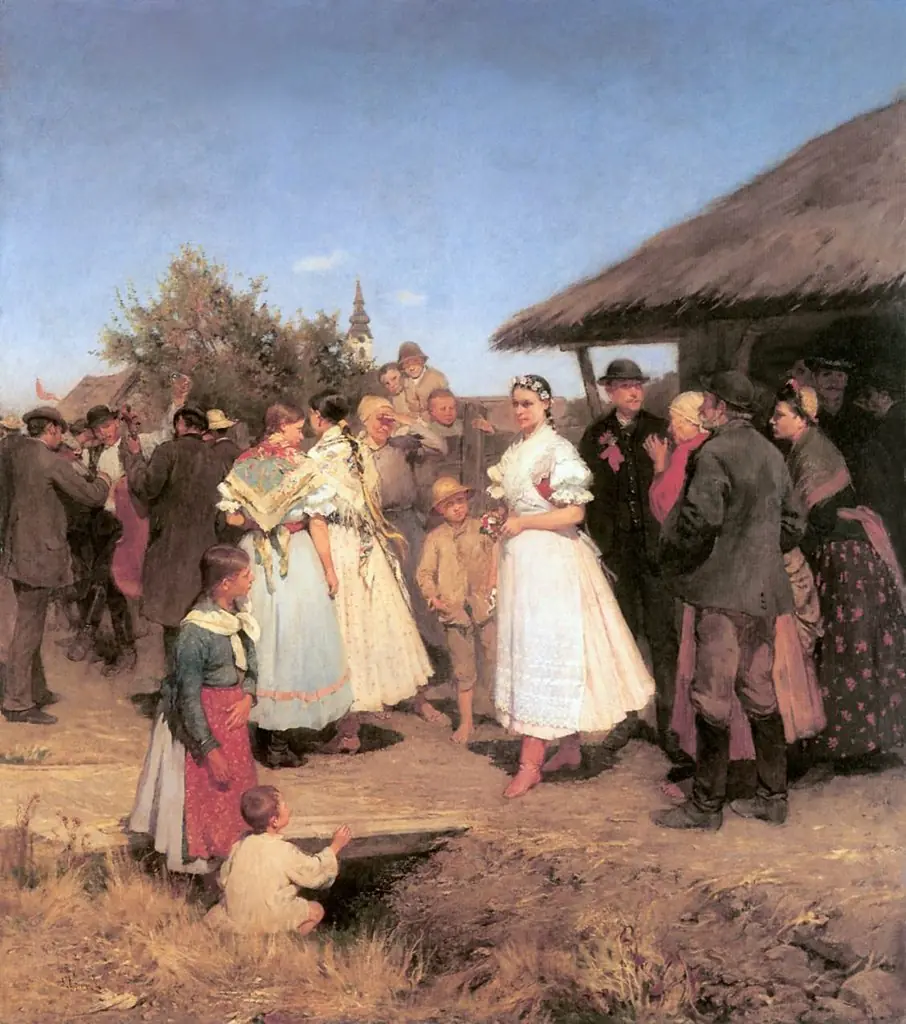
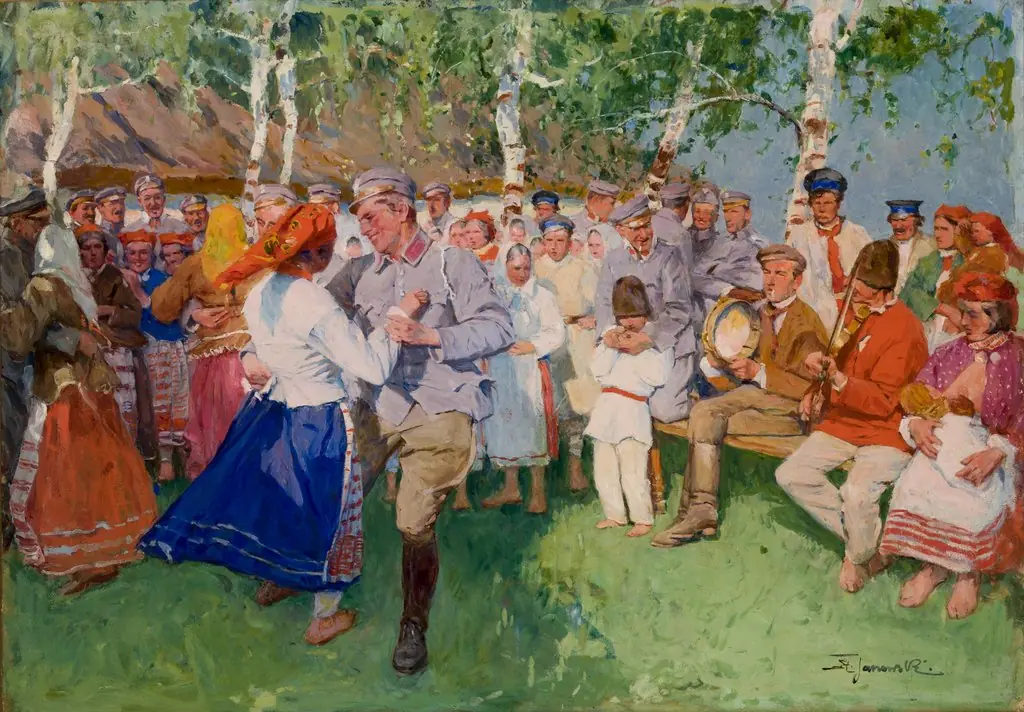
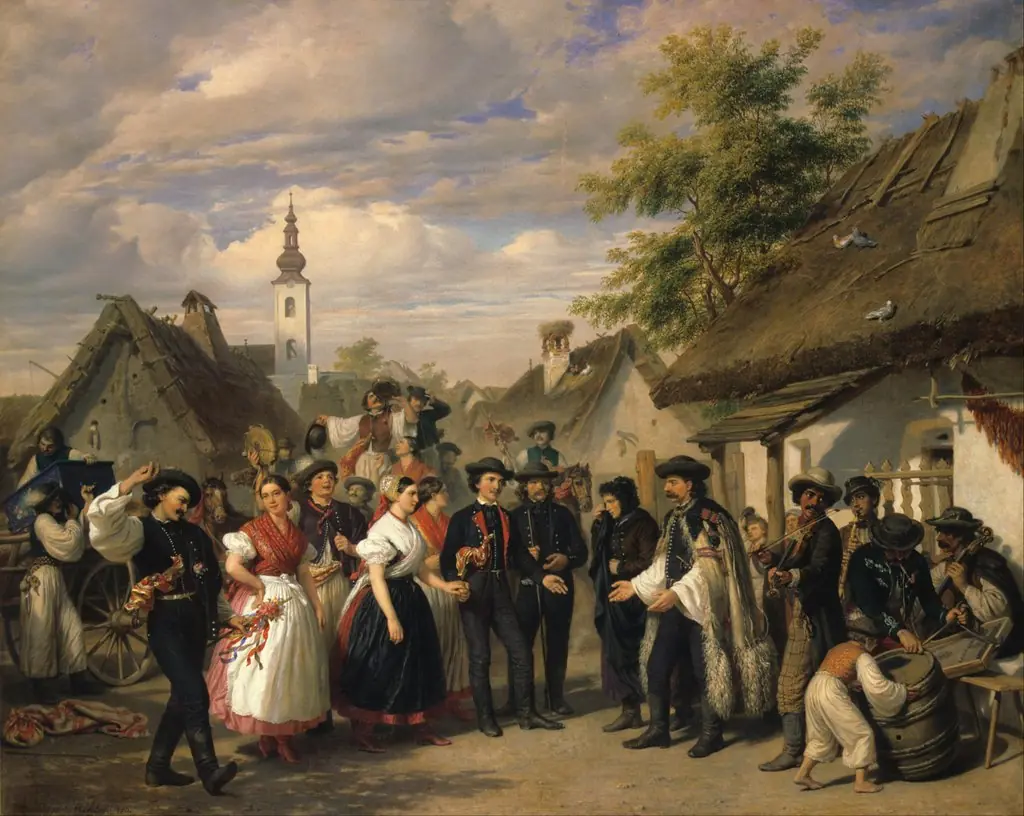
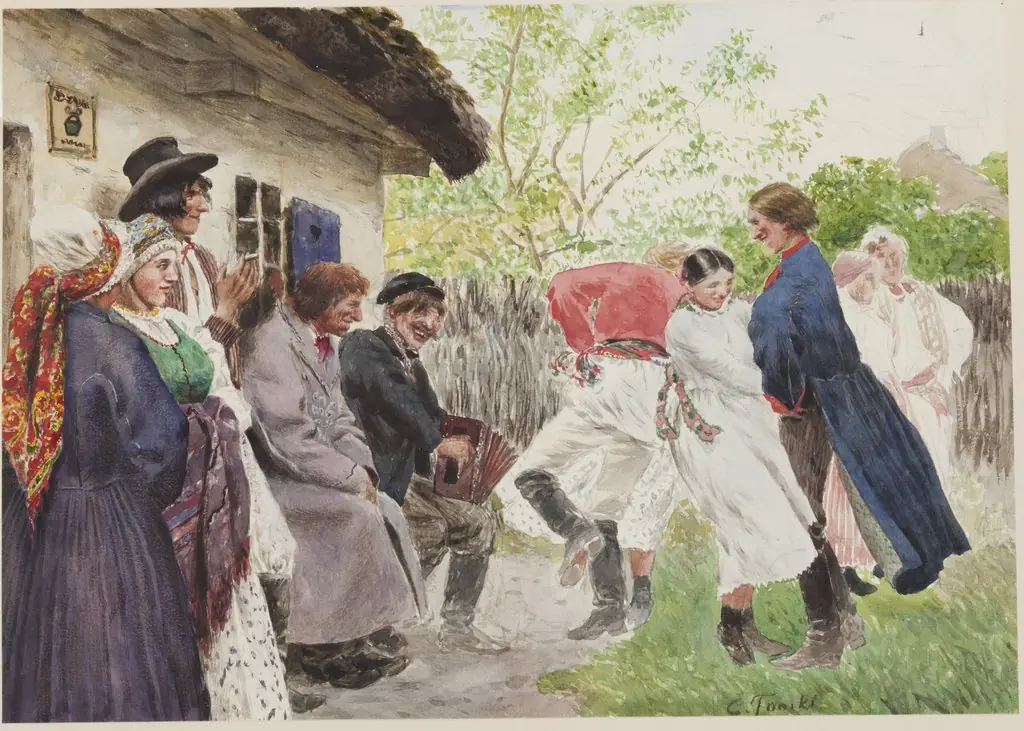
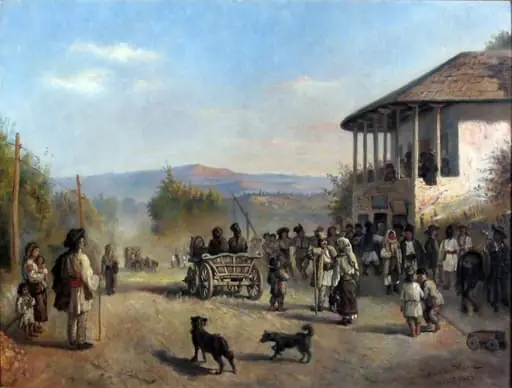
Created in 1890 by Romanian artist Theodor Aman, *Hora de la Aninoasa* presents an outdoor village scene centered on a communal dance. Figures in traditional attire form a circle, while onlookers and musicians populate the surrounding space, conveying a snapshot of rural social life.
Subject & Meaning
The work records a local hora, a folk dance that served both entertainment and communal bonding in 19th‑century Romania. By portraying participants, spectators, and even a resting dog, Aman emphasizes the collective nature of the event and its role in reinforcing cultural identity.
Technique & Style
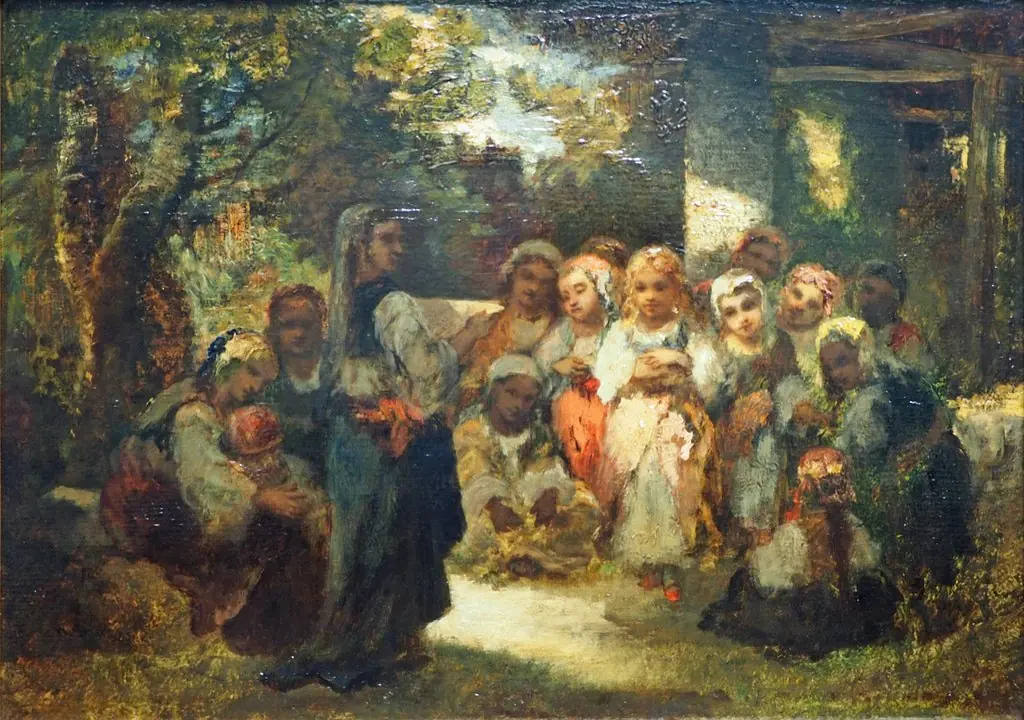
Aman employs a bright palette and brisk brushwork that lend the composition a sense of immediacy. The loose handling of paint captures movement and atmosphere, while the simplified village backdrop anchors the scene in a recognizable rural setting.
History & Provenance
The painting belongs to Aman’s broader oeuvre of genre and historical subjects, reflecting his interest in everyday Romanian customs. It was produced during his tenure as a professor at the Bucharest School of Fine Arts, a period when he frequently documented national traditions.
Artist & collection
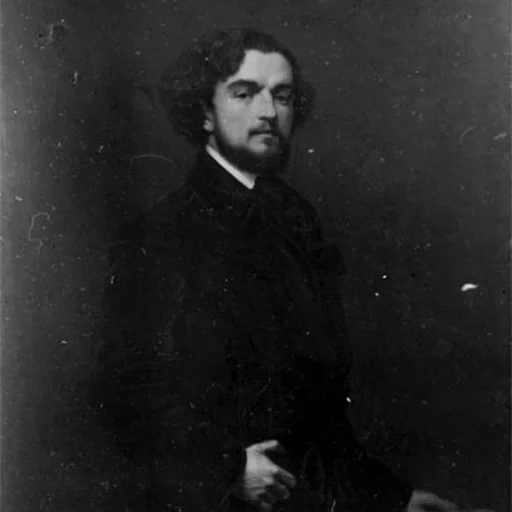
Artist
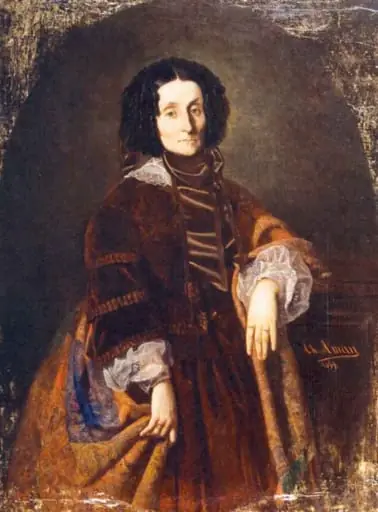
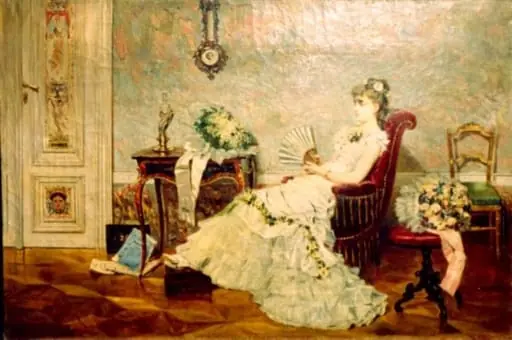
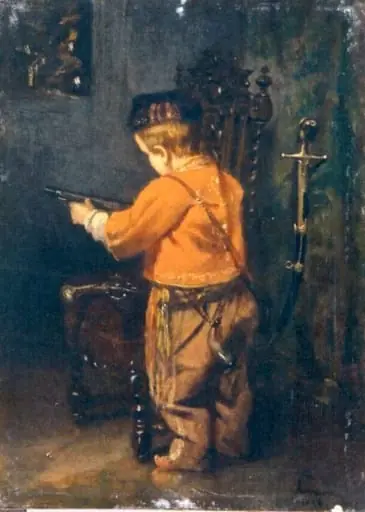
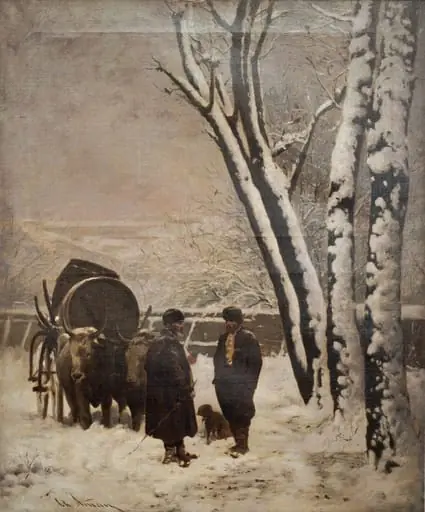
Theodor Aman (20 March 1831 – 19 August 1891) was a Romanian painter, engraver and art professor. He mostly produced genre and history scenes.