Artwork
Portret de militar (Davilla ?)
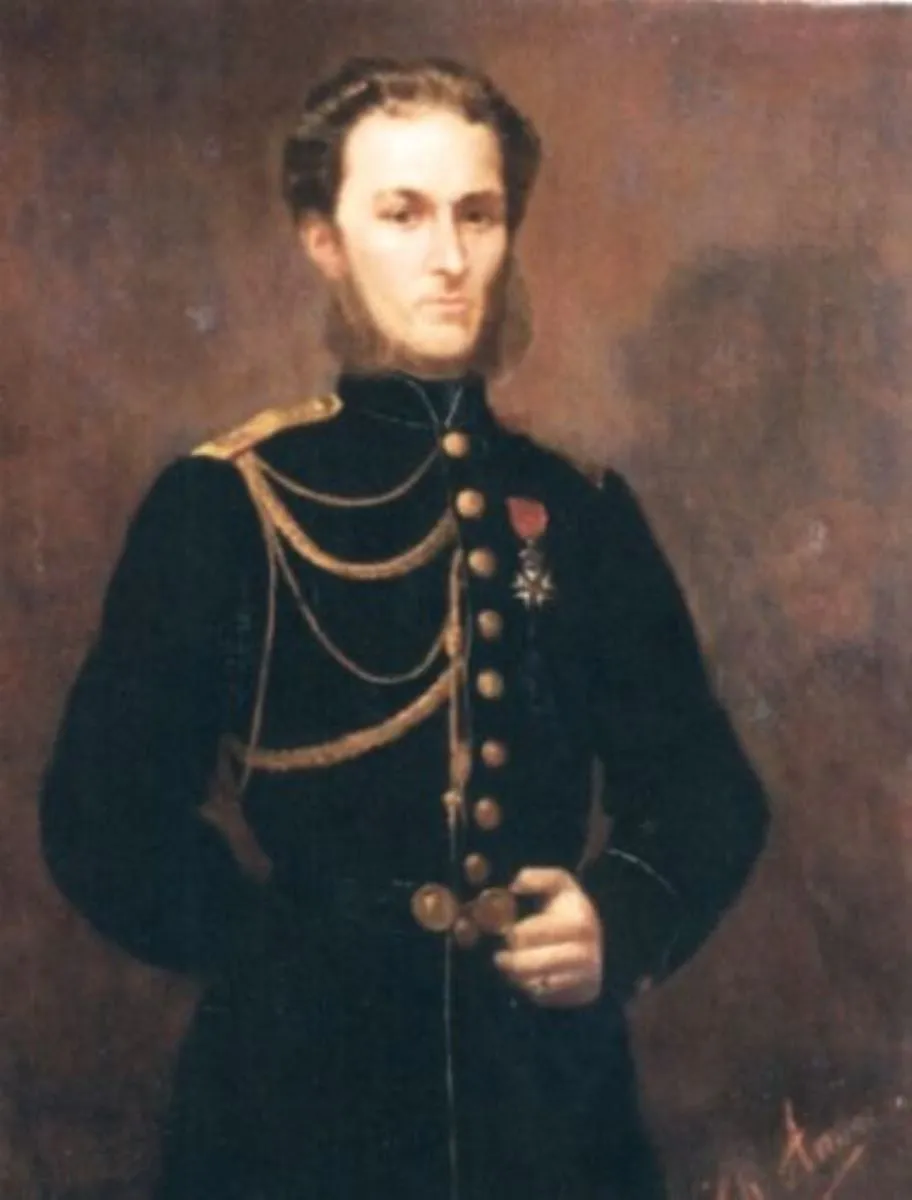
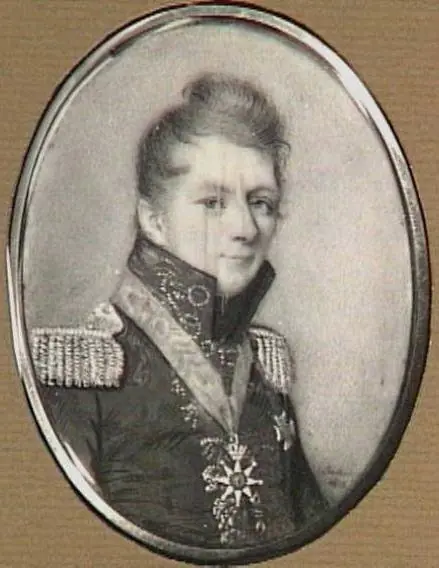
Portret de militar (Davilla ?) is an unspecified painting by Theodor Aman. It is held in the collection of the National Museum of Art of Romania. This portrait depicts a man in military attire, rendered with formal solemnity.
About this work
Overview
This portrait depicts a man in military attire, rendered with formal solemnity. The figure stands against a flat brown background, emphasizing his presence without distraction. His posture and attire suggest rank and duty, while the lighting technique enhances the three-dimensionality of his figure. The composition is restrained, focusing attention on the subject’s bearing and insignia.
Subject & Meaning
The sitter is identified as a military officer, indicated by his uniform, sword, and chest decoration. The red ribbon and medal signify honors earned, reinforcing his status and service. His direct gaze and composed stance convey authority and self-possession. The absence of contextual elements directs focus to his identity as a figure of institutional importance rather than personal narrative.
Technique & Style
Chiaroscuro is employed to model the figure’s form, with light falling sharply across the uniform and face, creating volume against the dark background.
Chiaroscuro is employed to model the figure’s form, with light falling sharply across the uniform and face, creating volume against the dark background. The gold trim on the jacket catches highlights, contrasting with the deep shadows of the coat. Brushwork is precise but not ornate, favoring clarity over decorative flourish. The solid background isolates the subject, heightening the sense of stillness and gravitas.
History & Provenance
The painting is attributed to Davilla, though documentation remains limited. Its origin and early ownership are unrecorded in widely accessible archives. The work likely dates to the late 18th or early 19th century, consistent with the uniform style and painting technique. It entered institutional collections in the 20th century, where it has been preserved as an example of regional military portraiture.
Context
During the period this portrait was made, military figures were frequently depicted in formal attire to affirm loyalty and achievement, especially in regions undergoing political change. The emphasis on medals and sword reflects a cultural value placed on service and hierarchy. Such portraits served both personal commemoration and public representation, reinforcing social order through visual symbolism.
Legacy
The portrait stands as a modest but clear example of military portraiture from a time when visual identity was tightly linked to rank and duty. Though not widely exhibited, it contributes to the understanding of how regional artists rendered authority in the absence of grand historical narratives. Its preservation offers insight into the visual language of service and status in its era.
Artist & collection
Artist

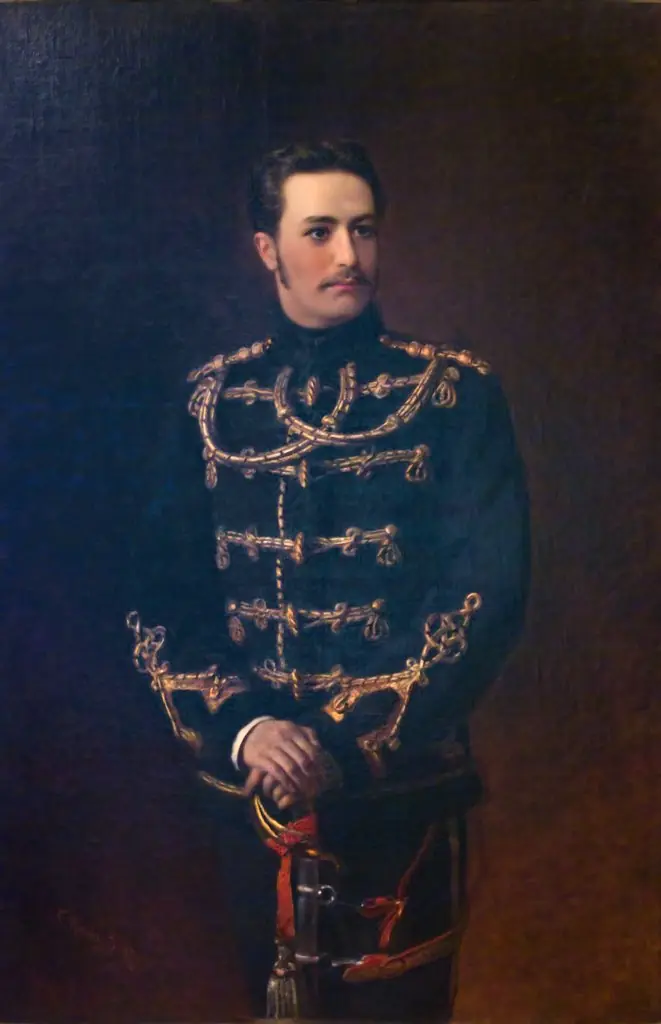 Portrait of Count Vladimir Bobrinsky, Lieutenant of the Life-Guards Hussar Regiment
 Colonelul Asztalos Sandor
 Radu Fărcășanu
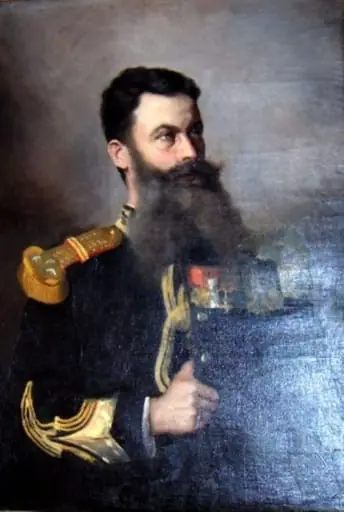 Moise Groza
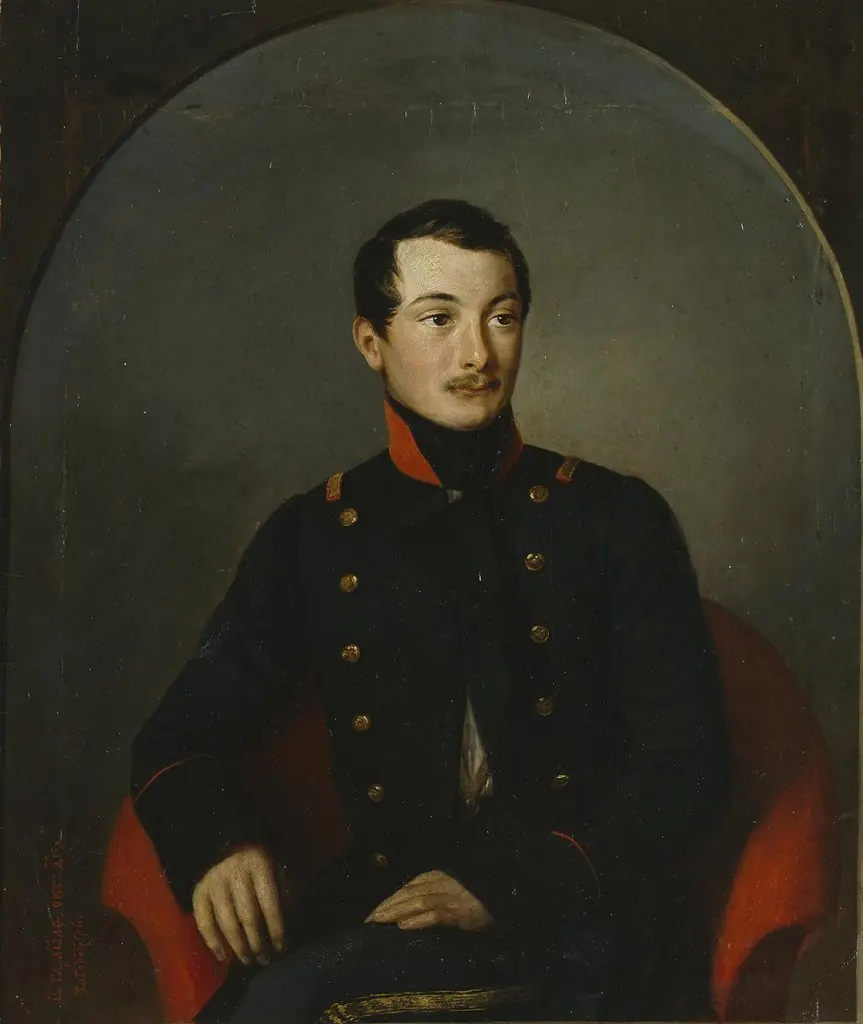 Portrait of a Hussar Guards Officer
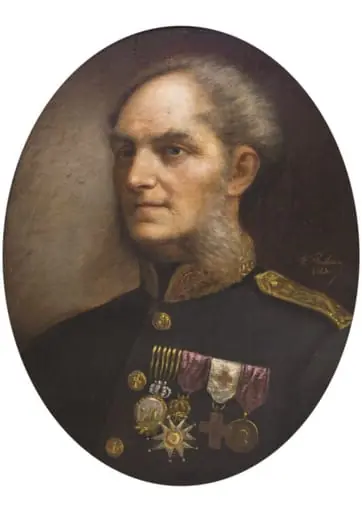 Portretul doctorului Carol Davila
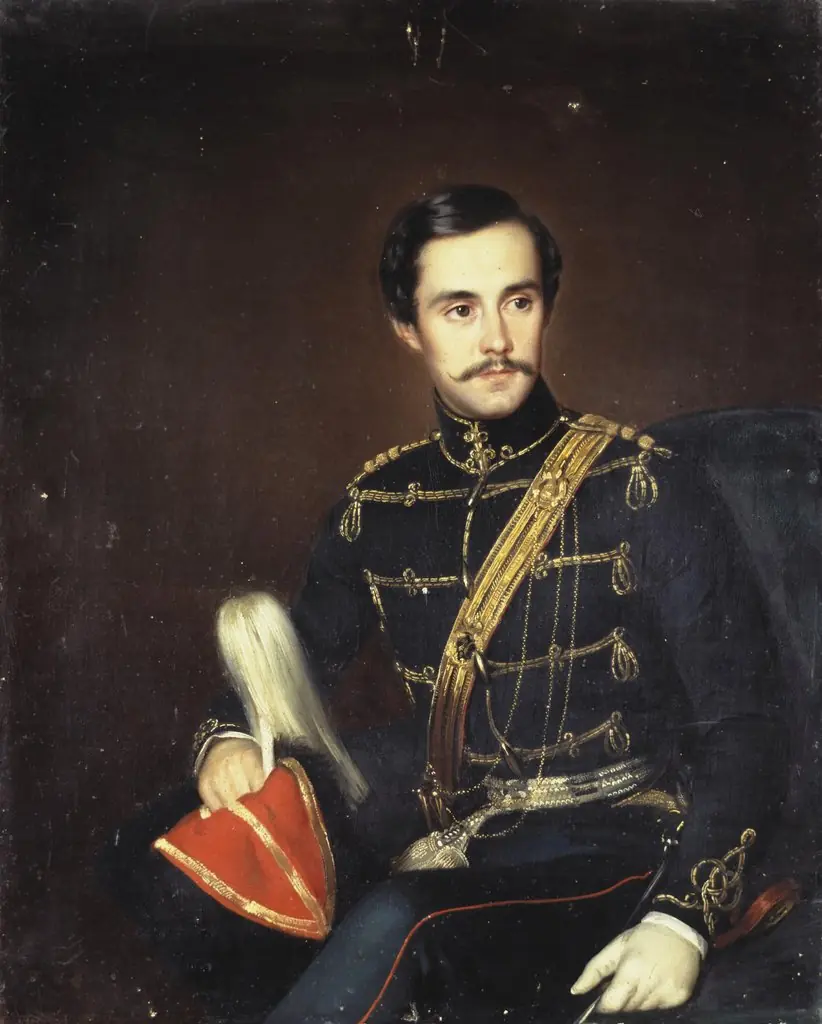 Portrait of Nikolai Monsey
 Napoleon al III-lea
 Portrait of Grand Duke Nikolai Pavlovich
 Alfonso XIII
 Kemény Zsigmond
 Portretminiatuur van een officier