Artwork
Supper
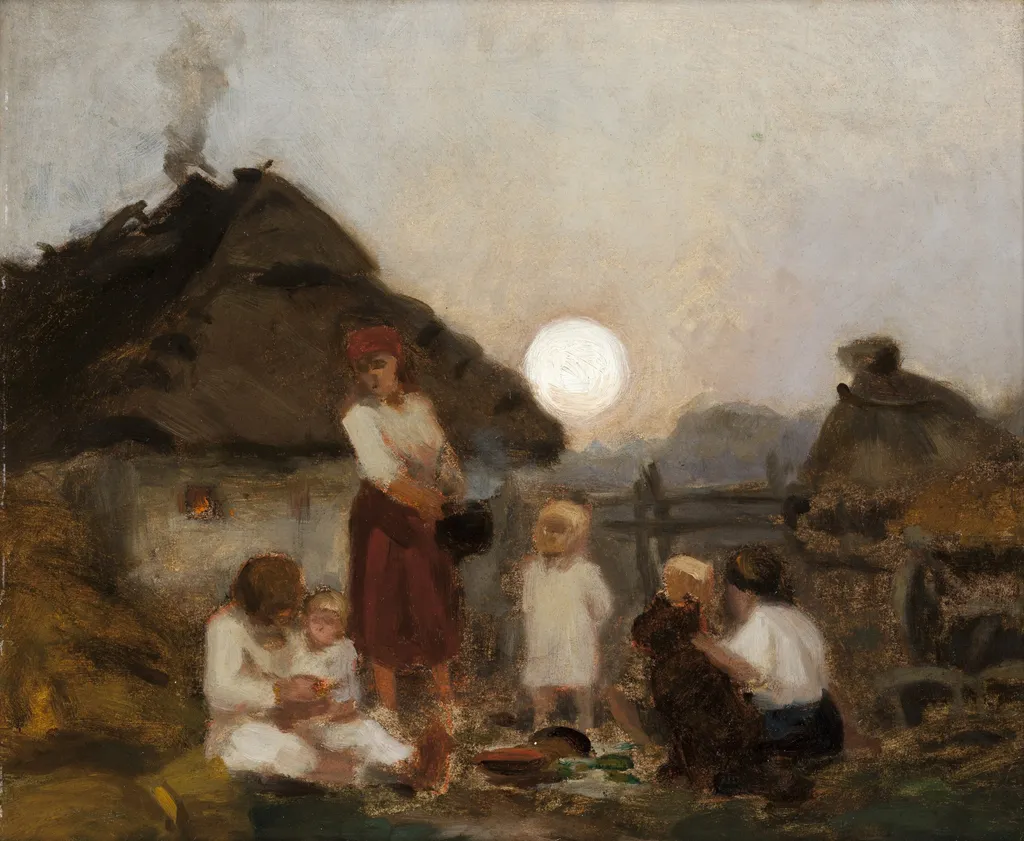
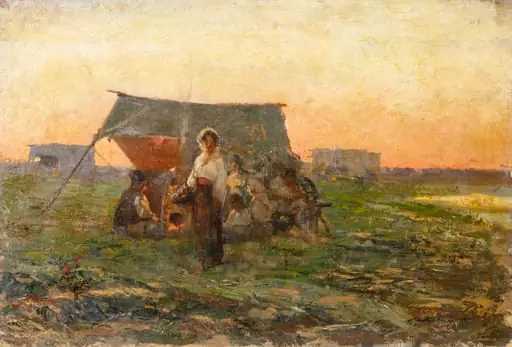
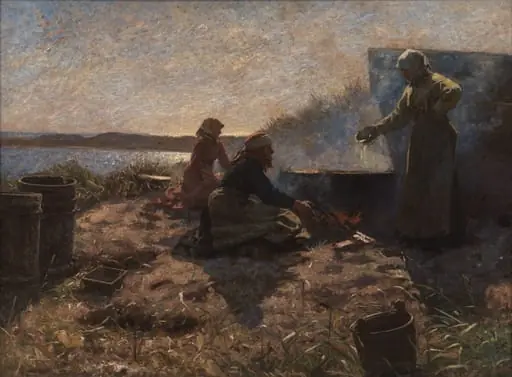
Supper is an unspecified painting by the Post-Impressionist artist Jan Stanisławski. It dates from 1896 and is held in the collection of the National Museum in Kraków.
About this work
Overview
The painting resides today in the National Museum in Kraków, reflecting his commitment to capturing authentic human moments.
Jan Stanisławski painted *Supper* in 1896, a work emerging from the broader post-impressionist current in European art. Though trained in academic traditions, he integrated expressive color and structured composition to convey everyday life. As a key figure in Kraków’s art scene, he balanced institutional teaching with progressive experimentation. The painting resides today in the National Museum in Kraków, reflecting his commitment to capturing authentic human moments.
Subject & Meaning
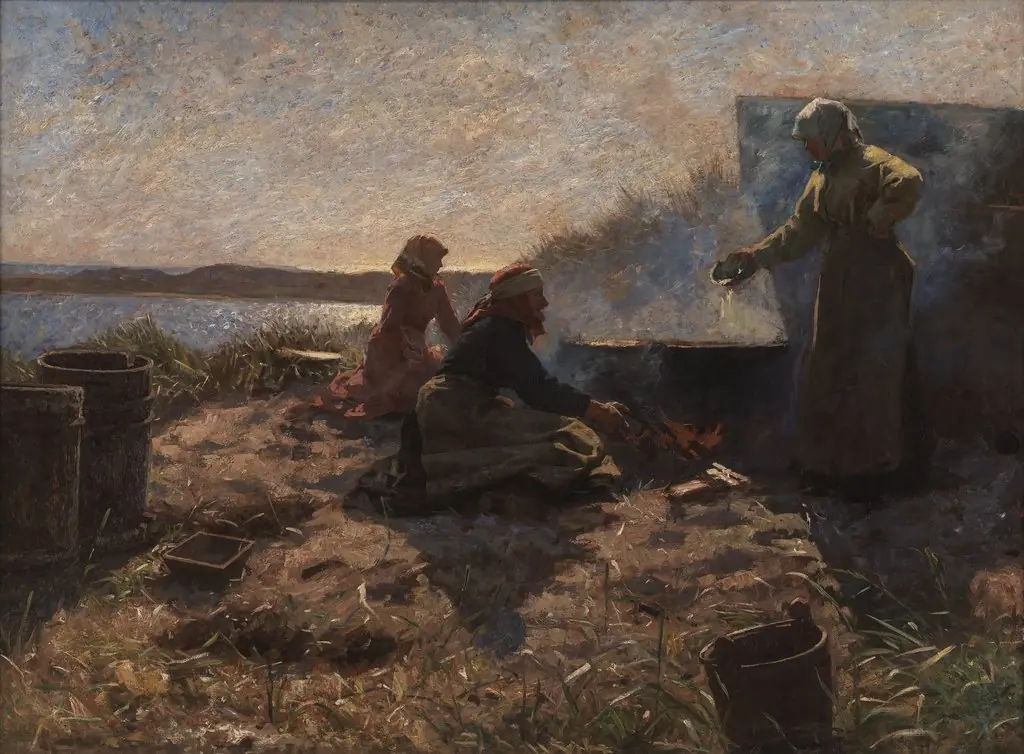
The scene depicts a modest outdoor meal shared among a small group, likely rural or working-class Poles. A woman serves food while a child watches, suggesting generational continuity and quiet domestic ritual. The gathering lacks theatricality, instead emphasizing solidarity and unspoken connection. The setting—simple clothing, humble tableware, and a distant building—grounds the moment in everyday reality, avoiding idealization.
Technique & Style
Stanisławski employed chiaroscuro to model forms with subtle light shifts, lending volume without dramatic contrast. Color is restrained yet deliberate, with earth tones dominating and warm accents drawing attention to the table and figures. Brushwork is deliberate but not overly textured, favoring clarity over fragmentation. The composition arranges figures in a shallow, intimate space, reinforcing the sense of shared presence.
History & Provenance
Created in 1896, the painting entered the National Museum in Kraków’s collection early in its history, likely through direct acquisition or donation linked to Stanisławski’s institutional ties. He became a professor at the Academy of Fine Arts in Kraków by 1906 and was active in founding progressive art societies. The work’s preservation reflects its recognition as a significant example of Polish modernist practice during a period of cultural redefinition.
Context
In late 19th-century Poland, artists sought to define a national visual language amid foreign partitions. Stanisławski contributed by focusing on local life with emotional sincerity, diverging from romanticized historical themes. *Supper* aligns with broader European trends toward everyday subject matter but retains distinctly Polish social and spatial cues, reflecting a quiet resistance to cultural erasure through intimate realism.
Legacy
Though not widely known outside Poland, *Supper* exemplifies Stanisławski’s role in bridging academic training and modernist sensibility. His emphasis on ordinary life influenced later generations of Polish painters who prioritized authenticity over spectacle. The painting remains a touchstone in Kraków’s art historical narrative, valued for its quiet dignity and technical restraint.
Own this work as a print
Artist & collection
Artist
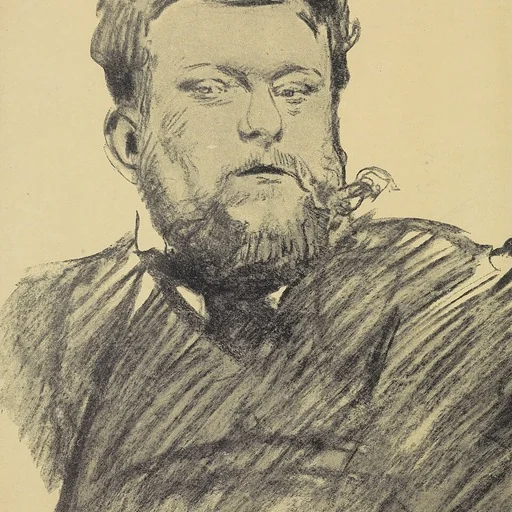
Jan Grzegorz Stanisławski (24 June 1860 – 6 January 1907) was a Polish modernist painter, art educator, and founder and member of various innovative art groups and literary societies.