Artwork
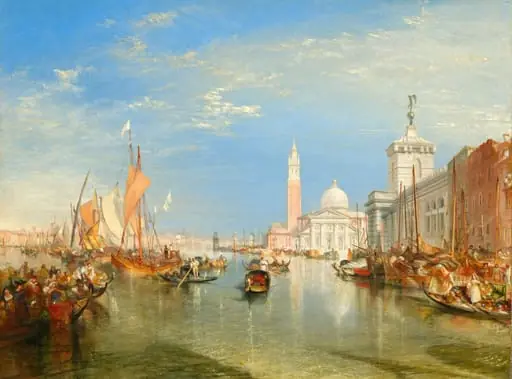
Venice with the Salute
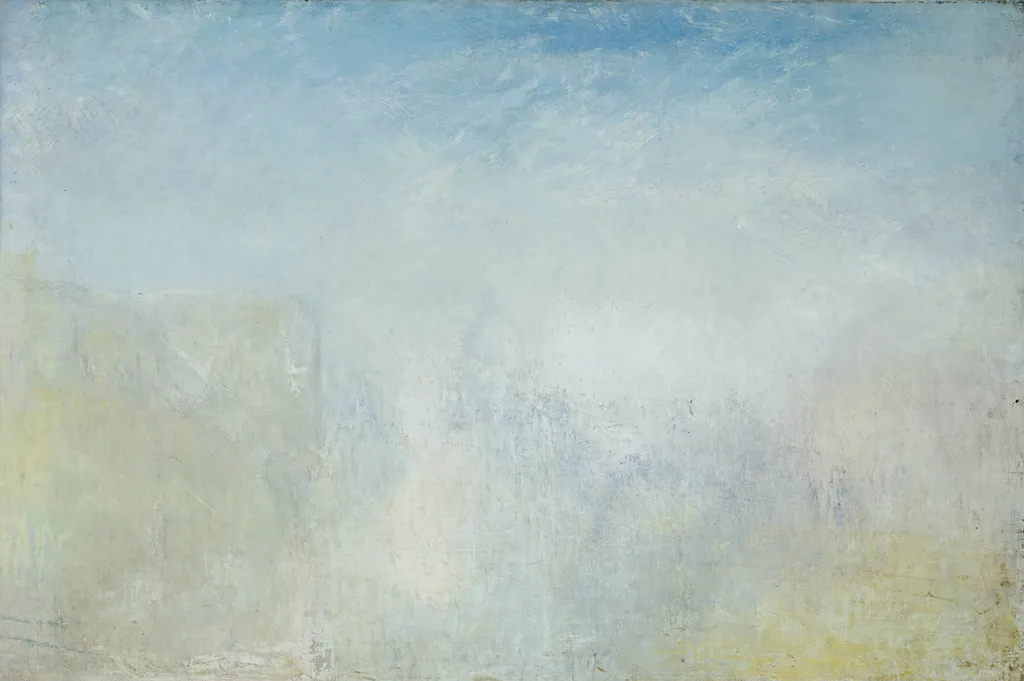
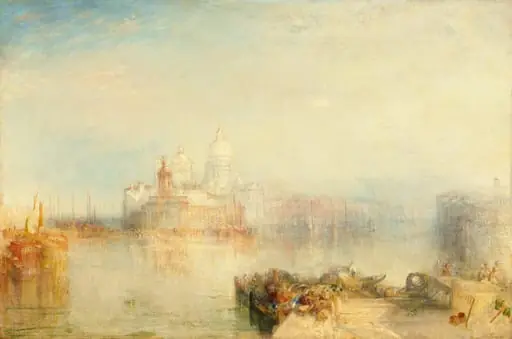
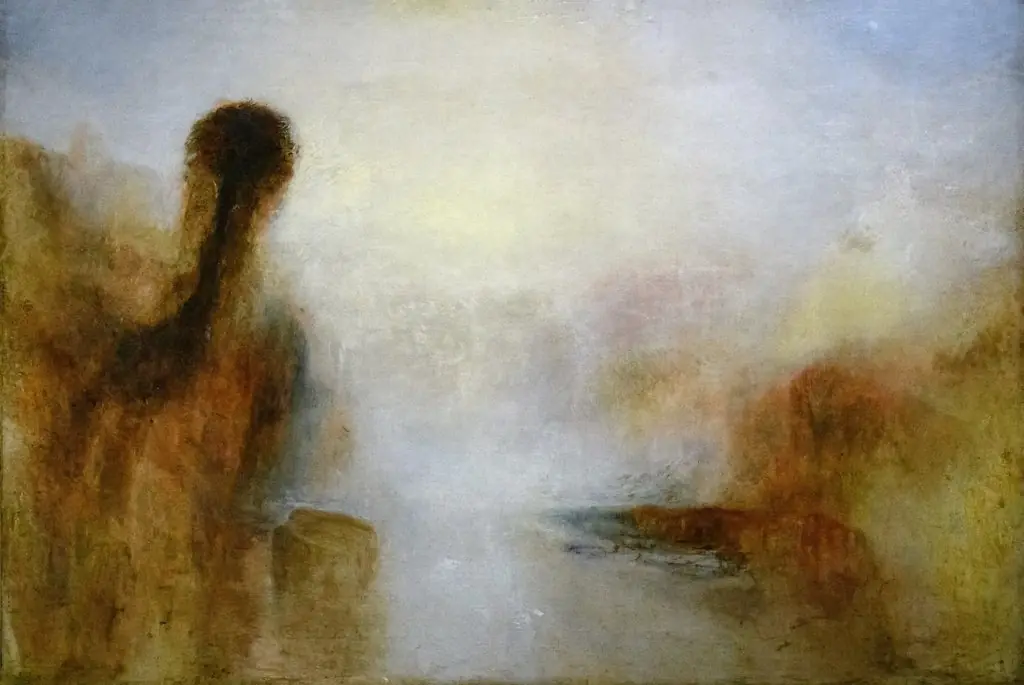
Venice with the Salute is an oil painting by Joseph Mallord William Turner. It dates from 1840 and is held in the collection of the National Gallery.
About this work
Overview
Painted in 1840 by Joseph Mallord William Turner, *Venice with the Salute* is an oil work that captures the Italian city through a veil of atmospheric haze.
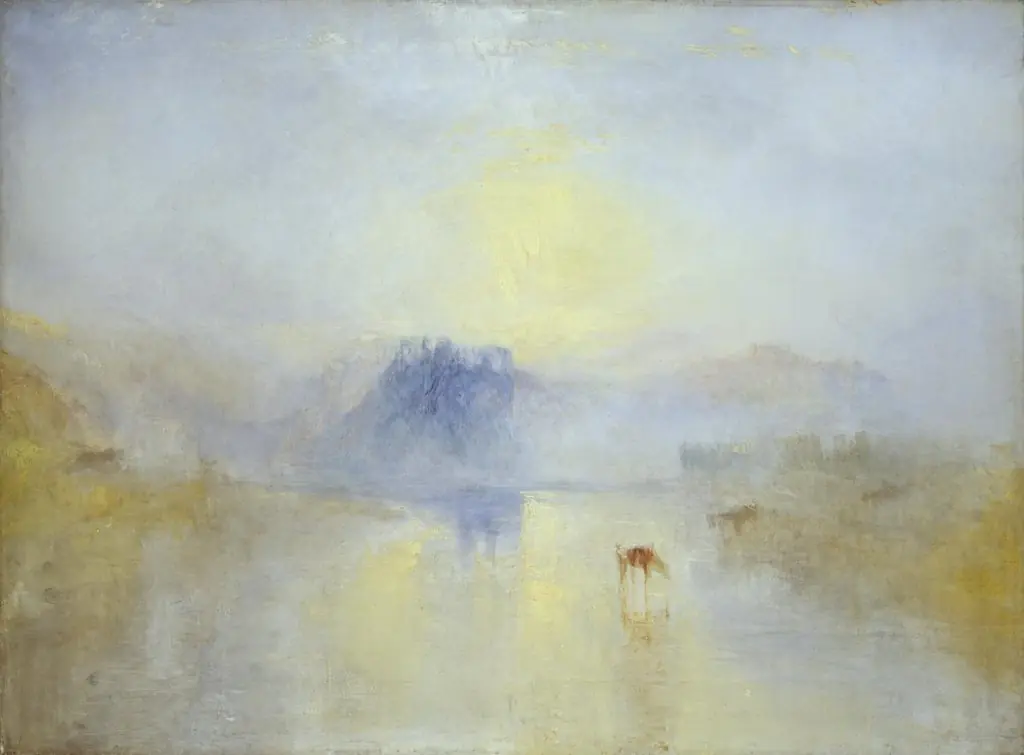
Painted in 1840 by Joseph Mallord William Turner, *Venice with the Salute* is an oil work that captures the Italian city through a veil of atmospheric haze. Rather than detailing architecture with precision, Turner conveys Venice as a luminous impression, where form dissolves into light and air. The painting reflects his late style, in which traditional representation gives way to sensory experience, prioritizing mood over topography.
Subject & Meaning
The subject is Venice, viewed from the lagoon, with the Basilica of Santa Maria della Salute rising faintly from the mist. The church serves as a subtle anchor amid the diffused skyline, but it is not the focus. Instead, the painting evokes transience—the city as a fleeting vision, half-revealed by light and moisture. Turner’s treatment suggests a meditation on perception, memory, and the impermanence of place.
Technique & Style
Turner applied thin, layered washes of oil paint with loose, fluid brushwork, allowing colors to blend optically rather than being meticulously defined. The sky and water merge in pale blues and grays, while the city emerges through subtle tonal shifts. Visible strokes and blurred edges eliminate hard contours, creating a sense of movement and atmospheric vibration. This approach anticipates techniques later associated with Impressionism.
History & Provenance
Completed during Turner’s final decade, the painting was retained by the artist until his death in 1851. It entered the collection of the British nation through his bequest to the nation, which included hundreds of works. It has remained in public ownership since, now housed at Tate Britain, where it is regularly displayed as part of the core collection of British Romantic art.
Context
Turner painted *Venice with the Salute* after multiple visits to the city, which he found rich in light and atmospheric variation. In the 1840s, he increasingly abandoned conventional composition in favor of emotional and sensory expression. This shift aligned with broader artistic currents in Europe, where painters began to prioritize perception over narrative, paving the way for later modern movements.
Legacy
The painting stands as a pivotal example of Turner’s late evolution, where landscape becomes an abstraction of light and atmosphere. Its influence extended beyond his lifetime, informing artists who sought to capture transient effects of nature. Though not widely recognized in his own time as radical, later generations saw in his work a precursor to Impressionist and even abstract tendencies in 20th-century art.
Artist & collection
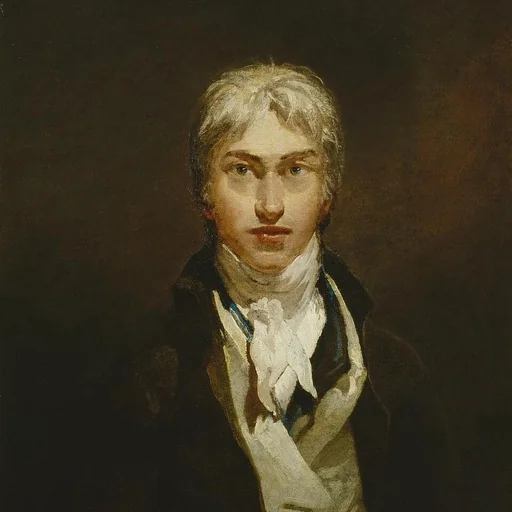
Artist
Joseph Mallord William Turner was born in 1775 at Maiden Lane, Covent Garden, where his father kept a barber and wig-making shop.