Artwork
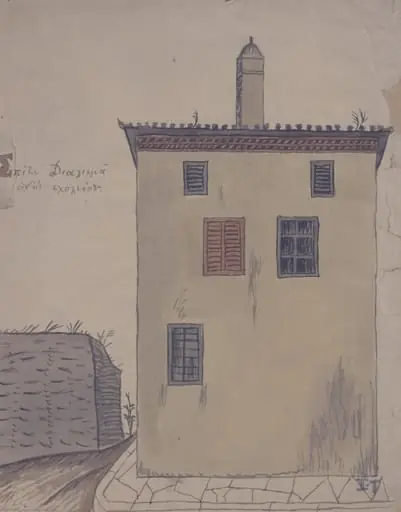
"ΣΠΙΤΙ ΣΤΗΝ ΟΔΟ ΥΠΕΡΕΙΔΟΥ. ΤΟ ΓΚΡΕΜΙΣΑΝΕ ΤΟ 1936", Αθήνα
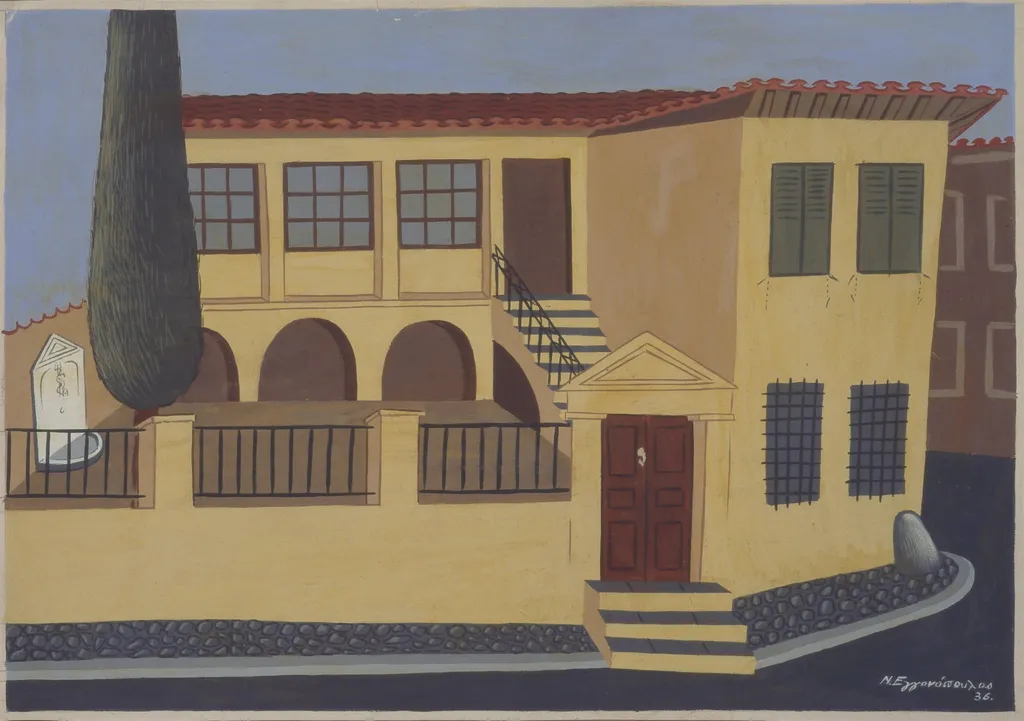
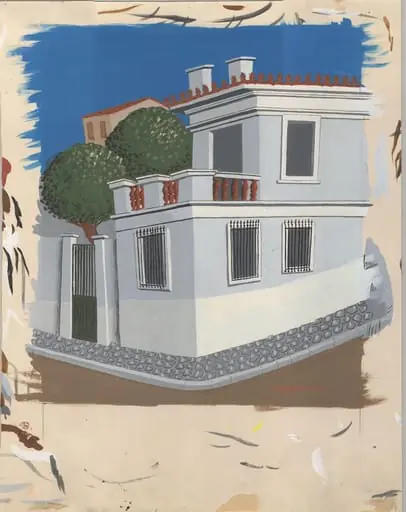
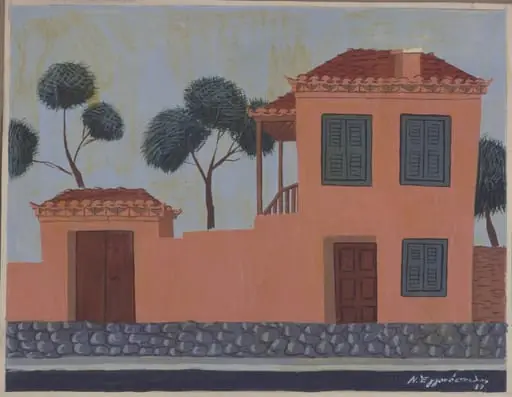
"ΣΠΙΤΙ ΣΤΗΝ ΟΔΟ ΥΠΕΡΕΙΔΟΥ. ΤΟ ΓΚΡΕΜΙΣΑΝΕ ΤΟ 1936", Αθήνα is an unspecified painting by Engonopoulos Nikos. It dates from 1936 and is held in the collection of the Historical & Ethnological Society of Greece. ΣΠΙΤΙ ΣΤΗΝ ΟΔΟ ΥΠΕΡΕΙΔΟΥ.
About this work
The door is dark brown with a small window in it, and there’s a small porch with a stone path leading up.
This painting shows a simple two-story house with a yellow and brown color scheme. The building has arched windows on the bottom floor and square windows on top, some with shutters. A tall chimney sits next to it, and the roof is red with a scalloped edge. The door is dark brown with a small window in it, and there’s a small porch with a stone path leading up.
The title, written in Greek, roughly translates to *"House on Yperidou Street. They demolished it in 1936."* This suggests the building was real and later torn down.
If you like this style, look up Engonopoulos Nikos for more of his work.
Overview
ΣΠΙΤΙ ΣΤΗΝ ΟΔΟ ΥΠΕΡΕΙΔΟΥ. ΤΟ ΓΚΡΕΜΙΣΑΝΕ ΤΟ 1936 (House on Yperidou Street. Demolished in 1936) is a 1936 artwork by Nikos Engonopoulos, currently housed at the Museum of Ethnography in Athens.
Subject & Meaning
The piece depicts a specific, now-demolished two-story house on Yperidou Street in Athens, highlighting its architectural details. The title's mention of demolition implies a commentary on urban change.
Technique & Style
Characterized by a muted yellow and brown color palette, the work features arched and square windows, a tall chimney, and a red scalloped-edged roof, showcasing Engonopoulos's attention to everyday architectural subjects.
History & Provenance
Created in 1936, the same year the depicted house was demolished, the artwork is now part of the Museum of Ethnography's collection in Athens, though the exact date of acquisition is not specified.
Context
Reflecting 1930s Athens, the work captures a moment of urban transformation. Engonopoulos's focus on a humble, doomed building contrasts with grander subjects, offering a glimpse into the city's lesser-documented spaces.
Legacy
While specific legacy details are scarce, the work contributes to Engonopoulos's body of capturing Athenian life and architecture of his time, encouraging viewers to appreciate everyday subjects and the transience of urban landscapes.
Artist & collection
Artist
Museum
Historical & Ethnological Society of Greece
Continue through works from the same source collection.