Artwork
The Smithy, Crathorne
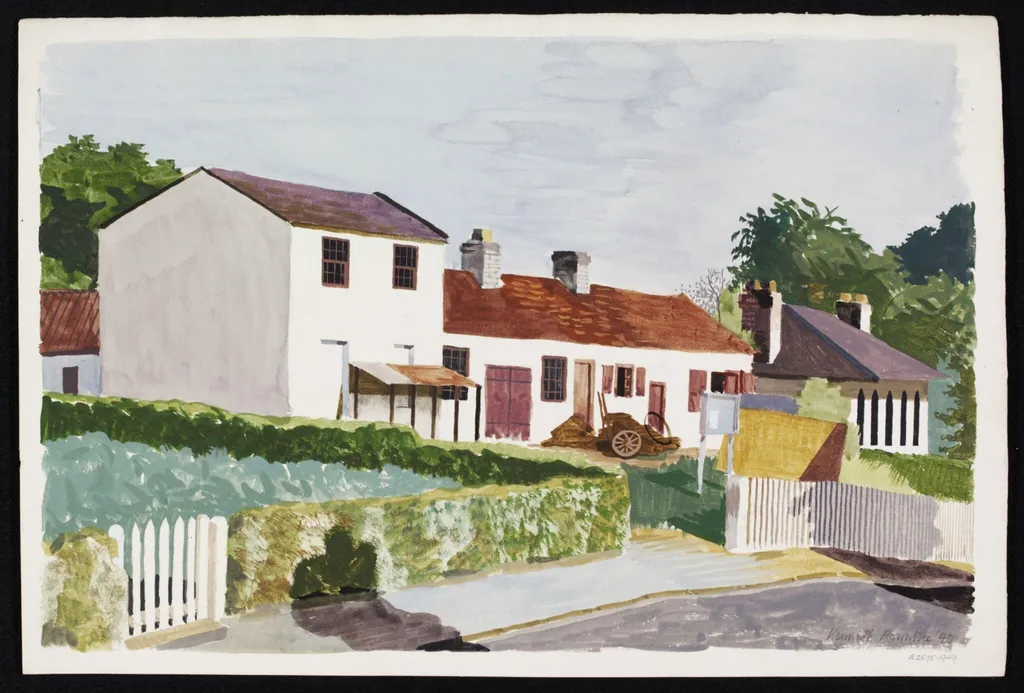
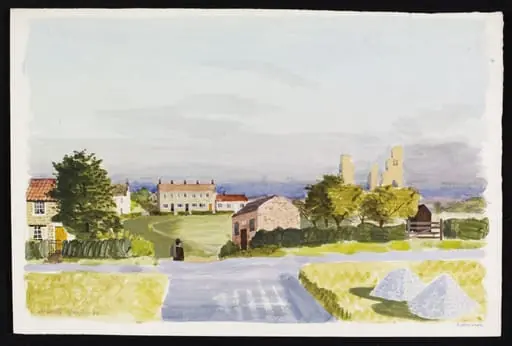
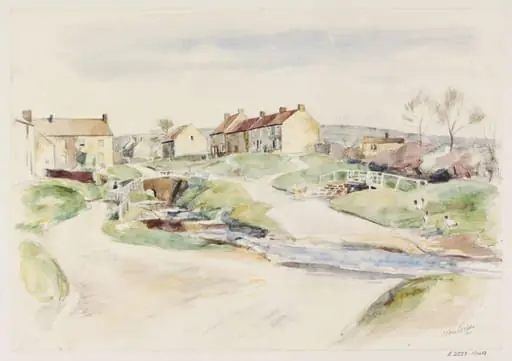
The Smithy, Crathorne is a watercolor work on paper by the Social Realist artist Rowntree. It dates from 1940 and is held in the collection of the Victoria and Albert Museum.
About this work
Overview
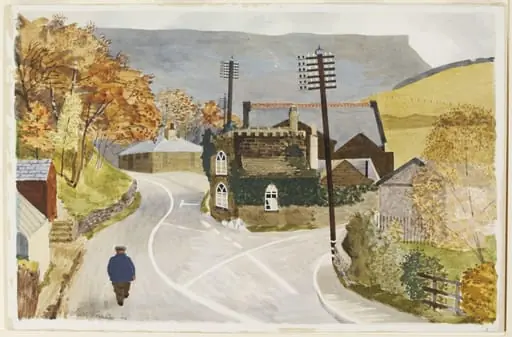
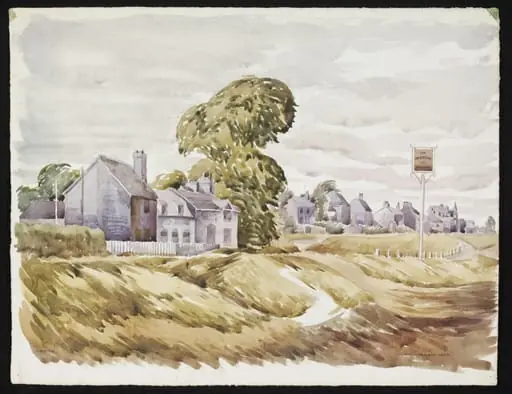
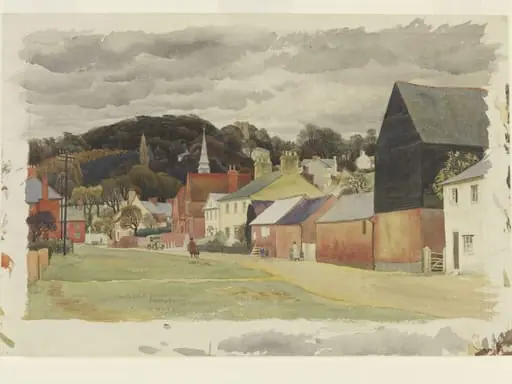
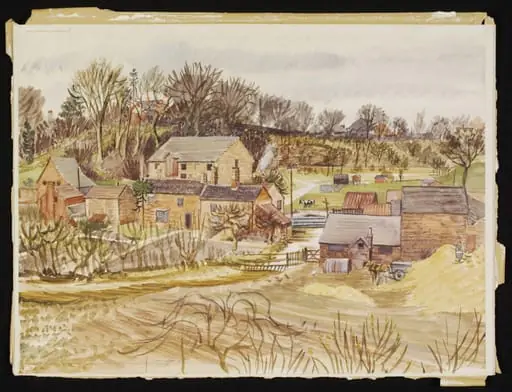
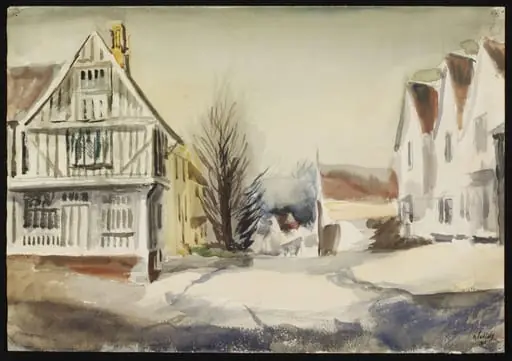
Created in 1940, this watercolour titled *The Smithy, Crathorne* records a modest village setting in England. The composition centers on a blacksmith’s forge flanked by three simple dwellings, a wooden cart, and a low stone wall, all rendered in muted tones. The scene conveys a tranquil, everyday atmosphere, reflecting a slice of rural life during a period of national upheaval.
Subject & Meaning
The work captures a traditional smithy, an emblem of local craftsmanship that persisted even as industrial and wartime pressures reshaped the countryside. By focusing on this modest trade, the painting underscores the endurance of community skills and the cultural value placed on ordinary labor within the broader narrative of British identity.
Technique & Style
Executed in delicate watercolour, the artist employs soft washes that blend seamlessly, producing a gentle, evenly lit surface without pronounced shadows. The palette is restrained, emphasizing subtle variations of green, ochre, and gray, while the brushwork remains fine and controlled, lending the scene a calm, almost documentary quality.
History & Provenance
The piece was produced under the Recording Britain scheme, a wartime project financed by the Pilgrim Trust and overseen by Sir Kenneth Clark.
The piece was produced under the Recording Britain scheme, a wartime project financed by the Pilgrim Trust and overseen by Sir Kenneth Clark. The initiative commissioned nearly a hundred artists to create over fifteen hundred works between 1940 and 1943, aiming to preserve images of landscapes and industries threatened by conflict or modernization. This watercolour remains part of that collective visual archive.
Artist & collection