Artwork
Chapel Tremadoc, Caernarvonshire
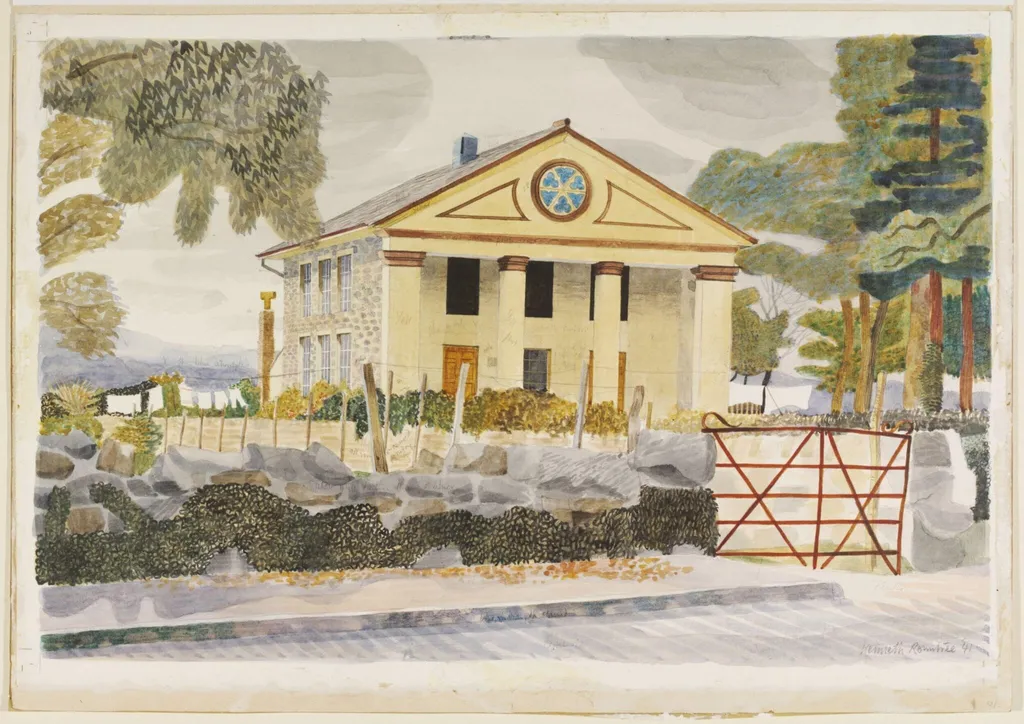
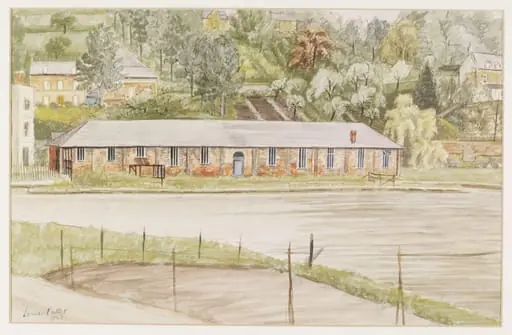
Chapel Tremadoc, Caernarvonshire is a watercolor work on paper by Rowntree. It dates from 1941 and is held in the collection of the Victoria and Albert Museum.
About this work
Overview
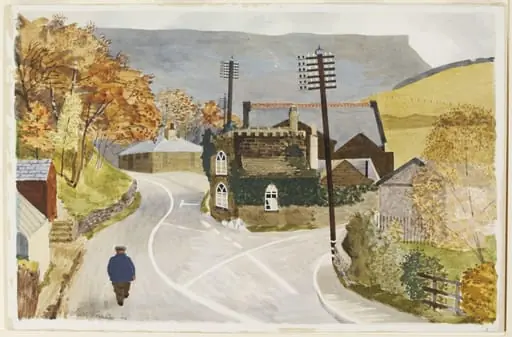
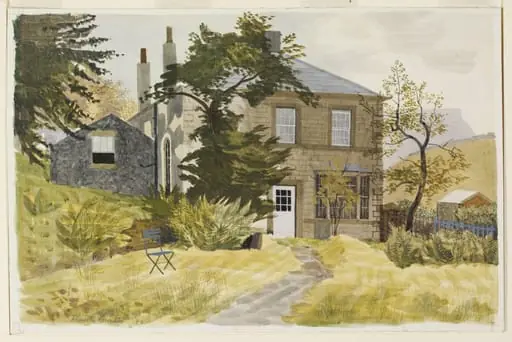
Rowntree’s 1941 watercolour records the neoclassical portico of a chapel in Tremadog, Caernarvonshire. The modest stone structure, rendered in soft yellow, is set against a simple garden with a wooden‑post fence, an open red gate and a low pile of stones, while a laundry line stretches behind it.
Subject & Meaning
The composition centers on the chapel’s three dark doorways and a circular, cross‑shaped window that crowns the central entrance, suggesting the building’s religious function. The inclusion of everyday details such as the laundry line and garden fence situates the sacred edifice within the rhythms of ordinary rural life.
Technique & Style
Rowntree employs a light palette of muted yellows, greys and reds, applying loose, fluid brushstrokes that convey atmosphere rather than precise form. The surrounding trees are suggested with rapid, sketch‑like strokes, giving the scene an airy, almost impressionistic quality while retaining enough detail to identify architectural elements.
History & Provenance
Created for the wartime Recording Britain project, the work was part of a national effort led by Sir Kenneth Clark to document at‑risk sites. The scheme commissioned 97 artists, who together produced over 1,500 pieces, aiming to preserve visual records of Britain’s built heritage threatened by conflict and change.
Context
The painting reflects the early 1940s concern that war, urban expansion and shifting agricultural practices might erase regional landmarks. By capturing the chapel and its modest surroundings, Rowntree contributed to a broader archival mission that sought to safeguard the visual memory of Britain’s cultural landscape for future generations.
Artist & collection