Artwork
Andorre
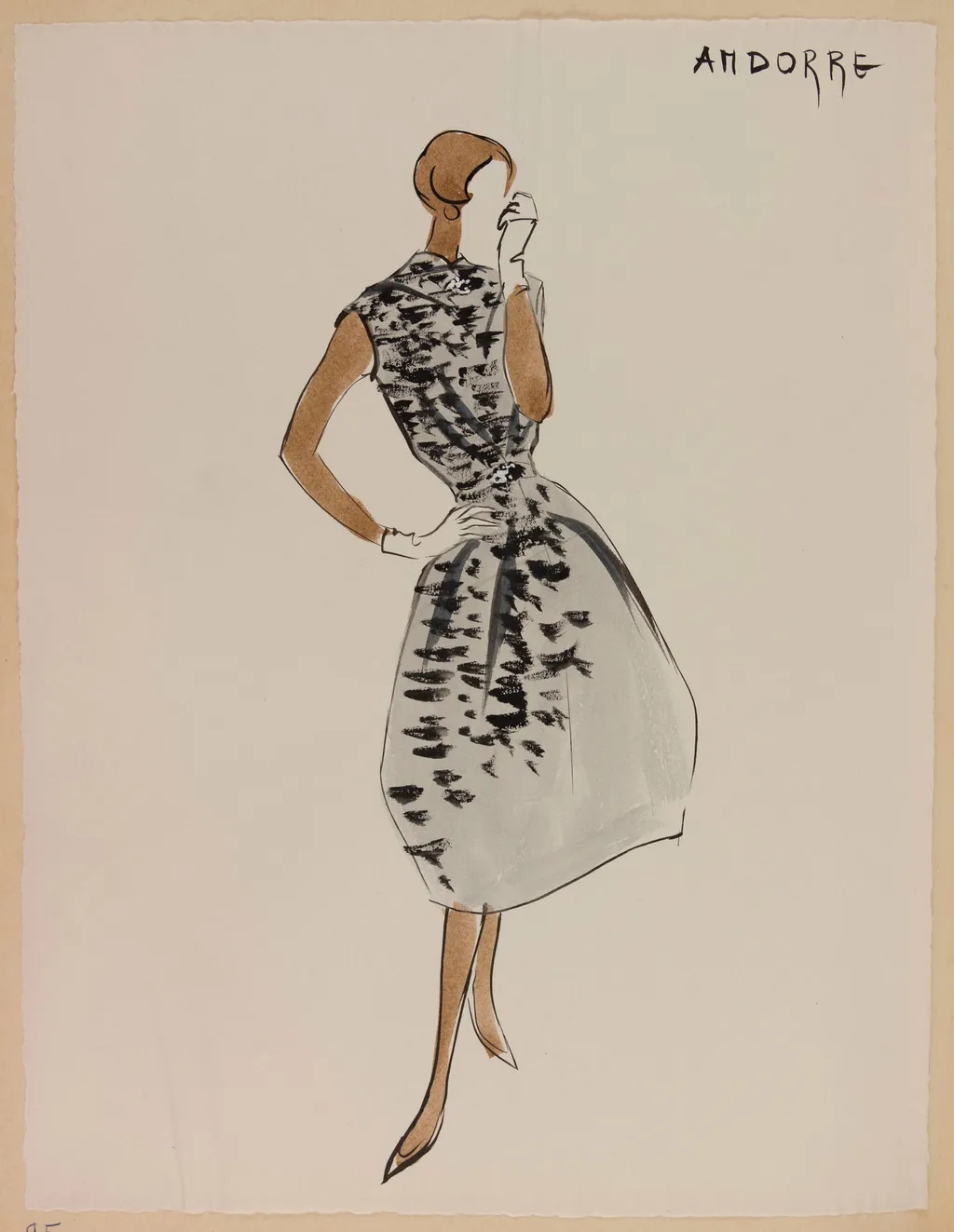
Andorre is a drawing by Marie-Louise Carven. It dates from 1956 and is held in the collection of the Palais Galliera - Musée de la Mode de la Ville de Paris.
About this work
Overview
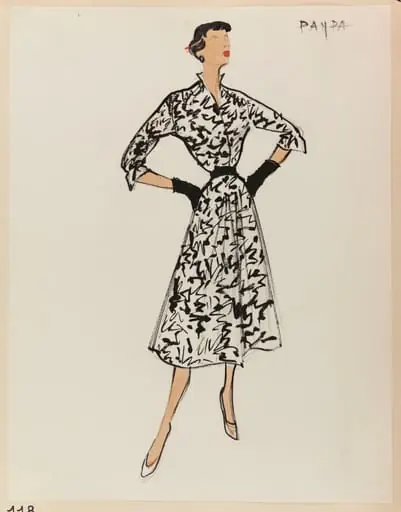
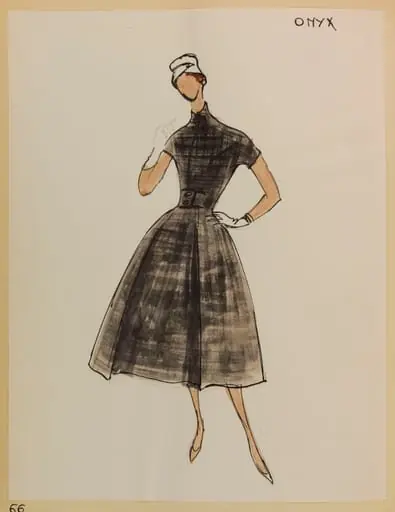
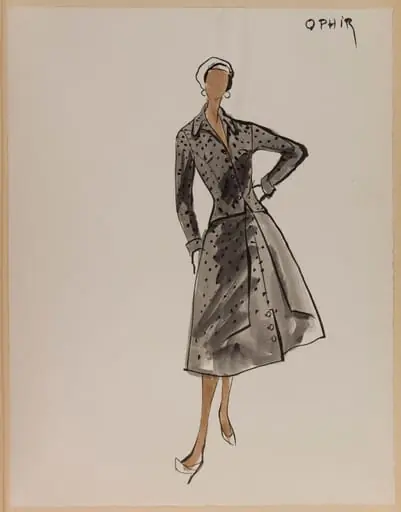
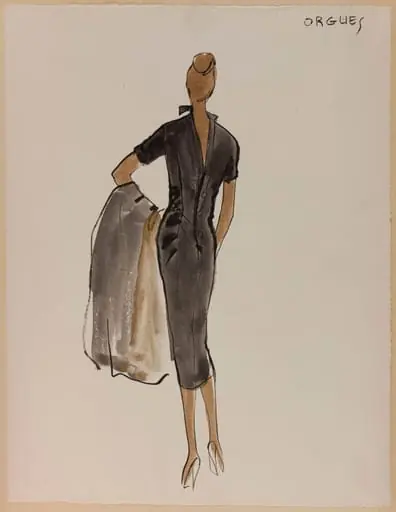
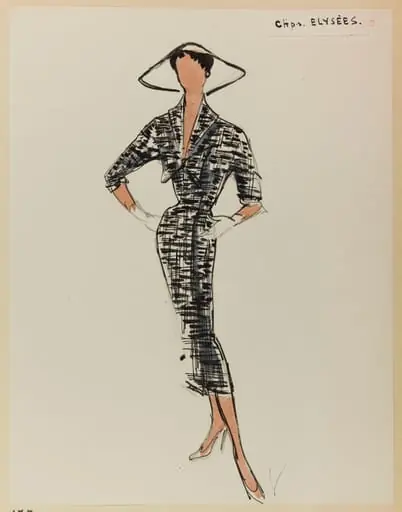
Andorre is a painted portrait of a woman dressed in a black-and-white patterned dress, created around 1956 by French designer Marie-Louise Carven.
Andorre is a painted portrait of a woman dressed in a black-and-white patterned dress, created around 1956 by French designer Marie-Louise Carven. Though primarily known for fashion, Carven produced this work as part of a broader engagement with visual representation. The image is held in the Museum of Ethnography’s collection, suggesting its role in documenting mid-century style rather than as a fine art object in the traditional sense.
Subject & Meaning
The subject is a poised woman in a knee-length dress with a fitted waist and full skirt, her posture conveying quiet confidence. One hand rests on her hip, the other near her face, suggesting contemplation or self-awareness. The white gloves and neat bob hairstyle reflect mid-1950s ideals of refined femininity. The image does not depict a specific individual but rather embodies Carven’s vision of elegant, accessible modern womanhood.
Technique & Style
The painting employs flat, clean lines and a limited palette dominated by black, white, and beige. The background is uniformly neutral, drawing focus to the subject’s form and attire. Details like the dress pattern and glove texture are rendered with precision but without overt realism. The style aligns with mid-century illustration, emphasizing silhouette and fashion detail over emotional depth or atmospheric context.
History & Provenance
Created around 1956, Andorre emerged during Carven’s active years as a couturier and early pioneer of ready-to-wear fashion. It was likely produced as a promotional or archival image, possibly to accompany a collection or editorial feature. The work entered the Museum of Ethnography’s holdings at an unspecified date, where it is preserved as a cultural artifact of postwar French fashion aesthetics.
Context
In the 1950s, fashion designers increasingly blurred lines between clothing design and visual culture. Carven, known for lightweight fabrics and petite sizing, contributed to a shift toward democratized style. Andorre reflects this era’s emphasis on polished, wearable elegance. The painting’s inclusion in an ethnographic museum signals its value as a document of social norms and gendered presentation in mid-century Europe.
Legacy
Andorre endures as a quiet testament to Carven’s influence beyond garment construction. It illustrates how fashion designers of the time shaped cultural ideals through imagery. While not widely exhibited, its presence in an ethnographic collection ensures its role in understanding how style was visually codified and preserved as part of everyday life in postwar France.
Artist & collection
Artist
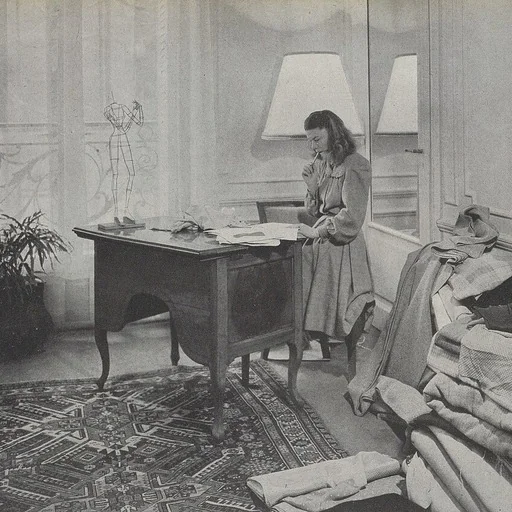
Marie-Louise Carven (31 August 1909 – 8 June 2015), born Carmen de Tommaso, was a French fashion designer who founded the house of Carven in 1945.
Museum
Palais Galliera - Musée de la Mode de la Ville de Paris
Continue through works from the same source collection.
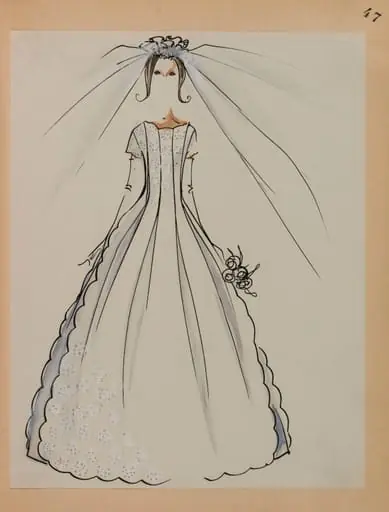 Robe de mariée festonnée et son voile
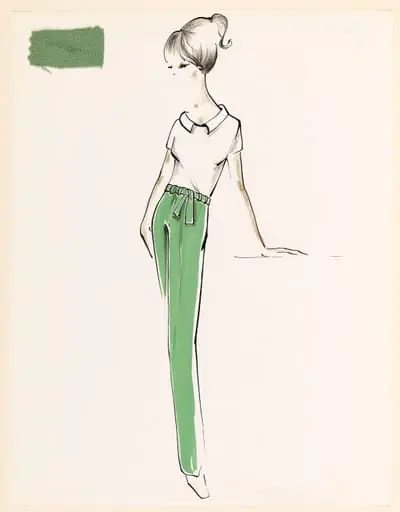 Haut blanc à manches courtes et pantalon vert à ceinture nouée
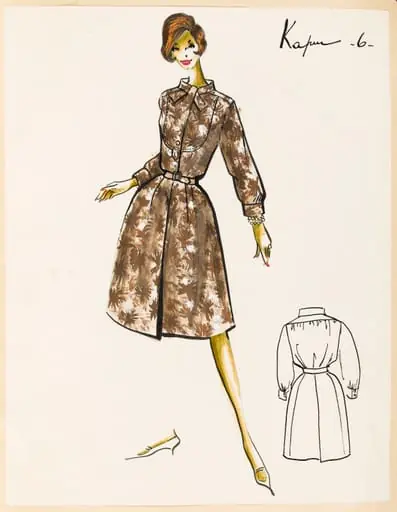 Kapur
Kapur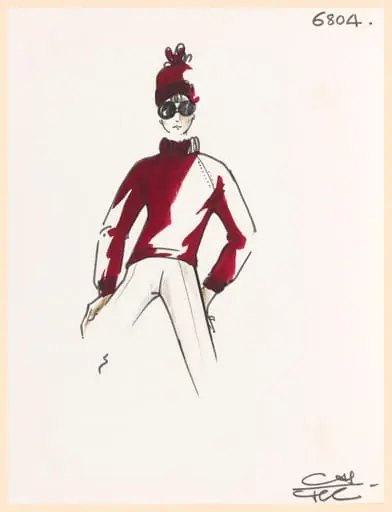 Pull-over à manches longues pourpre, bonnet assorti, pantalon et lunettes de soleil
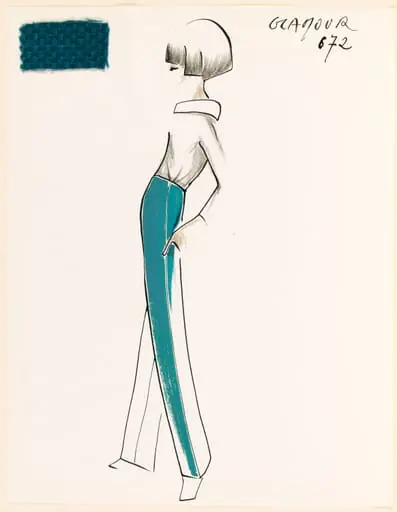 GLAMOUR
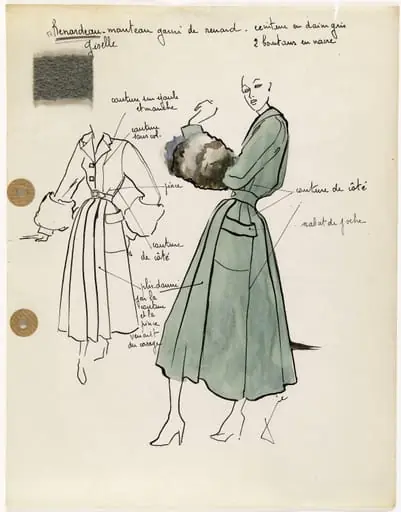 'Renardeau'
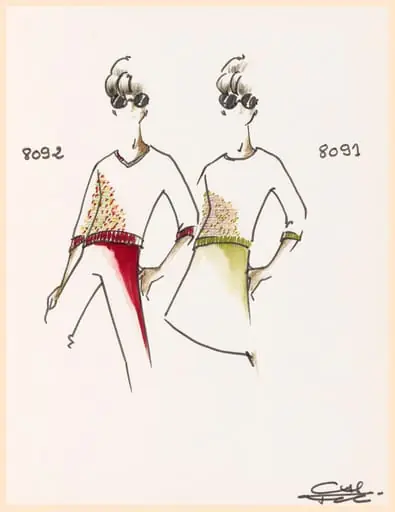 Pull-over à manches trois quarts et à encolure V à motifs multicolores, pantalon cerise et lunettes de soleil
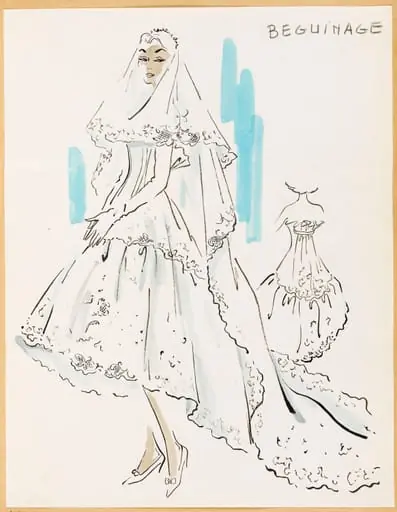 Béguinage