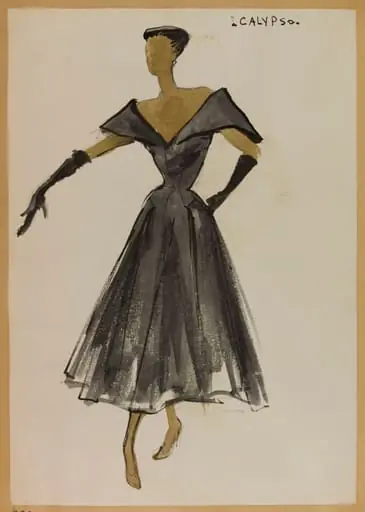
Artwork
'Fraisette'
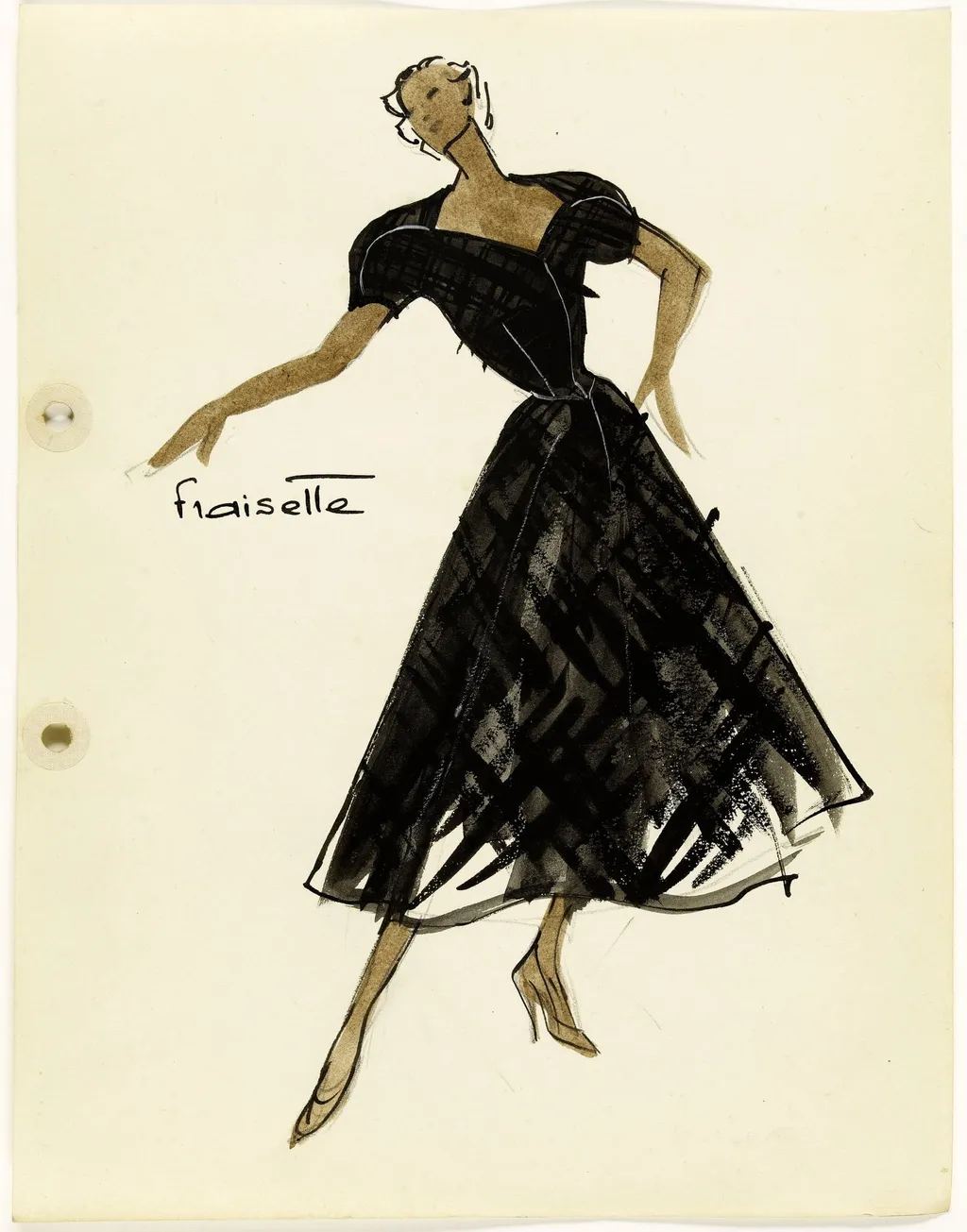
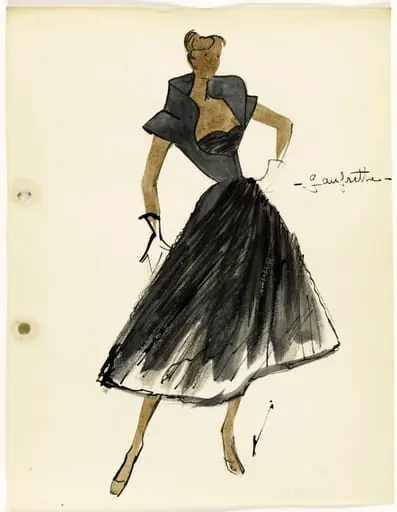
'Fraisette' is a drawing by Marie-Louise Carven. It dates from 1951 and is held in the collection of the Palais Galliera - Musée de la Mode de la Ville de Paris.
About this work
Overview
The sketch is part of the Museum of Ethnography’s collection, where it is preserved as a record of mid-century French fashion design practice.
Fraisette is a pencil sketch attributed to French fashion designer Marie-Louise Carven, dated approximately 1951. It captures a dynamic pose of a woman in a black dress, rendered with swift, expressive lines and subtle shading. Though not a finished garment, the drawing functions as a design study, reflecting Carven’s process in developing wearable forms. The sketch is part of the Museum of Ethnography’s collection, where it is preserved as a record of mid-century French fashion design practice.
Subject & Meaning
The figure in Fraisette is depicted mid-motion, one leg raised, arms extended, suggesting a moment of spontaneous movement. The dress—fitted at the torso and flaring into a ruffled hem—aligns with Carven’s signature aesthetic of lightness and grace. The name 'Fraisette,' meaning 'little fresh one' in French, hints at a playful, airy quality. The sketch conveys not just a garment, but an ideal of effortless femininity tied to movement and ease.
Technique & Style
Carven rendered Fraisette with loose, gestural pencil strokes, emphasizing flow over precision. Shading is minimal but effective, suggesting volume in the skirt and folds of fabric without heavy modeling. The sketch’s immediacy reflects its function as a working drawing—likely made to capture a silhouette or movement idea quickly. The informal script of the title in the corner reinforces its status as a private design note, not a public presentation.
History & Provenance
Created around 1951, Fraisette emerged during the early years of Carven’s fashion house, which she founded in 1945. As one of Paris’s first designers to focus on ready-to-wear, her sketches like this one were vital tools in translating ideas into producible garments. The drawing entered the Museum of Ethnography’s collection as part of a broader effort to document the material culture of 20th-century fashion, particularly designs intended for everyday wear.
Context
In postwar Paris, fashion was shifting from haute couture exclusivity toward accessible, mass-produced clothing. Carven’s designs, often tailored for smaller frames and made with delicate fabrics like gingham and lace, responded to this change. Fraisette reflects that transition—not as a finished product, but as a conceptual step in a process that democratized style. Its preservation in an ethnographic museum underscores its role as a cultural artifact of daily life.
Legacy
Fraisette stands as a quiet testament to Carven’s influence on modern ready-to-wear. While not widely exhibited, such sketches reveal the intimate, human side of fashion design—ideas captured in motion, not polished for display. The drawing contributes to a broader understanding of how designers worked behind the scenes, prioritizing movement and wearability. It remains a reference point for studies of mid-century French fashion practice.
Artist & collection
Artist
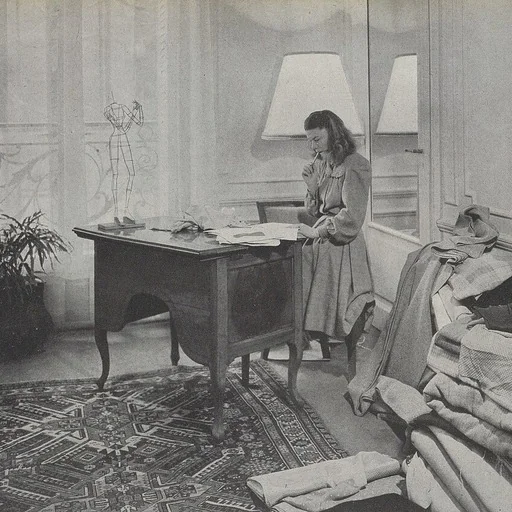
Marie-Louise Carven (31 August 1909 – 8 June 2015), born Carmen de Tommaso, was a French fashion designer who founded the house of Carven in 1945.
Museum
Palais Galliera - Musée de la Mode de la Ville de Paris
Continue through works from the same source collection.
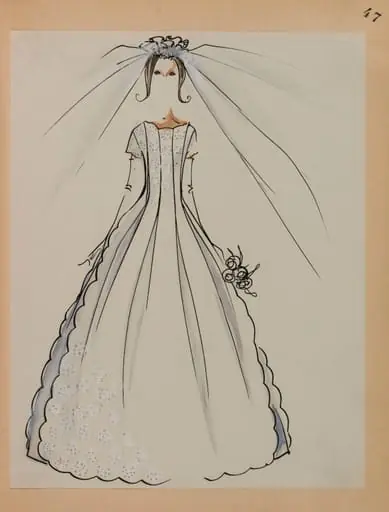 Robe de mariée festonnée et son voile
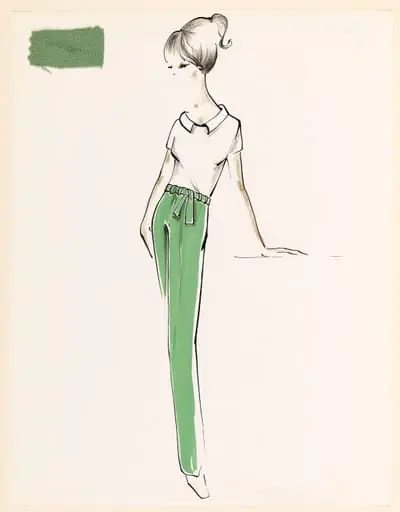 Haut blanc à manches courtes et pantalon vert à ceinture nouée
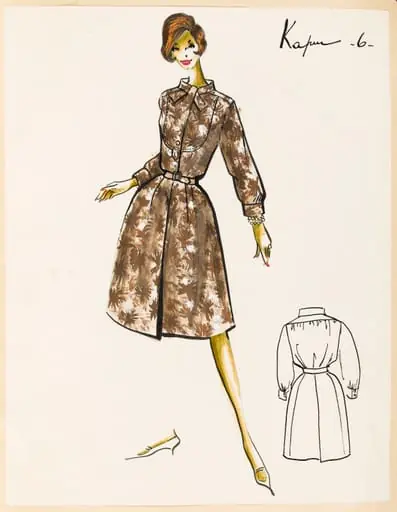 Kapur
Kapur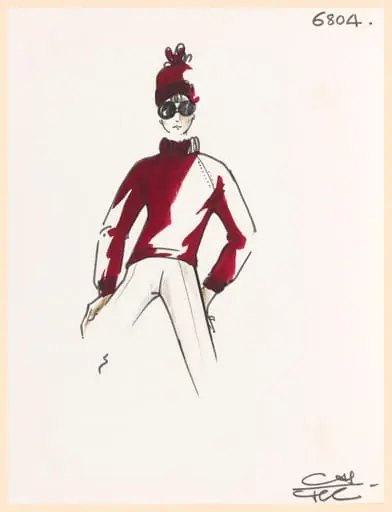 Pull-over à manches longues pourpre, bonnet assorti, pantalon et lunettes de soleil
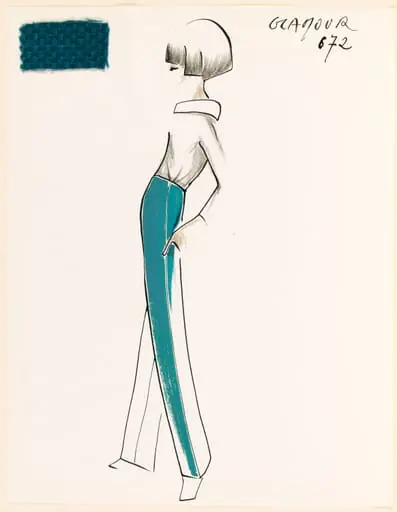 GLAMOUR
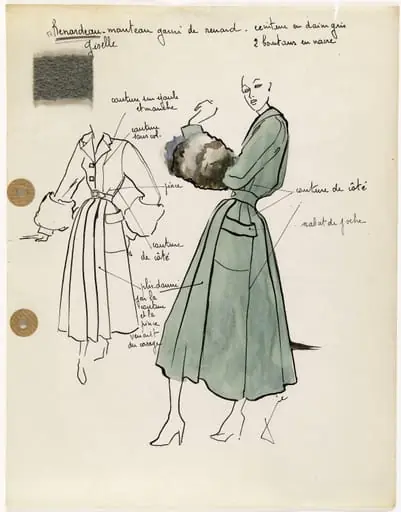 'Renardeau'
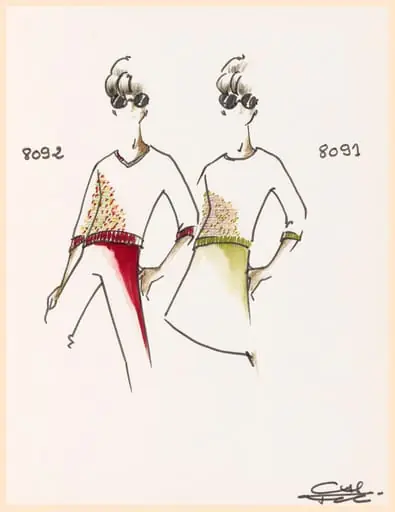 Pull-over à manches trois quarts et à encolure V à motifs multicolores, pantalon cerise et lunettes de soleil
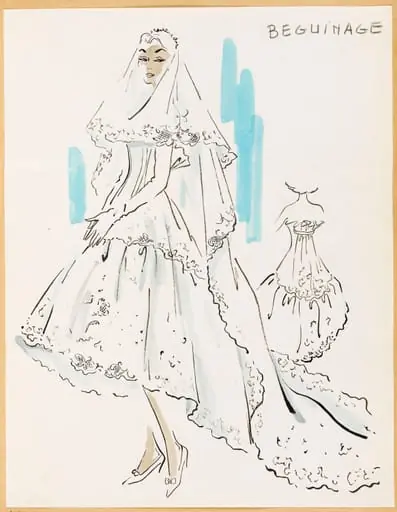 Béguinage