Artwork
Arequier
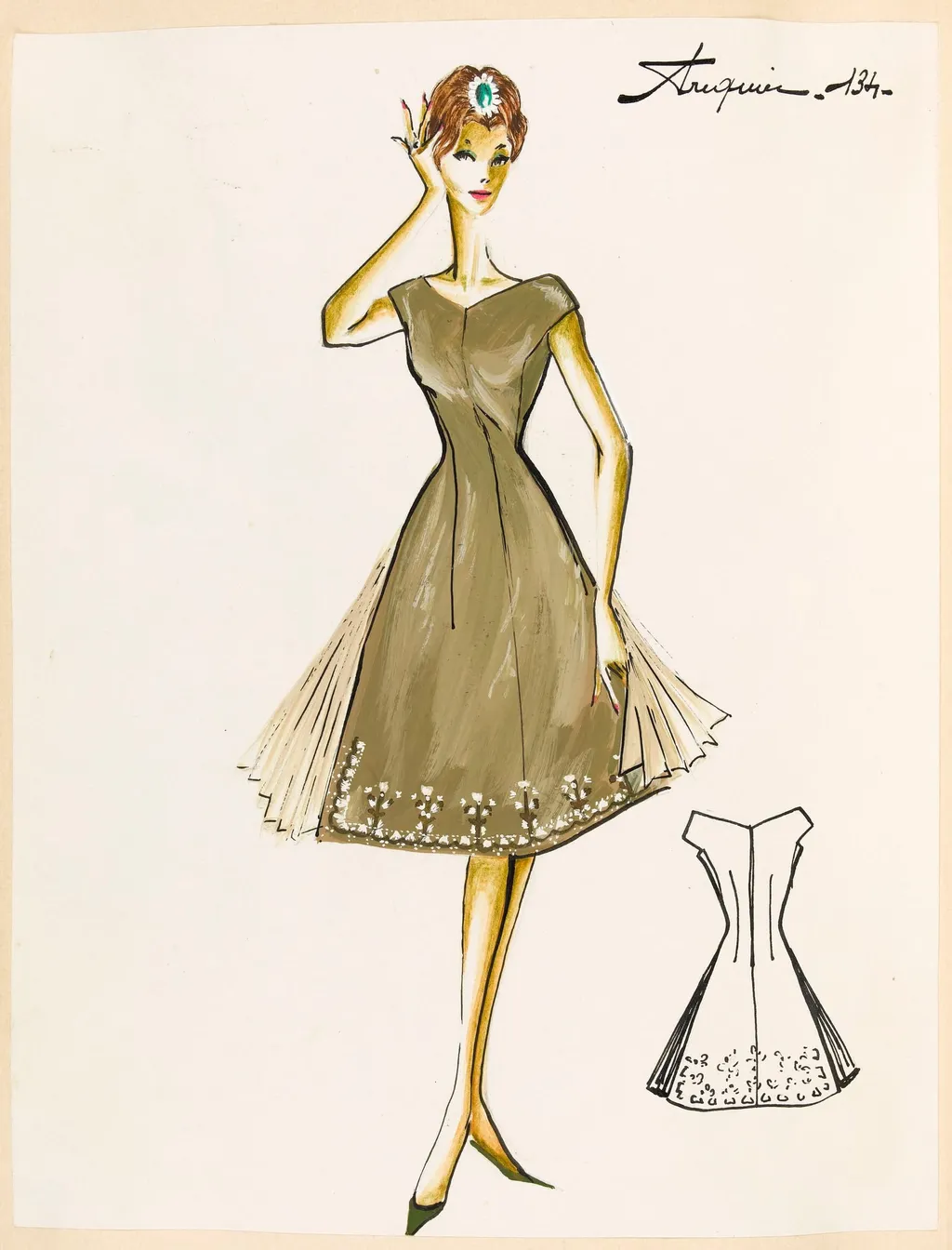
Arequier is a drawing by Marie-Louise Carven. It dates from 1959 and is held in the collection of the Palais Galliera - Musée de la Mode de la Ville de Paris.
About this work
Overview
Though labeled as an image, it functions as a design study rather than a finished illustration, reflecting Carven’s practice of capturing garment ideas quickly.
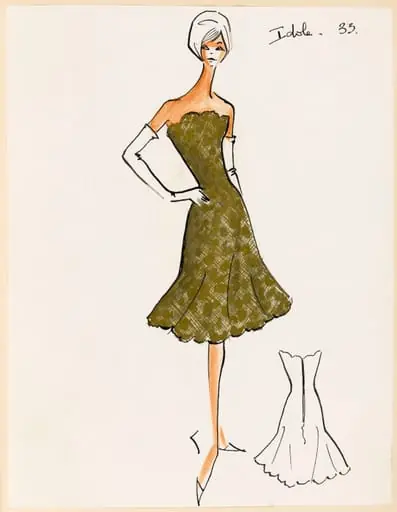
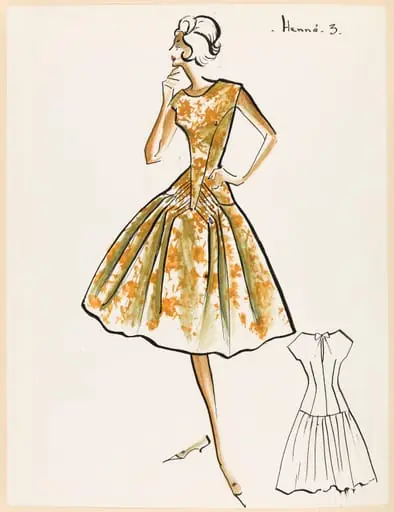
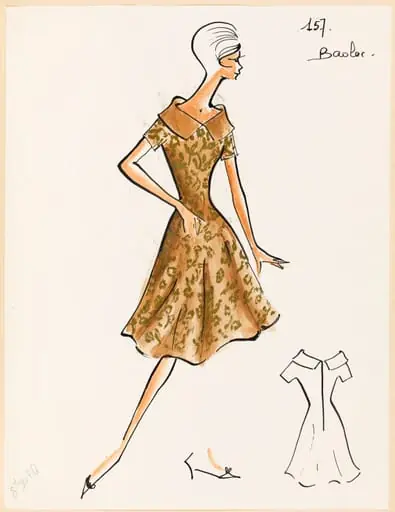
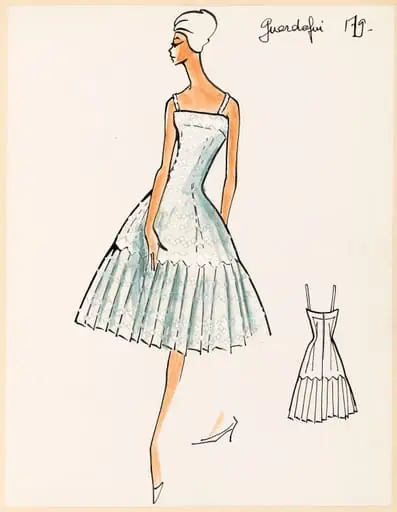
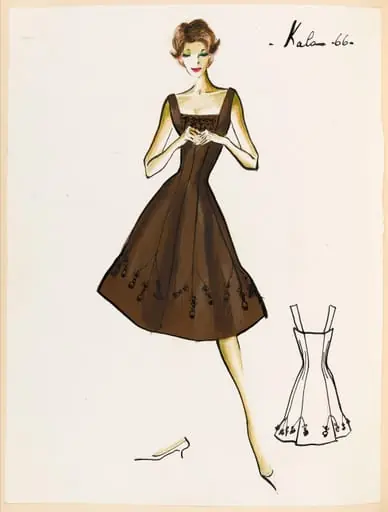
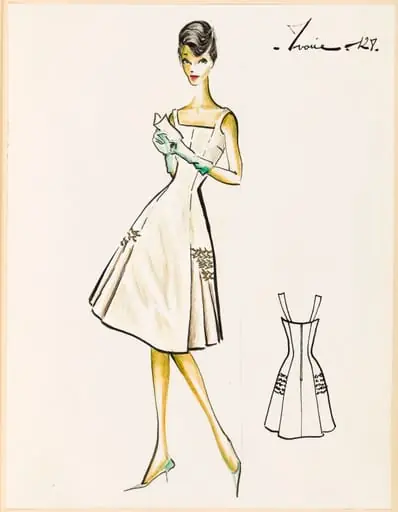
Arequier is a pencil and ink sketch from around 1959, attributed to the French fashion designer Marie-Louise Carven. It depicts a woman in a minimalist dress with a V-neck and flared hem, rendered in loose, rapid strokes. The drawing includes a secondary front view of the garment and a signature in the corner. Though labeled as an image, it functions as a design study rather than a finished illustration, reflecting Carven’s practice of capturing garment ideas quickly.
Subject & Meaning
The figure in Arequier wears a modest, tailored dress with a subtle dot pattern near the hem, suggesting texture without ornamentation. Her hair is neatly pulled back, and a small brooch adorns a headband—details that emphasize restraint and elegance. The composition avoids theatricality, aligning with Carven’s design philosophy: clothing for active, everyday women, prioritizing comfort and proportion over spectacle.
Technique & Style
Executed with swift, unfixed brushwork and minimal shading, the sketch conveys movement and form through suggestion rather than precision. The loose lines and lack of background isolate the garment, focusing attention on silhouette and structure. This method reflects Carven’s habit of sketching on the fly, using minimal tools to capture the essence of a design before production.
History & Provenance
The sketch entered the collection of the Museum of Ethnography, though its acquisition path remains undocumented. It is not signed with Carven’s full name but with the moniker 'Arequier,' the origin of which is unclear. No other works bearing this signature are known, making this piece a rare, possibly personal, record of her design process during the late 1950s.
Context
In the late 1950s, Parisian fashion was shifting toward accessible, ready-to-wear garments. Carven, who founded her house in 1945, was among the first to champion this approach, designing for smaller frames and lighter fabrics. Arequier reflects this ethos—its simplicity, lack of excess, and focus on wearable form align with broader postwar trends favoring practicality and democratic style.
Legacy
Though little is known about the specific fate of Arequier beyond its preservation in a museum, it stands as a quiet testament to Carven’s influence on modern prêt-à-porter. Her sketches, like this one, reveal how design thinking was distilled into economical, functional forms—contributing to a legacy that redefined women’s fashion as both refined and attainable.
Artist & collection
Artist
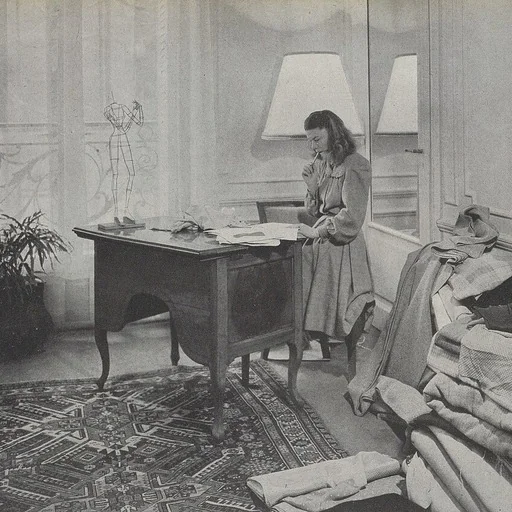
Marie-Louise Carven (31 August 1909 – 8 June 2015), born Carmen de Tommaso, was a French fashion designer who founded the house of Carven in 1945.
Museum
Palais Galliera - Musée de la Mode de la Ville de Paris
Continue through works from the same source collection.
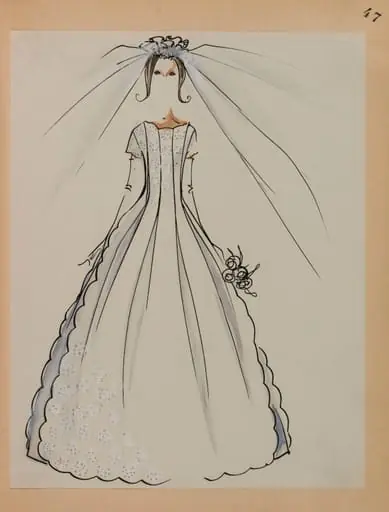 Robe de mariée festonnée et son voile
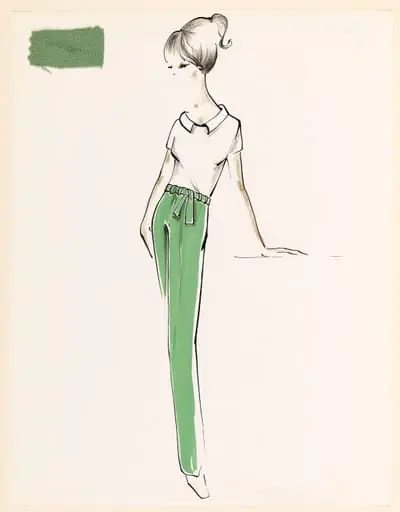 Haut blanc à manches courtes et pantalon vert à ceinture nouée
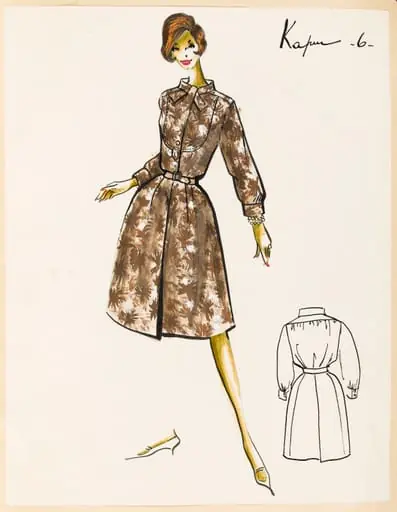 Kapur
Kapur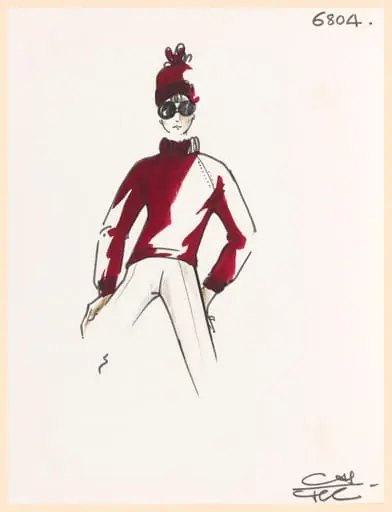 Pull-over à manches longues pourpre, bonnet assorti, pantalon et lunettes de soleil
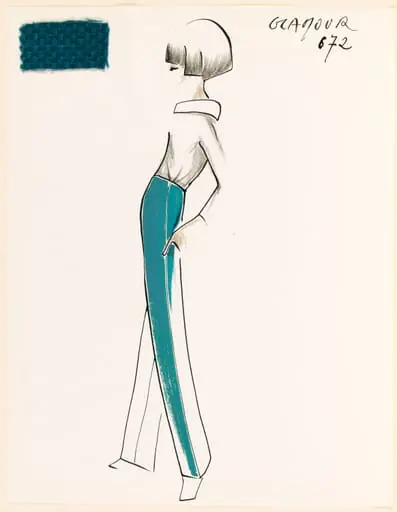 GLAMOUR
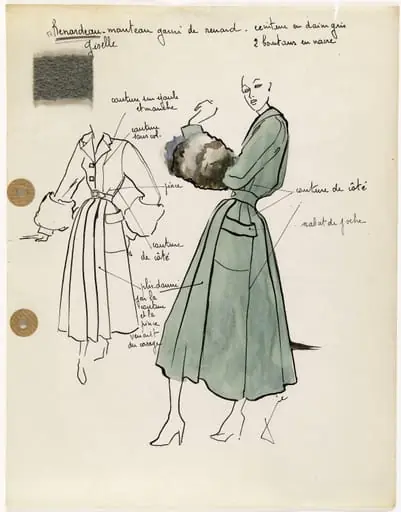 'Renardeau'
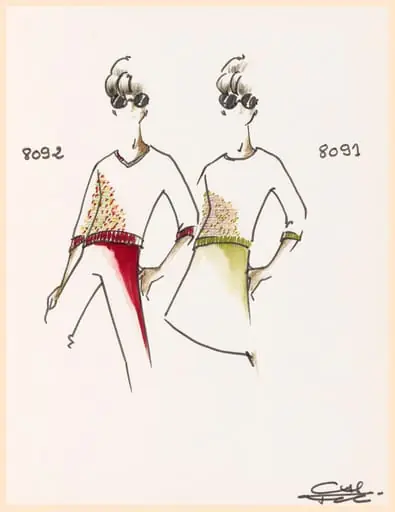 Pull-over à manches trois quarts et à encolure V à motifs multicolores, pantalon cerise et lunettes de soleil
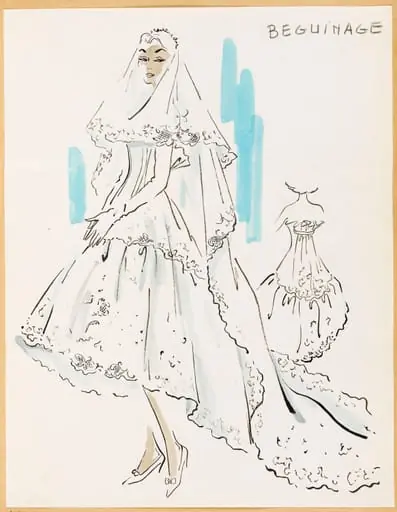 Béguinage