Artwork
Béatrice
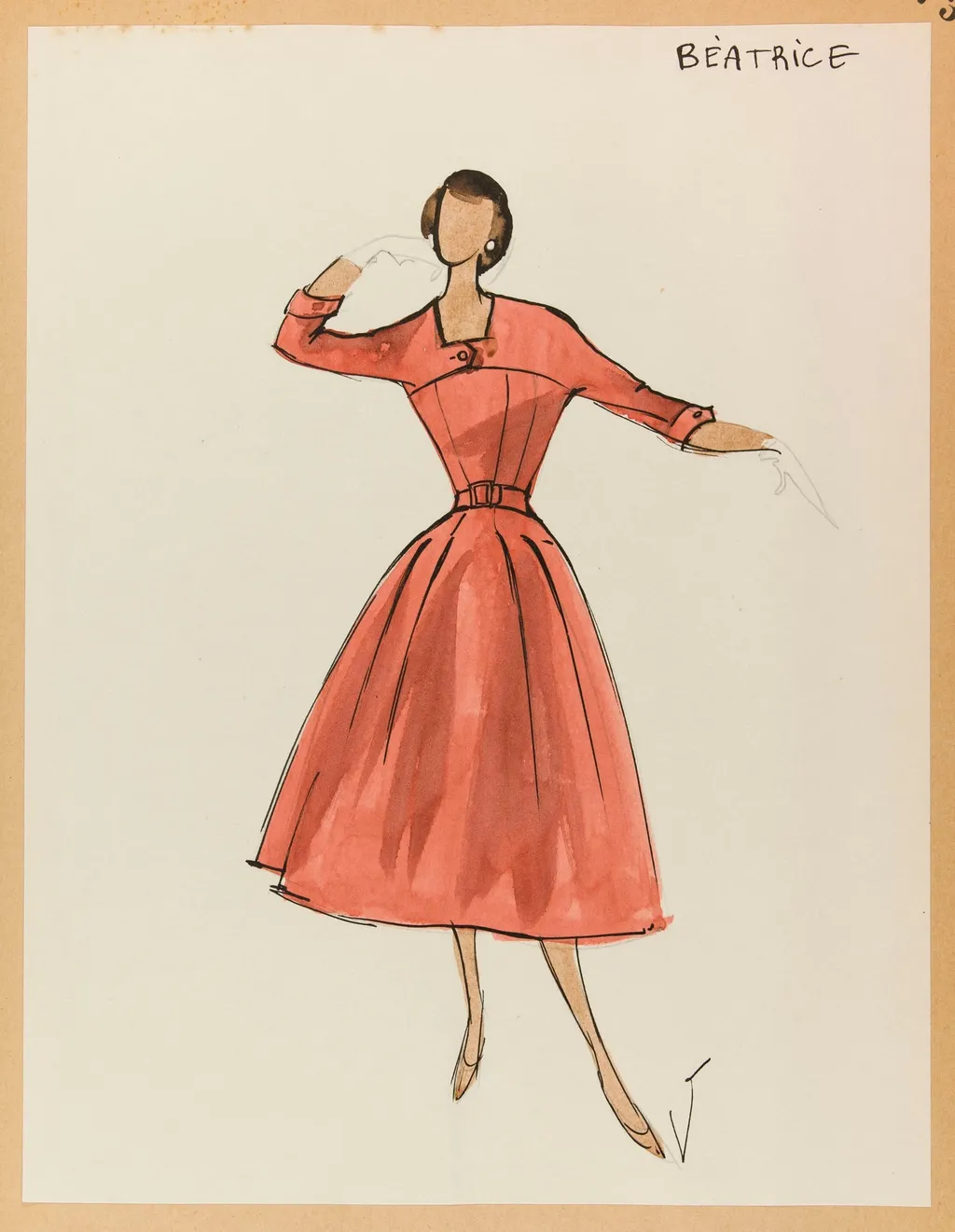
Béatrice is a drawing by Marie-Louise Carven. It dates from 1955 and is held in the collection of the Palais Galliera - Musée de la Mode de la Ville de Paris.
About this work
The style looks like something from the mid-20th century, with clean lines and a fitted waist.
This sketch shows a woman in a bright red dress and matching jacket. Her skirt flares out slightly, and she holds a small object near her face with one hand. The lines are loose and confident, with quick strokes for the hair and fabric folds.
The name *Béatrice* is written in the corner, suggesting this might be a fashion study. The style looks like something from the mid-20th century, with clean lines and a fitted waist.
Check out Marie-Louise Carven for more of her fashion drawings.
Overview
Béatrice is a fashion sketch attributed to Marie-Louise Carven, created circa 1955. Executed in ink or pencil, it captures a woman in a vivid red ensemble, reflecting Carven’s signature focus on tailored yet fluid silhouettes for smaller frames. The drawing, labeled with the name Béatrice, likely served as a design study for a garment in her emerging prêt-à-porter line, which she pioneered in the mid-1940s.
Subject & Meaning
The figure depicted is a woman wearing a fitted jacket and flared skirt, both in bold red, suggesting a cohesive, wearable outfit. Her gesture—hand near the face—implies contemplation or adjustment, adding a subtle narrative. The name Béatrice may reference a client, model, or idealized persona, aligning with Carven’s practice of naming designs to evoke personality and elegance in everyday wear.
Technique & Style
Carven’s brushwork is swift and assured, using loose, expressive lines to suggest fabric movement and hair texture. The sketch avoids excessive detail, favoring clarity and rhythm. Clean contours define the waist, while the flared skirt and minimal shading reflect mid-century modernism’s emphasis on simplicity. The drawing’s spontaneity reveals its function as a working study rather than a finished illustration.
History & Provenance
The sketch entered the collection of the Museum of Ethnography, where it is preserved as part of a broader documentation of 20th-century fashion design. Its presence there underscores its value as a cultural artifact, illustrating the transition from haute couture to accessible ready-to-wear. No earlier ownership records are publicly documented, but its style and date align with Carven’s active design years.
Context
In the 1950s, Carven was among the few French designers to embrace prêt-à-porter, making fashion more democratic. Béatrice reflects this shift: a refined, wearable design intended for mass production. The sketch’s modest scale and informal execution contrast with the grandeur of traditional couture drawings, signaling a new era in fashion’s production and presentation.
Legacy
Béatrice stands as a quiet testament to Carven’s role in reshaping postwar fashion. Her integration of personal, feminine aesthetics with practical design influenced later generations of ready-to-wear creators. Though not widely exhibited, such sketches remain vital to understanding how couturiers translated vision into accessible clothing, bridging artistry and everyday life.
Artist & collection
Artist
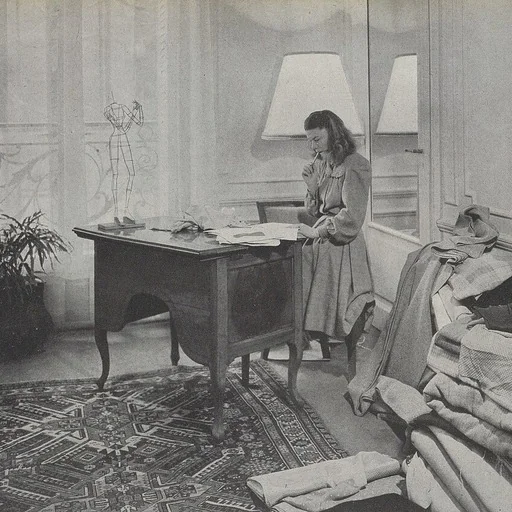
Marie-Louise Carven (31 August 1909 – 8 June 2015), born Carmen de Tommaso, was a French fashion designer who founded the house of Carven in 1945.
Museum
Palais Galliera - Musée de la Mode de la Ville de Paris
Continue through works from the same source collection.
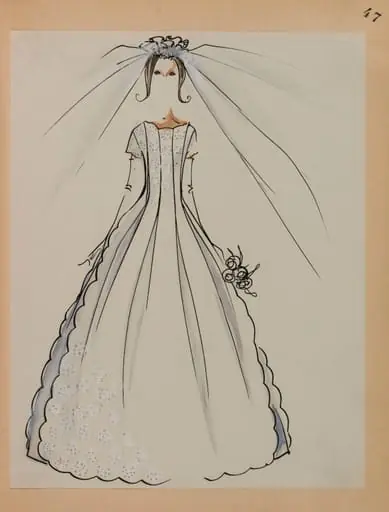 Robe de mariée festonnée et son voile
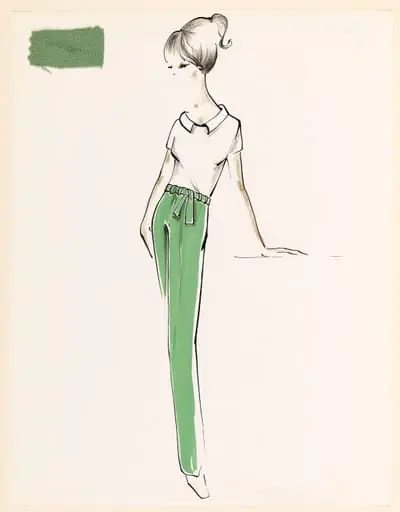 Haut blanc à manches courtes et pantalon vert à ceinture nouée
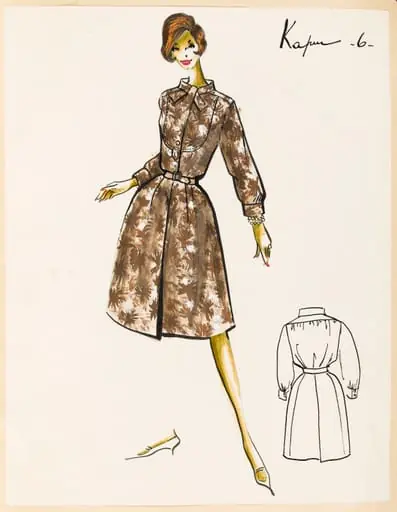 Kapur
Kapur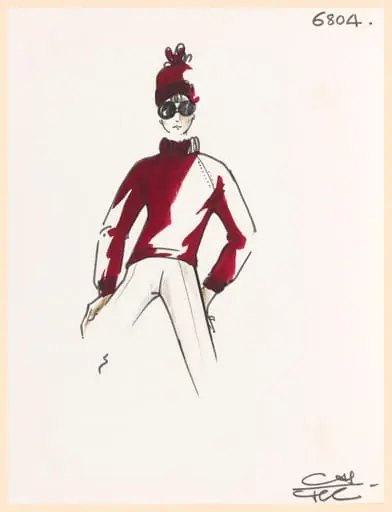 Pull-over à manches longues pourpre, bonnet assorti, pantalon et lunettes de soleil
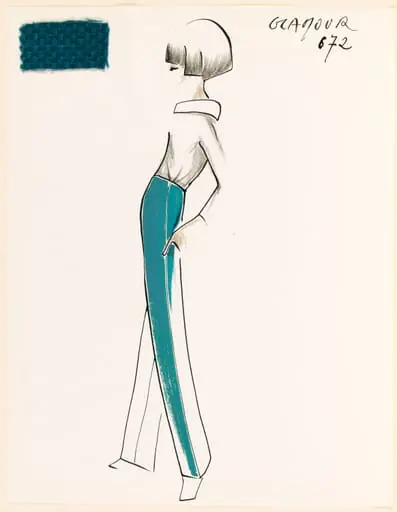 GLAMOUR
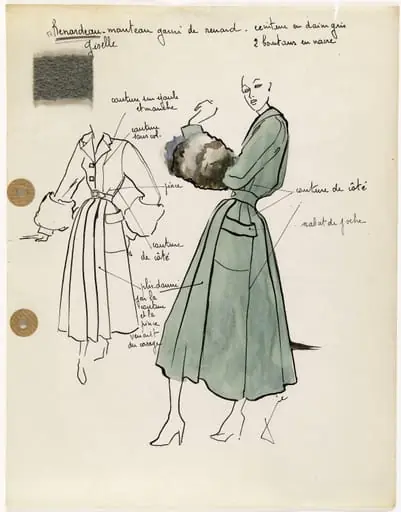 'Renardeau'
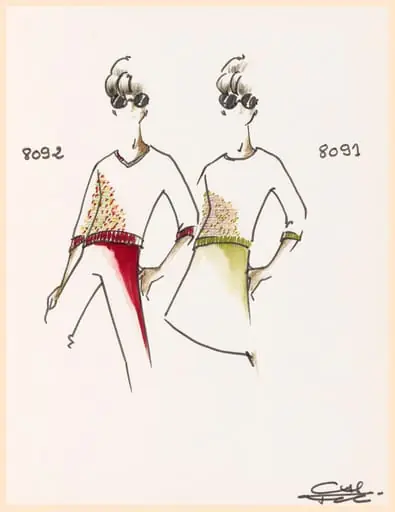 Pull-over à manches trois quarts et à encolure V à motifs multicolores, pantalon cerise et lunettes de soleil
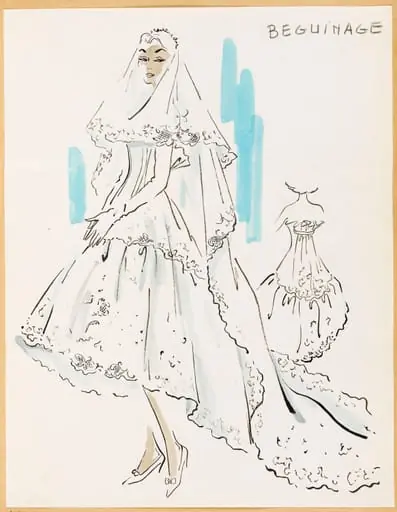 Béguinage