Artwork
Mathilde
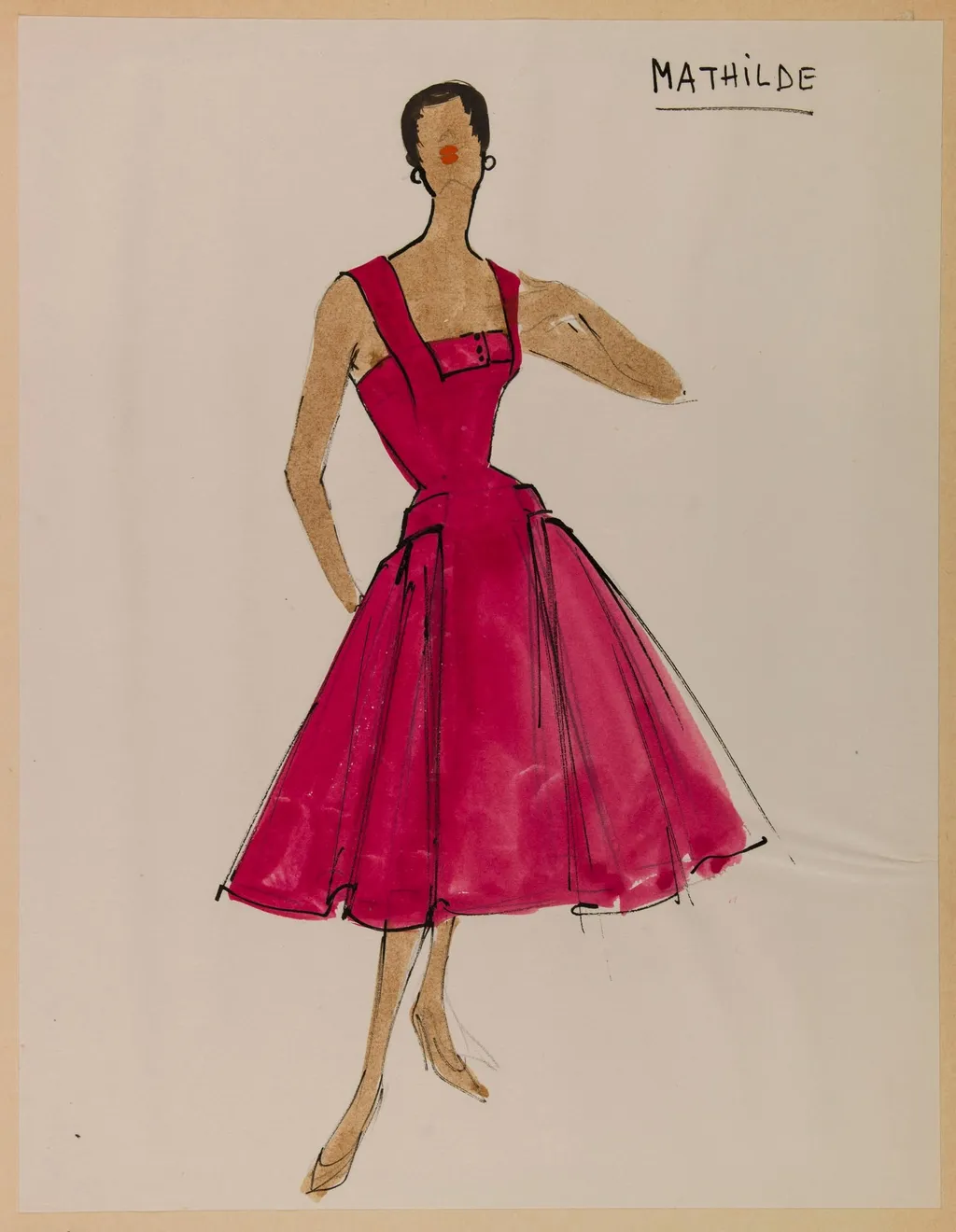
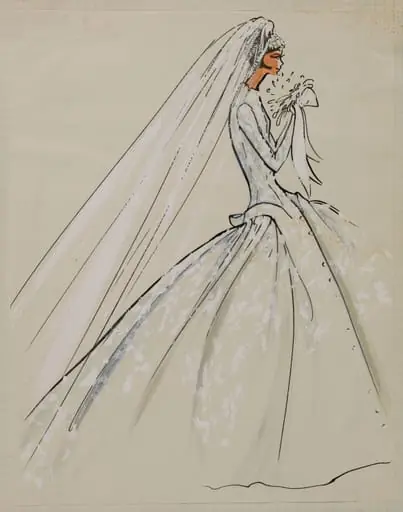
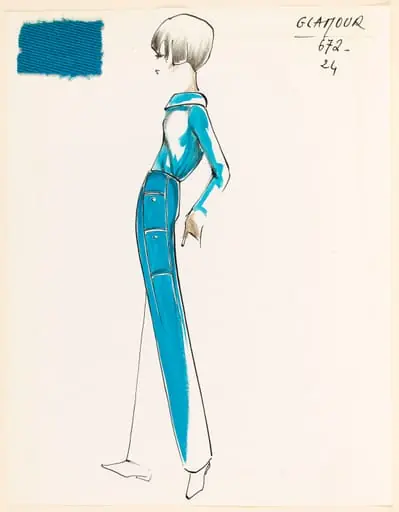
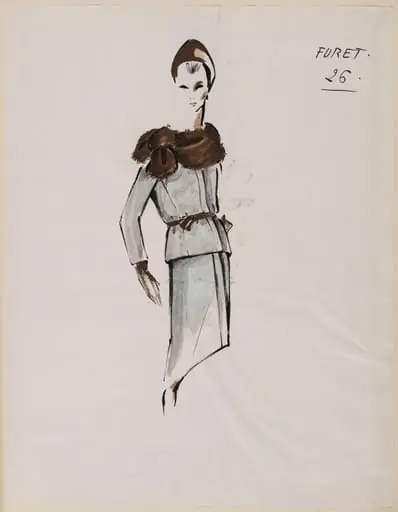
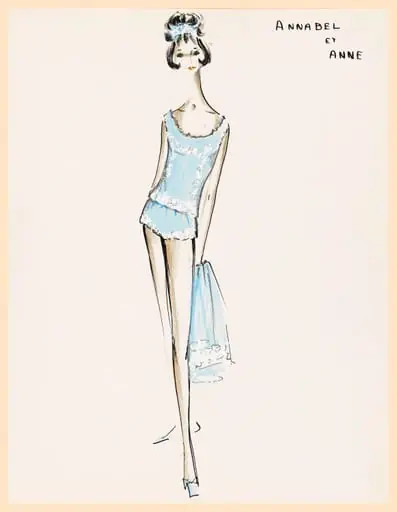
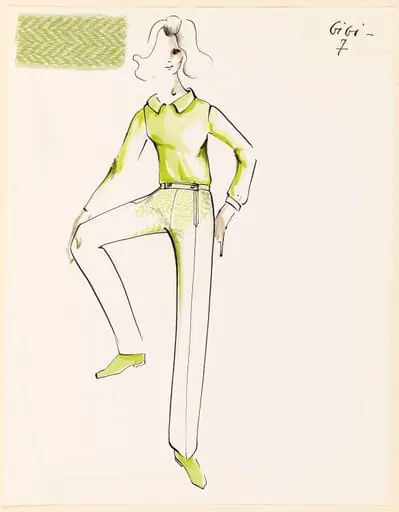
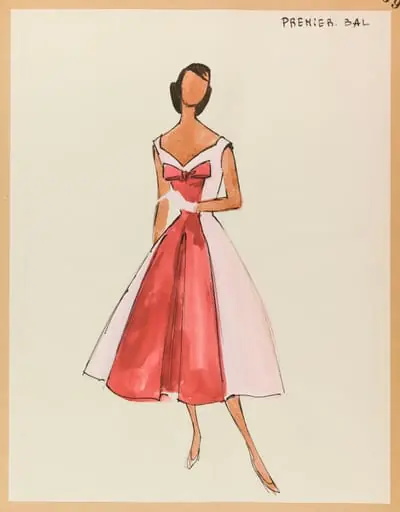
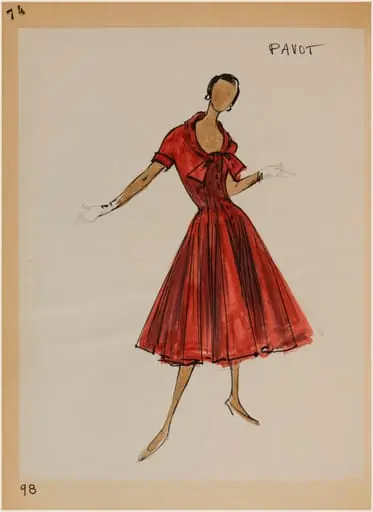
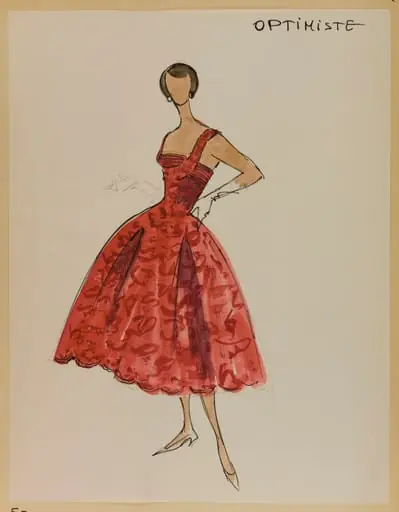
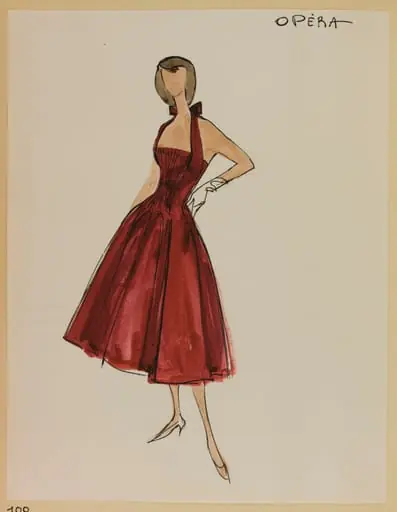
Mathilde is a drawing by Carven. It dates from 1953 and is held in the collection of the Palais Galliera - Musée de la Mode de la Ville de Paris.
About this work
Overview
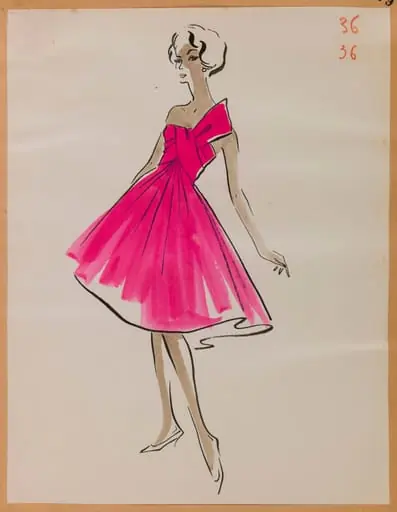
The composition is minimal, with no contextual elements beyond a flat beige background, directing focus entirely to the subject’s attire and posture.
Created around 1953, Mathilde is a painted portrait attributed to the fashion designer Carven. The work is part of the collection at the Museum of Ethnography. It presents a single figure in a stylized manner, emphasizing textile and form over narrative detail. The composition is minimal, with no contextual elements beyond a flat beige background, directing focus entirely to the subject’s attire and posture.
Subject & Meaning
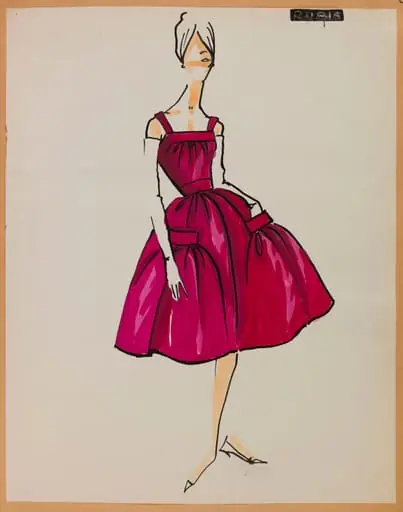
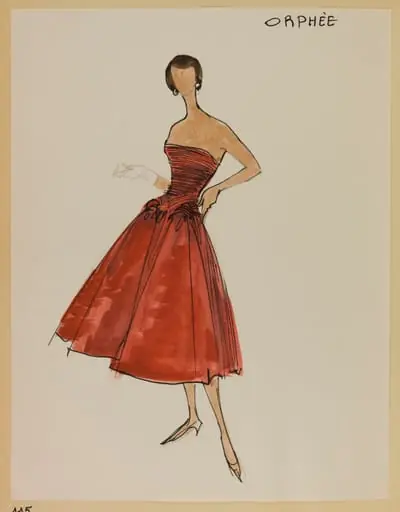
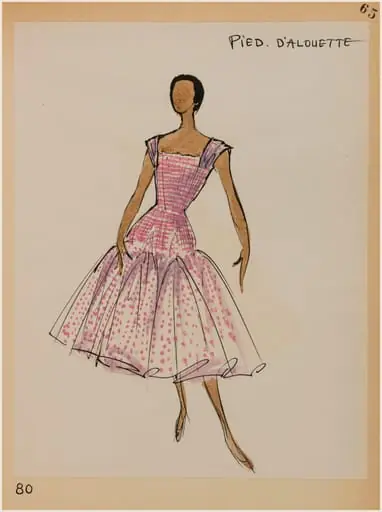
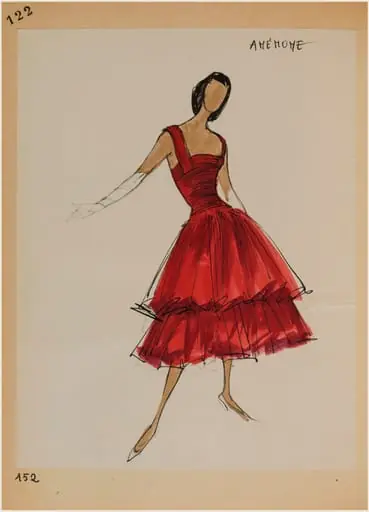
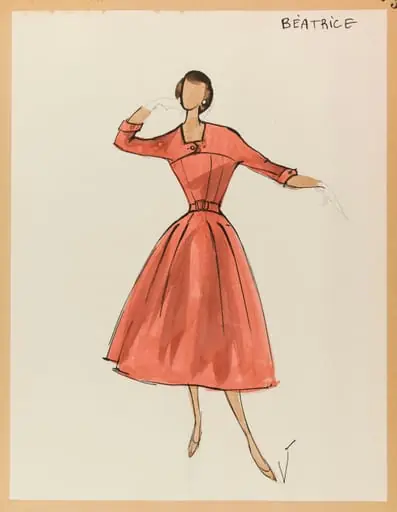
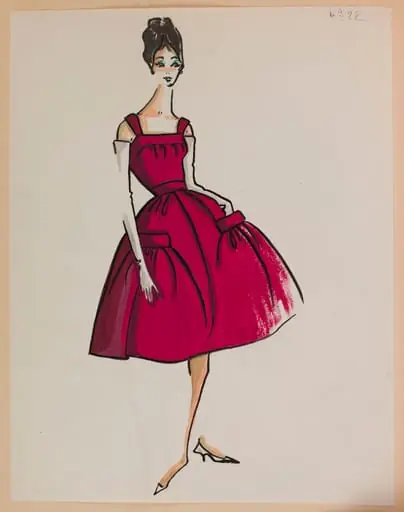
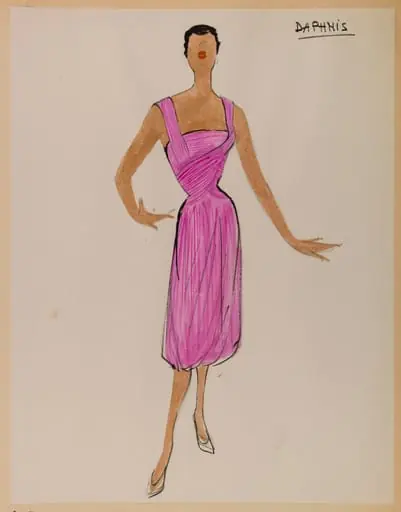
The subject is a woman with short dark hair and light brown skin, dressed in a sleeveless, bright pink dress with a full skirt. Her left arm extends outward while her right rests at her side, suggesting a moment of pause or display. The image functions as a fashion study, capturing a specific silhouette and fabric volume of its era. There is no indication of identity beyond the title, leaving interpretation centered on style and presentation.
Technique & Style
The painting employs bold, clean outlines and flat areas of saturated color, particularly the vivid pink of the dress against the neutral beige background. Brushwork is deliberate but untextured, avoiding shading or depth. This graphic approach aligns with mid-century fashion illustration, prioritizing clarity and visual impact over realism. The lack of detail in the face and hands reinforces the focus on clothing as the primary subject.
History & Provenance
The work entered the Museum of Ethnography’s collection without documented provenance prior to its acquisition. It is not listed in major exhibition records of Carven’s fashion house, suggesting it may have been a personal or promotional study rather than a public-facing advertisement. Its classification as an ethnographic object implies an interest in cultural expression through dress rather than fine art.
Context
In the early 1950s, Parisian fashion houses like Carven produced illustrations to communicate new designs to clients and press. This image reflects that practice, blending commercial intent with artistic simplification. The absence of a setting or accessories situates it within a broader trend of isolating garments to highlight their form, a method common in fashion media of the period.
Legacy
Mathilde remains a quiet example of how fashion design intersected with visual art in postwar Europe. While not widely exhibited, it contributes to understanding how clothing was visually codified for public consumption. Its presence in an ethnographic museum signals an evolving recognition of fashion as a cultural artifact, rather than merely a commercial product.
Artist & collection
Artist
These delicate ink-on-paper drawings capture the quiet poetry of everyday things: pinecones, reeds, apples.
Museum
Palais Galliera - Musée de la Mode de la Ville de Paris
Continue through works from the same source collection.