Artwork
Bébé phoque
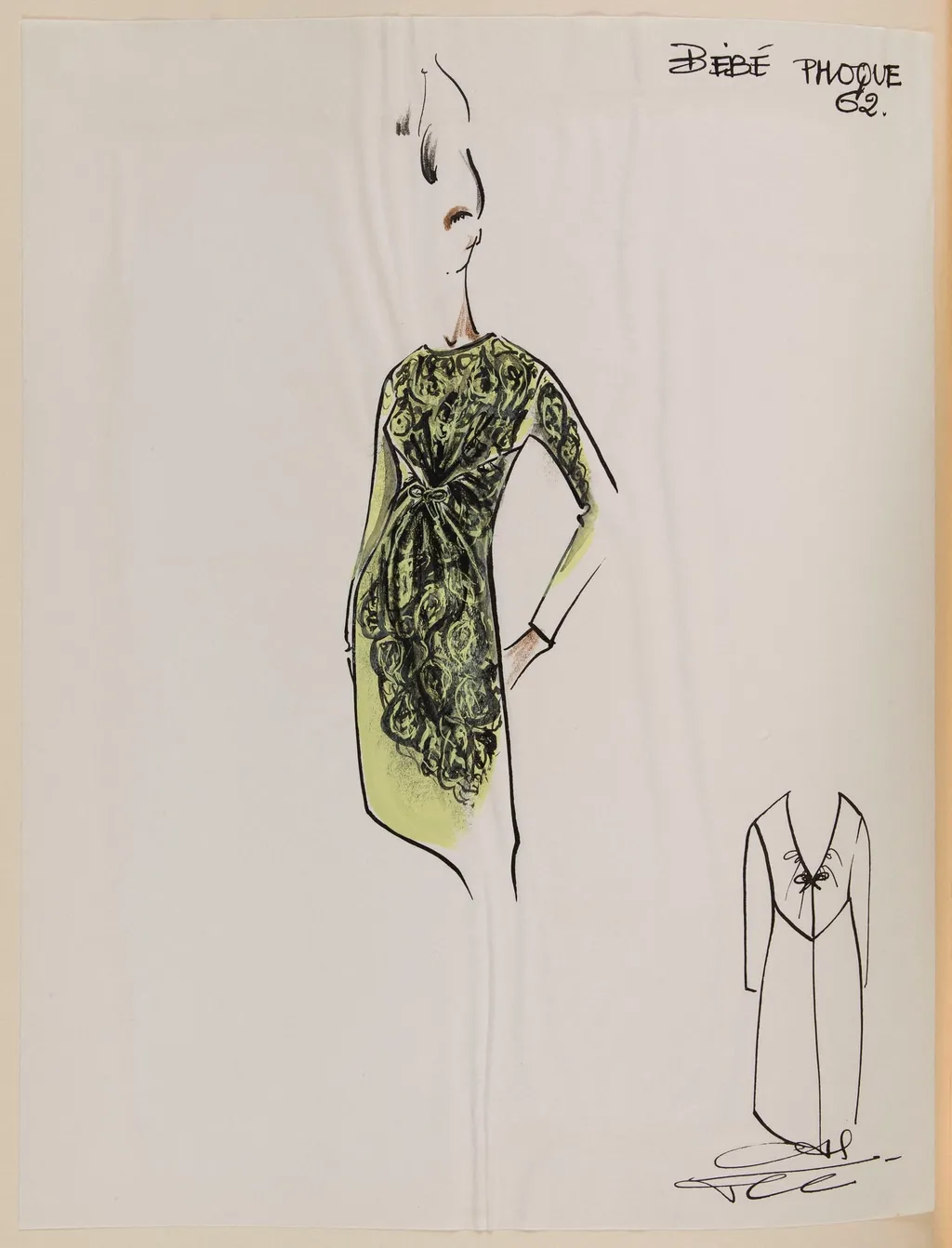
Bébé phoque is a drawing by Marie-Louise Carven. It dates from 1963 and is held in the collection of the Palais Galliera - Musée de la Mode de la Ville de Paris.
About this work
This drawing is a testament to the art of fashion illustration, a technique that has been used by artists such as Marie-Louise Carven to bring designs to life.
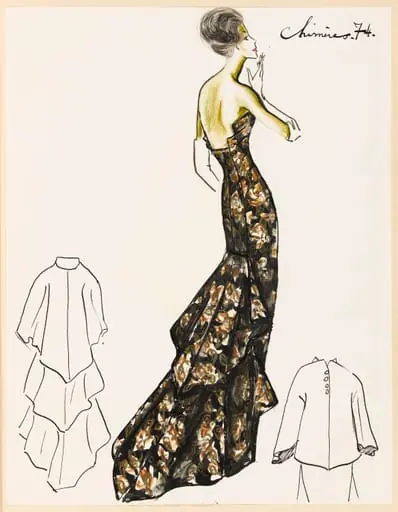
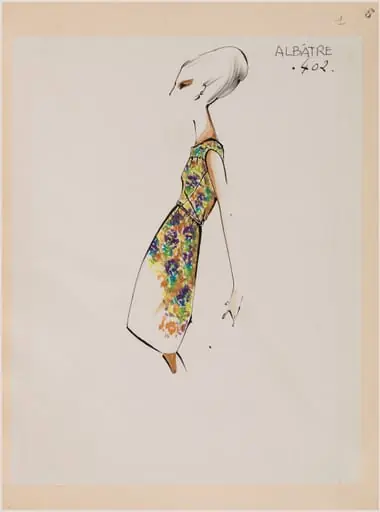
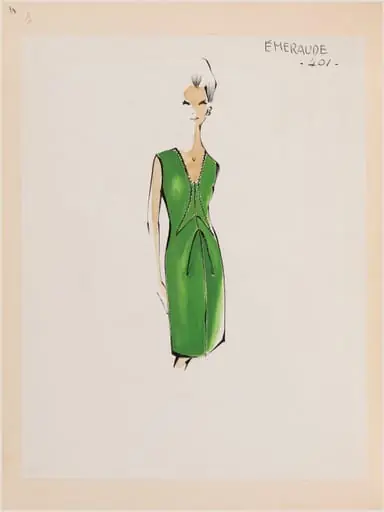
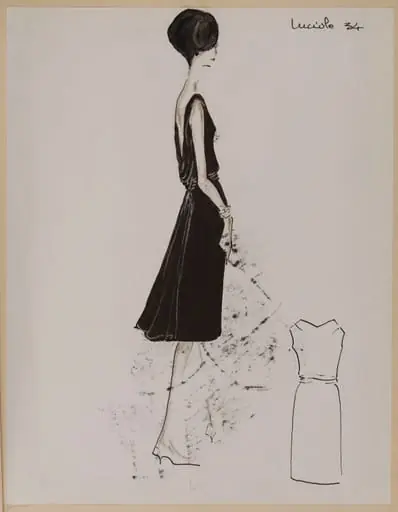
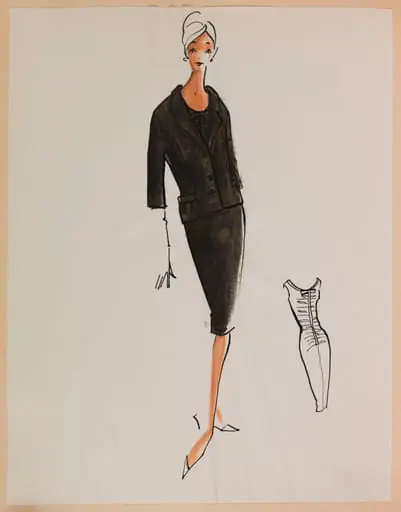
The image presents a drawing of a woman in a dress, accompanied by a smaller sketch of the same dress to her right. The woman is depicted with her left hand on her hip, wearing a green dress adorned with a floral pattern and a bow at the waist. Her face is not visible.
The drawing is rendered in black ink, with subtle shading and texture added to the dress. The overall style is reminiscent of fashion illustrations from the mid-20th century.
This drawing is a testament to the art of fashion illustration, a technique that has been used by artists such as Marie-Louise Carven to bring designs to life.
Overview
Created circa 1963, *Bébé phoque* is an ink drawing held by the Museum of Ethnography. The work shows a woman in a green, floral‑patterned dress, posed with a hand on her hip, accompanied by a smaller sketch of the same garment. The figure’s face is omitted, focusing attention on the clothing itself.
Subject & Meaning
The composition functions as a fashion illustration rather than a narrative scene, using the stylized seal‑pup title to suggest playfulness and delicacy. By presenting the dress twice—full size and reduced—the image emphasizes design details and the versatility of the garment.
Technique & Style
Rendered in black ink, the drawing employs fine line work and subtle shading to convey texture, particularly in the fabric’s floral motif and bow at the waist. The aesthetic aligns with mid‑century fashion illustration, characterized by clean contours and a focus on silhouette over facial expression.
History & Provenance
The piece is attributed to Marie‑Louise Carven, a French designer born Carmen de Tommaso in 1909. After founding her own fashion house in 1945, Carven became known for petite‑friendly designs and innovative ready‑to‑wear garments. *Bébé phoque* entered the Museum of Ethnography’s collection sometime after its creation, though precise acquisition details remain undocumented.
Context
During the early 1960s, fashion illustration served as a primary means of communicating new designs to clients and manufacturers. Carven’s work reflects this practice, illustrating how designers translated textile concepts into visual proposals before the widespread use of photographic reproduction.
Artist & collection
Artist
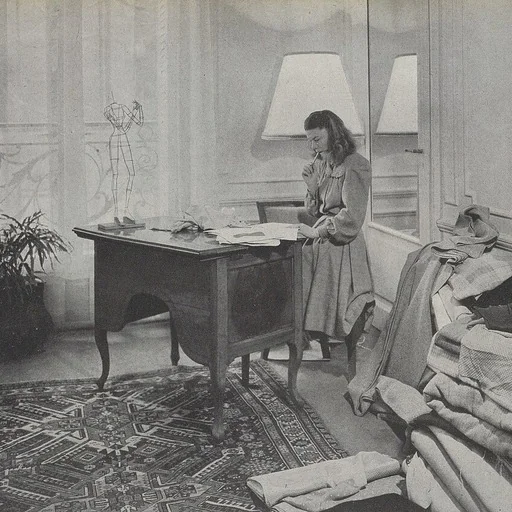
Marie-Louise Carven (31 August 1909 – 8 June 2015), born Carmen de Tommaso, was a French fashion designer who founded the house of Carven in 1945.
Museum
Palais Galliera - Musée de la Mode de la Ville de Paris
Continue through works from the same source collection.
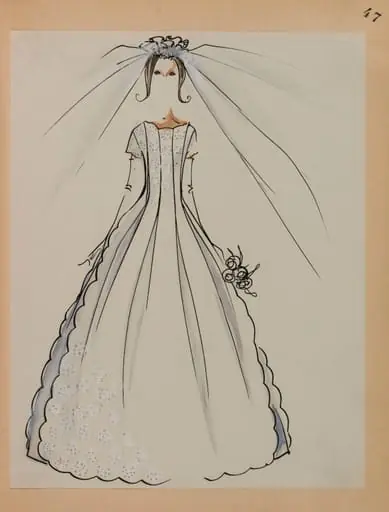 Robe de mariée festonnée et son voile
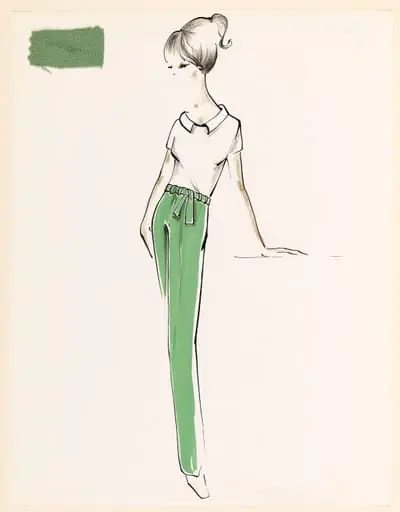 Haut blanc à manches courtes et pantalon vert à ceinture nouée
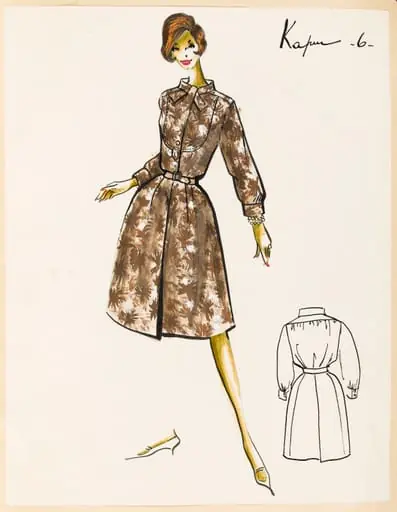 Kapur
Kapur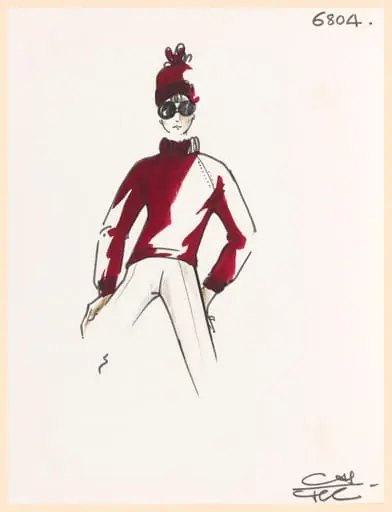 Pull-over à manches longues pourpre, bonnet assorti, pantalon et lunettes de soleil
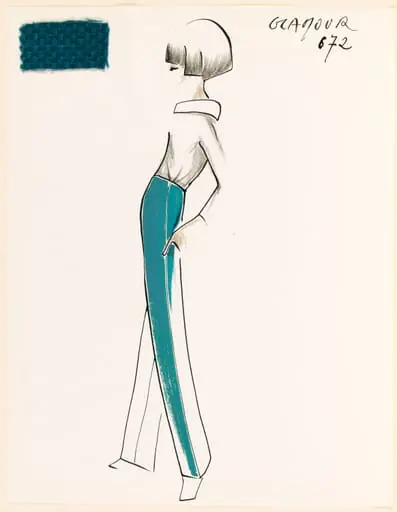 GLAMOUR
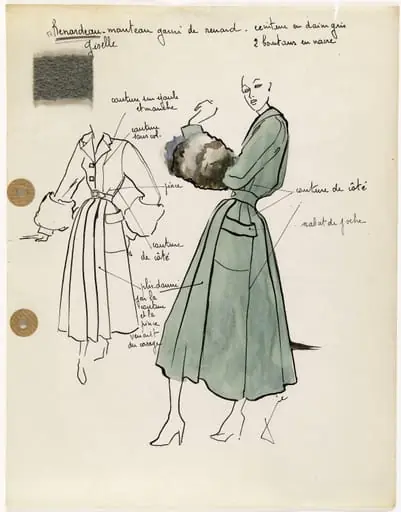 'Renardeau'
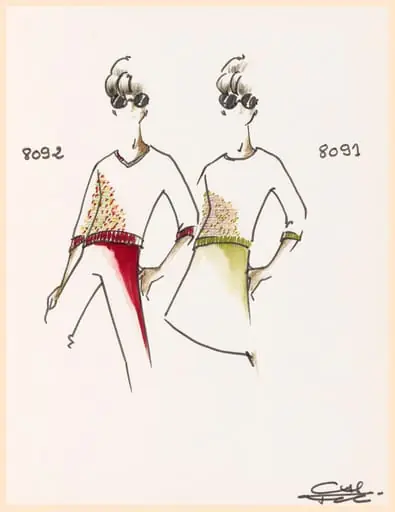 Pull-over à manches trois quarts et à encolure V à motifs multicolores, pantalon cerise et lunettes de soleil
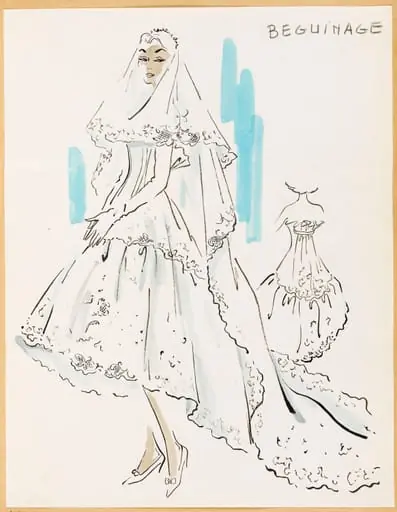 Béguinage