Artwork
Bagatelle
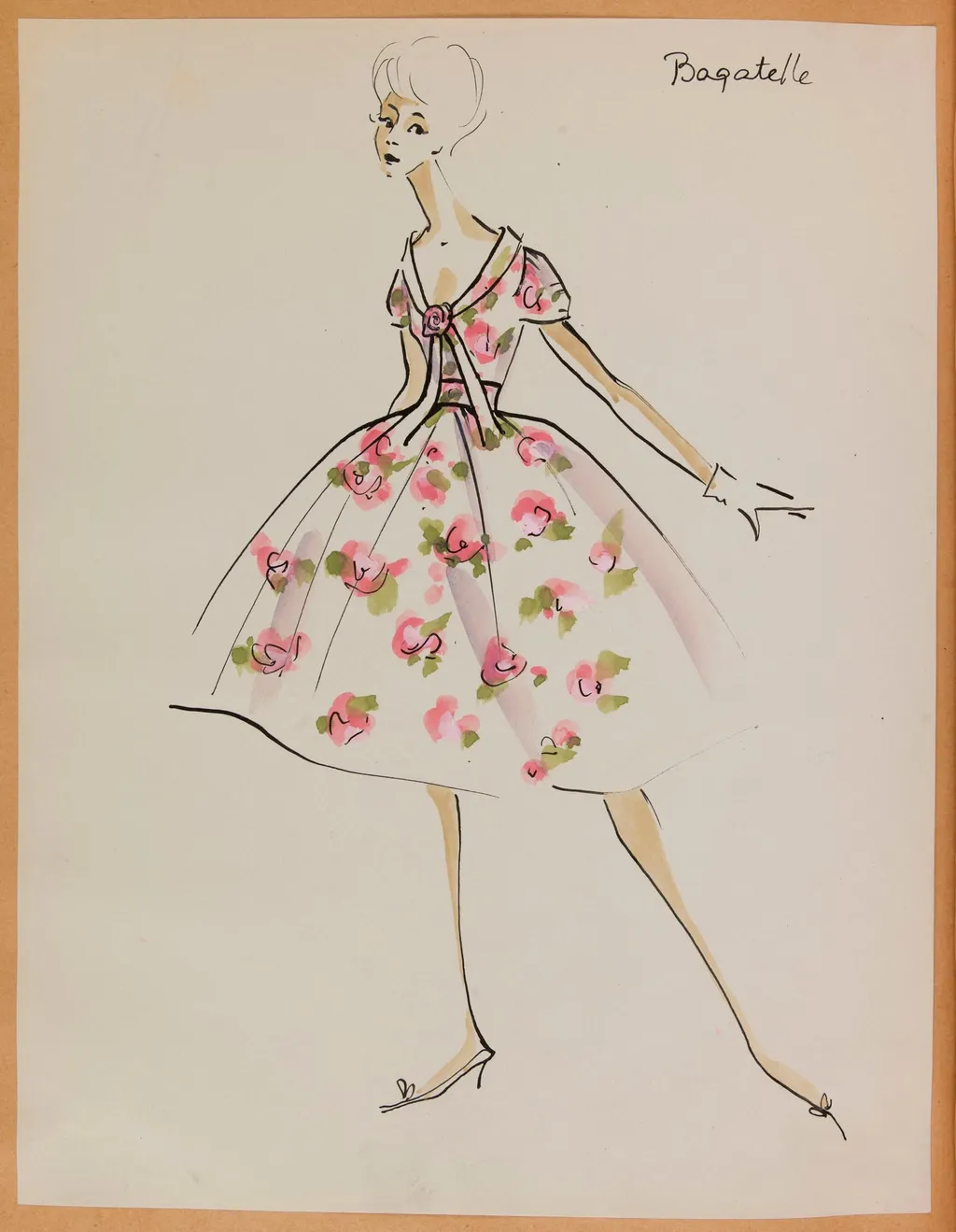
Bagatelle is a drawing by Marie-Louise Carven. It dates from 1958 and is held in the collection of the Palais Galliera - Musée de la Mode de la Ville de Paris.
About this work
Overview
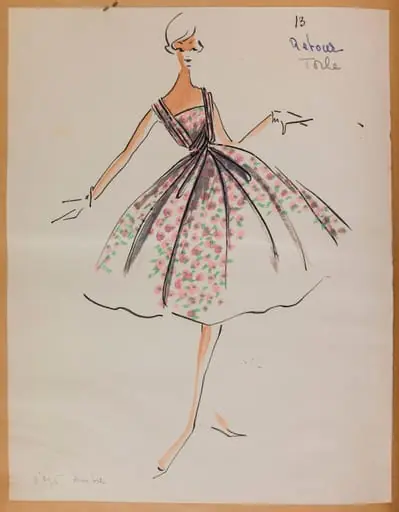
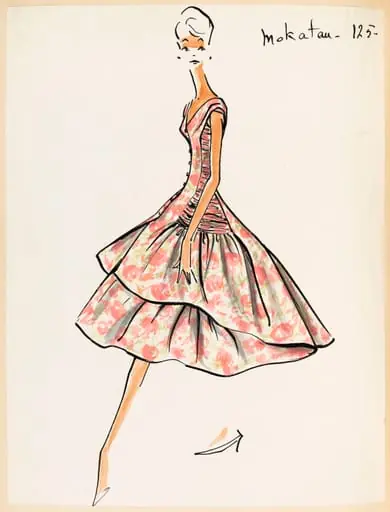
Created around 1958 by French designer Marie-Louise Carven, *Bagatelle* is a fashion sketch that captures a dress design rather than a portrait.
Created around 1958 by French designer Marie-Louise Carven, *Bagatelle* is a fashion sketch that captures a dress design rather than a portrait. Executed in ink and watercolor, it reflects Carven’s signature focus on light, feminine silhouettes. The piece resides in the Museum of Ethnography’s collection, underscoring its significance as a cultural artifact of mid-century fashion design. Its informal title and sketch-like quality suggest it was part of a working portfolio.
Subject & Meaning
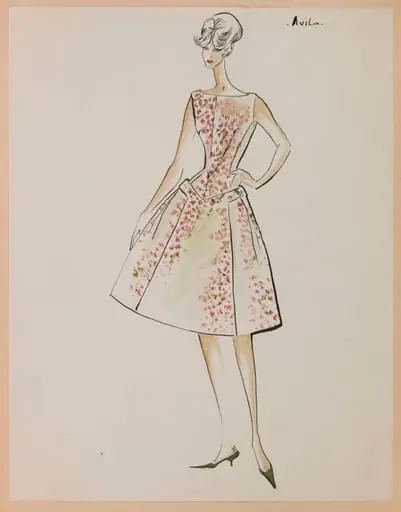
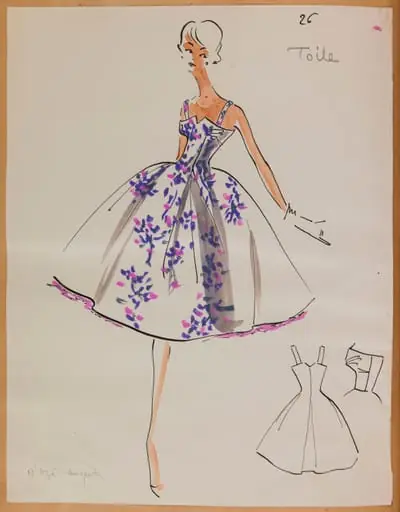
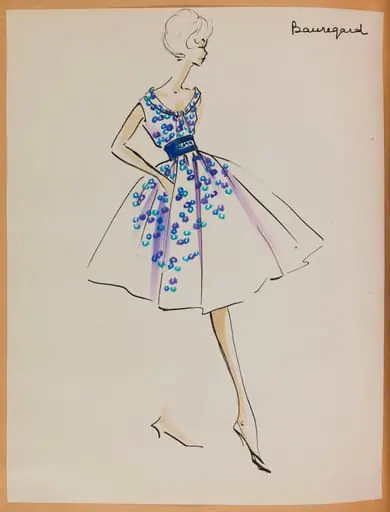
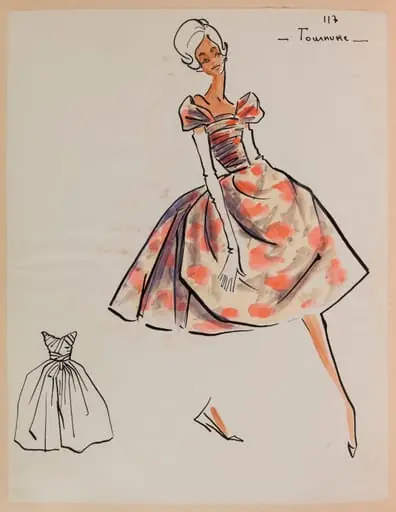
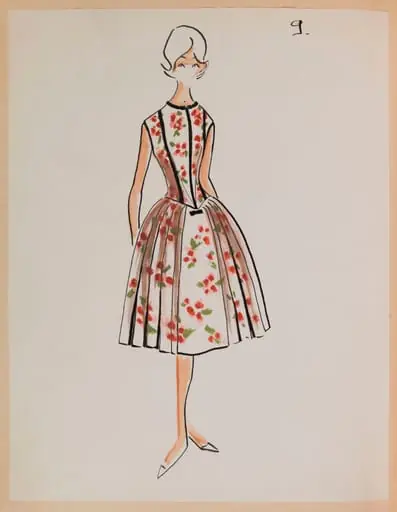
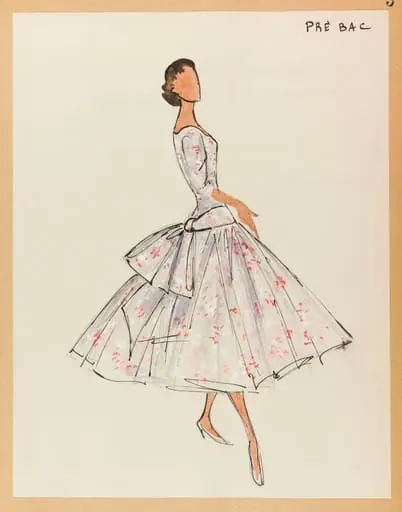
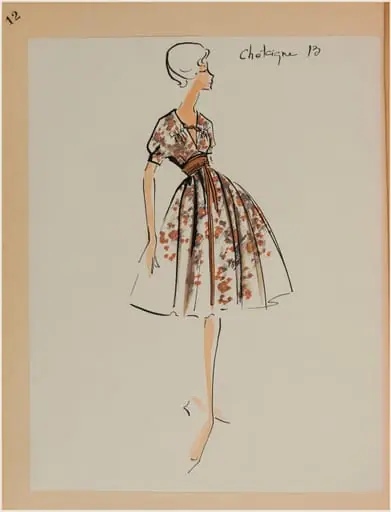
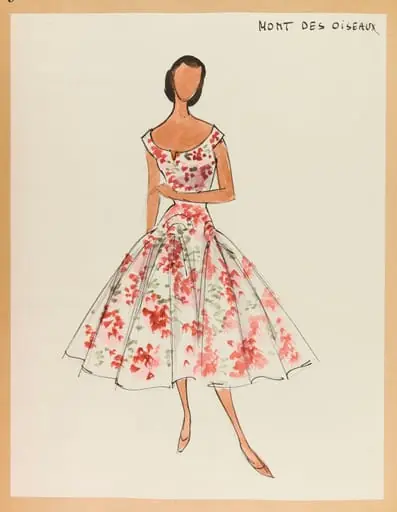
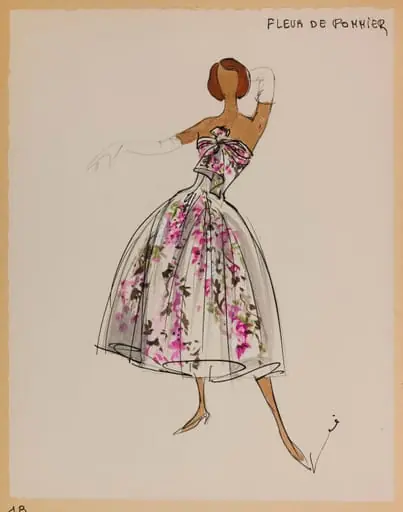
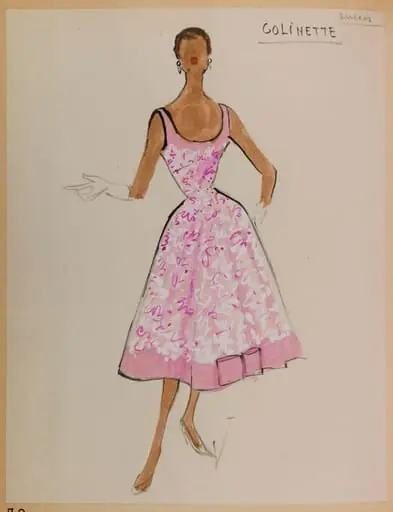
The figure in *Bagatelle* wears a loose, flowing dress adorned with scattered pink and green floral motifs. Her outstretched arms and open posture suggest movement, evoking the dress’s intended drape and motion when worn. The title, meaning 'trifle' or 'light diversion,' aligns with the design’s playful, effortless aesthetic. Rather than emphasizing the wearer’s identity, the focus remains on the garment’s form and rhythm, reflecting Carven’s design philosophy.
Technique & Style
Carven rendered the dress with swift, confident brushwork and delicate cross-hatching to suggest texture and volume. The floral patterns are simplified yet energetic, drawn with minimal detail that implies abundance without clutter. The plain background isolates the garment, directing attention to its silhouette and movement. The sketch’s spontaneity reveals a hand familiar with fabric behavior, prioritizing expressive clarity over polished finish.
History & Provenance
Marie-Louise Carven founded her fashion house in 1945 and later pioneered one of the first ready-to-wear lines in haute couture. *Bagatelle* dates from the late 1950s, a period when her designs gained international recognition for their accessibility and charm. The sketch entered the Museum of Ethnography’s collection as part of a broader effort to document fashion as cultural expression, rather than merely as luxury object.
Context
In postwar Europe, fashion was shifting toward practicality without sacrificing elegance. Carven’s designs catered to petite figures and emphasized ease of movement, resonating with changing social norms. *Bagatelle* reflects this trend: its airy fabric and unstructured form contrasted with the rigid silhouettes of earlier decades. As a sketch, it also reveals the creative process behind garments now seen as emblematic of 1950s French style.
Legacy
Carven’s integration of ready-to-wear into couture practice helped democratize fashion. *Bagatelle* survives as a testament to her ability to convey movement and grace through minimal means. Though not a finished garment, the sketch continues to inform studies of mid-century design methodology, illustrating how technical precision and artistic intuition combined to shape modern clothing aesthetics.
Artist & collection
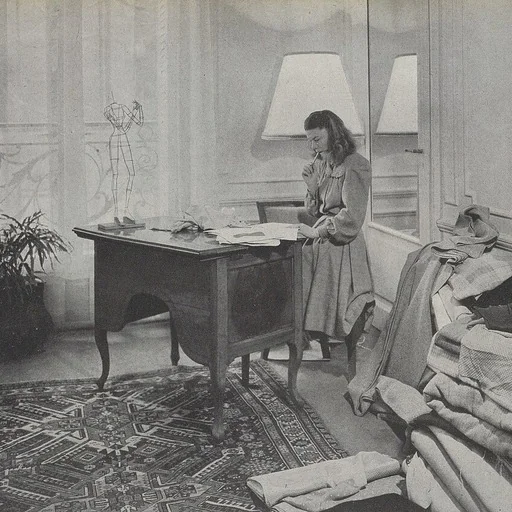
Artist
Marie-Louise Carven (31 August 1909 – 8 June 2015), born Carmen de Tommaso, was a French fashion designer who founded the house of Carven in 1945.
Museum
Palais Galliera - Musée de la Mode de la Ville de Paris
Continue through works from the same source collection.
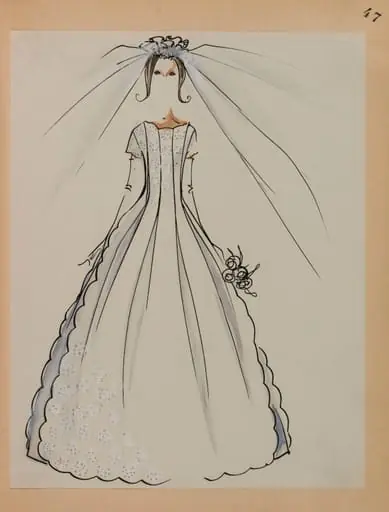 Robe de mariée festonnée et son voile
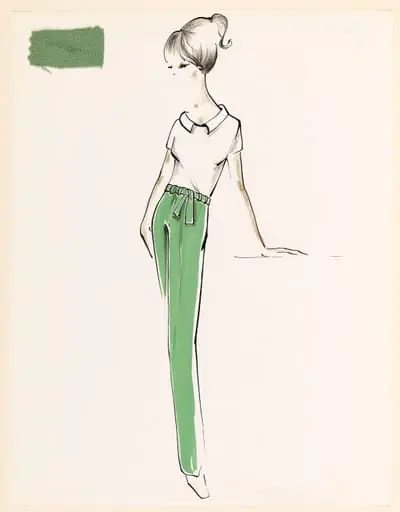 Haut blanc à manches courtes et pantalon vert à ceinture nouée
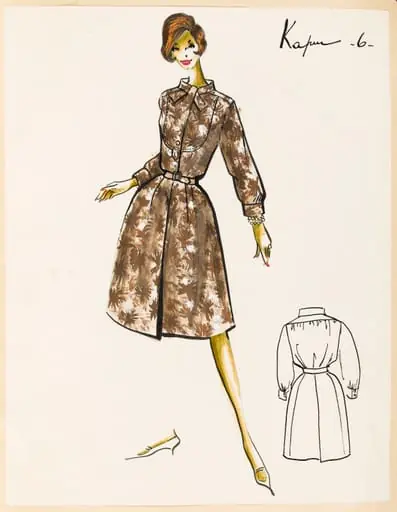 Kapur
Kapur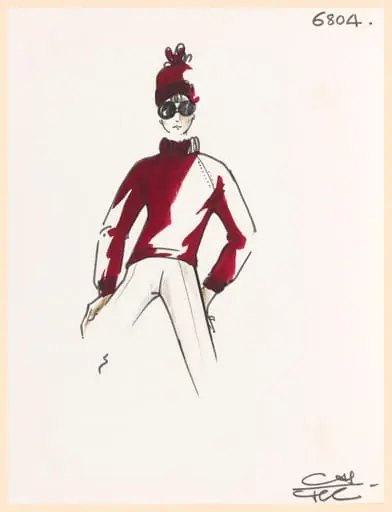 Pull-over à manches longues pourpre, bonnet assorti, pantalon et lunettes de soleil
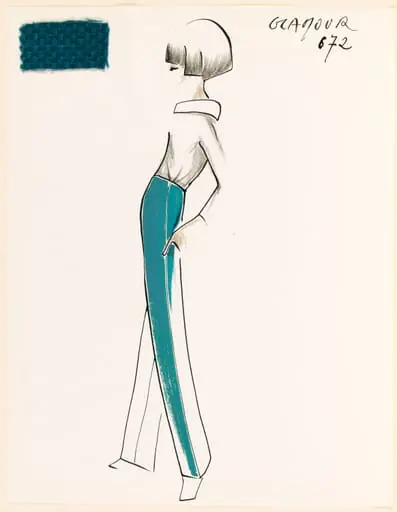 GLAMOUR
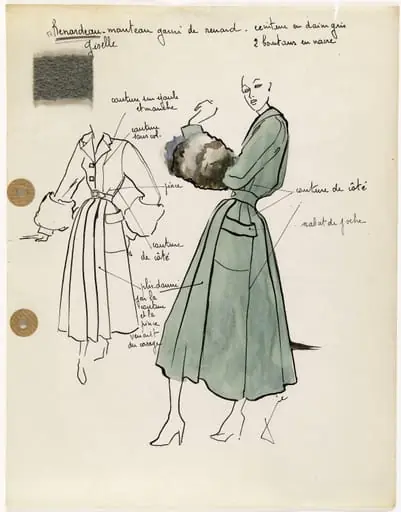 'Renardeau'
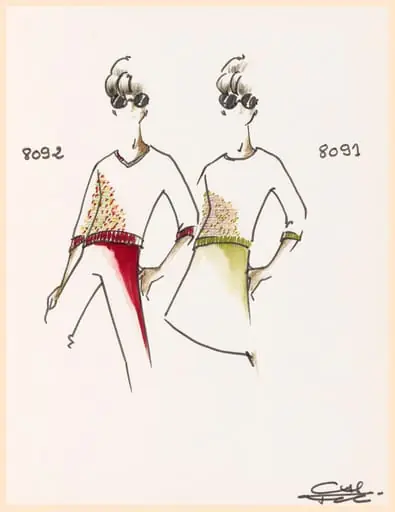 Pull-over à manches trois quarts et à encolure V à motifs multicolores, pantalon cerise et lunettes de soleil
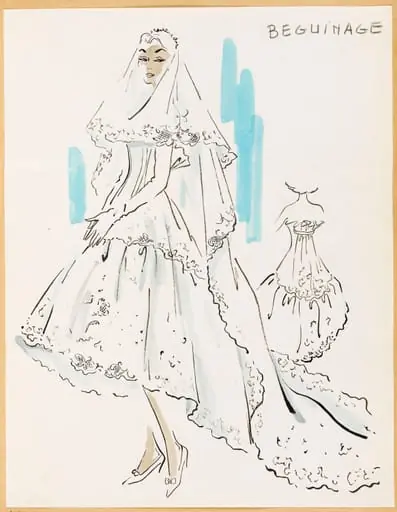 Béguinage