Artwork
Bailly
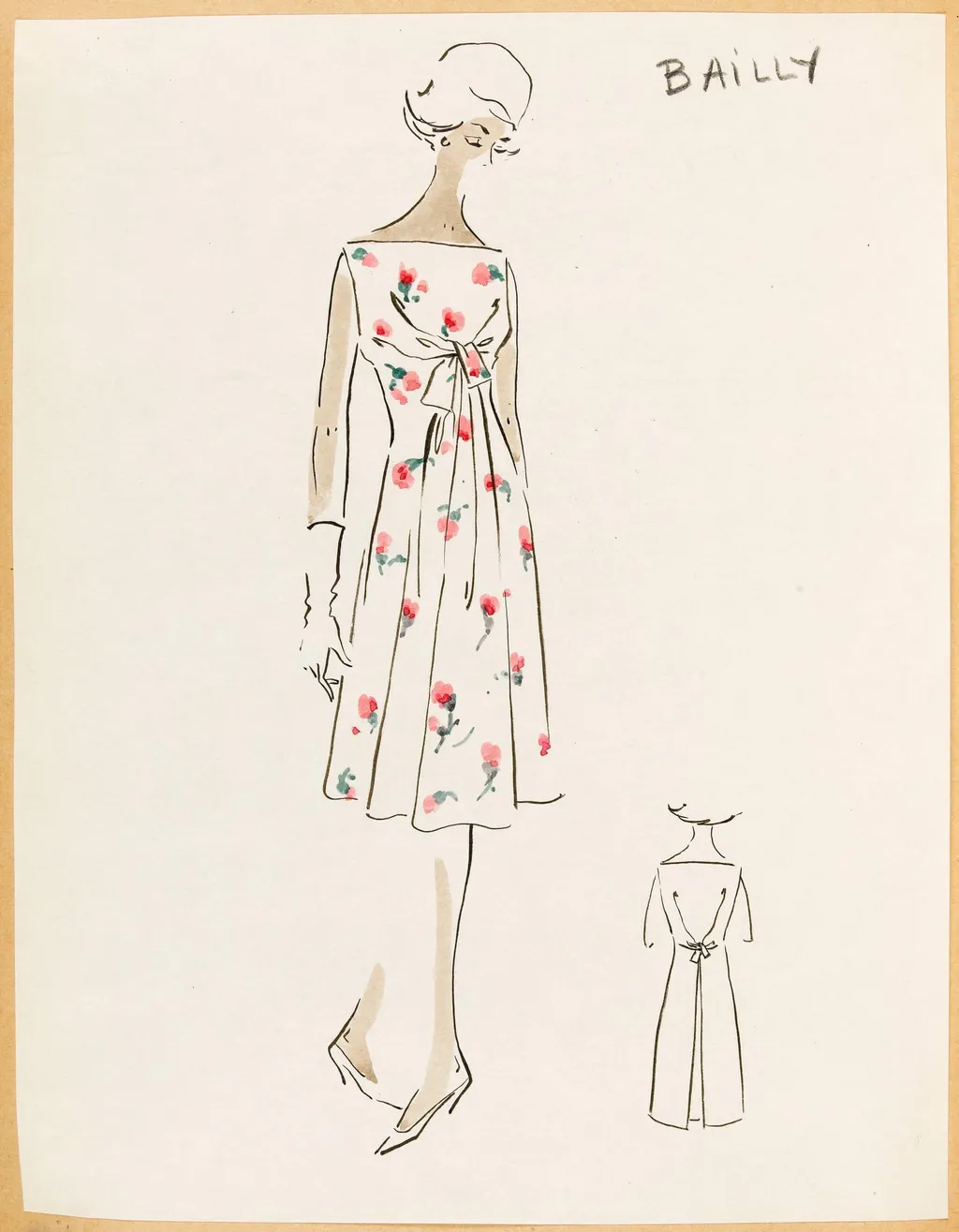
Bailly is a drawing by Marie-Louise Carven. It dates from 1957 and is held in the collection of the Palais Galliera - Musée de la Mode de la Ville de Paris.
About this work
Overview
Created around 1957, *Bailly* is a pencil sketch by French designer Marie-Louise Carven, capturing a dress design in loose, rapid strokes.
Created around 1957, *Bailly* is a pencil sketch by French designer Marie-Louise Carven, capturing a dress design in loose, rapid strokes. Executed on paper, it reflects her approach to fashion as both art and practical craft. The drawing is part of the Museum of Ethnography’s collection, where it is preserved not as a finished garment but as a working record of design thinking during the rise of ready-to-wear fashion.
Subject & Meaning
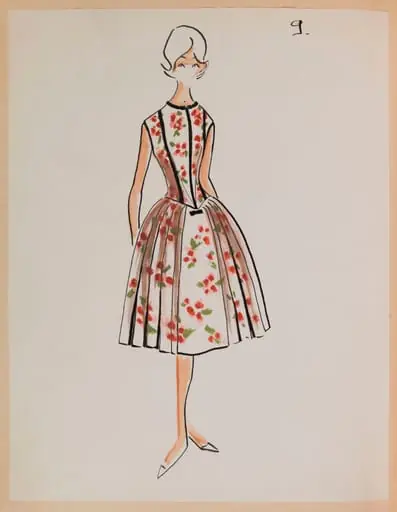
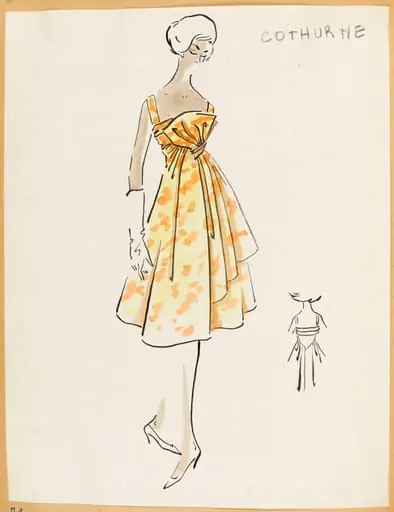
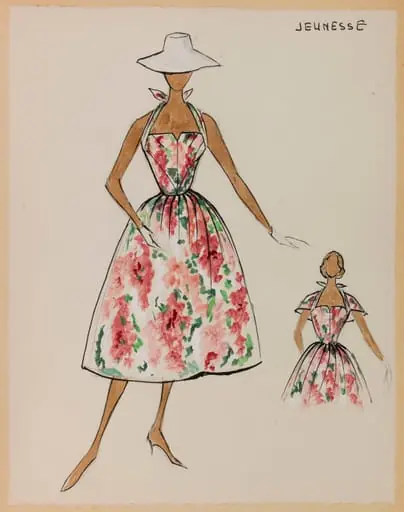
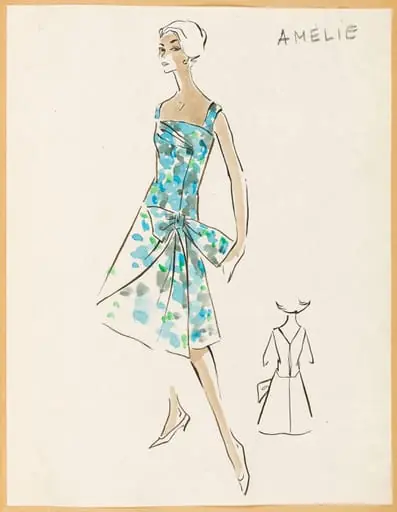
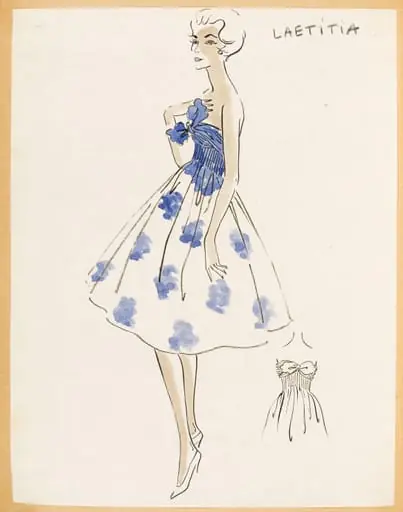
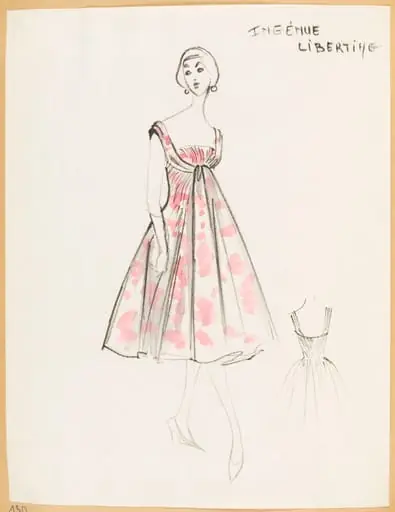
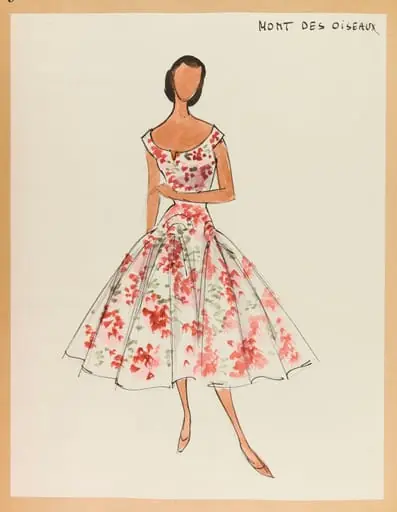
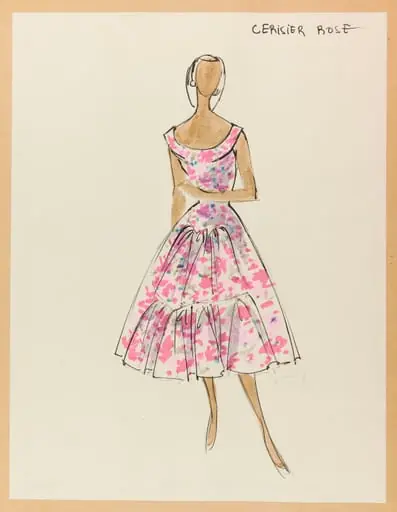
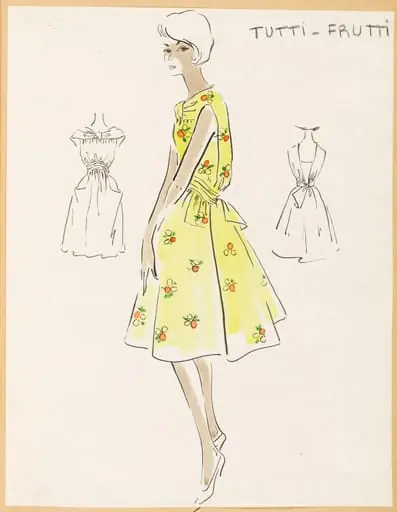
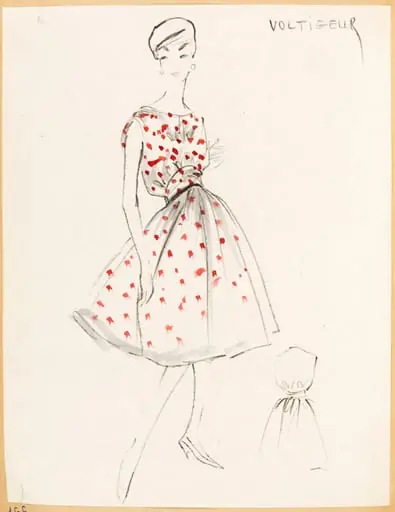
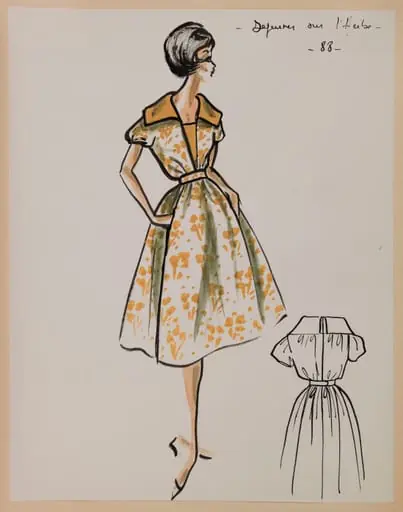
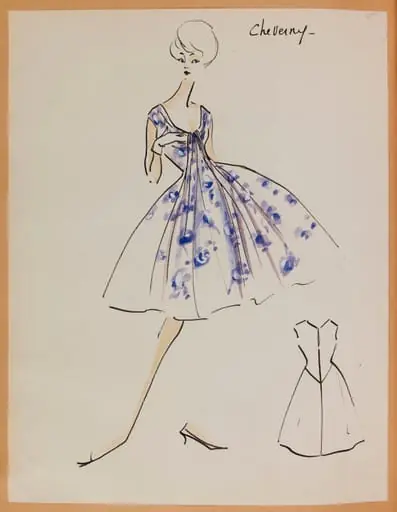
The sketch depicts a knee-length dress with a small bow at the neckline and faint floral motifs in pink and green on a pale ground. The absence of detailed anatomy or texture suggests the focus is on silhouette and ornament rather than individual wearers. The label 'Bailly' remains unexplained—possibly a client, model, or internal code—leaving the piece open to interpretation as a private notation within Carven’s creative process.
Technique & Style
Carven rendered the design with swift, economical lines, emphasizing form over precision. The sketch includes a faint reverse outline of the dress in the corner, indicating she considered construction from multiple angles. The minimal use of color and absence of shading reflect a working method prioritizing speed and clarity, typical of fashion illustrators translating ideas from mind to paper before pattern-making.
History & Provenance
Marie-Louise Carven founded her fashion house in 1945 and was among the earliest French couturiers to develop a prêt-à-porter line. *Bailly* likely dates from the late 1950s, a period when her brand expanded beyond haute couture. The sketch entered the Museum of Ethnography’s holdings as part of a broader effort to document design practices that influenced everyday dress, rather than ceremonial or elite attire.
Context
In postwar France, fashion was shifting toward accessibility and simplicity. Carven’s designs catered to petite figures and favored light fabrics like gingham and lace, aligning with changing lifestyles. *Bailly* exemplifies this trend: unpretentious, functional, and quietly playful. Its sketch form underscores how design innovation often emerged from informal, rapid notations rather than polished presentations.
Legacy
Though not a finished garment, *Bailly* preserves the tactile, immediate quality of Carven’s design process. It stands as evidence of how couturiers transitioned into ready-to-wear, valuing efficiency and clarity. The sketch’s preservation in an ethnographic context signals its value as a cultural artifact—not for its rarity, but for its representation of ordinary, evolving fashion practices in mid-century Europe.
Artist & collection
Artist
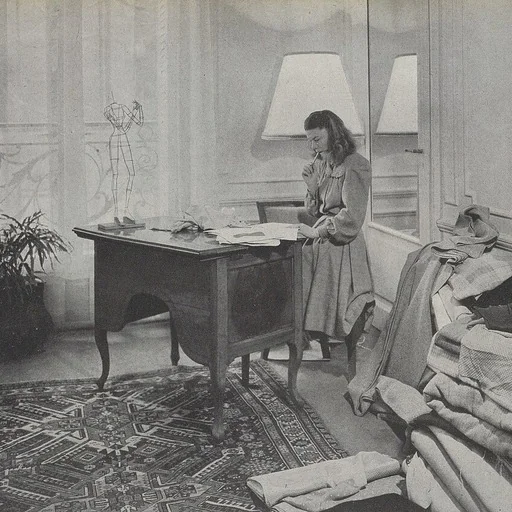
Marie-Louise Carven (31 August 1909 – 8 June 2015), born Carmen de Tommaso, was a French fashion designer who founded the house of Carven in 1945.
Museum
Palais Galliera - Musée de la Mode de la Ville de Paris
Continue through works from the same source collection.
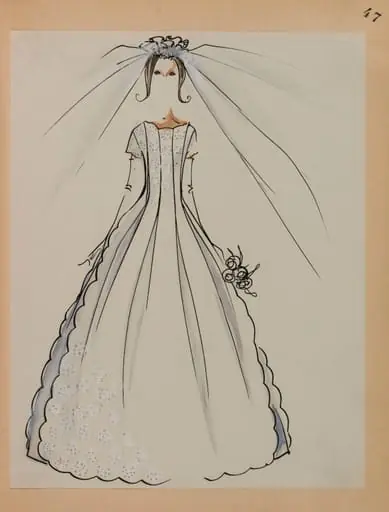 Robe de mariée festonnée et son voile
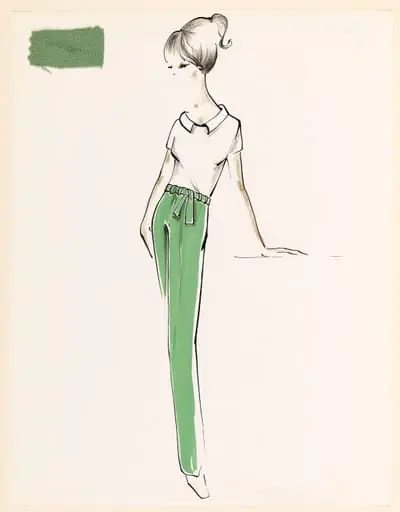 Haut blanc à manches courtes et pantalon vert à ceinture nouée
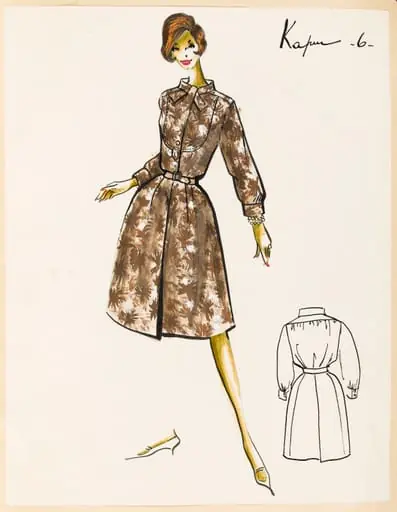 Kapur
Kapur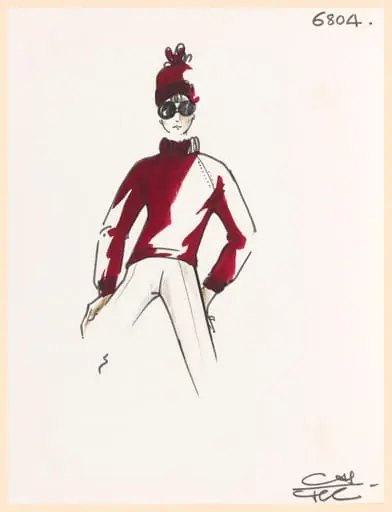 Pull-over à manches longues pourpre, bonnet assorti, pantalon et lunettes de soleil
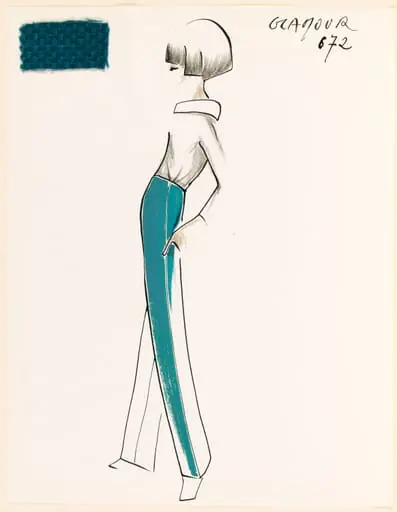 GLAMOUR
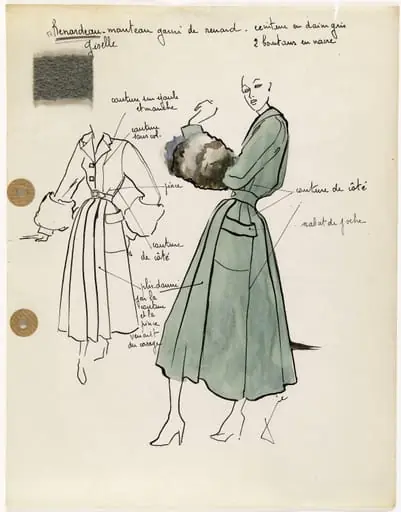 'Renardeau'
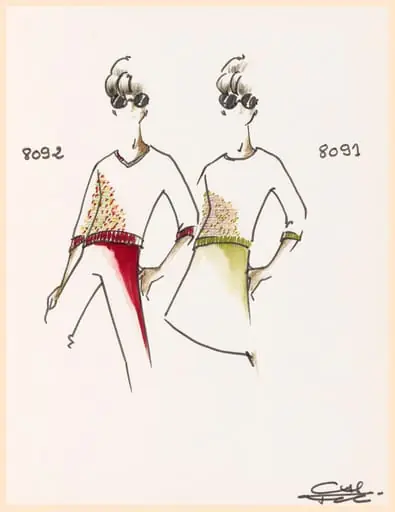 Pull-over à manches trois quarts et à encolure V à motifs multicolores, pantalon cerise et lunettes de soleil
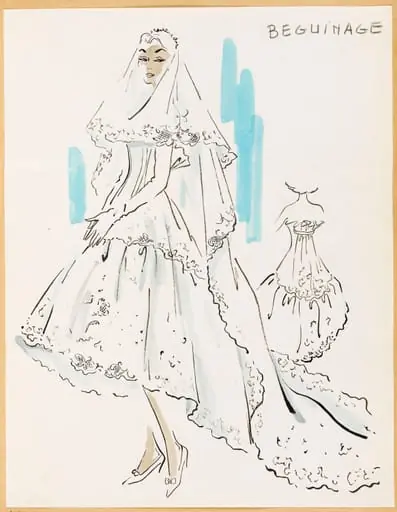 Béguinage