Artwork
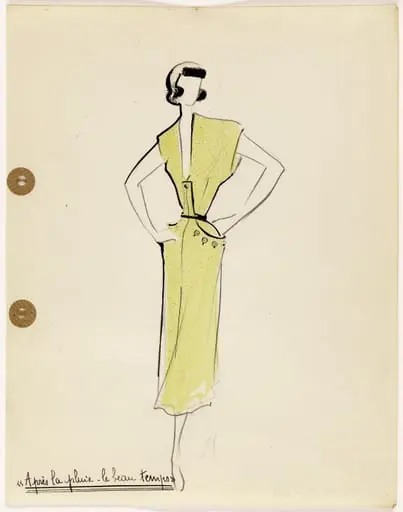
'Beau temps
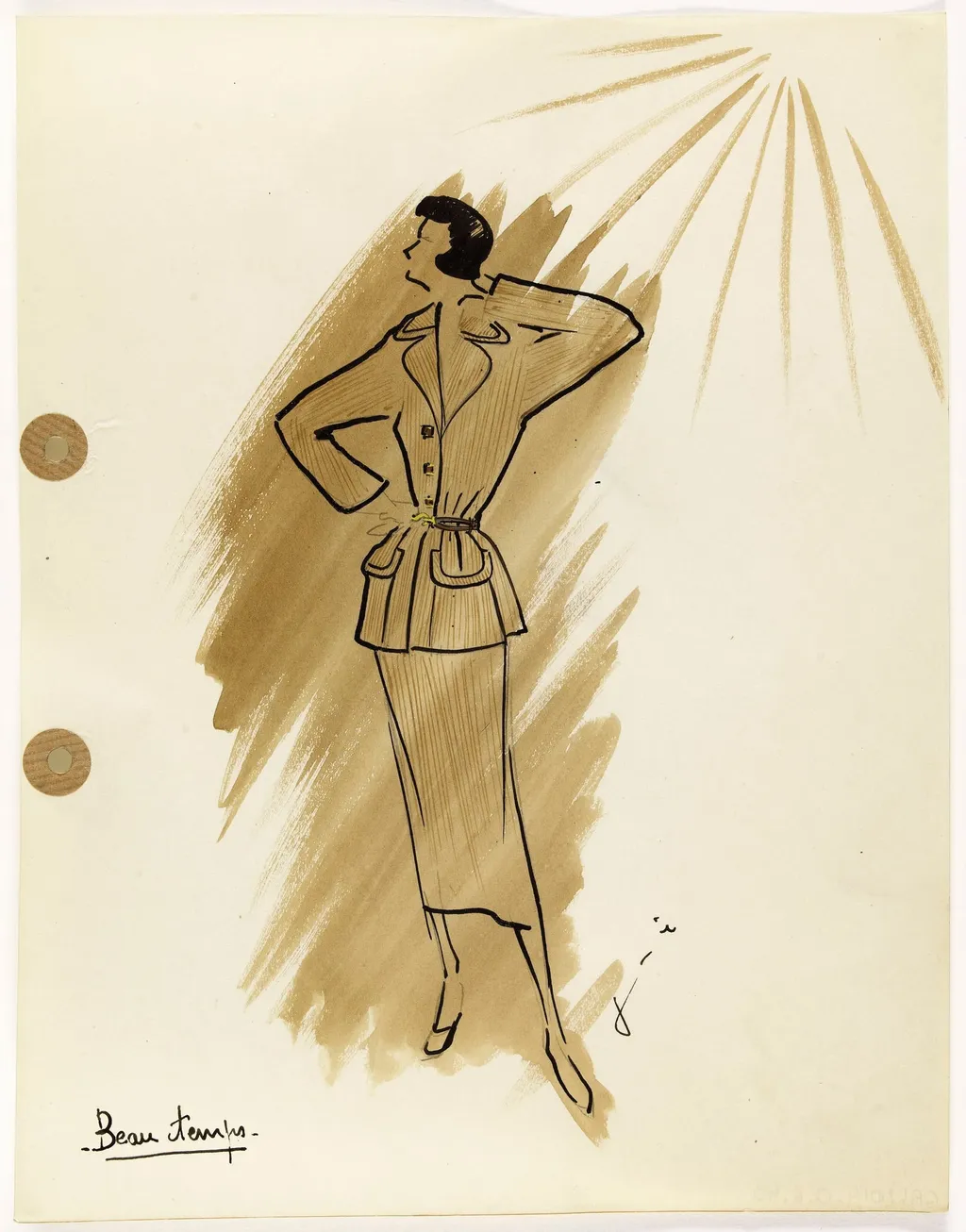
'Beau temps is a drawing by Marie-Louise Carven. It dates from 1949 and is held in the collection of the Palais Galliera - Musée de la Mode de la Ville de Paris.
About this work
Overview
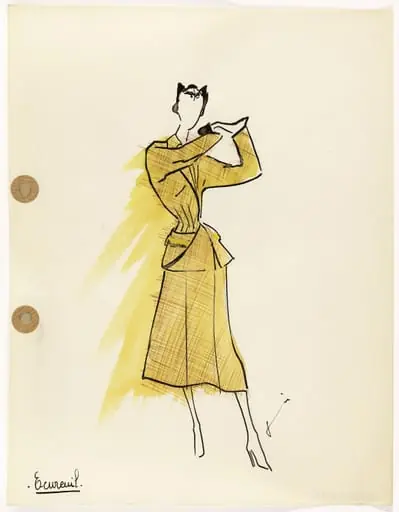
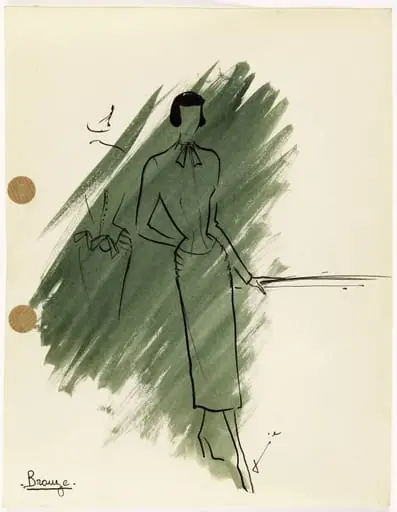
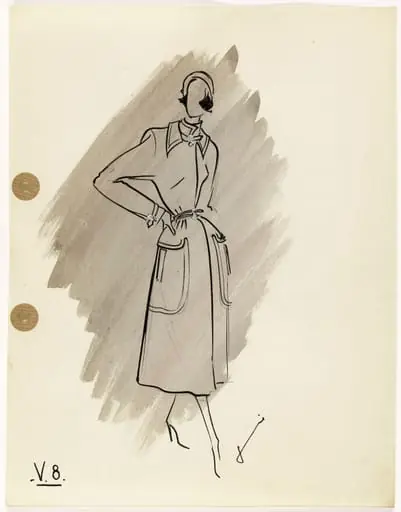
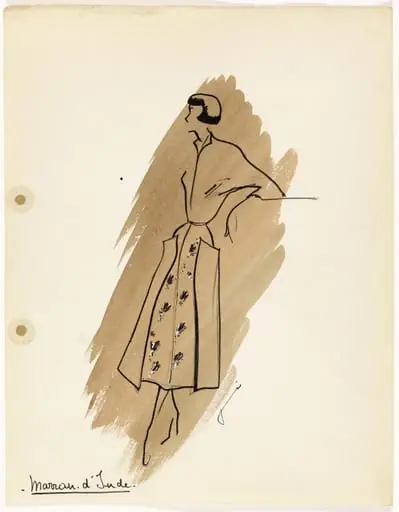
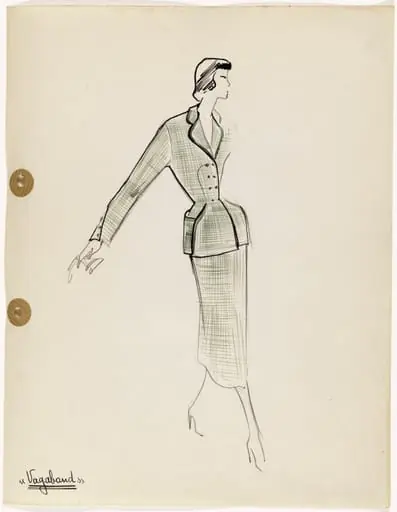
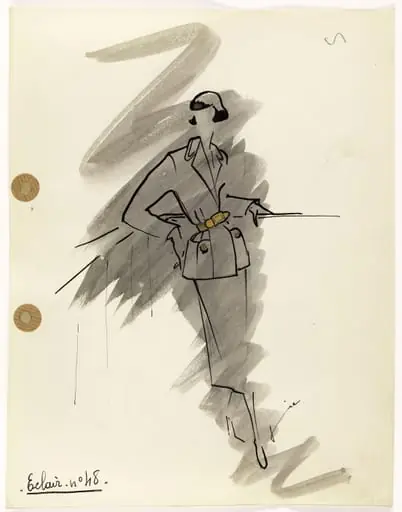
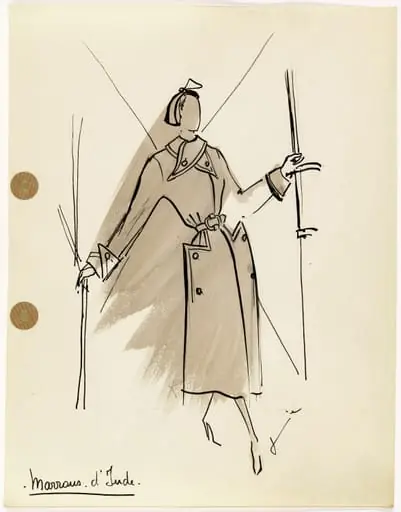
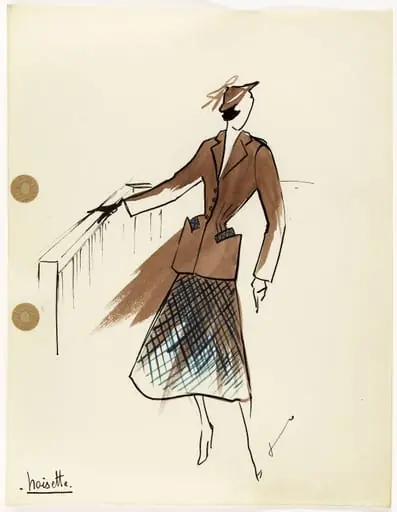
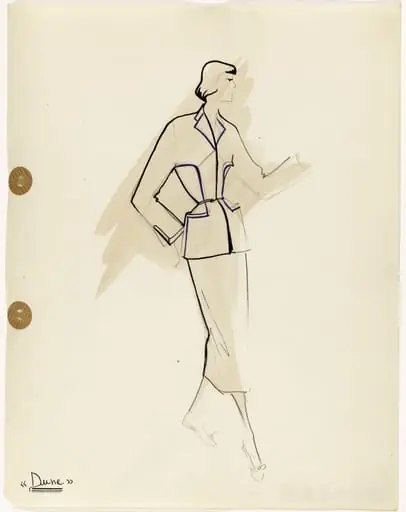
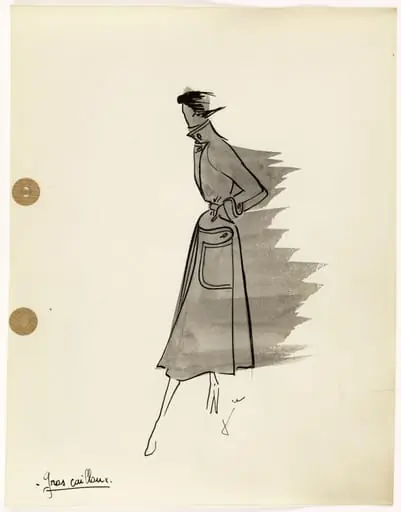
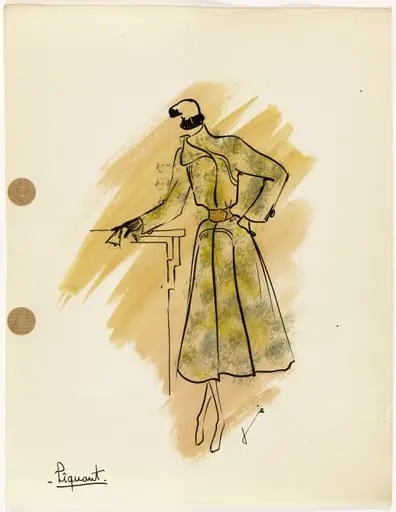
Created around 1949, *Beau temps* is a fashion sketch by Marie-Louise Carven, founder of a Parisian design house established after World War II.
Created around 1949, *Beau temps* is a fashion sketch by Marie-Louise Carven, founder of a Parisian design house established after World War II. The drawing captures a single figure in motion, rendered with minimal detail and fluid lines. It reflects Carven’s approach to design as both an art and a practical craft, emphasizing movement and wearability over ornate detail. The work serves as a personal record of her aesthetic vision rather than a commercial blueprint.
Subject & Meaning
The figure in *Beau temps* is a woman standing with relaxed poise, one hand on her hip, dressed in a loose, flowing garment with broad shoulders and a defined waist. Her hair is neatly pulled back, suggesting practicality and modernity. The title, meaning 'good weather,' evokes a sense of ease and lightness, aligning with Carven’s focus on clothing suited to everyday life rather than formal occasions. The posture and attire together convey confidence without pretension.
Technique & Style
Carven rendered the sketch with swift, unrefined pencil strokes that suggest spontaneity rather than precision. The background is nearly empty, with only faint, wispy lines implying ambient movement or sunlight. Clothing details are simplified—fabric folds are indicated, not modeled—emphasizing silhouette over texture. This loose, gestural approach mirrors the immediacy of her design process, prioritizing form and proportion over finished rendering.
History & Provenance
The sketch originates from Carven’s personal archive during the early years of her fashion house, founded in 1945. As one of the first designers in Paris to develop a ready-to-wear line, she relied on such sketches to communicate ideas to tailors and clients. *Beau temps* likely served as a working study for a garment intended for mass production, reflecting her commitment to accessible, well-proportioned clothing for women of smaller frames.
Context
In postwar Paris, fashion was shifting from haute couture exclusivity toward practical, affordable clothing. Carven’s designs responded to changing social roles and economic realities, favoring lightweight fabrics like gingham and lace. *Beau temps* embodies this transition: its simplicity, comfort, and focus on the natural body contrasted with the structured silhouettes of earlier decades, aligning with a broader cultural move toward informality in women’s dress.
Legacy
Though not widely exhibited, *Beau temps* exemplifies Carven’s influence on the evolution of prêt-à-porter in France. Her emphasis on fit for petite figures and breathable materials paved the way for later designers who prioritized wearability. The sketch’s unadorned elegance reveals a design philosophy centered on the wearer’s experience, leaving a quiet but enduring mark on 20th-century fashion practice.
Artist & collection
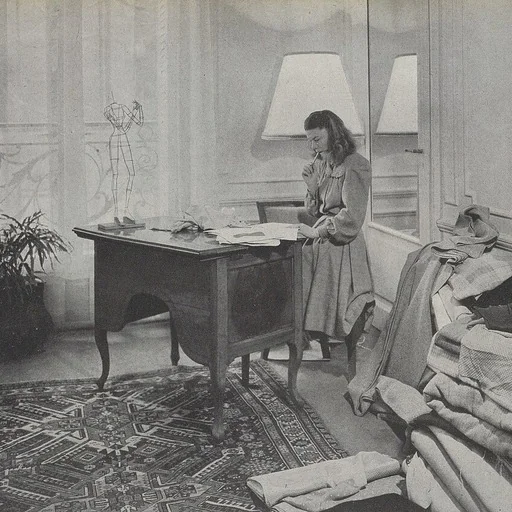
Artist
Marie-Louise Carven (31 August 1909 – 8 June 2015), born Carmen de Tommaso, was a French fashion designer who founded the house of Carven in 1945.
Museum
Palais Galliera - Musée de la Mode de la Ville de Paris
Continue through works from the same source collection.
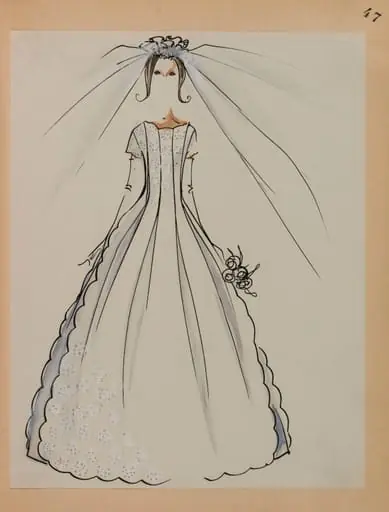 Robe de mariée festonnée et son voile
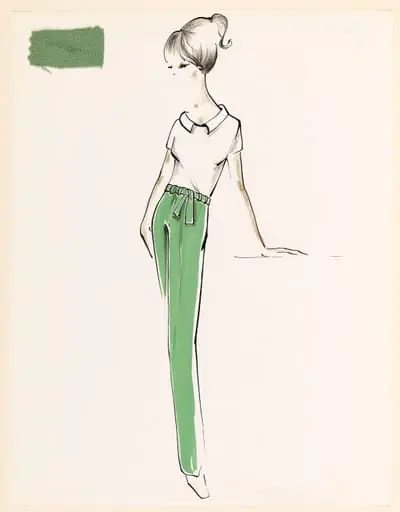 Haut blanc à manches courtes et pantalon vert à ceinture nouée
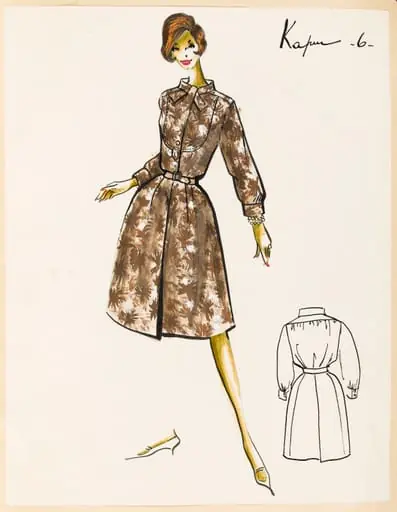 Kapur
Kapur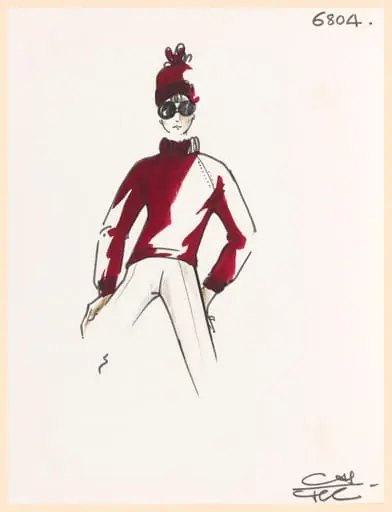 Pull-over à manches longues pourpre, bonnet assorti, pantalon et lunettes de soleil
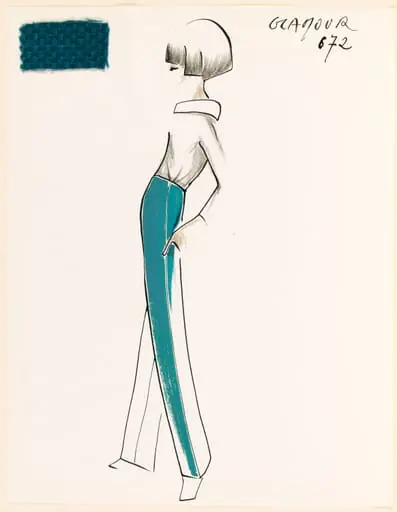 GLAMOUR
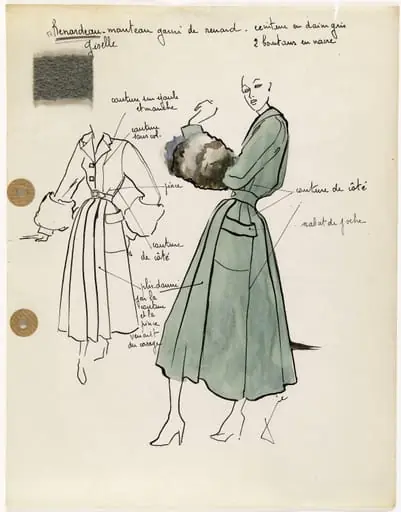 'Renardeau'
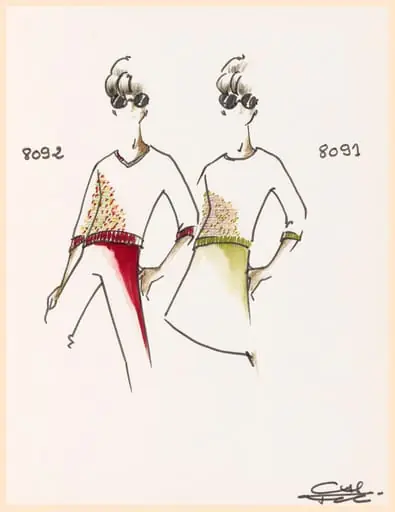 Pull-over à manches trois quarts et à encolure V à motifs multicolores, pantalon cerise et lunettes de soleil
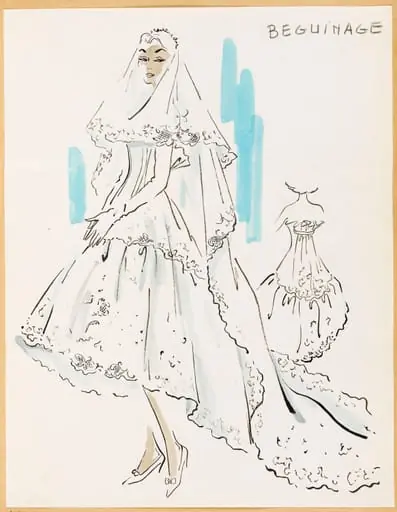 Béguinage