Artwork
'Piquant'
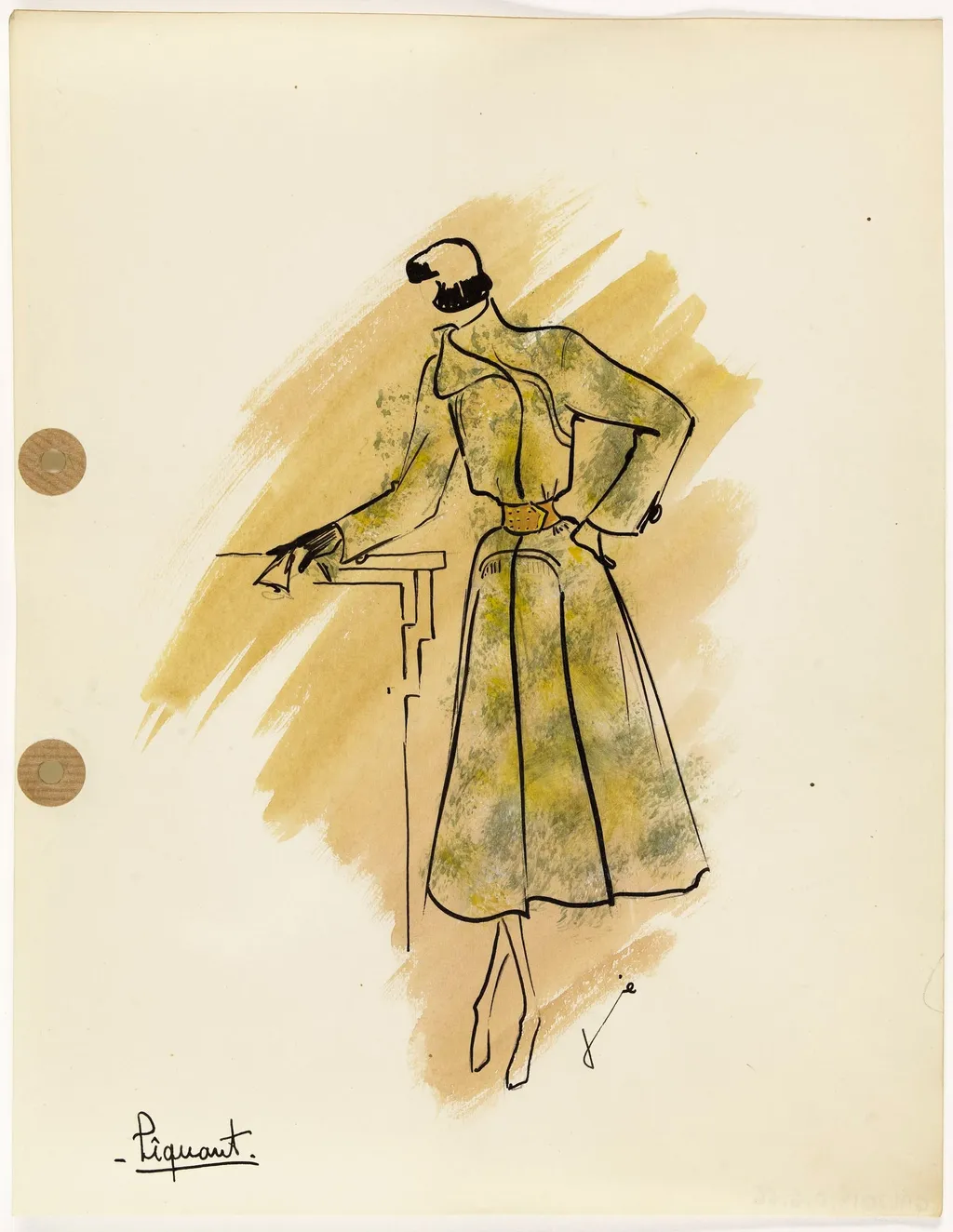
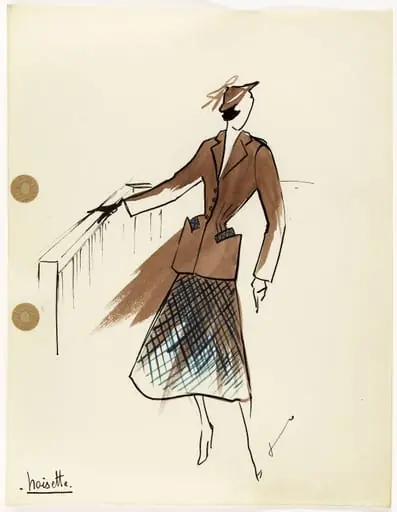
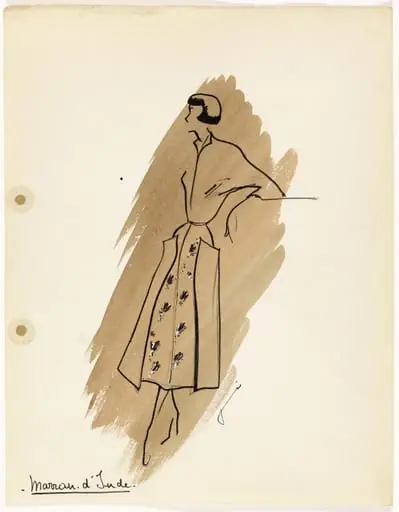
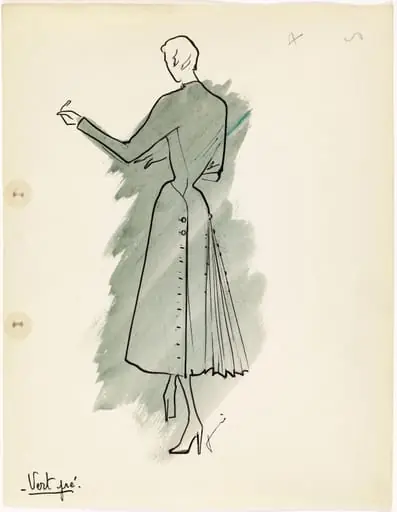
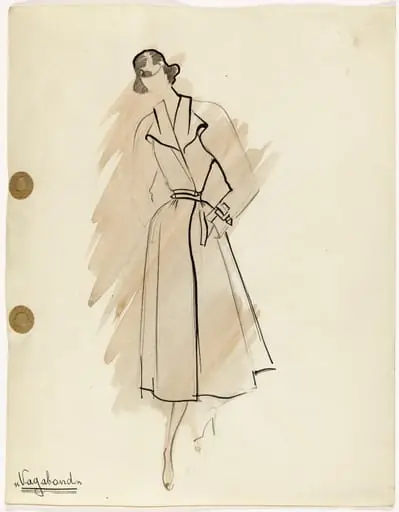
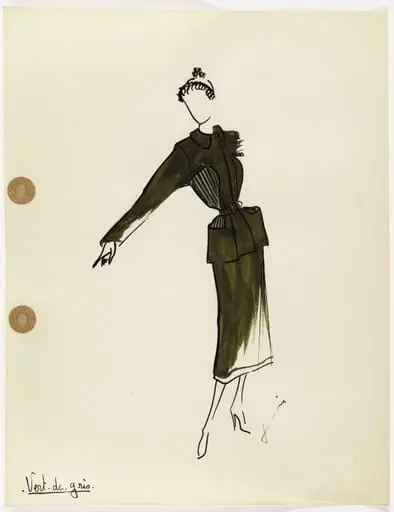
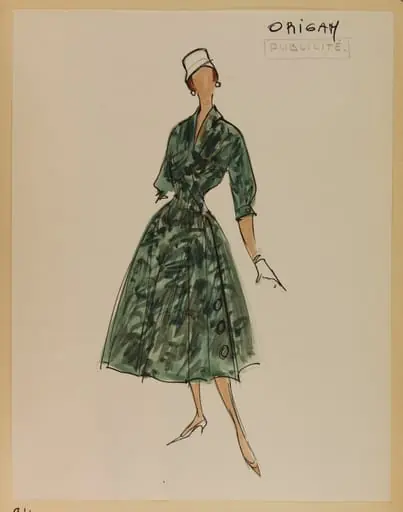
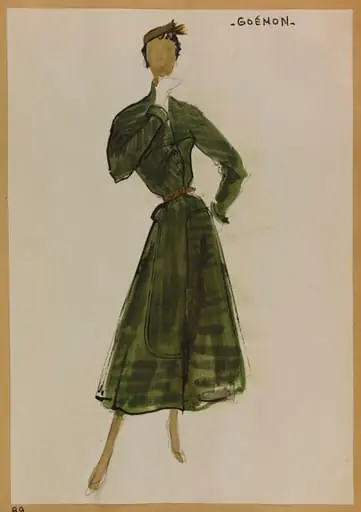
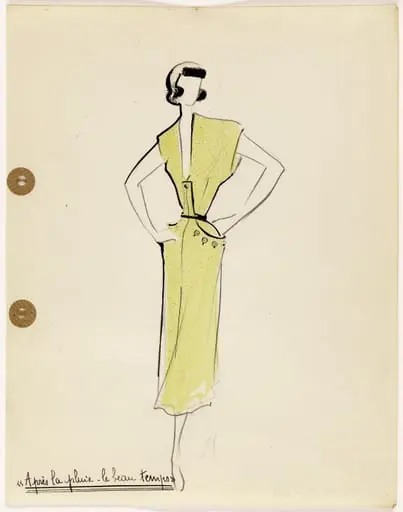
'Piquant' is a drawing by Marie-Louise Carven. It dates from 1949 and is held in the collection of the Palais Galliera - Musée de la Mode de la Ville de Paris.
About this work
Overview
The piece is part of the Museum of Ethnography’s collection, suggesting its cultural or anthropological significance beyond fashion.
Piquant is a drawing attributed to Marie-Louise Carven, created around 1949. Though best known as a fashion designer, Carven also produced visual works that reflected her aesthetic sensibilities. The piece is part of the Museum of Ethnography’s collection, suggesting its cultural or anthropological significance beyond fashion. Its modest scale and intimate subject align with Carven’s focus on everyday elegance and feminine form.
Subject & Meaning
The drawing portrays a woman standing with one hand on her hip and the other resting on a table, her back turned to the viewer. Her posture suggests quiet confidence, and the absence of facial features shifts focus to her silhouette and bearing. The attire—a long-sleeved dress with a belted waist and full skirt—echoes Carven’s signature designs for petite figures. The anonymity of the subject invites contemplation of identity and quiet dignity rather than individual portraiture.
Technique & Style
Rendered in clean, restrained lines with minimal shading, the drawing avoids ornamental detail in favor of clarity. The contours of the dress and figure are defined with precision, suggesting an awareness of textile structure and movement. While cross-hatching and stippling are noted in some accounts, the work’s simplicity implies a deliberate economy of mark-making, prioritizing form and rhythm over texture or depth.
History & Provenance
Created shortly after Carven founded her fashion house in 1945, Piquant emerged during a period when she was pioneering ready-to-wear fashion in France. The drawing’s inclusion in the Museum of Ethnography indicates it was collected as a cultural artifact, possibly as an example of postwar French feminine ideals. Its provenance reflects an interest in fashion as material culture, rather than solely as commercial design.
Context
In late 1940s France, fashion design was transitioning from haute couture to accessible clothing, and Carven was a key figure in this shift. Her designs emphasized light fabrics and tailored fits for smaller frames. Piquant, as a visual artifact, mirrors this ethos—its restrained elegance and focus on silhouette align with the practical yet refined aesthetics she promoted in her collections.
Legacy
While Carven’s fashion innovations are well documented, her drawings remain lesser known. Piquant offers insight into her visual language beyond garments, revealing how her understanding of form and movement extended into illustration. The work contributes to broader discussions about the intersection of fashion design and fine art in mid-century Europe, though it has not been widely exhibited or studied.
Artist & collection
Artist
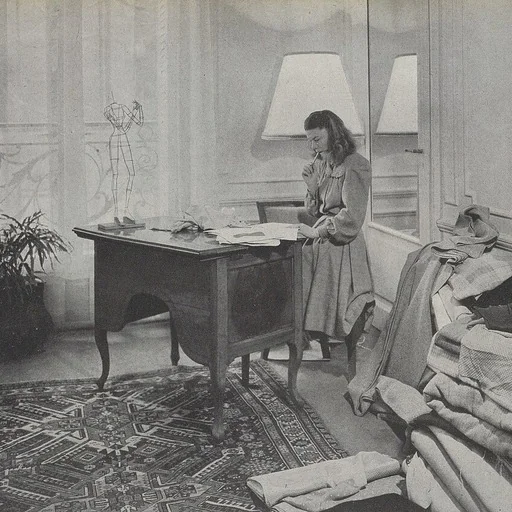
Marie-Louise Carven (31 August 1909 – 8 June 2015), born Carmen de Tommaso, was a French fashion designer who founded the house of Carven in 1945.
Museum
Palais Galliera - Musée de la Mode de la Ville de Paris
Continue through works from the same source collection.
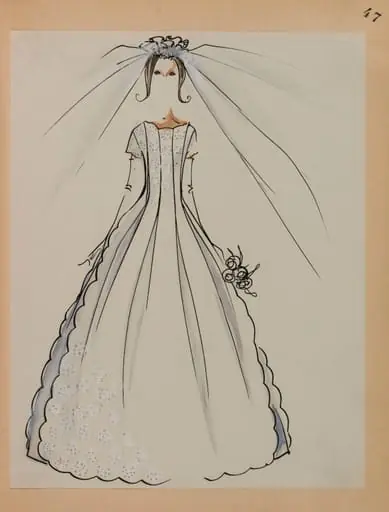 Robe de mariée festonnée et son voile
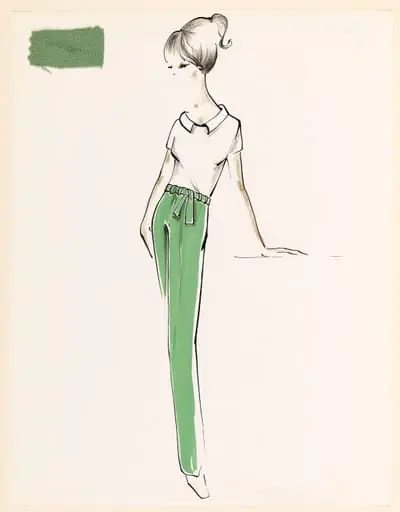 Haut blanc à manches courtes et pantalon vert à ceinture nouée
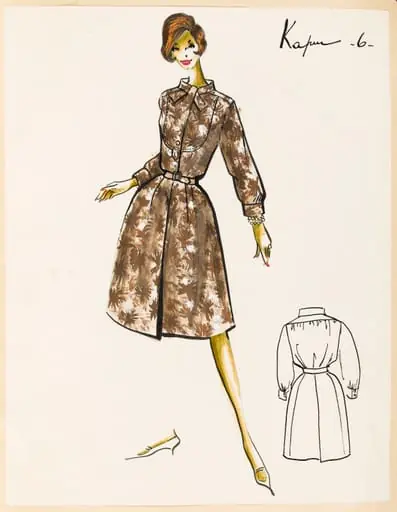 Kapur
Kapur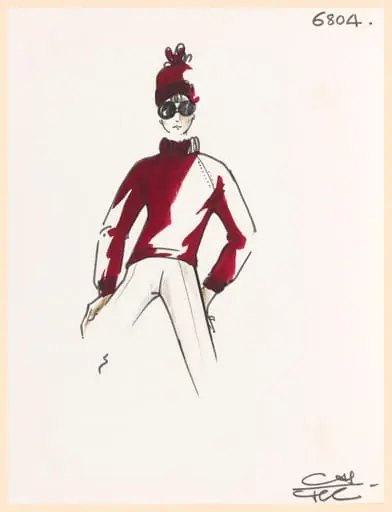 Pull-over à manches longues pourpre, bonnet assorti, pantalon et lunettes de soleil
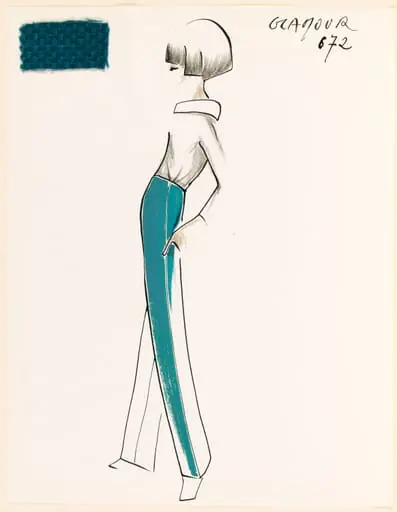 GLAMOUR
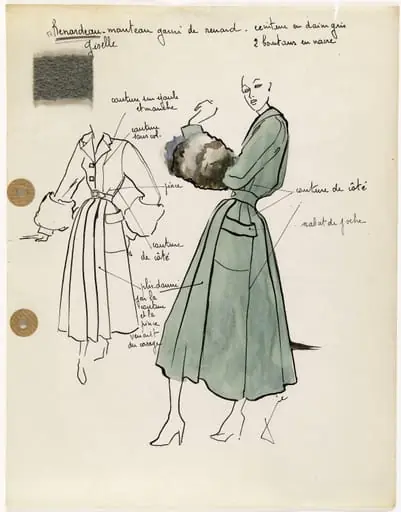 'Renardeau'
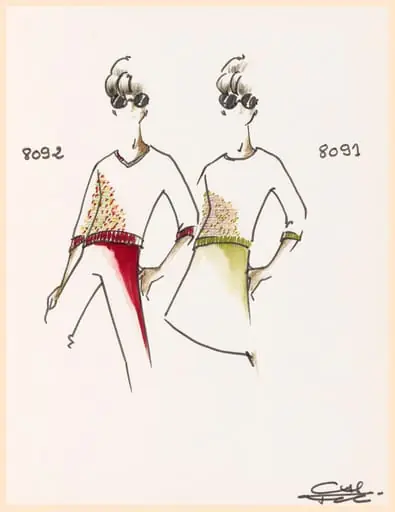 Pull-over à manches trois quarts et à encolure V à motifs multicolores, pantalon cerise et lunettes de soleil
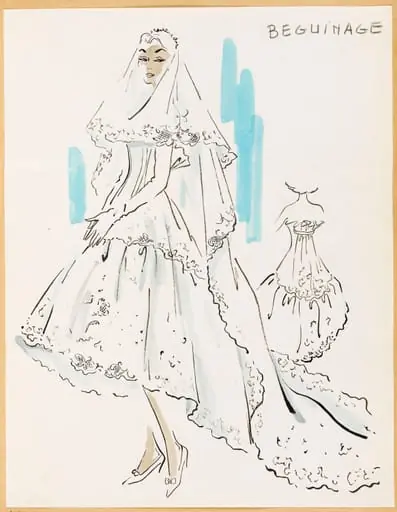 Béguinage