Artwork
Cerceau
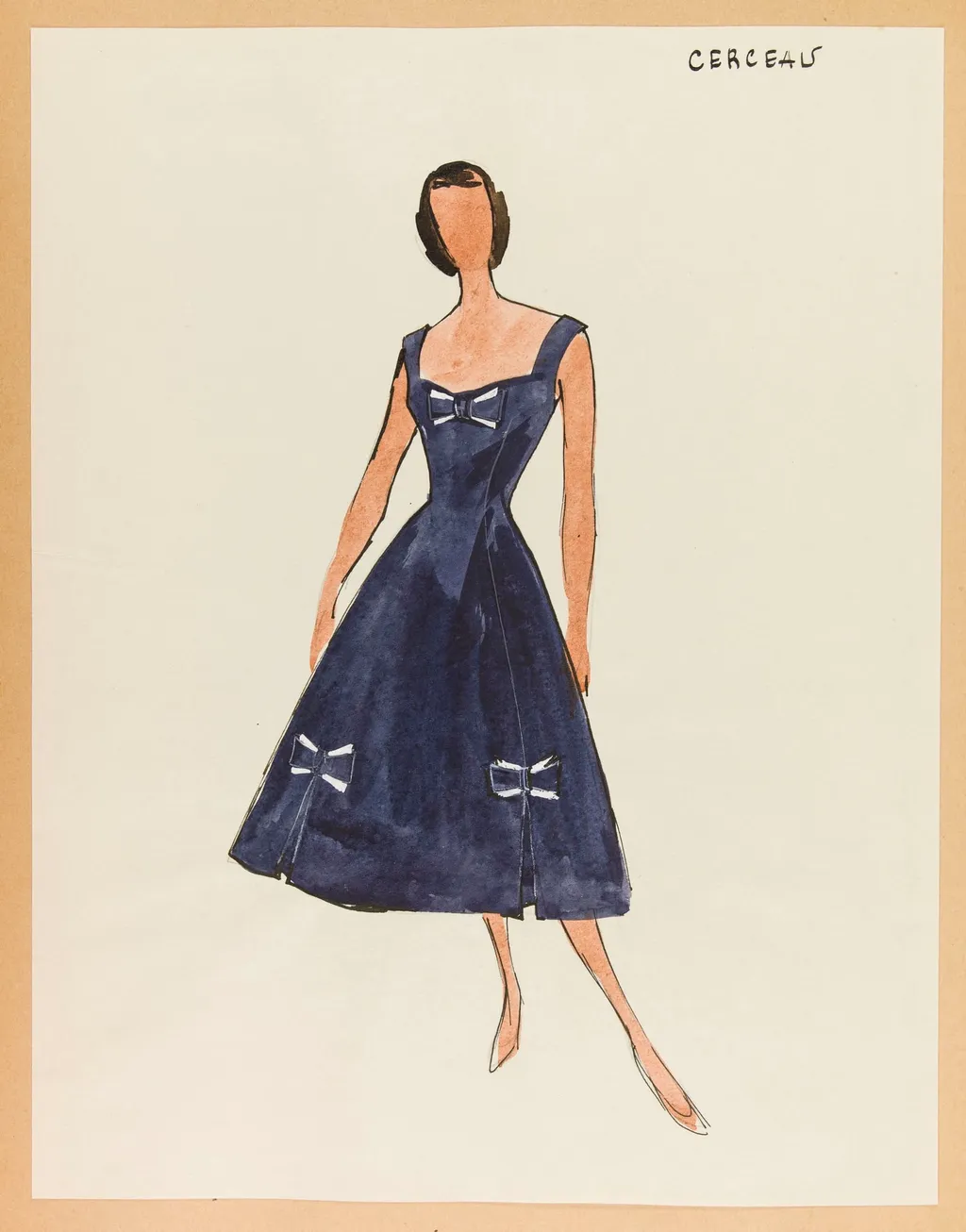
Cerceau is a drawing by Marie-Louise Carven. It dates from 1955 and is held in the collection of the Palais Galliera - Musée de la Mode de la Ville de Paris.
About this work
Overview
The drawing lacks the polish of a final pattern, suggesting it was an early conceptual study, possibly for a garment intended for everyday wear.
Created around 1955, *Cerceau* is a pencil sketch by French designer Marie-Louise Carven, capturing a dress design in minimal, assured lines. Executed on paper, it belongs to the Museum of Ethnography’s collection and reflects Carven’s approach to wearable, understated elegance. The drawing lacks the polish of a final pattern, suggesting it was an early conceptual study, possibly for a garment intended for everyday wear.
Subject & Meaning
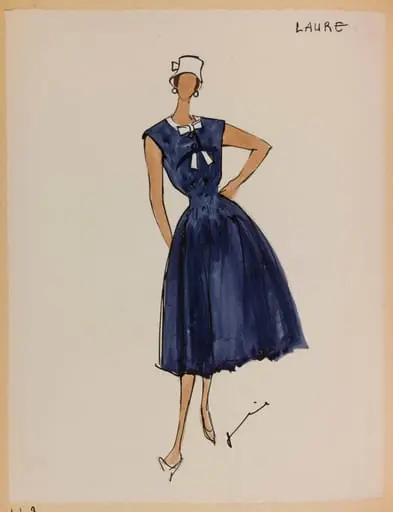
The figure wears a simple, dark blue dress with a square neckline and three white bows—one centered on the chest, two on the skirt’s sides. The silhouette is loose yet subtly contoured, avoiding ornamentation. The woman’s hair is neatly pulled back, emphasizing clarity of form. The title *Cerceau*, meaning hoop or ring in French, may reference the dress’s circular bow placements or its uncluttered, rounded structure, though its precise intent remains unconfirmed.
Technique & Style
Carven rendered the design with swift, confident strokes, using pencil on a beige background to isolate the figure. Details are reduced to essential contours; shading is minimal, and the absence of facial features or texture focuses attention on the garment’s shape. The sketch’s immediacy suggests it was made as a working note, prioritizing function over finish, aligning with Carven’s pragmatic design philosophy.
History & Provenance
Marie-Louise Carven founded her fashion house in 1945 and was among the first Parisian couturiers to develop a prêt-à-porter line, making fashion more accessible. *Cerceau* likely emerged during this period of expansion, when she was refining ready-to-wear silhouettes for petite figures. The sketch entered the Museum of Ethnography’s collection as part of a broader effort to document 20th-century fashion as cultural artifact.
Context
In mid-1950s Paris, haute couture dominated, but Carven’s focus on lightweight fabrics and practical designs catered to a growing market of independent women. *Cerceau* reflects this shift—its simplicity contrasts with the elaborate tailoring of contemporaries. The sketch’s restraint aligns with postwar aesthetics favoring utility and quiet refinement over excess, positioning Carven as a quiet innovator in democratizing fashion.
Legacy
Though modest in scale, *Cerceau* exemplifies Carven’s lasting influence: her emphasis on proportion, comfort, and accessible elegance helped redefine postwar women’s wear. The sketch survives not as a finished product but as evidence of a design process that valued clarity and wearability. It stands as a quiet testament to a designer who prioritized the wearer’s experience over spectacle.
Artist & collection
Artist
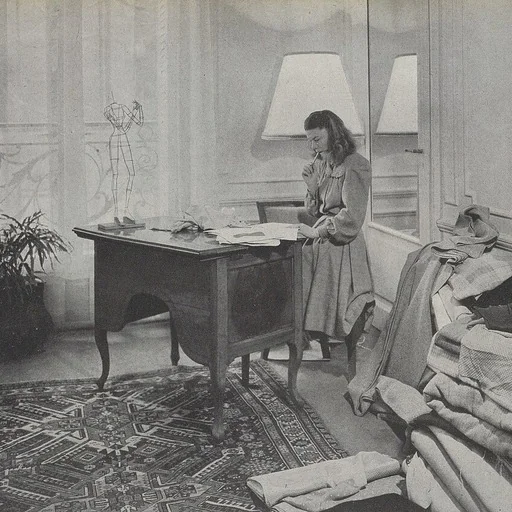
Marie-Louise Carven (31 August 1909 – 8 June 2015), born Carmen de Tommaso, was a French fashion designer who founded the house of Carven in 1945.
Museum
Palais Galliera - Musée de la Mode de la Ville de Paris
Continue through works from the same source collection.
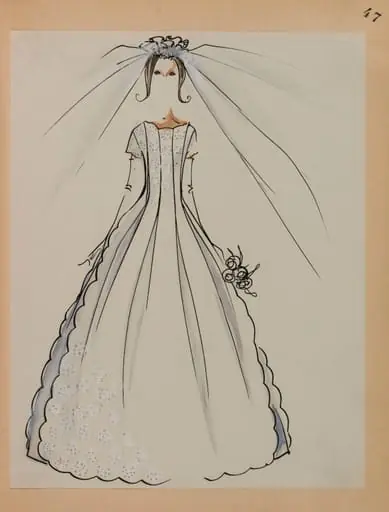 Robe de mariée festonnée et son voile
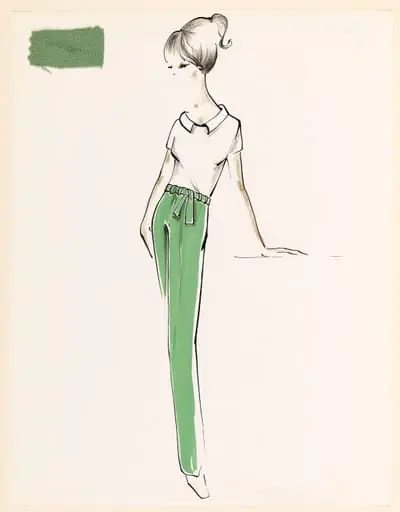 Haut blanc à manches courtes et pantalon vert à ceinture nouée
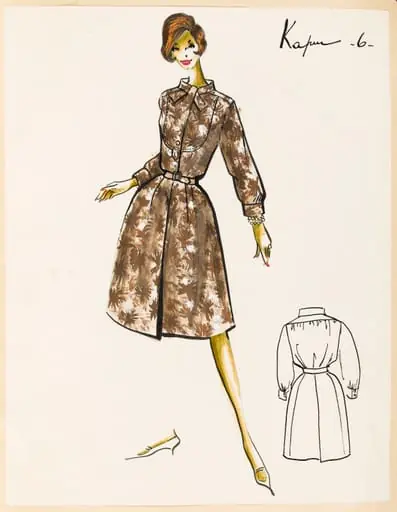 Kapur
Kapur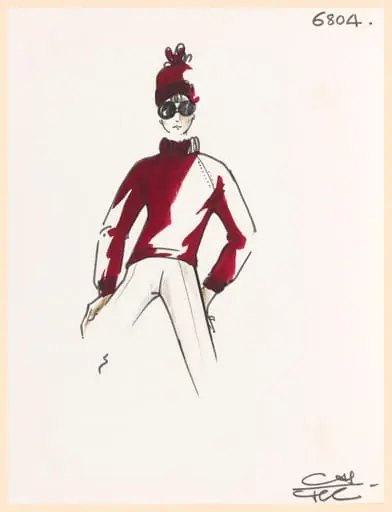 Pull-over à manches longues pourpre, bonnet assorti, pantalon et lunettes de soleil
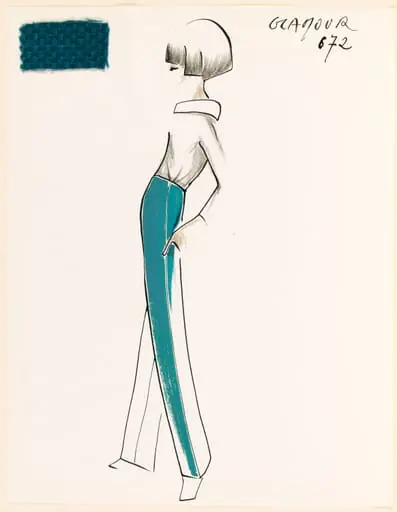 GLAMOUR
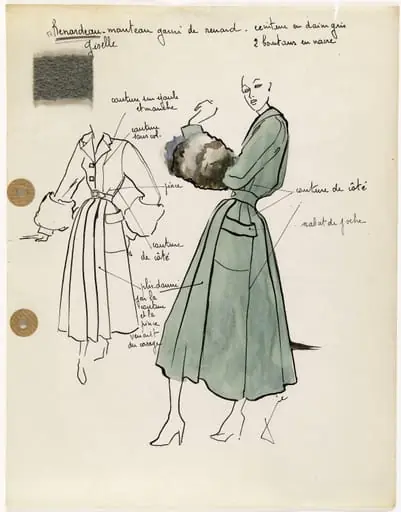 'Renardeau'
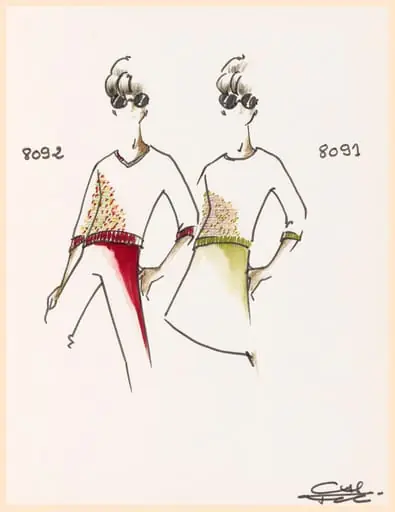 Pull-over à manches trois quarts et à encolure V à motifs multicolores, pantalon cerise et lunettes de soleil
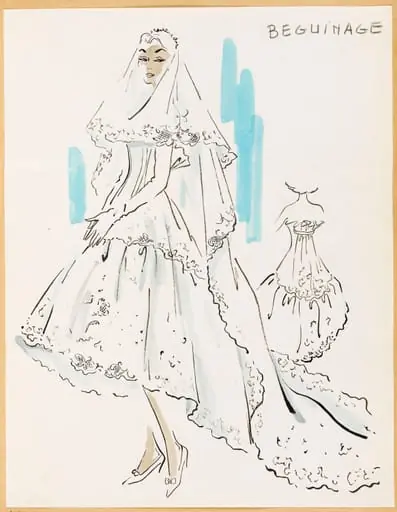 Béguinage