Artwork
'Copenhague'
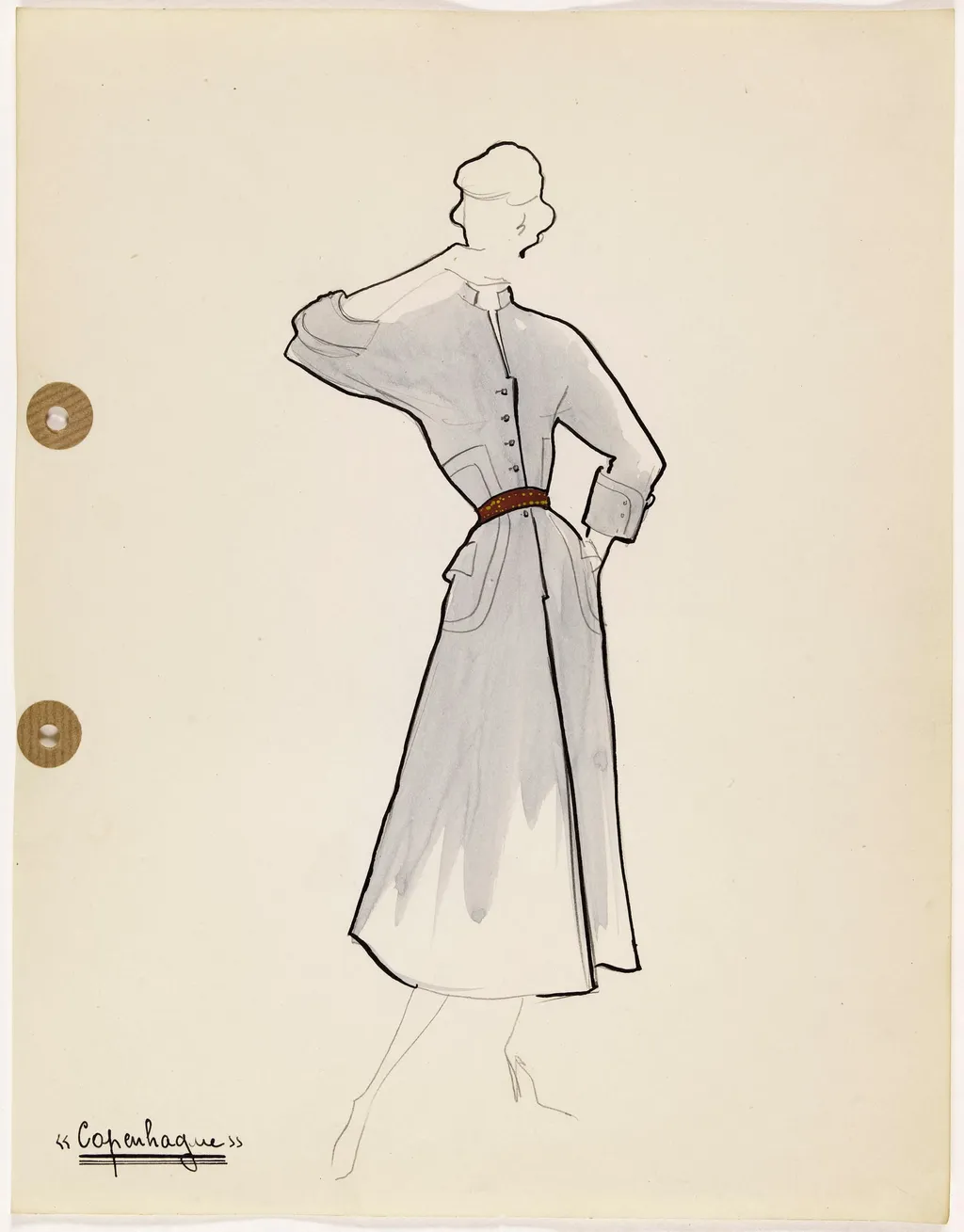
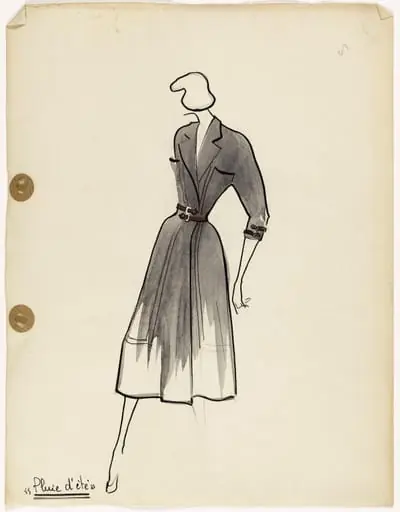
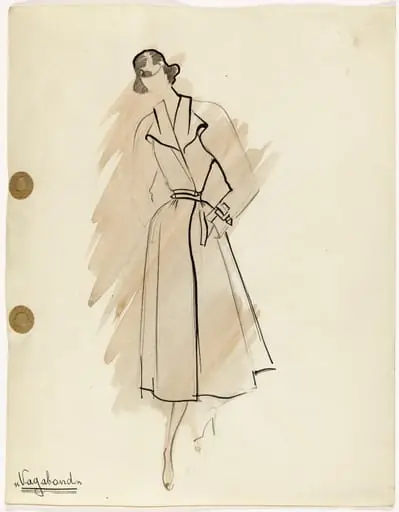
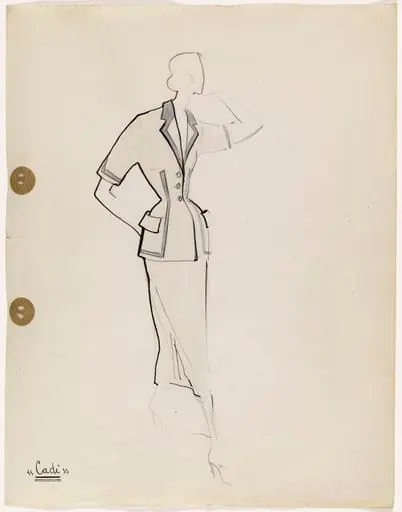
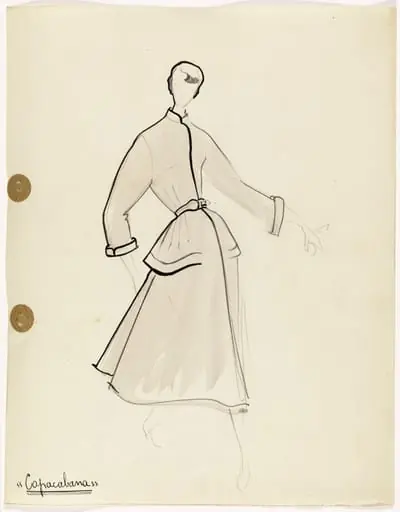
'Copenhague' is a drawing by Marie-Louise Carven. It dates from 1949 and is held in the collection of the Palais Galliera - Musée de la Mode de la Ville de Paris.
About this work
Overview
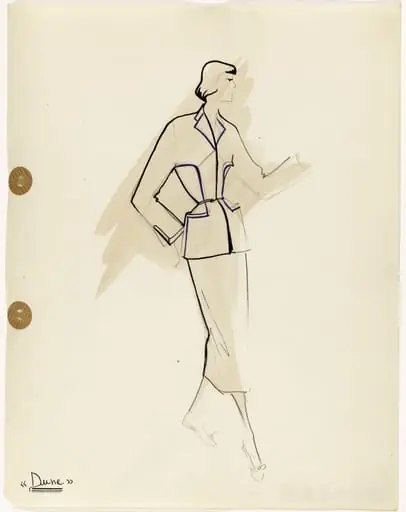
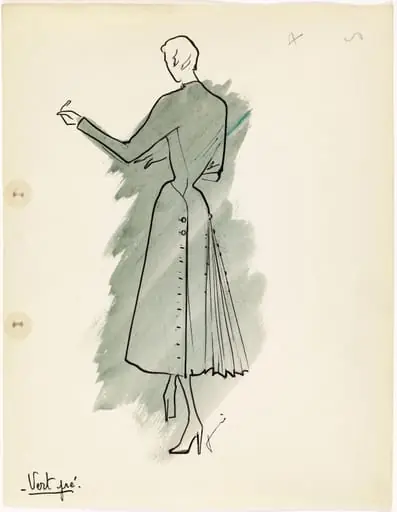
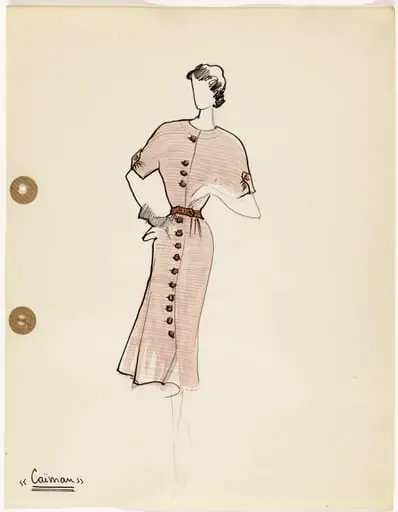
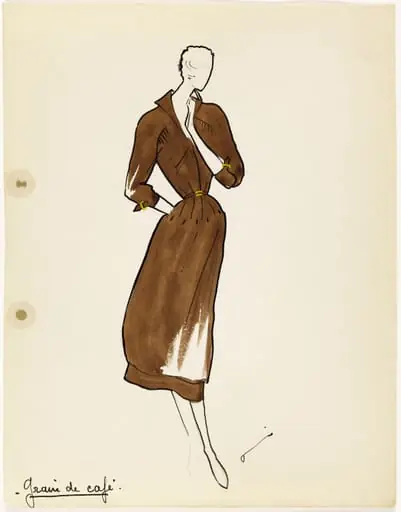
Copenhague is a watercolor sketch by French designer Marie-Louise Carven, created in 1949.
Copenhague is a watercolor sketch by French designer Marie-Louise Carven, created in 1949. It depicts a slender female figure in a tailored, knee-length dress with long sleeves and a defined waist, accompanied by a jacket featuring large front pockets. The drawing, signed with the title, reflects Carven’s approach to wearable design and was later acquired by the Museum of Ethnography as part of its fashion archive.
Subject & Meaning
The figure in Copenhague stands in a relaxed, sideways pose, one arm curved behind her, suggesting ease of movement. The clothing—lightweight, unstructured, and practical—reflects postwar ideals of functionality and quiet elegance. The title may reference Copenhagen, hinting at Scandinavian influence on Carven’s aesthetic, or serve as a personal designation for the garment’s intended wearer or mood.
Technique & Style
Carven rendered the sketch with swift, confident lines and minimal watercolor washes to suggest fabric texture and shadow. The absence of detailed facial features shifts focus to silhouette and garment construction. Her technique prioritizes clarity and movement over ornamentation, aligning with her design philosophy of simplicity and livability in women’s clothing.
History & Provenance
Created in 1949, Copenhague emerged during Carven’s early years as a couturier, shortly after founding her house in 1945. The sketch entered the collection of the Museum of Ethnography, likely through donation or acquisition as part of a broader effort to document modern fashion design. Its preservation underscores its value as a primary record of mid-century French ready-to-wear development.
Context
In the late 1940s, Carven distinguished herself by designing for smaller frames and favoring delicate fabrics like gingham and lace. Her decision to launch a prêt-à-porter line challenged the exclusivity of haute couture. Copenhague exemplifies this shift: a design meant for mass production, yet retaining the hand-drawn intimacy of a couturier’s original concept.
Legacy
Copenhague stands as a quiet testament to Carven’s role in democratizing fashion. Its unadorned form and emphasis on practicality prefigured later trends in minimalist, everyday wear. Though not widely exhibited, the sketch remains a key artifact in understanding how postwar designers redefined femininity through accessible, well-considered clothing.
Artist & collection
Artist
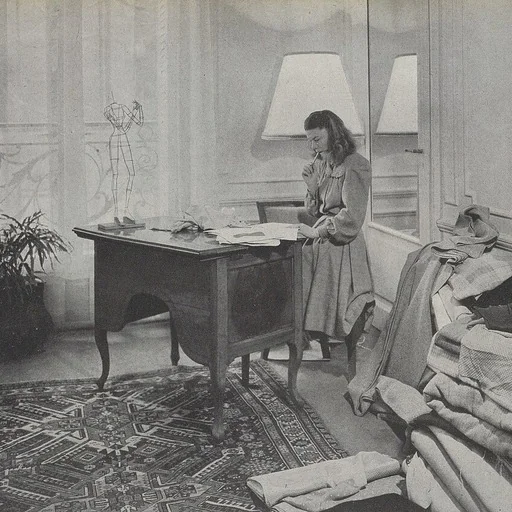
Marie-Louise Carven (31 August 1909 – 8 June 2015), born Carmen de Tommaso, was a French fashion designer who founded the house of Carven in 1945.
Museum
Palais Galliera - Musée de la Mode de la Ville de Paris
Continue through works from the same source collection.
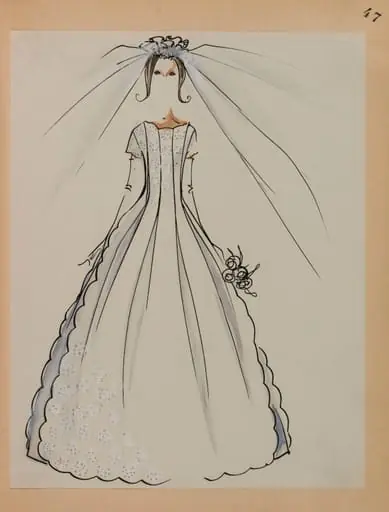 Robe de mariée festonnée et son voile
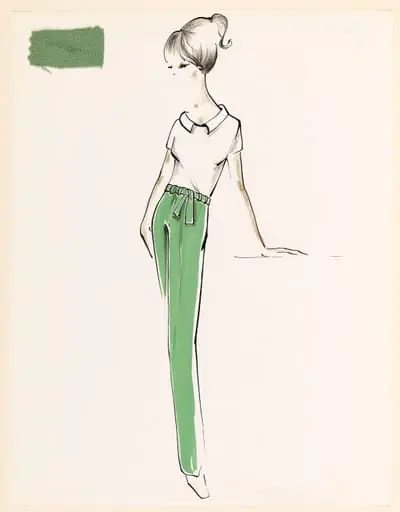 Haut blanc à manches courtes et pantalon vert à ceinture nouée
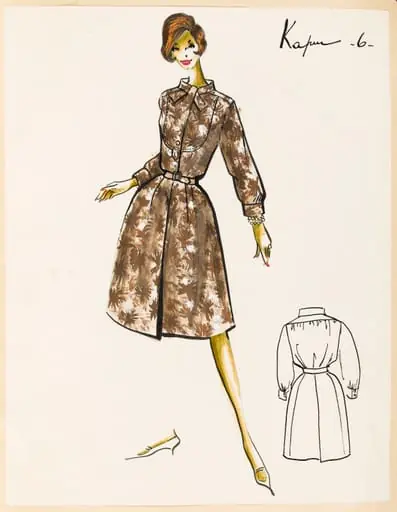 Kapur
Kapur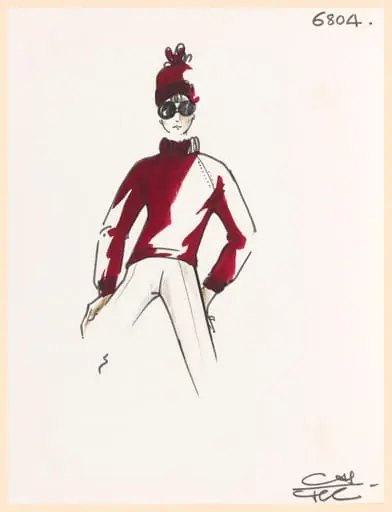 Pull-over à manches longues pourpre, bonnet assorti, pantalon et lunettes de soleil
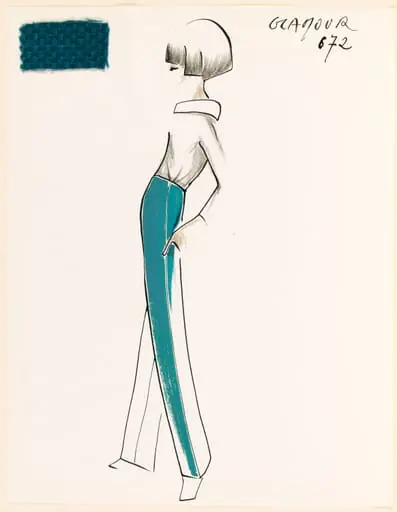 GLAMOUR
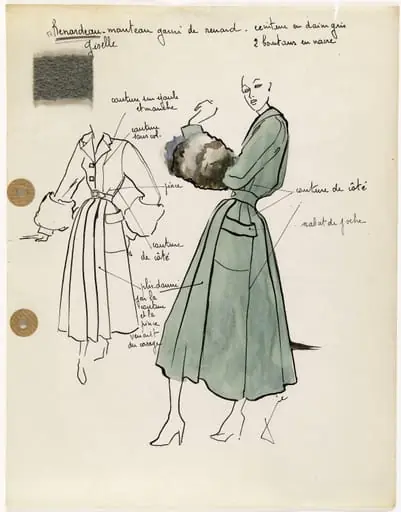 'Renardeau'
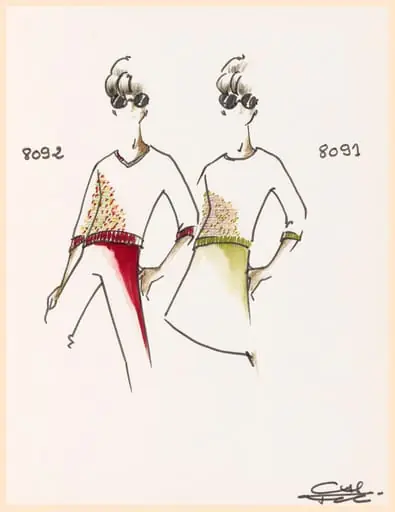 Pull-over à manches trois quarts et à encolure V à motifs multicolores, pantalon cerise et lunettes de soleil
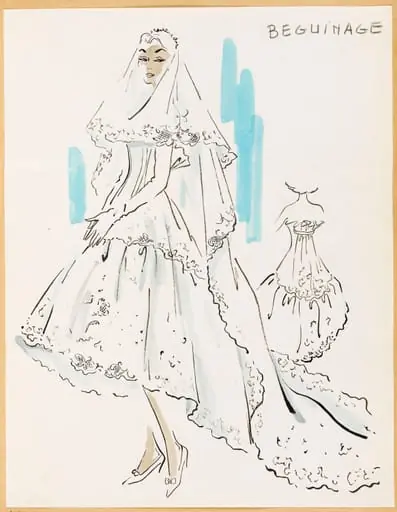 Béguinage