Artwork
'Fil d'argent'
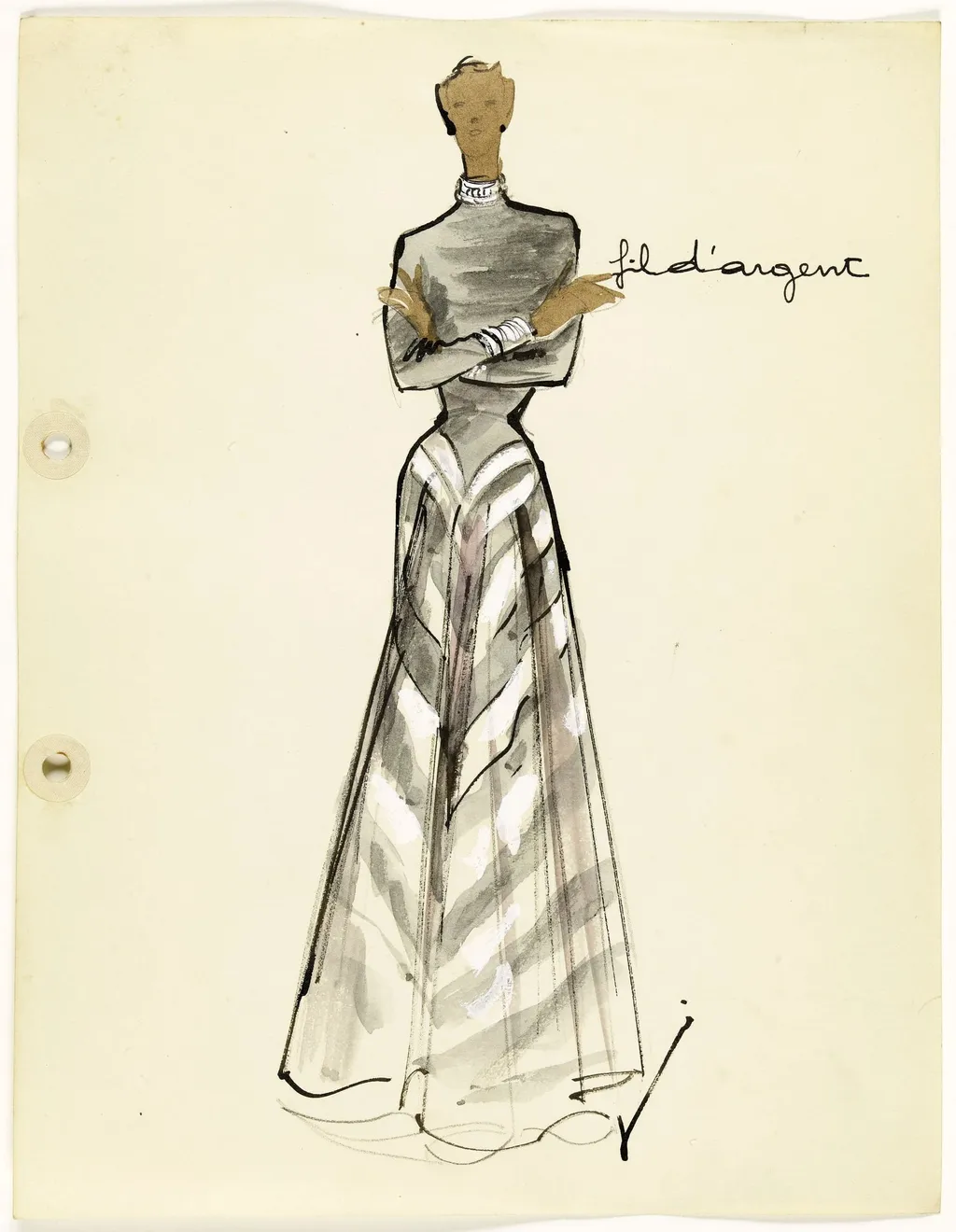
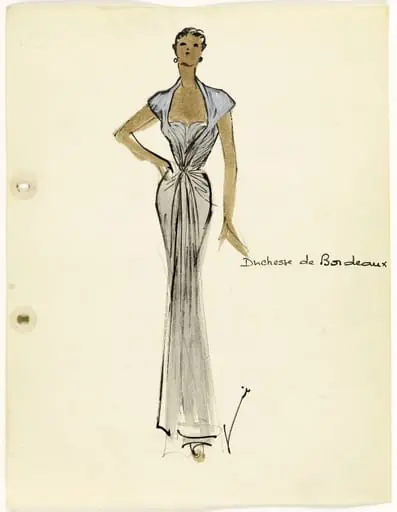
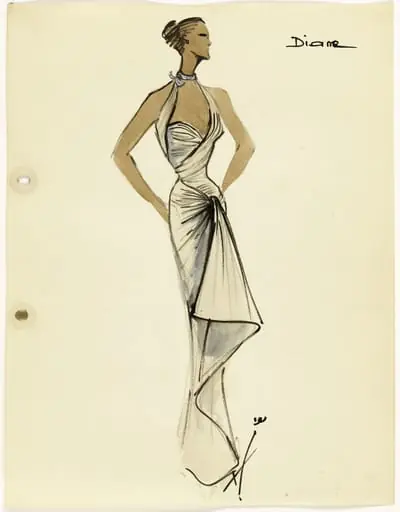
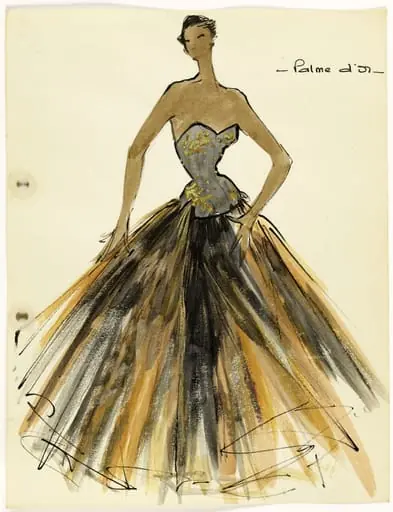
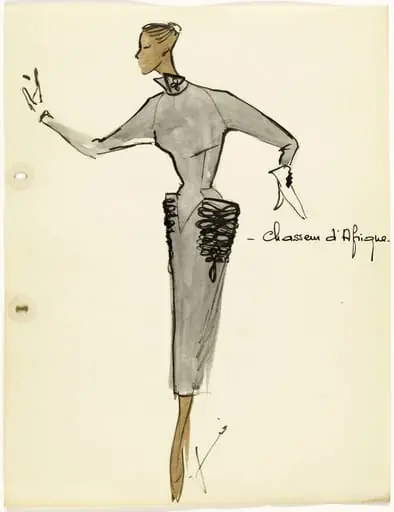
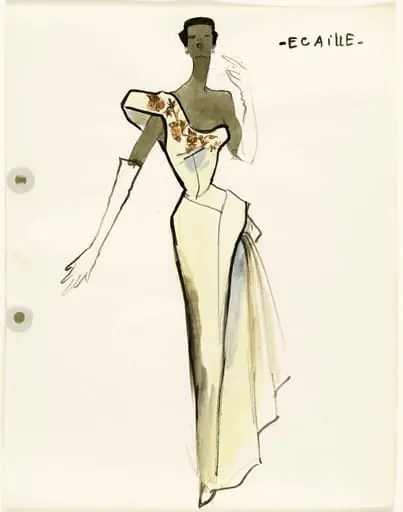
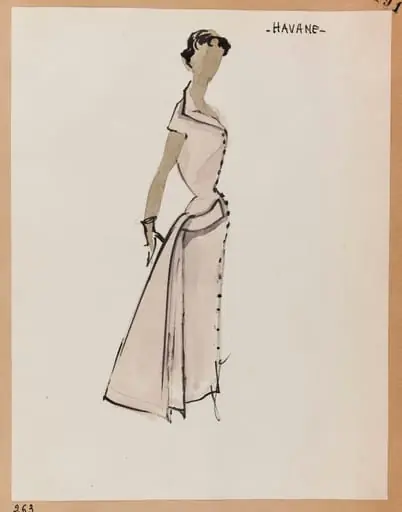
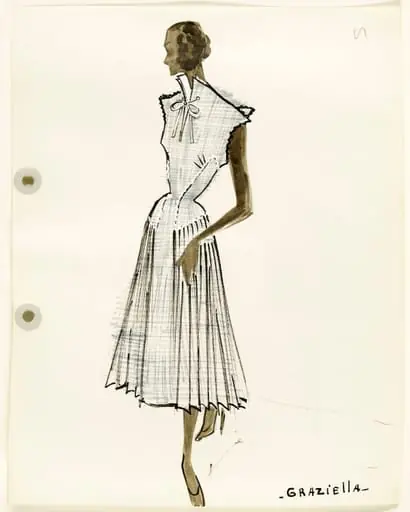
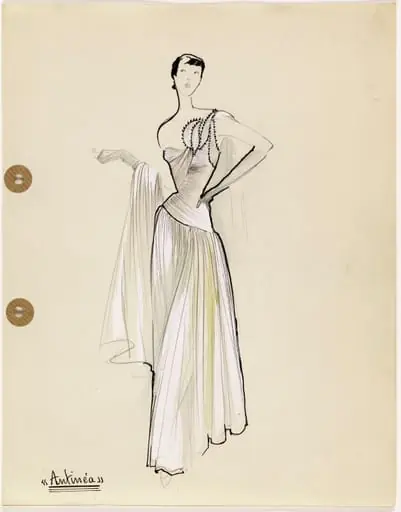
'Fil d'argent' is a drawing by Marie-Louise Carven. It dates from 1951 and is held in the collection of the Palais Galliera - Musée de la Mode de la Ville de Paris.
About this work
Overview
The piece resides in the Museum of Ethnography’s collection, where it serves as a record of mid-century French design practice.
Created around 1951, *Fil d'argent* is a pencil and ink sketch by French designer Marie-Louise Carven. It depicts a figure in a slender, draped gown, rendered with delicate linework and subtle shading. The drawing reflects Carven’s interest in lightweight, feminine silhouettes and was produced during the early years of her fashion house, which she founded in 1945. The piece resides in the Museum of Ethnography’s collection, where it serves as a record of mid-century French design practice.
Subject & Meaning
The figure in *Fil d'argent* stands with arms crossed, holding a small object, suggesting quiet contemplation or ritual. The high collar and fitted sleeves convey modesty, while the wide, flowing skirt implies movement and grace. The title, meaning 'silver thread,' alludes to the fabric’s luminous, fine texture, evoking both material quality and poetic elegance. The pose and attire together suggest an idealized, refined femininity central to Carven’s aesthetic.
Technique & Style
Carven employed soft pencil and ink to achieve a light, airy effect, using fine cross-hatching to model form without heavy contrast. The lines are precise yet fluid, emphasizing the drape and volume of the garment. Shading is restrained, allowing the fabric’s texture to suggest itself through subtle tonal shifts rather than bold definition. The signature, placed discreetly in the corner, reflects the drawing’s function as a working design study rather than a finished artwork.
History & Provenance
The sketch dates to the early 1950s, a period when Carven was expanding her label beyond haute couture into prêt-à-porter, making her one of the first French designers to do so. Though primarily known for garments, Carven produced numerous design sketches to guide her ateliers. *Fil d'argent* entered the Museum of Ethnography’s collection as part of a broader effort to document fashion as cultural artifact, preserving the material and conceptual processes behind mid-century dressmaking.
Context
In postwar France, fashion design increasingly emphasized accessibility and practicality alongside elegance. Carven’s focus on petite proportions and light fabrics responded to changing lifestyles and the rise of ready-to-wear. *Fil d'argent* reflects this shift, merging traditional couture techniques with a modern sensibility. Its preservation in an ethnographic museum underscores how fashion was being repositioned as a cultural practice, not merely a commercial one.
Legacy
The sketch remains a quiet testament to Carven’s influence on postwar French fashion. While less celebrated than contemporaries, her innovations in ready-to-wear and attention to proportion helped redefine women’s dress for everyday life. *Fil d'argent* illustrates how design thinking was embedded in the hand-drawn process, preserving a moment when fashion’s creativity was rooted in meticulous, intimate craftsmanship.
Artist & collection
Artist
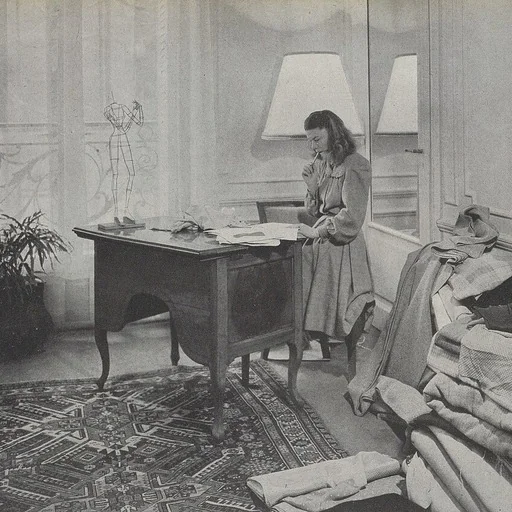
Marie-Louise Carven (31 August 1909 – 8 June 2015), born Carmen de Tommaso, was a French fashion designer who founded the house of Carven in 1945.
Museum
Palais Galliera - Musée de la Mode de la Ville de Paris
Continue through works from the same source collection.
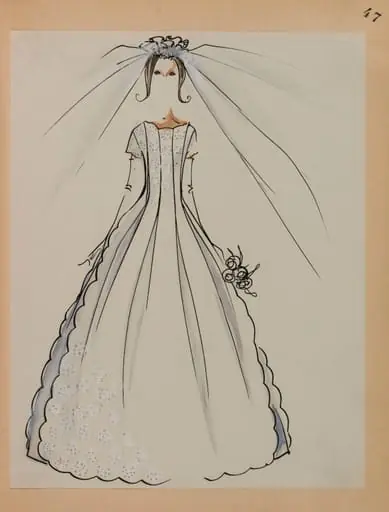 Robe de mariée festonnée et son voile
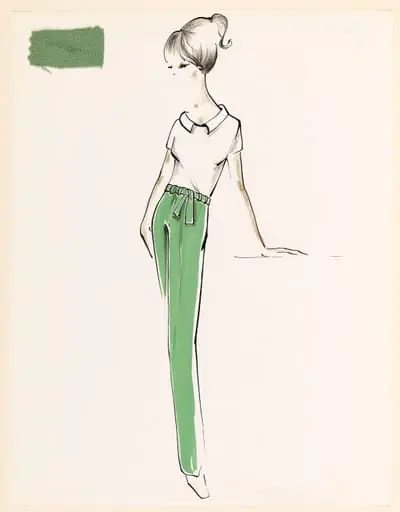 Haut blanc à manches courtes et pantalon vert à ceinture nouée
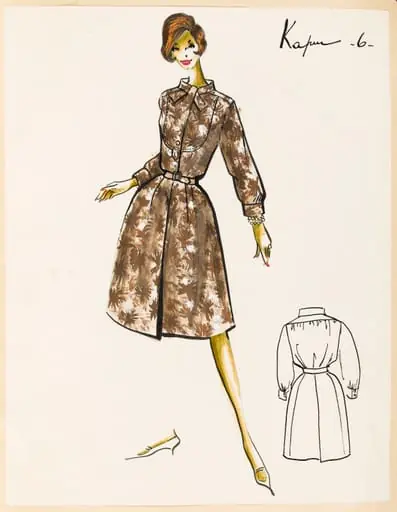 Kapur
Kapur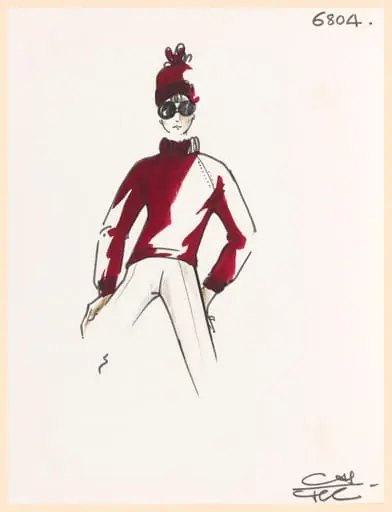 Pull-over à manches longues pourpre, bonnet assorti, pantalon et lunettes de soleil
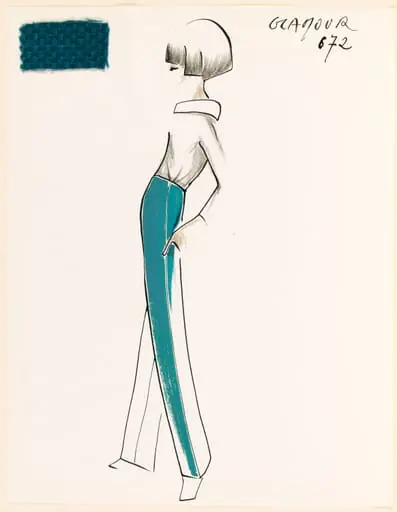 GLAMOUR
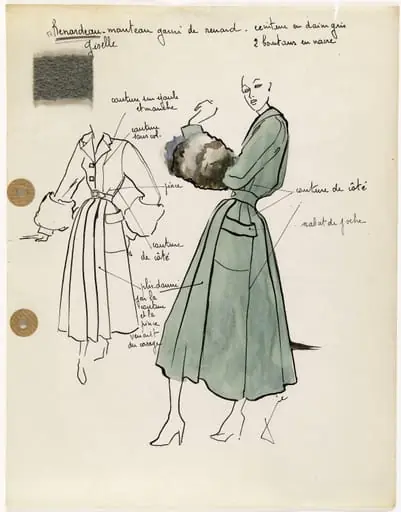 'Renardeau'
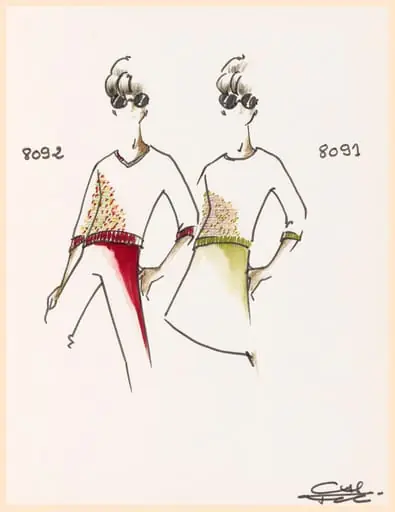 Pull-over à manches trois quarts et à encolure V à motifs multicolores, pantalon cerise et lunettes de soleil
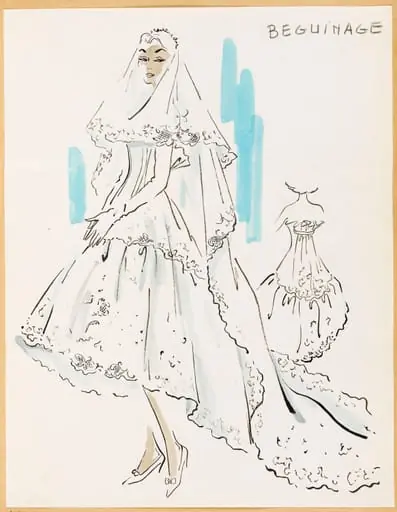 Béguinage