Artwork
'Gaufrette'
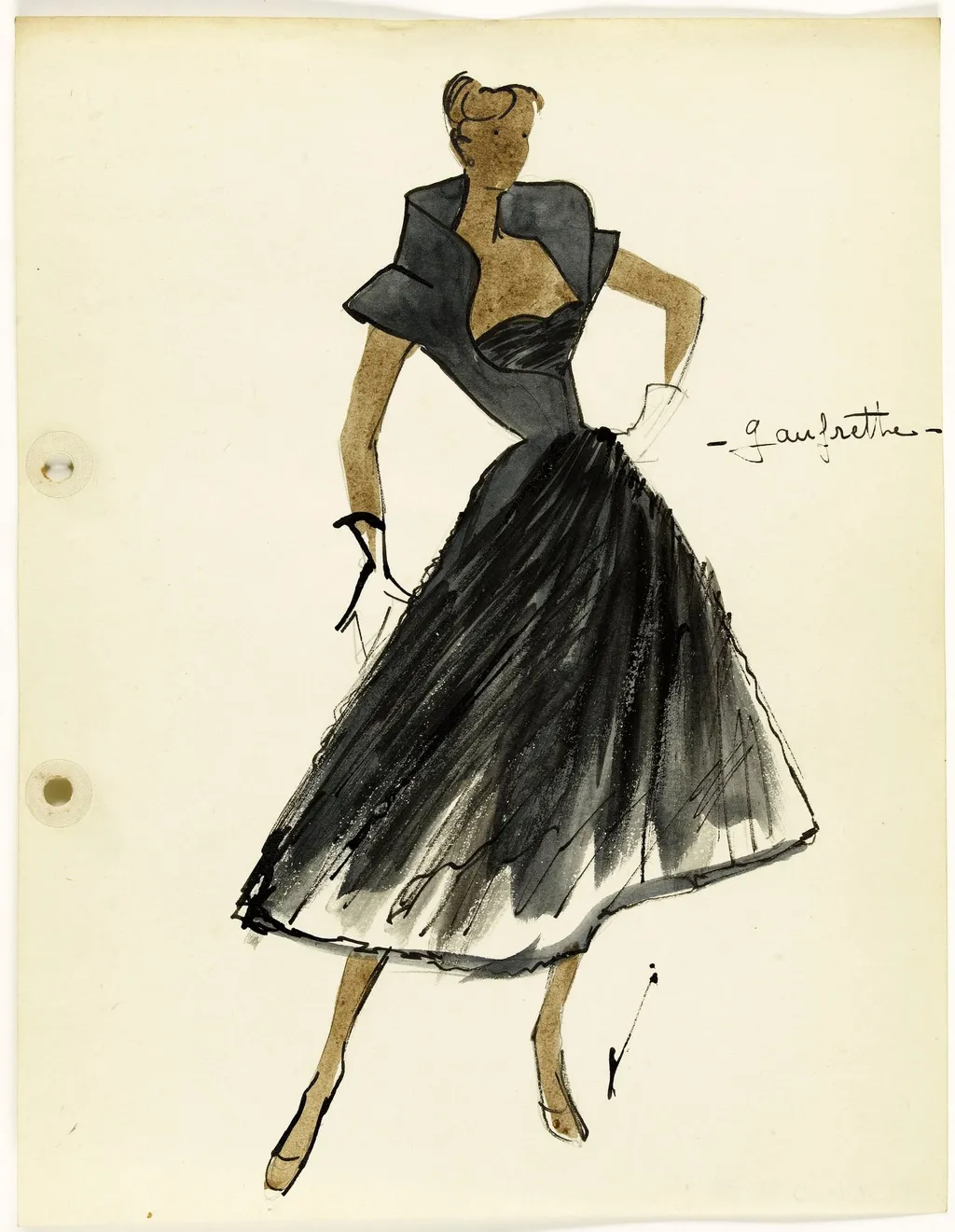
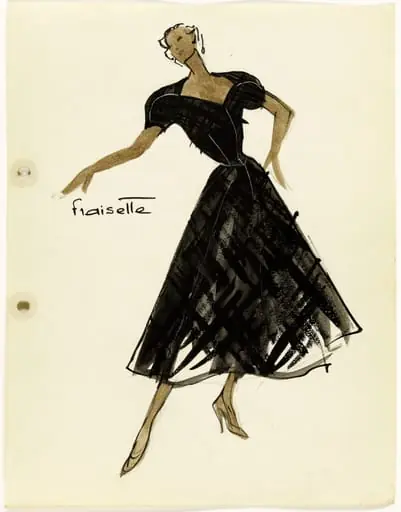
'Gaufrette' is a drawing by Carven. It dates from 1951 and is held in the collection of the Palais Galliera - Musée de la Mode de la Ville de Paris.
About this work
Overview
The work is part of the collection at the Museum of Ethnography, where it is preserved as an example of mid-century French fashion drafting.
Created around 1951, 'Gaufrette' is a fashion sketch attributed to the designer Carven. Executed in ink or watercolor, it was likely produced as a design study rather than a finished illustration. The work is part of the collection at the Museum of Ethnography, where it is preserved as an example of mid-century French fashion drafting. Its informal, rapid execution suggests it was made in a studio setting during the design process.
Subject & Meaning
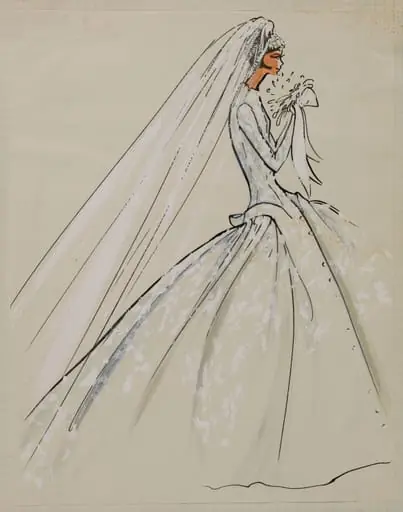
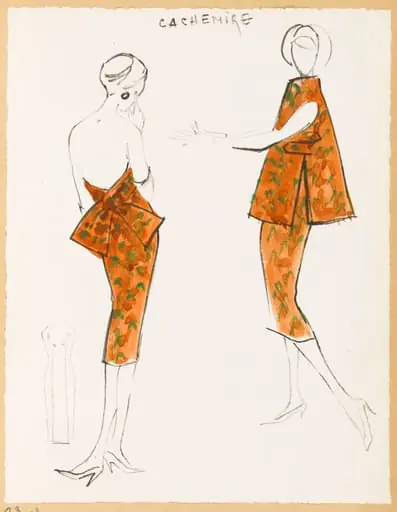
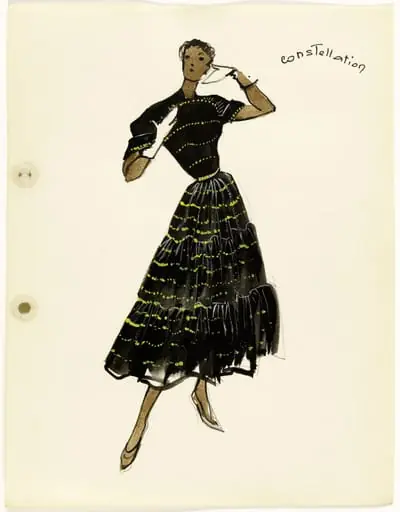
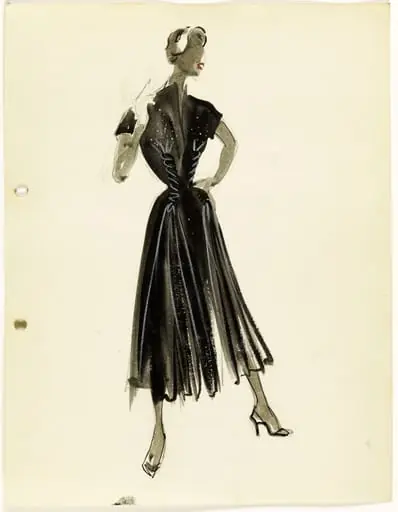
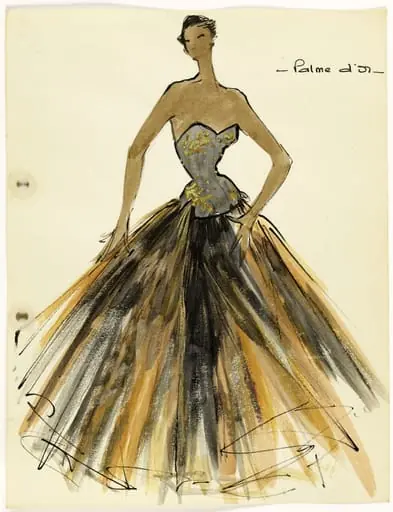
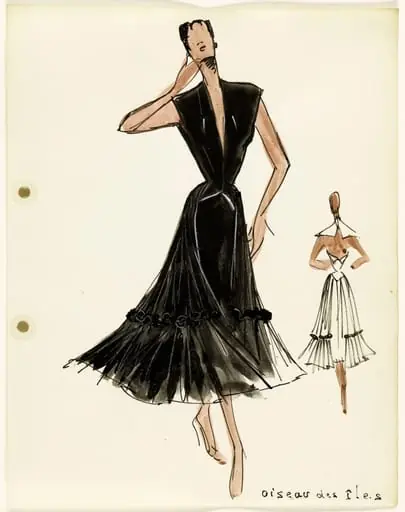
The drawing depicts a woman wearing a tailored black dress characterized by exaggerated padded shoulders and a low, open neckline. The flared, floor-length skirt is rendered with fluid, sweeping strokes that imply motion and volume. The absence of facial features or background elements directs focus to the silhouette, emphasizing the garment’s structure and drape as the central subject. The piece reflects a postwar interest in dramatic, sculptural forms in women’s wear.
Technique & Style
Carven employed loose, expressive brushwork to convey the texture and movement of fabric without precise detail. Lines are confident and economical, suggesting form through rhythm rather than outline. The ink or wash medium allows for subtle gradations, enhancing the sense of flow in the skirt. The signature 'Carven' in the corner confirms the drawing’s origin as a designer’s autograph, typical of fashion houses that treated sketches as both functional tools and personal statements.
History & Provenance
The sketch entered the Museum of Ethnography’s collection as part of a broader acquisition of fashion-related materials documenting 20th-century design practices. Its provenance traces back to Carven’s atelier in Paris, where such drawings were used to communicate ideas to tailors and clients. Unlike mass-produced fashion plates, this piece retains the immediacy of its creation, offering insight into the private workflow of a couturier during the early 1950s.
Context
In the early 1950s, Parisian fashion emphasized structured silhouettes following the austerity of wartime. Carven’s designs, including this sketch, responded with bold shoulders and fluid skirts that balanced authority with elegance. The drawing aligns with trends set by contemporaries like Dior and Balmain, yet retains a distinctive lightness. It reflects a moment when haute couture still relied heavily on hand-drawn concepts before photographic documentation became dominant.
Legacy
As a surviving example of a designer’s working sketch, 'Gaufrette' contributes to the scholarly understanding of fashion as a tactile, iterative process. It stands as a record of craftsmanship before industrialization transformed design workflows. The drawing’s preservation in an ethnographic museum underscores its value not merely as art, but as cultural artifact—evidence of how clothing was conceived, communicated, and realized in mid-century France.
Artist & collection
Artist
These delicate ink-on-paper drawings capture the quiet poetry of everyday things: pinecones, reeds, apples.
Museum
Palais Galliera - Musée de la Mode de la Ville de Paris
Continue through works from the same source collection.