Artwork
Chardonneret
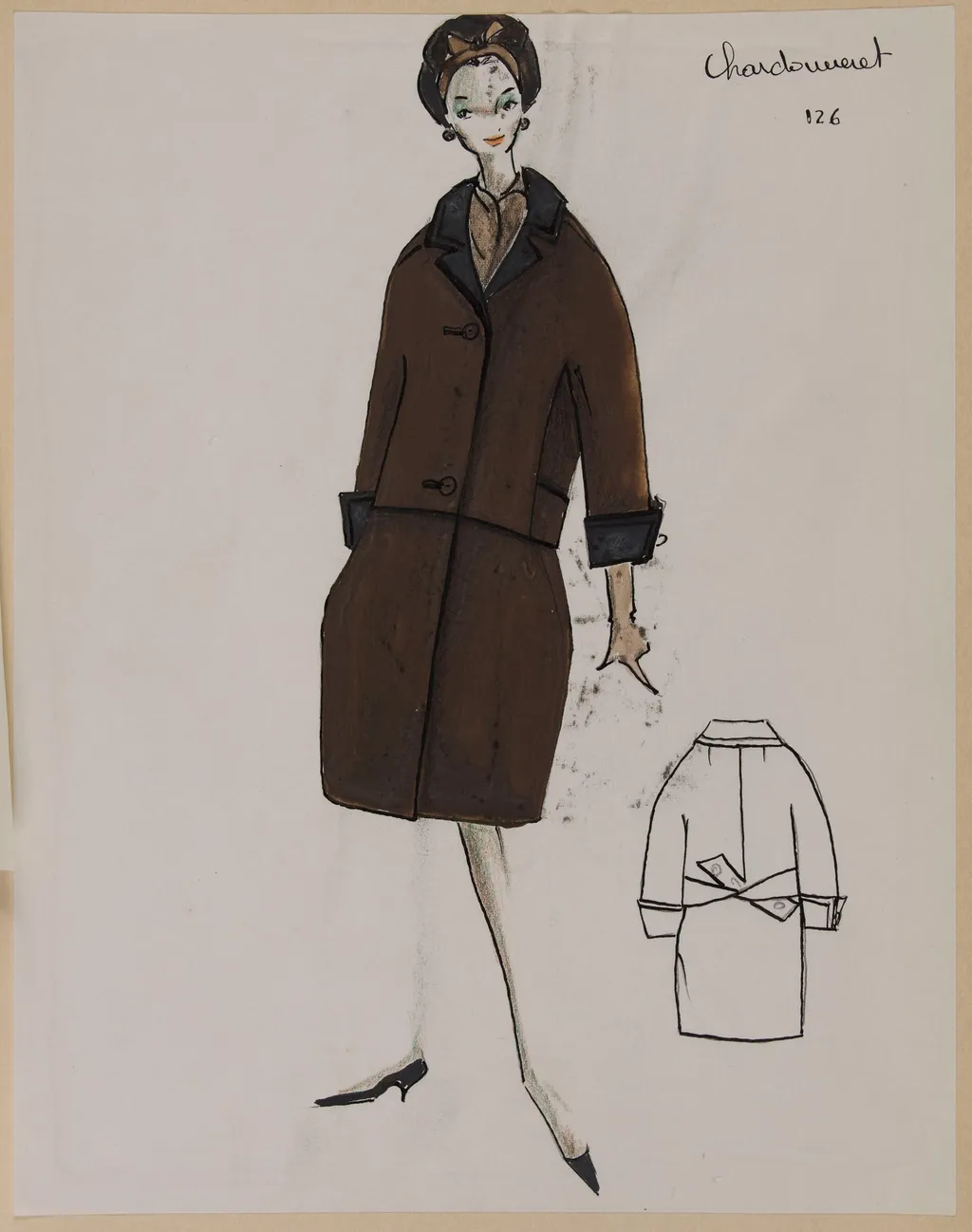
Chardonneret is a drawing by Marie-Louise Carven. It dates from 1960 and is held in the collection of the Palais Galliera - Musée de la Mode de la Ville de Paris.
About this work
Overview
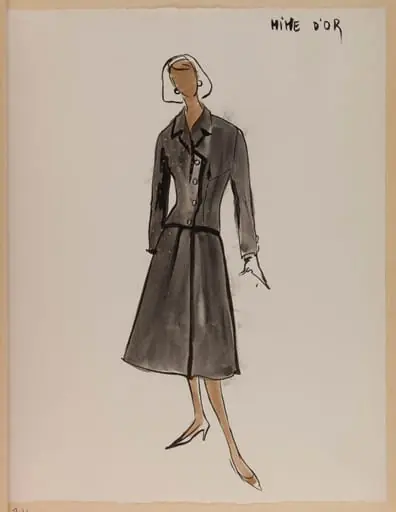
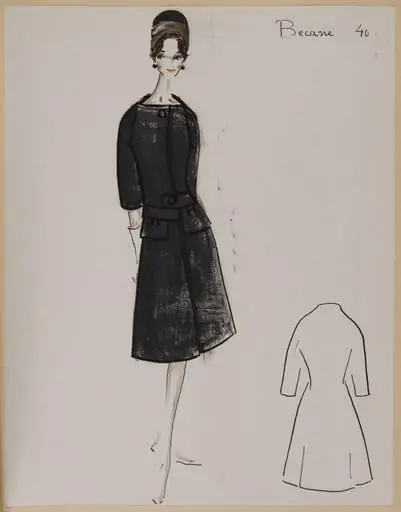
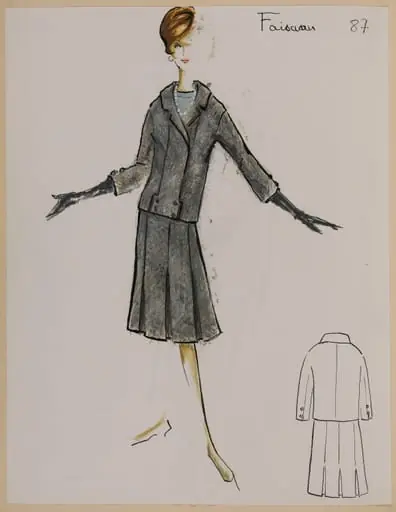
Created around 1960, *Chardonneret* is a fashion illustration by Marie-Louise Carven, founder of the Parisian fashion house Carven established in 1945.
Created around 1960, *Chardonneret* is a fashion illustration by Marie-Louise Carven, founder of the Parisian fashion house Carven established in 1945. The work captures a tailored ensemble in graphite and ink, emphasizing clean lines and restrained color. It reflects Carven’s focus on wearable, feminine silhouettes suited to modern urban life. Though presented as an image, it functions as a design document rather than a fine art piece, intended to communicate garment structure and aesthetic.
Subject & Meaning
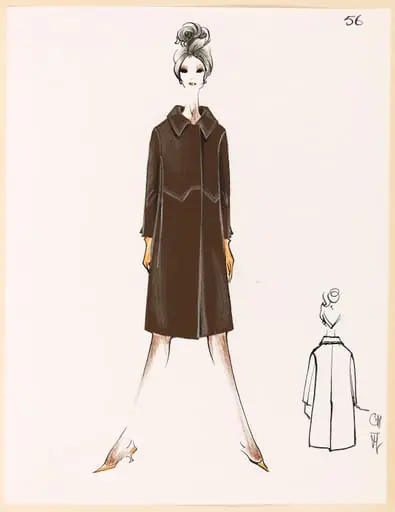
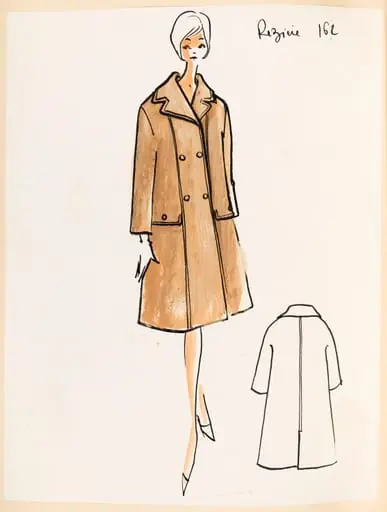
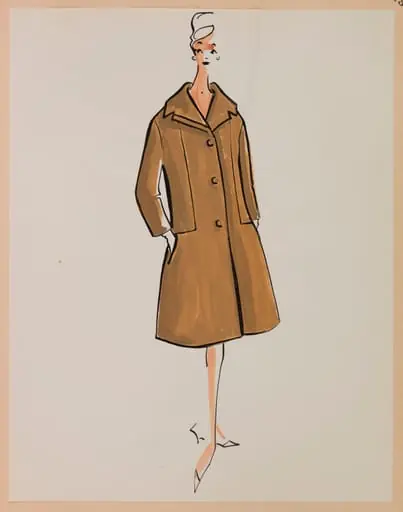
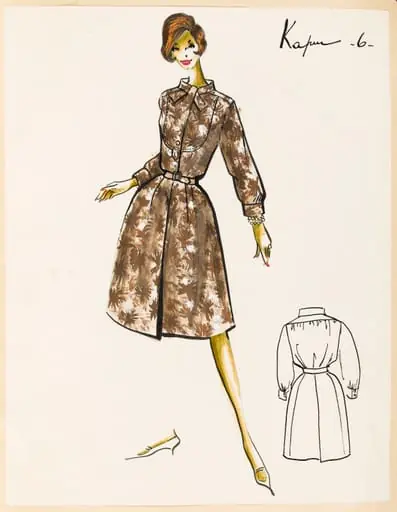
The illustration depicts a woman from the waist up, dressed in a brown coat with black trim and matching dress and heels. Her face is intentionally obscured, shifting focus from identity to garment construction. The subdued palette of brown and black conveys understated elegance, aligning with Carven’s philosophy of quiet sophistication. The inclusion of a secondary sketch of the coat’s back reveals attention to detail and functionality, suggesting the design’s practicality alongside its visual harmony.
Technique & Style
Rendered in fine line drawing with minimal color, the illustration employs precise contours and subtle shading to define fabric drape and structure. The blurred facial features and simplified form reflect the conventions of mid-century fashion drafting, prioritizing clarity over realism. The placement of the rear view beside the front figure demonstrates a methodical approach to presenting garment anatomy. The restrained use of ink and graphite underscores a disciplined, commercial aesthetic rooted in couture tradition.
History & Provenance
The illustration entered the collection of the Museum of Ethnography, likely as part of a broader effort to document 20th-century fashion as cultural artifact. Carven’s brand, known for pioneering ready-to-wear in postwar France, produced such drawings for clients and manufacturers. While the exact provenance of this piece is undocumented, its preservation suggests recognition of its role in the evolution of accessible fashion design during a period of significant industry transformation.
Context
In the 1950s and 1960s, Parisian couturiers like Carven navigated the shift from bespoke tailoring to mass-produced clothing. Her designs catered to a growing market of working women seeking refined, affordable garments. *Chardonneret* embodies this transition—elevating everyday wear through thoughtful construction and restrained beauty. The illustration’s existence reflects the industry’s reliance on visual documentation to bridge design intent and production.
Legacy
Marie-Louise Carven’s work laid groundwork for the democratization of fashion, influencing later designers who prioritized wearability without sacrificing elegance. *Chardonneret* stands as a quiet testament to this legacy—not as a celebrated runway piece, but as a functional record of design thinking. Its preservation in an ethnographic context signals its value as a cultural artifact, illustrating how fashion communicates social norms and aesthetic values beyond the runway.
Artist & collection
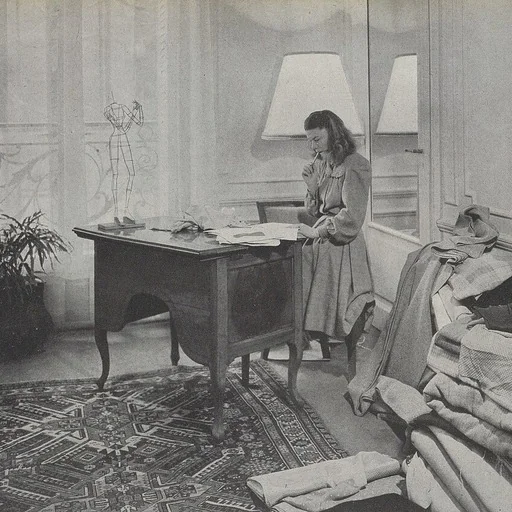
Artist
Marie-Louise Carven (31 August 1909 – 8 June 2015), born Carmen de Tommaso, was a French fashion designer who founded the house of Carven in 1945.
Museum
Palais Galliera - Musée de la Mode de la Ville de Paris
Continue through works from the same source collection.
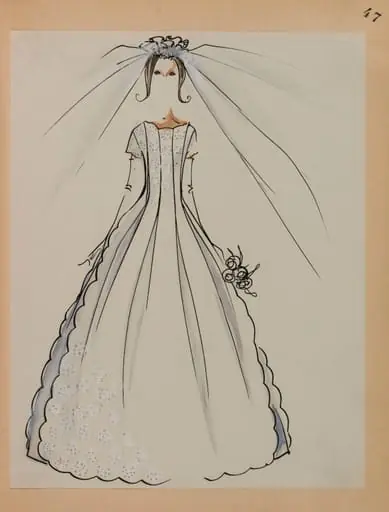 Robe de mariée festonnée et son voile
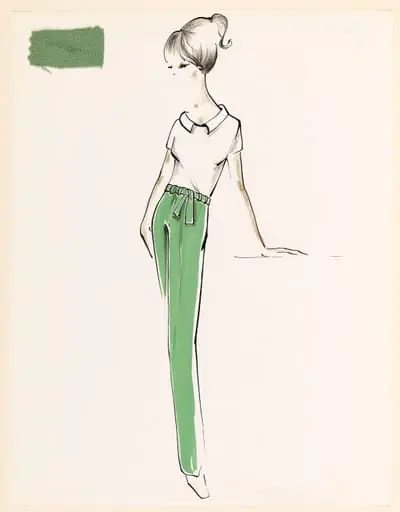 Haut blanc à manches courtes et pantalon vert à ceinture nouée
 Kapur
Kapur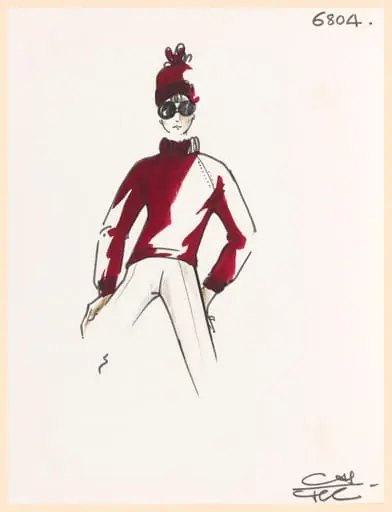 Pull-over à manches longues pourpre, bonnet assorti, pantalon et lunettes de soleil
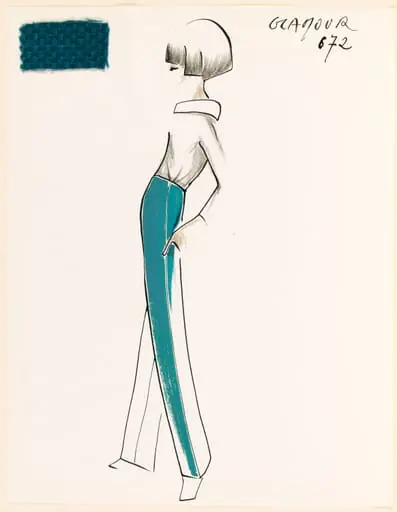 GLAMOUR
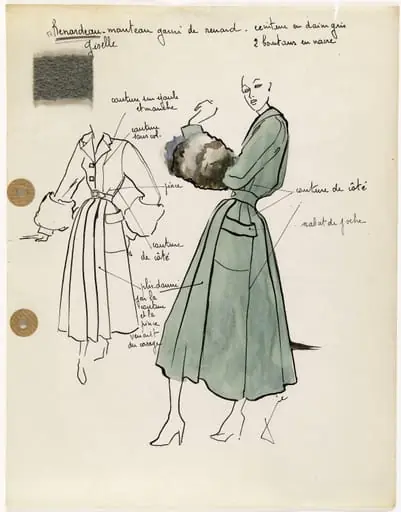 'Renardeau'
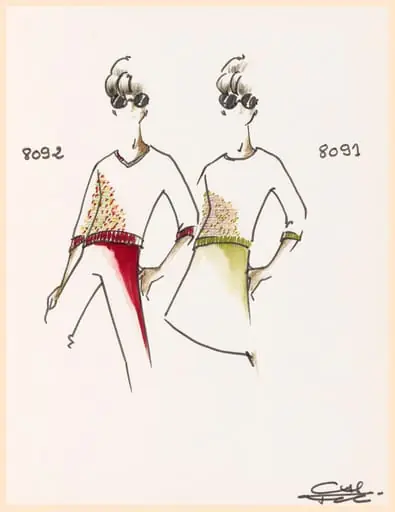 Pull-over à manches trois quarts et à encolure V à motifs multicolores, pantalon cerise et lunettes de soleil
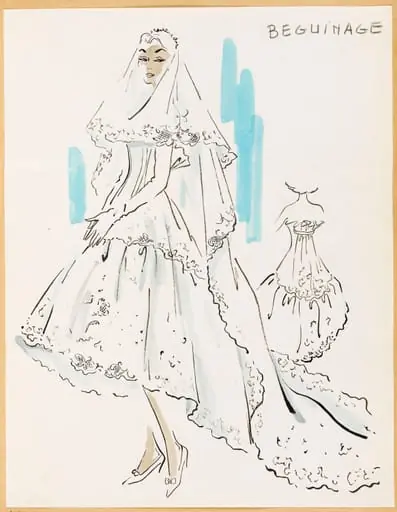 Béguinage