Artwork
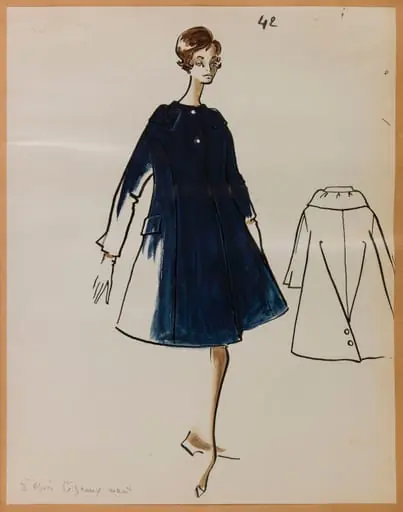
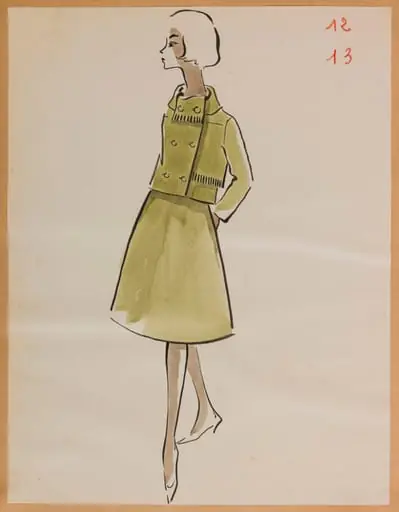
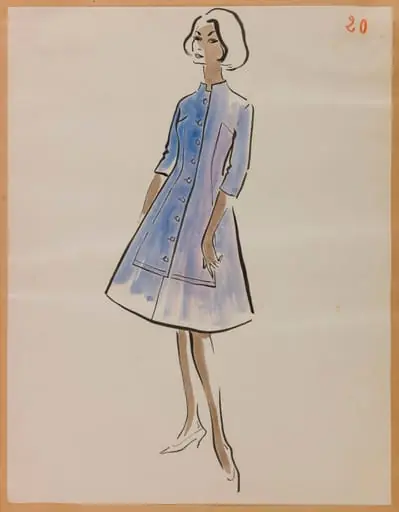
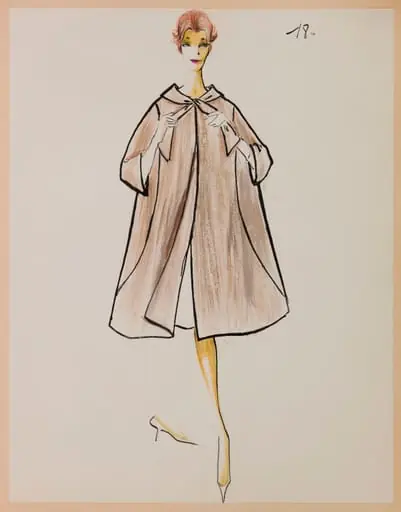
Manteau ample absinthe
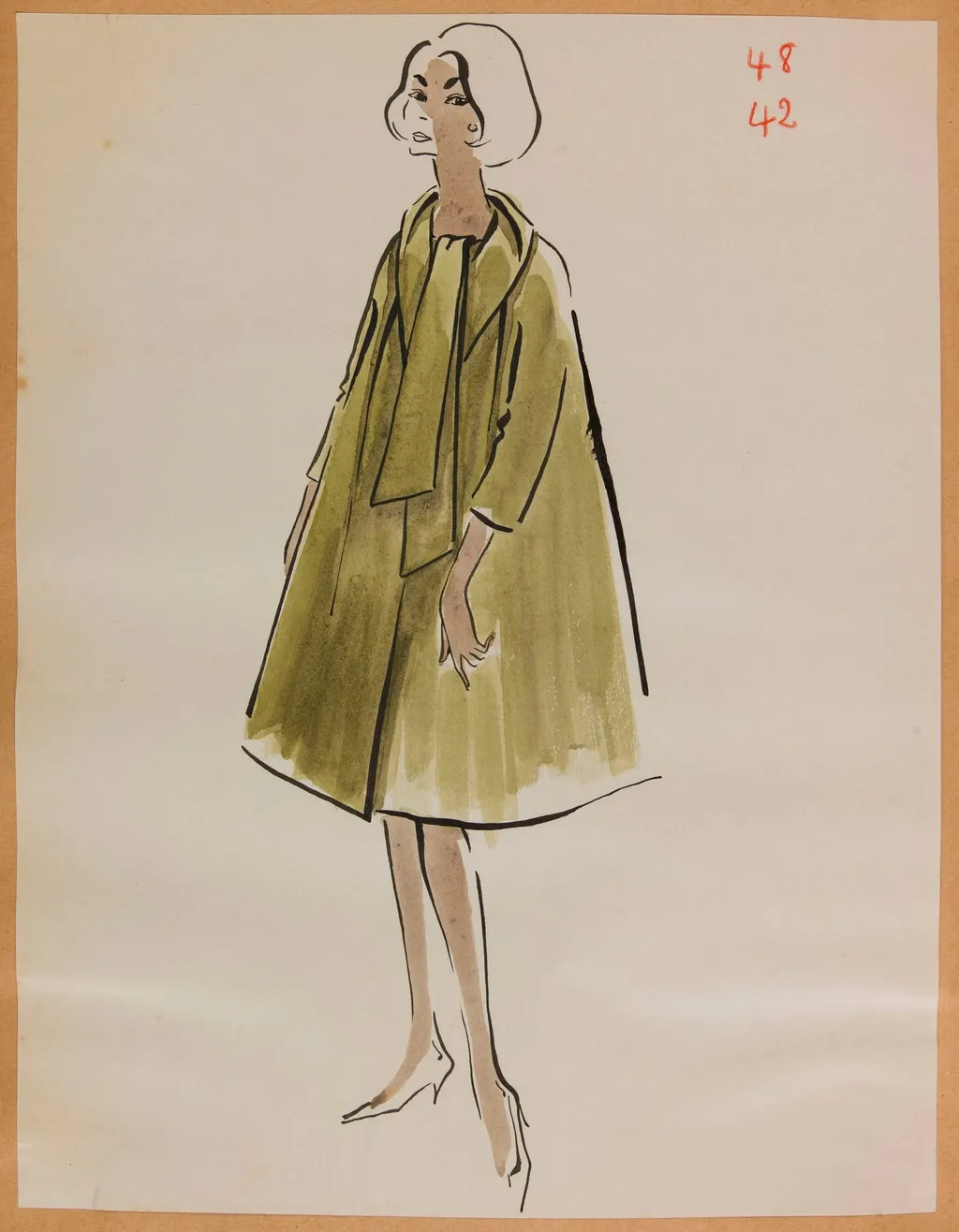
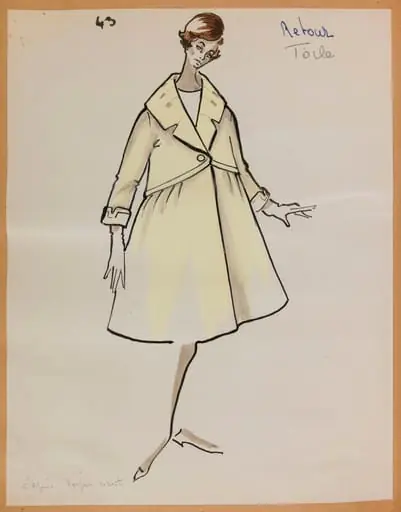
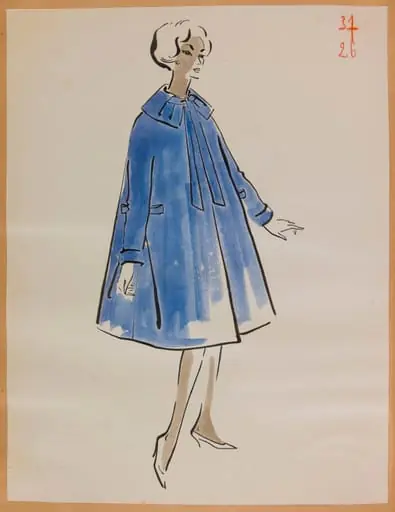
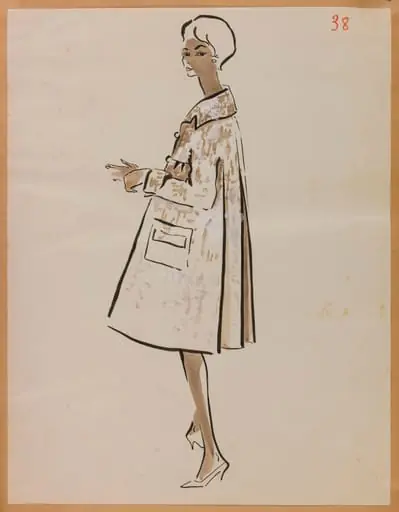
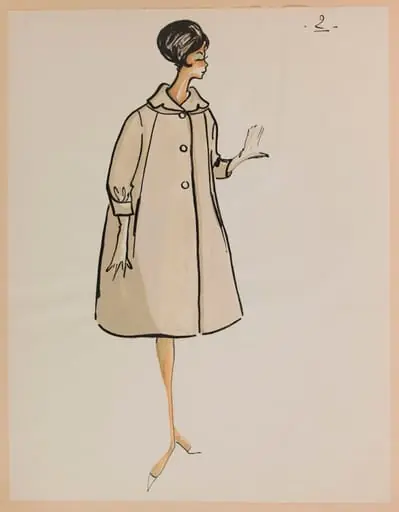
Manteau ample absinthe is a drawing by Marie-Louise Carven. It dates from 1957 and is held in the collection of the Palais Galliera - Musée de la Mode de la Ville de Paris.
About this work
Overview
This image captures a woman wearing a flowing green coat and matching dress, attributed to the aesthetic of French designer Marie-Louise Carven.
This image captures a woman wearing a flowing green coat and matching dress, attributed to the aesthetic of French designer Marie-Louise Carven. Created circa 1957, it reflects the designer’s focus on accessible, refined clothing for smaller frames. Rendered in soft green tones with defined black outlines, the illustration emphasizes silhouette and poise over detailed realism, aligning with mid-century fashion editorial styles.
Subject & Meaning
The figure stands with composed grace, one hand in pocket and gaze lifted, suggesting quiet confidence. Her crossed legs and bobbed hair convey a modern, understated femininity. The attire—lightweight, fluid, and monochromatic—hints at Carven’s philosophy of elegance through simplicity. The image does not depict a specific event but rather embodies an ideal of everyday sophistication suited to postwar urban life.
Technique & Style
The illustration uses a limited palette of green hues with crisp black contours to define form, creating a stylized yet wearable aesthetic. Backgrounds are minimized to a neutral beige, directing attention to the figure’s silhouette. The rendering avoids photorealism, favoring clean lines and flat planes reminiscent of fashion sketches from the era, prioritizing clarity and mood over texture or depth.
History & Provenance
The image is linked to the fashion house founded by Carmen de Tommaso, known professionally as Marie-Louise Carven, established in Paris in 1945. While the exact origin of this illustration is undocumented, its style and timing align with promotional materials produced during the rise of her prêt-à-porter line. It likely served as a visual reference for clients or press, reinforcing the brand’s identity in the late 1950s.
Context
In postwar France, fashion was shifting toward ready-to-wear collections that balanced artistry with practicality. Carven’s designs catered to women seeking refined yet livable clothing, contrasting with haute couture’s exclusivity. This image reflects that cultural pivot—elevating everyday wear through thoughtful design, subtle color, and an emphasis on proportion suited to the modern woman’s active life.
Legacy
Carven’s emphasis on petite proportions and accessible luxury influenced later designers who prioritized inclusivity in sizing and silhouette. Though this image is not a garment itself, it preserves the visual language of her brand: restrained, graceful, and attuned to the rhythms of daily life. It stands as a quiet testament to a design philosophy that valued dignity over spectacle.
Artist & collection
Artist
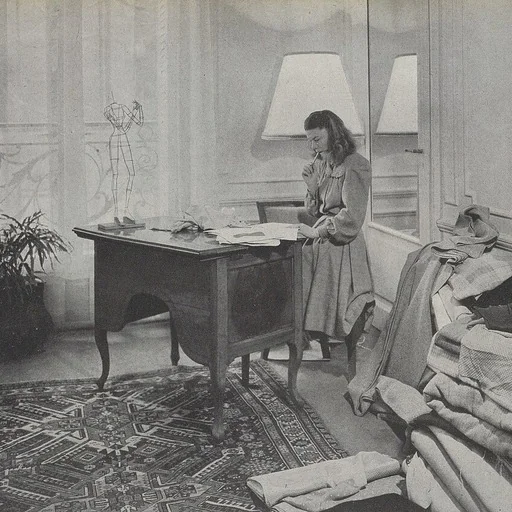
Marie-Louise Carven (31 August 1909 – 8 June 2015), born Carmen de Tommaso, was a French fashion designer who founded the house of Carven in 1945.
Museum
Palais Galliera - Musée de la Mode de la Ville de Paris
Continue through works from the same source collection.
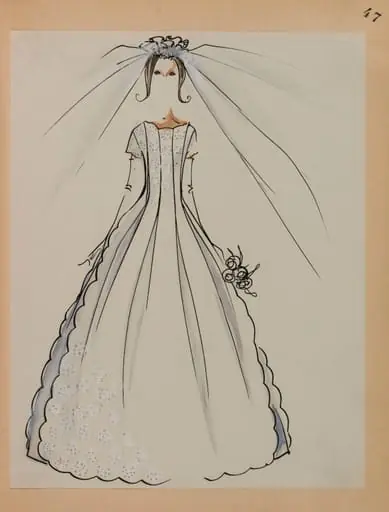 Robe de mariée festonnée et son voile
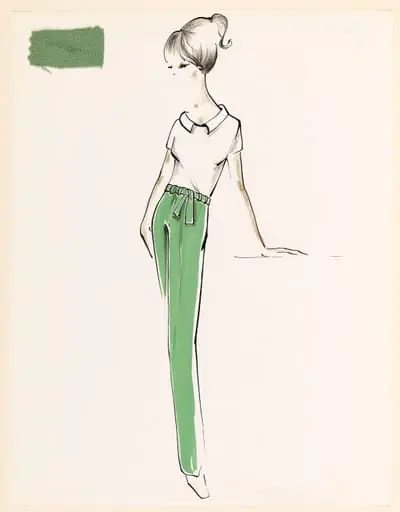 Haut blanc à manches courtes et pantalon vert à ceinture nouée
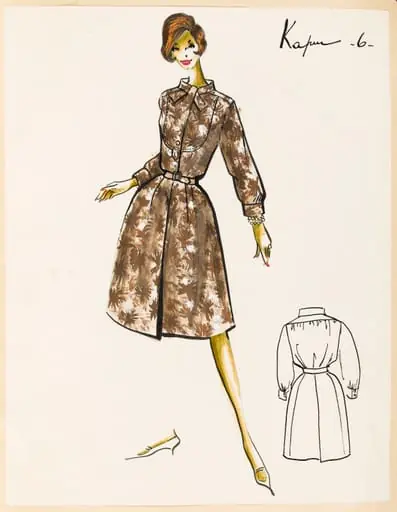 Kapur
Kapur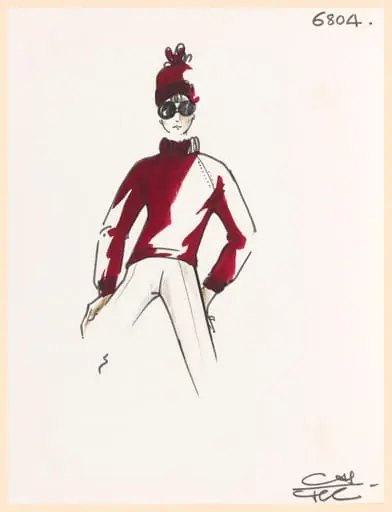 Pull-over à manches longues pourpre, bonnet assorti, pantalon et lunettes de soleil
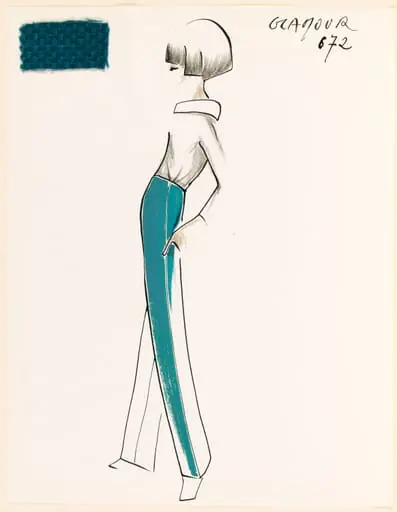 GLAMOUR
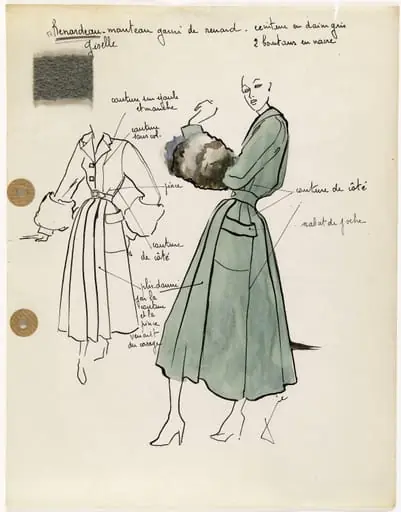 'Renardeau'
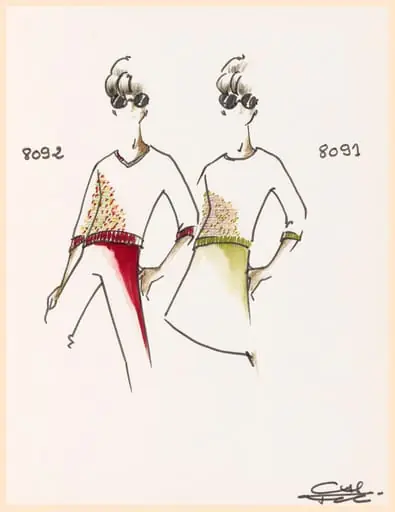 Pull-over à manches trois quarts et à encolure V à motifs multicolores, pantalon cerise et lunettes de soleil
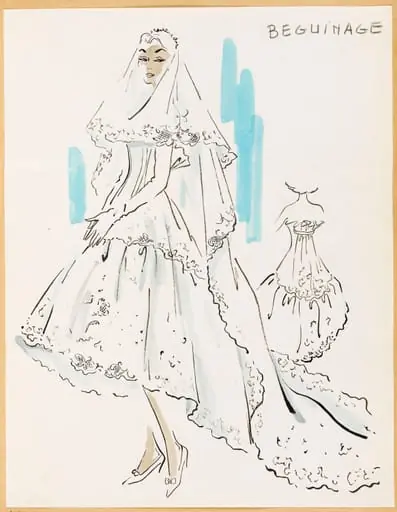 Béguinage