Artwork
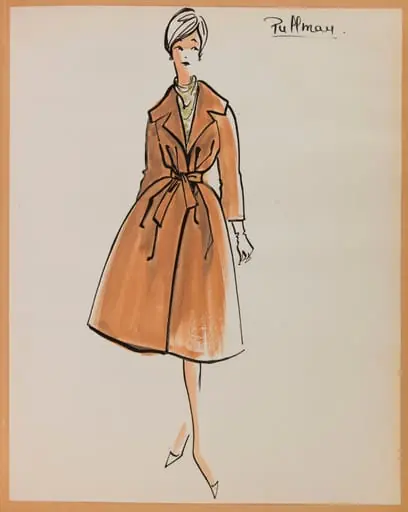
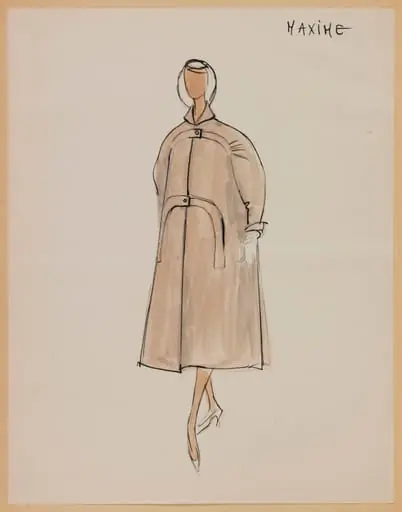
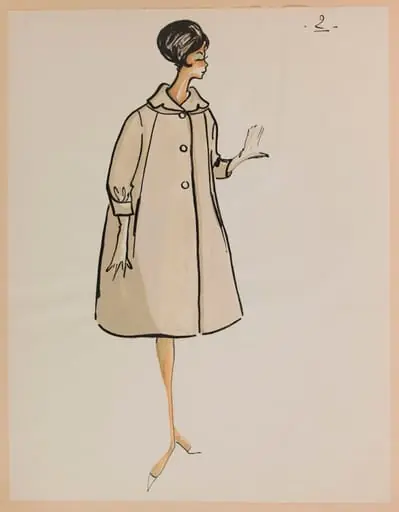
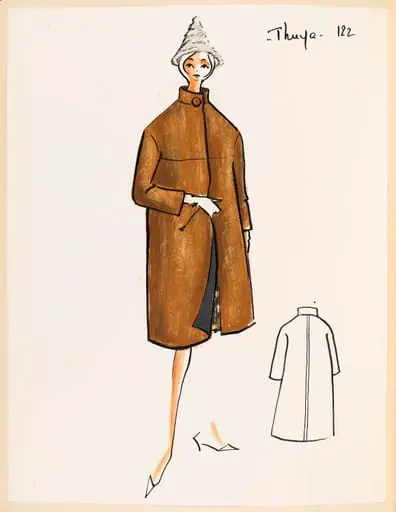
Manteau cape marron
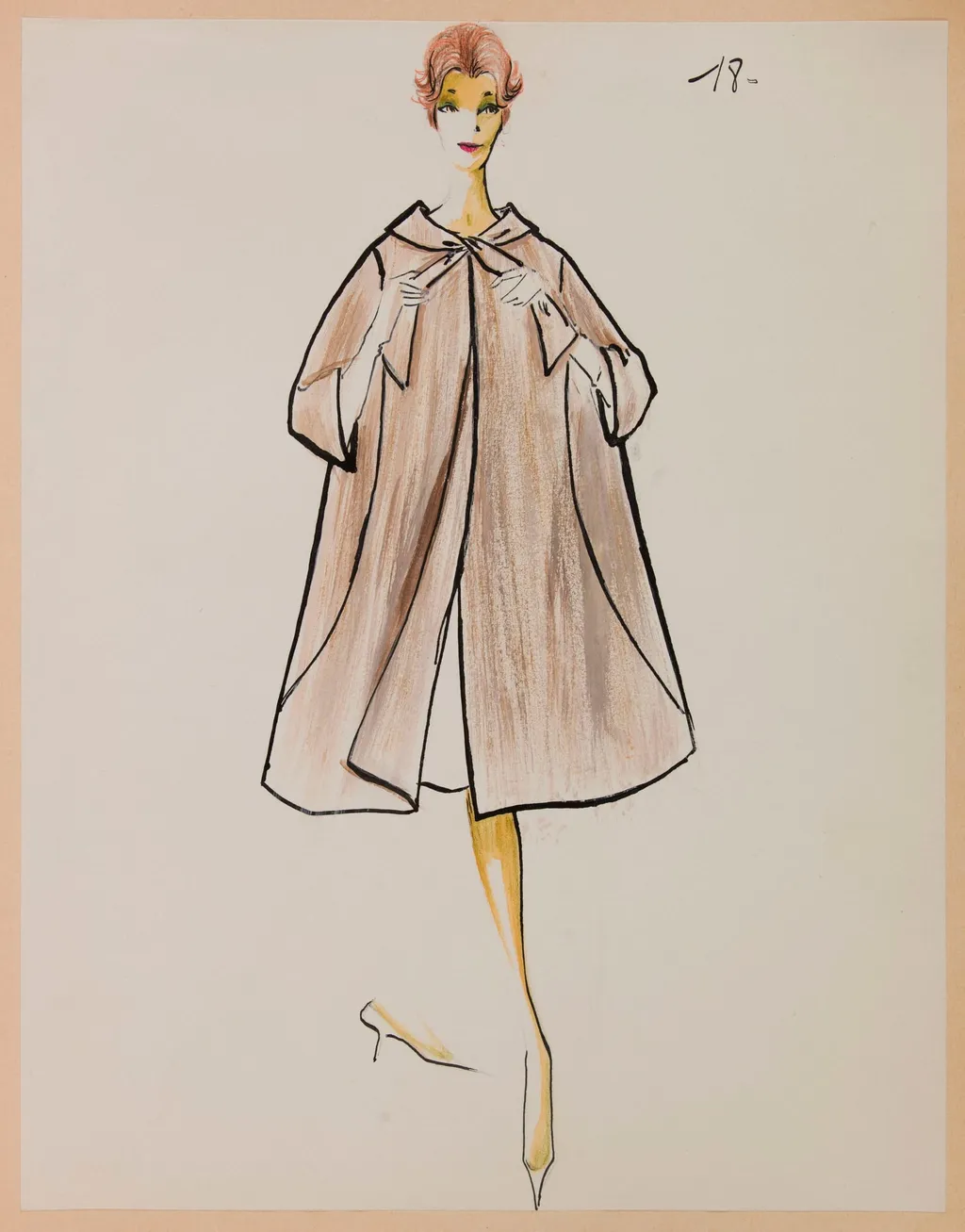
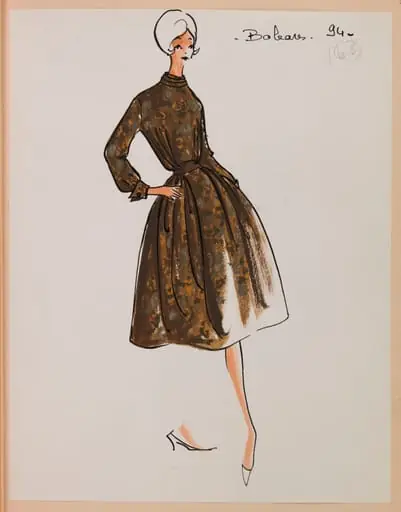
Manteau cape marron is a drawing by Marie-Louise Carven. It dates from 1959 and is held in the collection of the Palais Galliera - Musée de la Mode de la Ville de Paris.
About this work
Overview
The piece is held in the Museum of Ethnography’s collection, reflecting its significance as a representative work of postwar French ready-to-wear design.
This brown wool cape, dated circa 1959, originates from the fashion house founded by Marie-Louise Carven in 1945. Designed for petite figures, it exemplifies her commitment to wearable elegance through lightweight materials and refined silhouettes. The piece is held in the Museum of Ethnography’s collection, reflecting its significance as a representative work of postwar French ready-to-wear design.
Subject & Meaning
The drawing depicts a woman wearing the cape with quiet poise, one foot gently advanced, suggesting movement within stillness. The garment’s loose drape and minimal structure emphasize comfort and fluidity, aligning with Carven’s philosophy of clothing that enhances rather than constrains the body. The neat hairstyle and simple heels reinforce an understated, everyday sophistication.
Technique & Style
The sketch captures the cape’s form through swift, assured lines that convey fabric weight and motion. Dark trim at the collar and cuffs anchors the composition, contrasting with the warm brown tones of the wool. The artist prioritizes the garment’s flow over detailed anatomy, focusing attention on how the material behaves in space — a hallmark of Carven’s design sensibility.
History & Provenance
The cape entered the Museum of Ethnography’s holdings as part of a broader effort to document mid-century fashion as cultural artifact. Its provenance traces to Carven’s Paris atelier, where garments were produced in limited quantities for a discerning clientele. Though not haute couture, it embodies the brand’s bridge between artisanal craftsmanship and accessible design.
Context
In the late 1950s, Carven was among the first French designers to successfully merge couture-level detail with ready-to-wear production. Her work responded to changing social norms, offering women garments suited to active, urban lives. This cape reflects a broader shift toward practicality without sacrificing aesthetic refinement in postwar European fashion.
Legacy
Carven’s approach influenced later generations of designers who prioritized proportion and wearability over ornamentation. The cape’s enduring presence in museum collections underscores its role as a quiet but pivotal example of how accessible fashion could maintain artistic integrity. It remains a reference point in studies of mid-century women’s dress and the democratization of style.
Artist & collection
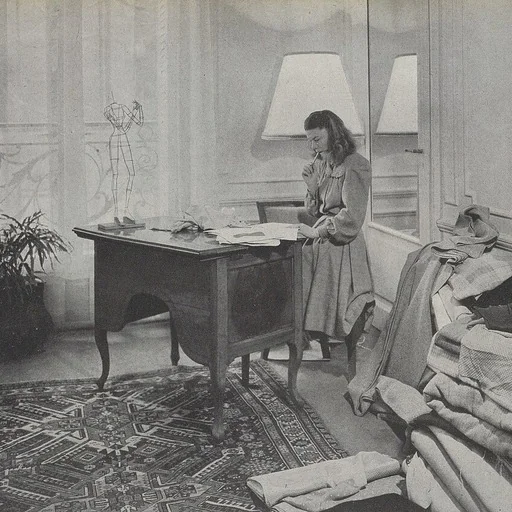
Artist
Marie-Louise Carven (31 August 1909 – 8 June 2015), born Carmen de Tommaso, was a French fashion designer who founded the house of Carven in 1945.
Museum
Palais Galliera - Musée de la Mode de la Ville de Paris
Continue through works from the same source collection.
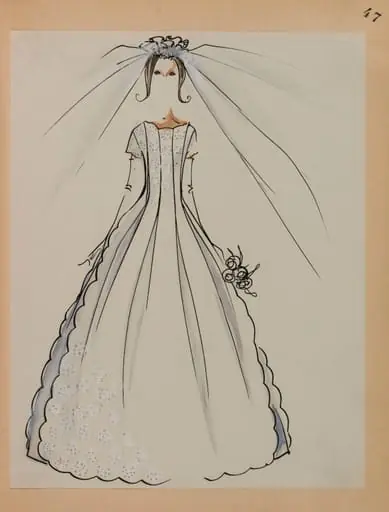 Robe de mariée festonnée et son voile
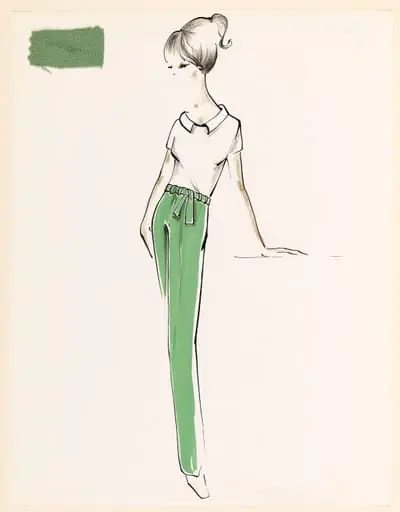 Haut blanc à manches courtes et pantalon vert à ceinture nouée
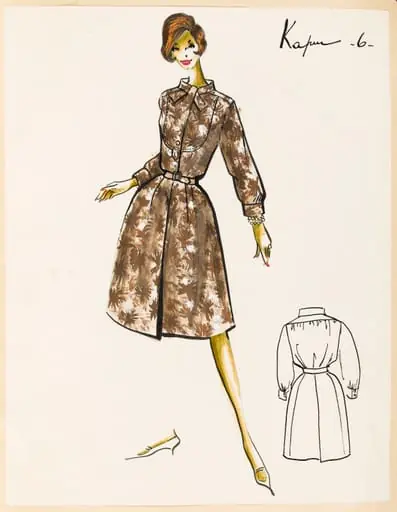 Kapur
Kapur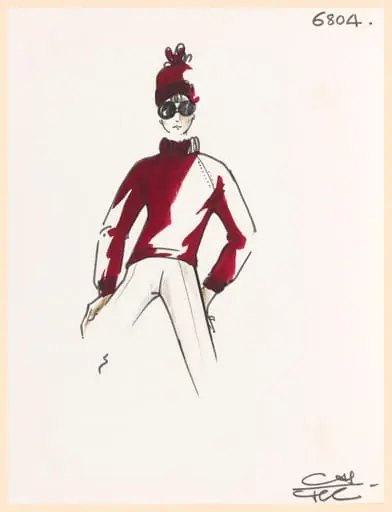 Pull-over à manches longues pourpre, bonnet assorti, pantalon et lunettes de soleil
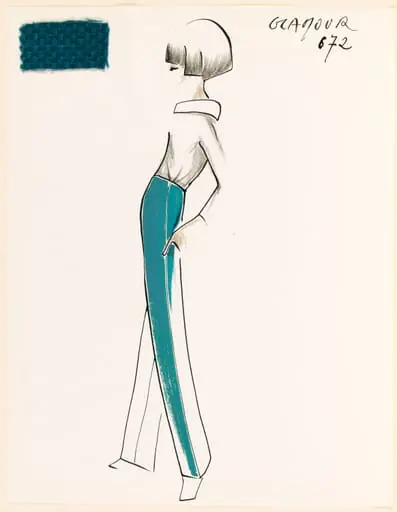 GLAMOUR
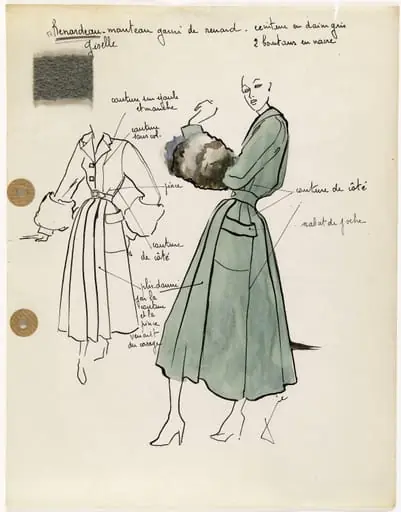 'Renardeau'
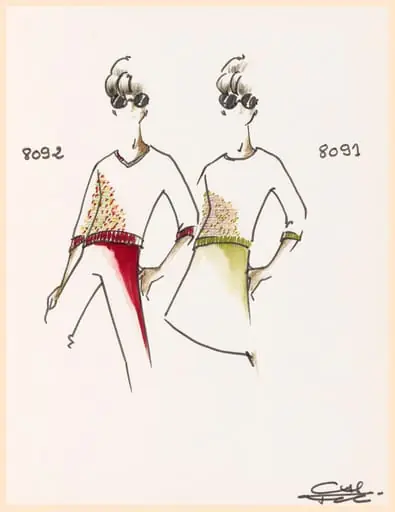 Pull-over à manches trois quarts et à encolure V à motifs multicolores, pantalon cerise et lunettes de soleil
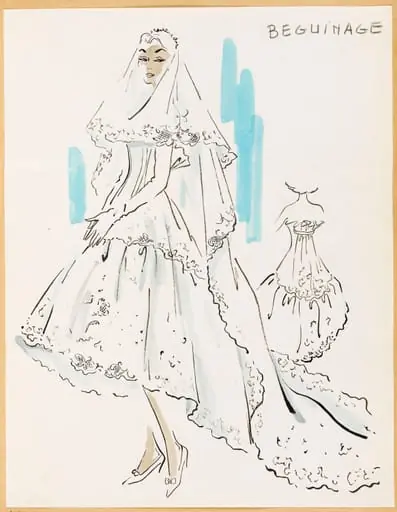 Béguinage