Artwork
Muguet
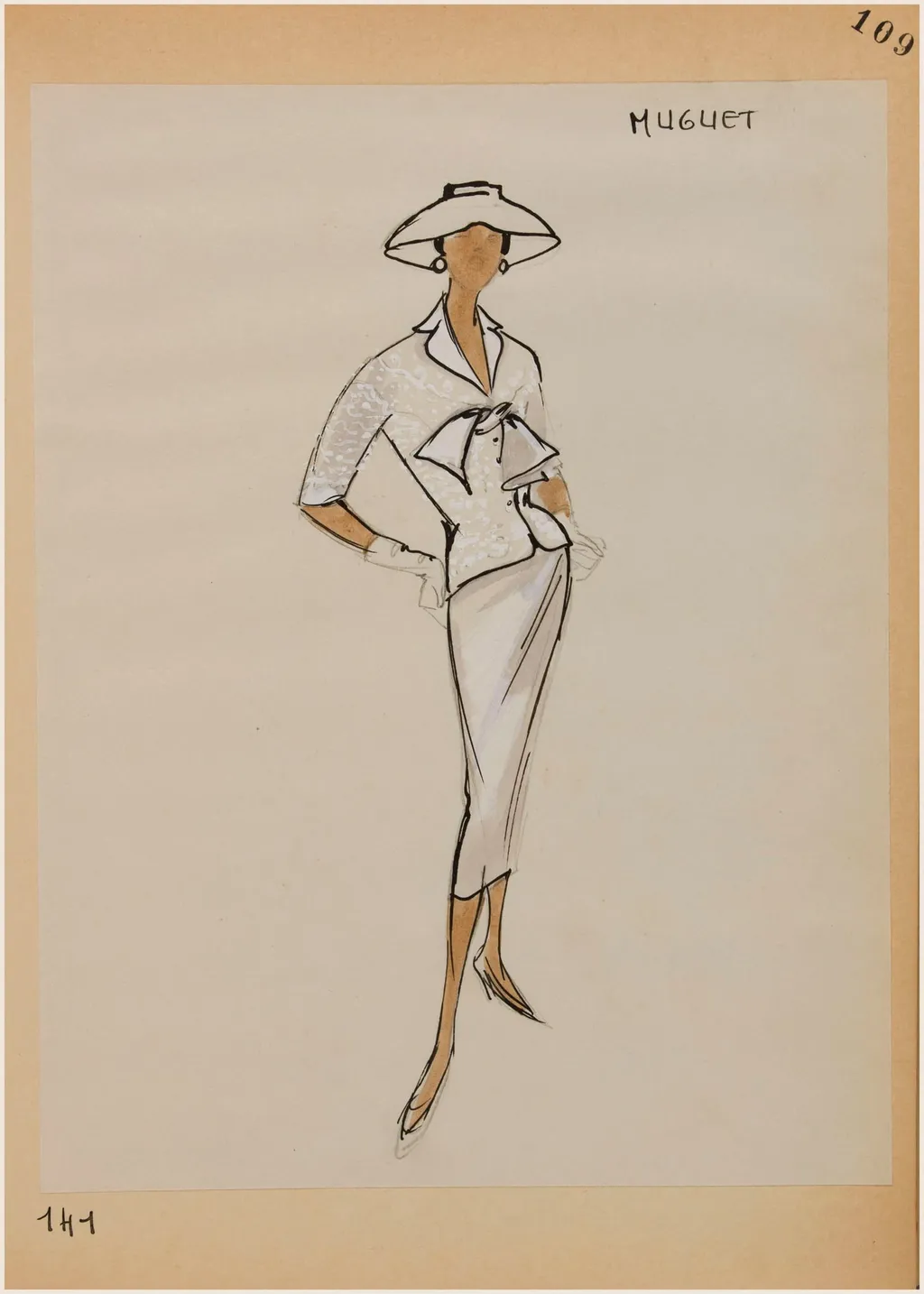
Muguet is a drawing by Marie-Louise Carven. It dates from 1956 and is held in the collection of the Palais Galliera - Musée de la Mode de la Ville de Paris.
About this work
The use of simple lines and subtle shading creates a sense of depth and dimensionality, drawing the viewer's eye to the subject.
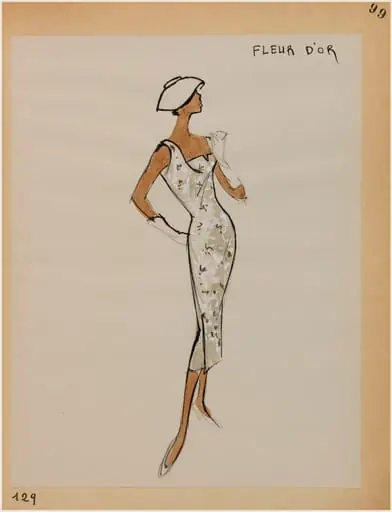
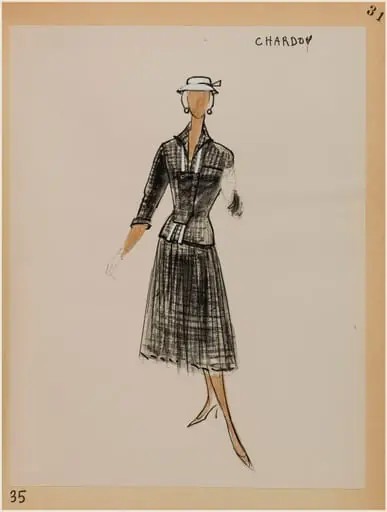
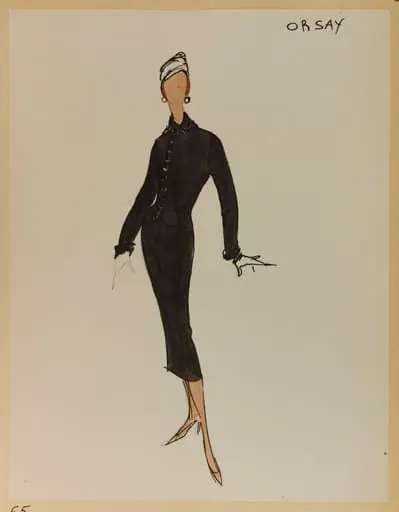
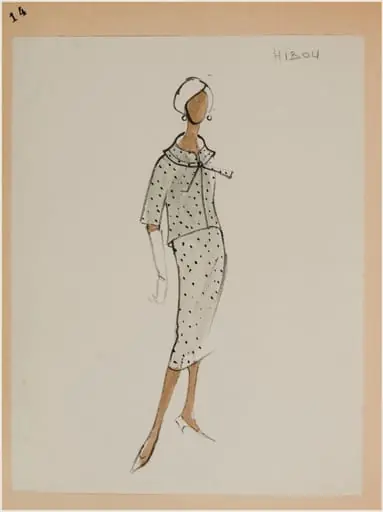
This drawing shows a woman dressed in a stylish outfit, complete with a hat and gloves. The woman's body is angled to the right, while her head is turned to face the viewer. Her attire is white, featuring a lace top and a pencil skirt that falls just below the knee. The overall style of the drawing is elegant and sophisticated.
The drawing is titled "Muguet" and was created by Marie-Louise Carven in 1956. It is a testament to the artist's skill in capturing the essence of high fashion. The use of simple lines and subtle shading creates a sense of depth and dimensionality, drawing the viewer's eye to the subject.
If you're interested in learning more about the artist behind this piece, you might want to look up Marie-Louise Carven.
Overview
Created in 1956 by French designer Marie-Louise Carven, *Muguet* is a fashion illustration depicting a woman in an elegant white ensemble. Executed in ink and subtle tonal shading, the drawing reflects Carven’s signature focus on refined silhouettes and lightweight materials. Though often associated with ready-to-wear innovation, this work belongs to her earlier couture practice, capturing the poised aesthetic of mid-century Parisian style.
Subject & Meaning
The figure in *Muguet* is rendered in a three-quarter pose, her head turned toward the viewer while her body faces slightly right, creating a dynamic yet restrained composition. Dressed in a lace bodice and knee-length pencil skirt, she wears gloves and a hat—elements signaling formality and grace. The title, meaning 'lily of the valley' in French, evokes delicacy and renewal, aligning the attire with seasonal elegance and quiet sophistication.
Technique & Style
Carven employed clean, precise lines and minimal shading to define form without heavy detail. The absence of facial features directs attention to the structure of the garment and the posture of the figure. The contrast between the fine texture of the lace and the smooth contour of the skirt suggests materiality through suggestion rather than literal rendering, characteristic of fashion drawing at the time.
History & Provenance
*Muguet* entered the collection of the Museum of Ethnography, an institution more commonly associated with cultural artifacts than fashion. Its inclusion suggests an early institutional recognition of fashion as a cultural expression. The drawing likely originated from Carven’s personal archive, possibly used as a design reference or promotional piece during the mid-1950s.
Context
In 1956, Parisian fashion was transitioning from haute couture dominance to accessible ready-to-wear. Carven, who launched one of the first prêt-à-porter lines in 1945, remained committed to feminine, scaled-down designs suited to everyday life. *Muguet* reflects this balance—elevated in detail yet grounded in practicality, embodying the modern woman’s evolving relationship with dress.
Legacy
Though Carven is often remembered for commercial innovations like the push-up bra, *Muguet* illustrates her foundational role in shaping postwar French fashion aesthetics. The drawing stands as a quiet example of how design sketches functioned as both artistic expression and commercial tools, preserving the visual language of an era defined by understated elegance.
Artist & collection
Artist
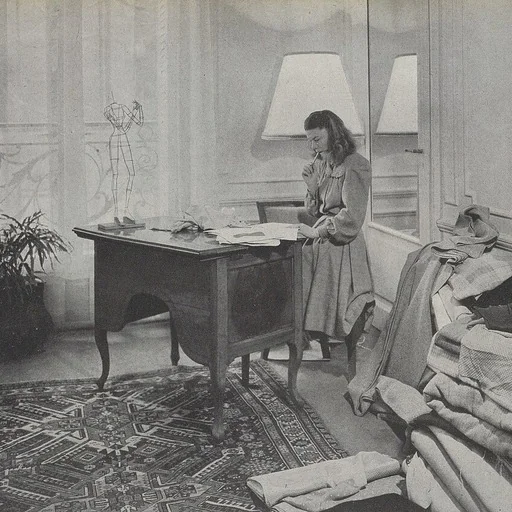
Marie-Louise Carven (31 August 1909 – 8 June 2015), born Carmen de Tommaso, was a French fashion designer who founded the house of Carven in 1945.
Museum
Palais Galliera - Musée de la Mode de la Ville de Paris
Continue through works from the same source collection.
 Robe de mariée festonnée et son voile
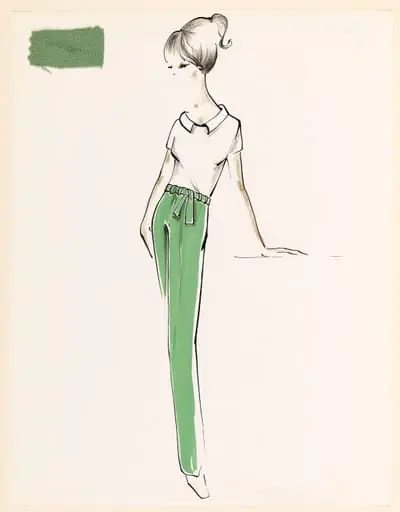 Haut blanc à manches courtes et pantalon vert à ceinture nouée
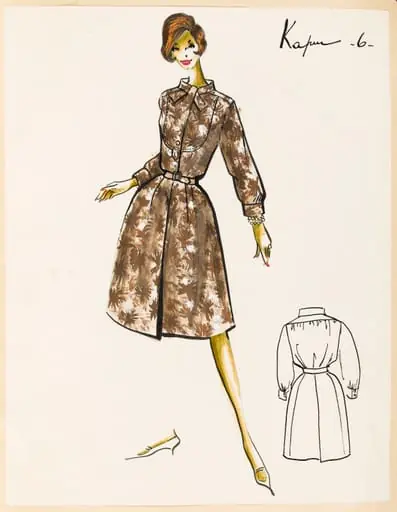 Kapur
Kapur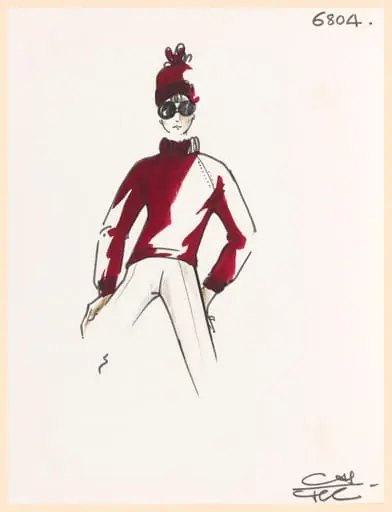 Pull-over à manches longues pourpre, bonnet assorti, pantalon et lunettes de soleil
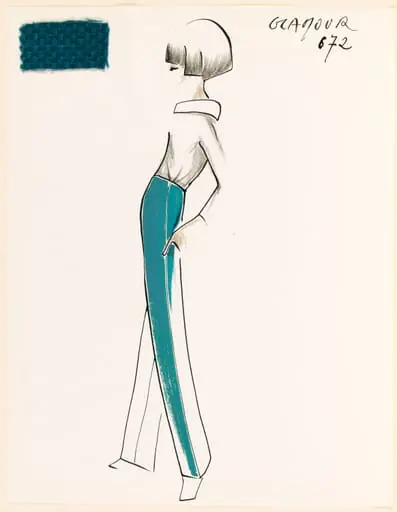 GLAMOUR
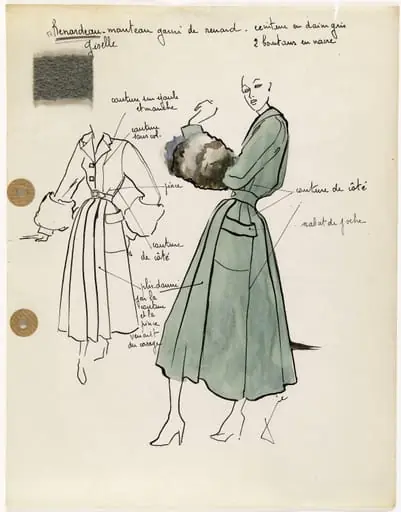 'Renardeau'
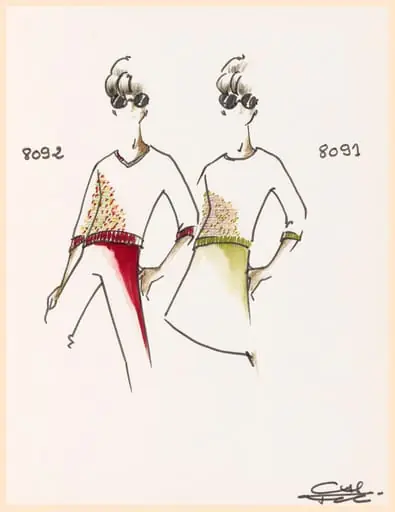 Pull-over à manches trois quarts et à encolure V à motifs multicolores, pantalon cerise et lunettes de soleil
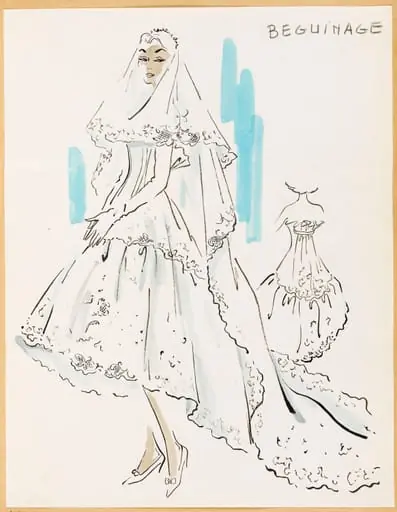 Béguinage