Artwork
Pagode
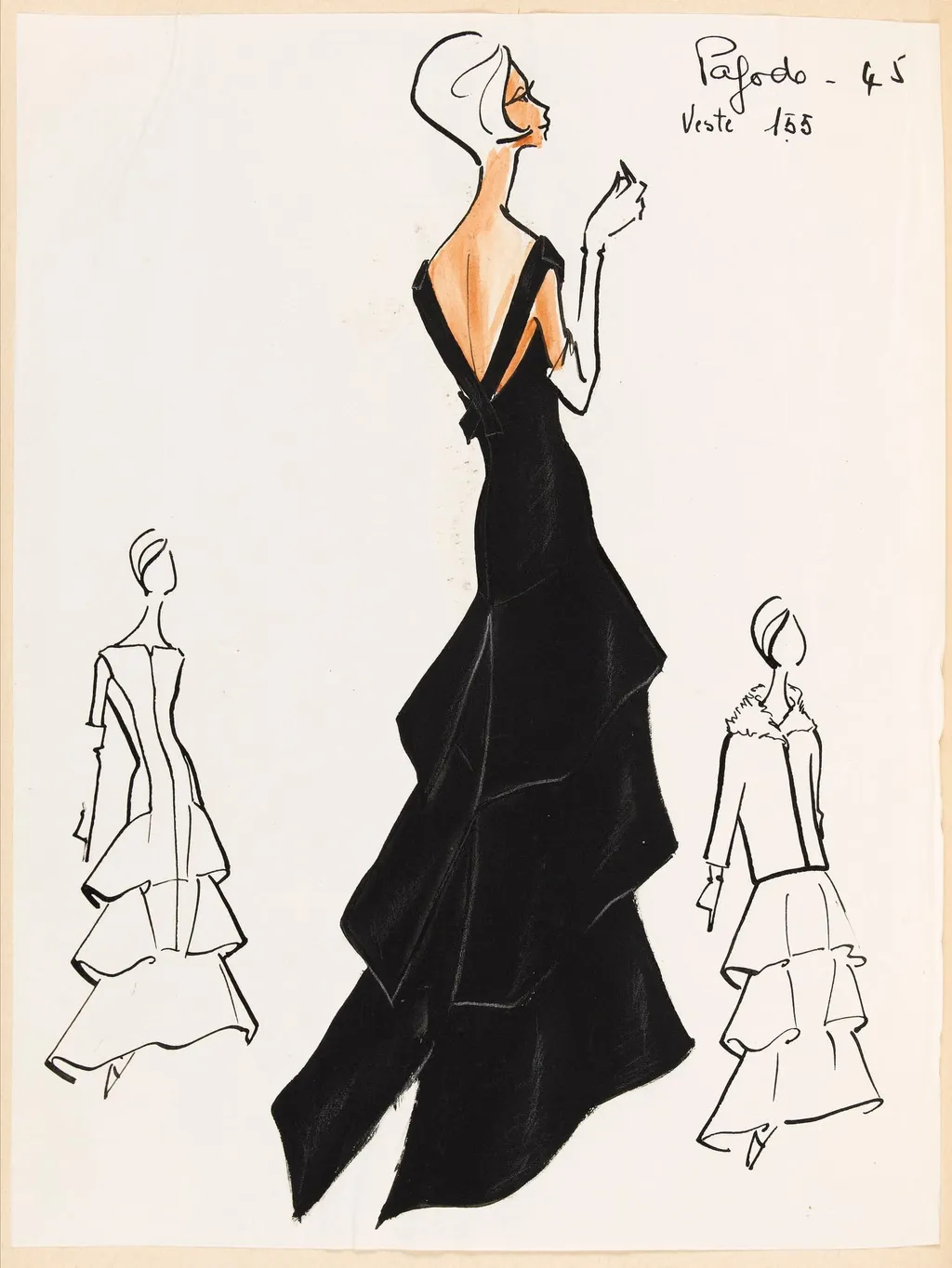
Pagode is a drawing by Marie-Louise Carven. It dates from 1959 and is held in the collection of the Palais Galliera - Musée de la Mode de la Ville de Paris.
About this work
Overview
The sketch reflects Carven’s shift toward ready-to-wear design and her focus on elegant, wearable silhouettes for smaller frames.
Created around 1959, *Pagode* is a fashion sketch by Marie-Louise Carven, founder of the Parisian house Carven. Executed in ink and color, it depicts three garment designs on a minimalist background. The central piece, a dramatic black gown, dominates the composition, flanked by two simpler forms. The sketch reflects Carven’s shift toward ready-to-wear design and her focus on elegant, wearable silhouettes for smaller frames.
Subject & Meaning
The central gown, labeled 'Pagode,' features a deep V-back and asymmetrical hem, suggesting movement and ceremony. The accompanying sketches—a sleeveless dress and layered top—indicate a cohesive collection. The handwritten notations, including 'Veste 155,' reveal Carven’s internal cataloging system, pointing to a practical, production-oriented approach. The designs balance theatricality with wearability, reflecting postwar shifts in women’s fashion.
Technique & Style
Carven’s lines are swift and assured, using bold black strokes and flat areas of color to define form without detail. The sketch avoids ornamental flourishes, emphasizing structure and silhouette. The contrast between the large gown’s dynamic flow and the smaller garments’ simplicity reveals a designer’s eye for proportion and rhythm. The minimal background directs focus entirely to the garments themselves.
History & Provenance
The sketch entered the collection of the Museum of Ethnography, a rare placement for a fashion design, suggesting its significance beyond commercial use. Carven, who founded her house in 1945, was among the first Parisian couturiers to develop a prêt-à-porter line. This sketch likely served as a prototype or presentation piece during the transition from haute couture to accessible fashion in the late 1950s.
Context
In the late 1950s, Parisian fashion was redefining itself amid rising demand for affordable, well-made clothing. Carven’s work responded to this shift, favoring light fabrics and tailored yet fluid cuts suited to modern lifestyles. *Pagode* embodies this evolution: its theatrical silhouette retains couture sensibility, while its clarity and practicality align with emerging ready-to-wear ideals.
Legacy
*Pagode* stands as a record of Carven’s role in democratizing fashion without sacrificing elegance. Its preservation in an ethnographic museum underscores its cultural value as an artifact of postwar design innovation. The sketch illustrates how a designer’s quick notations could bridge artistic vision and industrial production, influencing the trajectory of 20th-century fashion.
Artist & collection
Artist
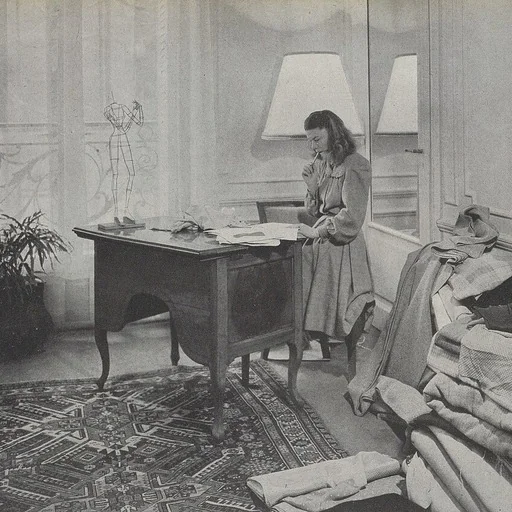
Marie-Louise Carven (31 August 1909 – 8 June 2015), born Carmen de Tommaso, was a French fashion designer who founded the house of Carven in 1945.
Museum
Palais Galliera - Musée de la Mode de la Ville de Paris
Continue through works from the same source collection.
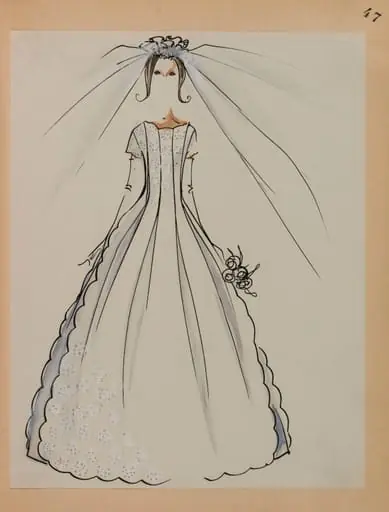 Robe de mariée festonnée et son voile
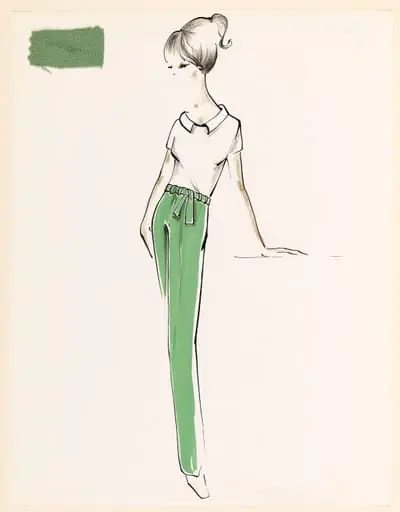 Haut blanc à manches courtes et pantalon vert à ceinture nouée
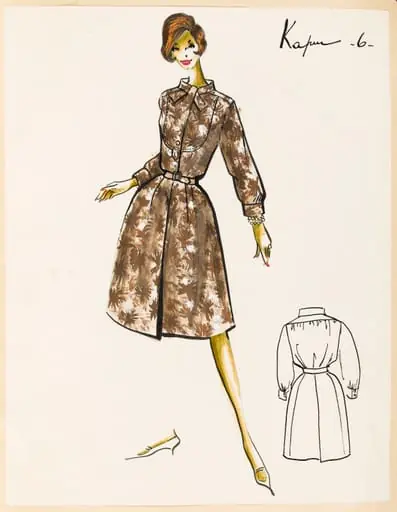 Kapur
Kapur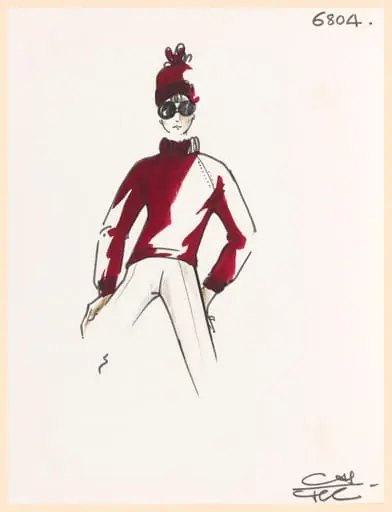 Pull-over à manches longues pourpre, bonnet assorti, pantalon et lunettes de soleil
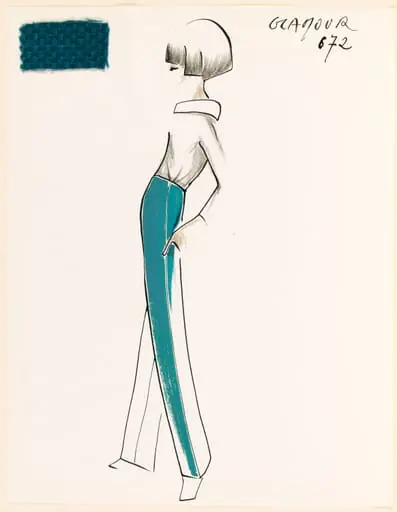 GLAMOUR
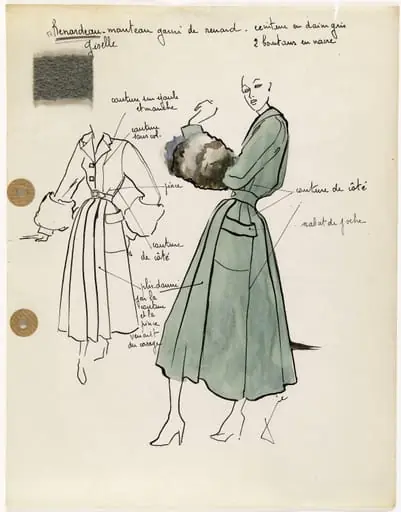 'Renardeau'
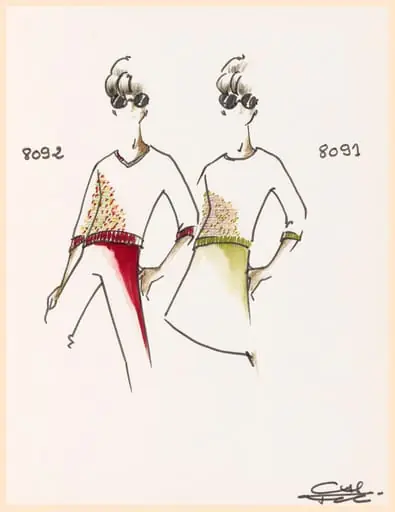 Pull-over à manches trois quarts et à encolure V à motifs multicolores, pantalon cerise et lunettes de soleil
 Béguinage