Artwork
Palétuvier
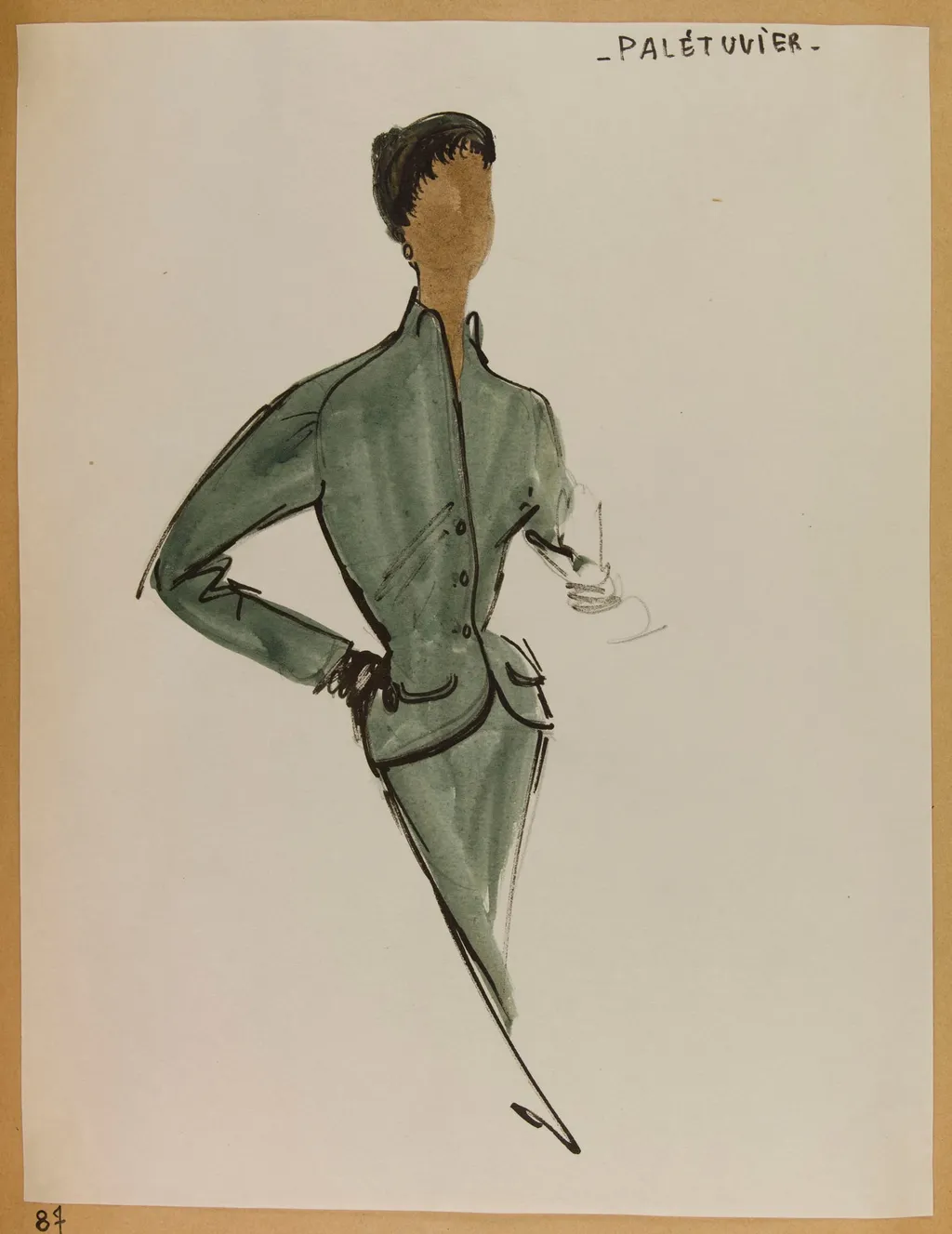
Palétuvier is a drawing by Marie-Louise Carven. It dates from 1952 and is held in the collection of the Palais Galliera - Musée de la Mode de la Ville de Paris.
About this work
Overview
Created in 1952 by French designer Marie-Louise Carven, *Palétuvier* is a fashion sketch executed in ink or pencil on paper. It belongs to a series of preparatory drawings made for her emerging prêt-à-porter collection. The piece is held in the collection of the Museum of Ethnography, reflecting its significance as a document of mid-century French fashion design rather than a finished garment.
Subject & Meaning
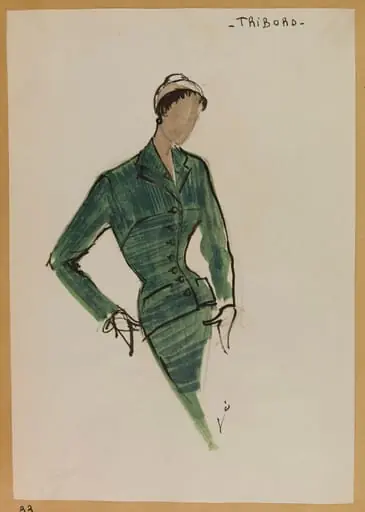
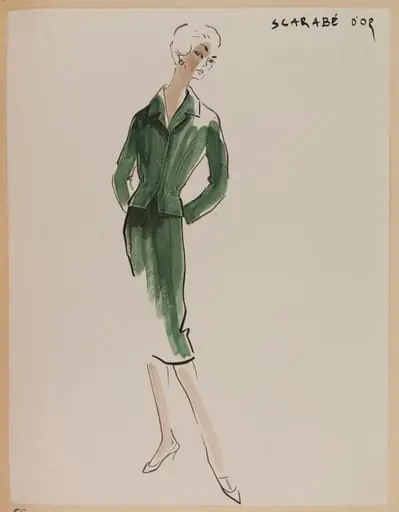
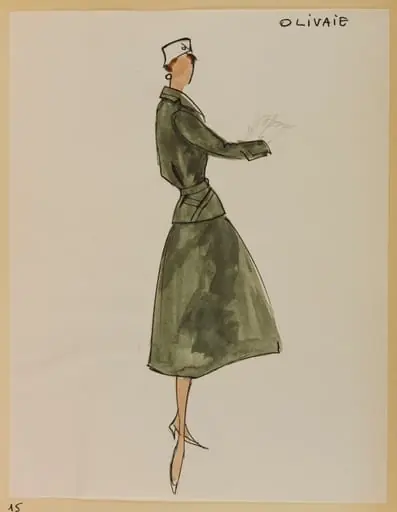
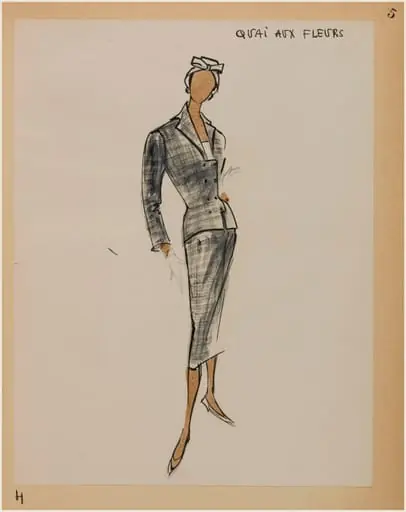
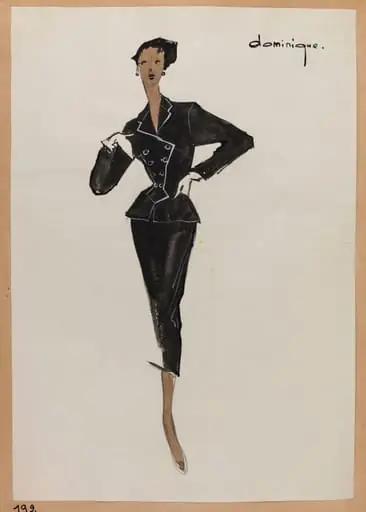
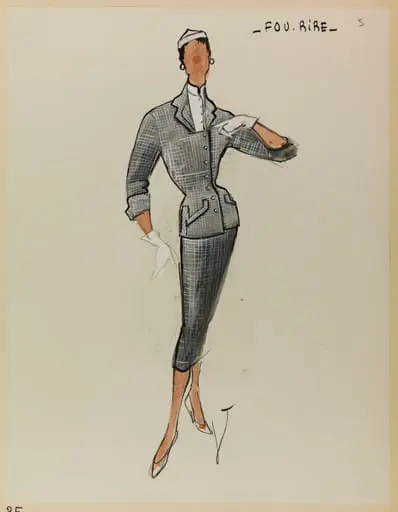
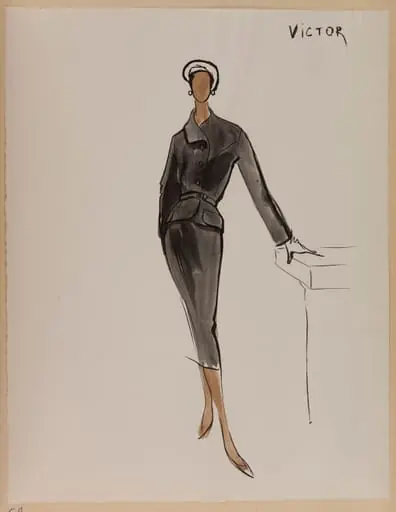
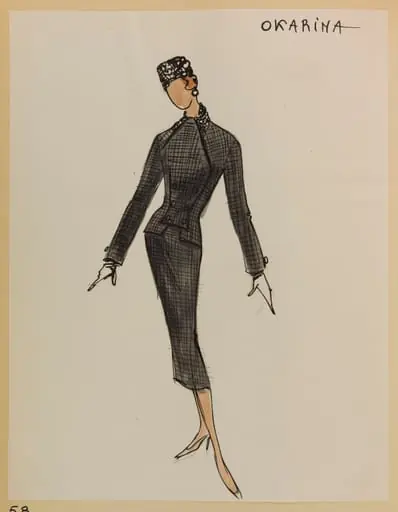
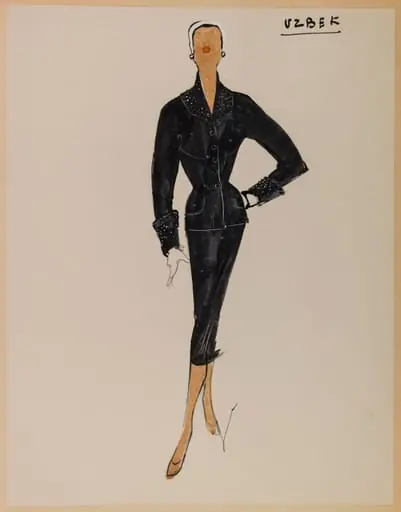
The drawing depicts a standing female figure in a simplified pose, one hand resting on the hip, the other holding a small purse.
The drawing depicts a standing female figure in a simplified pose, one hand resting on the hip, the other holding a small purse. The absence of facial features and background emphasizes the silhouette and structure of the clothing. The title, *Palétuvier*—referring to a type of mangrove tree—suggests a poetic association with natural forms, possibly alluding to the garment’s fluid lines and organic rhythm.
Technique & Style
Carven employed swift, confident lines to define the jacket’s high collar and the skirt’s straight fall to just above the ankle. Subtle shading indicates fabric folds without overmodeling, prioritizing clarity and movement over detail. The minimalism reflects her design philosophy: functional elegance tailored for the modern, petite woman, with an emphasis on how cloth behaves on the body.
History & Provenance
Marie-Louise Carven founded her fashion house in 1945 and was among the first Parisian designers to develop a ready-to-wear line, challenging the dominance of haute couture. *Palétuvier* was produced during this pivotal transition. Its preservation in the Museum of Ethnography indicates recognition of its cultural value as a representative artifact of postwar French fashion innovation.
Context
In the early 1950s, Parisian fashion was redefining itself after wartime austerity. Carven’s focus on accessible, well-cut garments for smaller frames responded to a growing demand for practical elegance. *Palétuvier* exemplifies this shift—its sketch form suggests mass production potential, aligning with the rise of prêt-à-porter as a legitimate alternative to bespoke tailoring.
Legacy
Though not a finished garment, *Palétuvier* endures as a testament to Carven’s influence on democratizing fashion. Its preservation in an ethnographic context underscores how fashion sketches became cultural records. The drawing’s restraint and focus on form continue to inform contemporary studies of mid-century design practices and the evolution of ready-to-wear.
Artist & collection
Artist
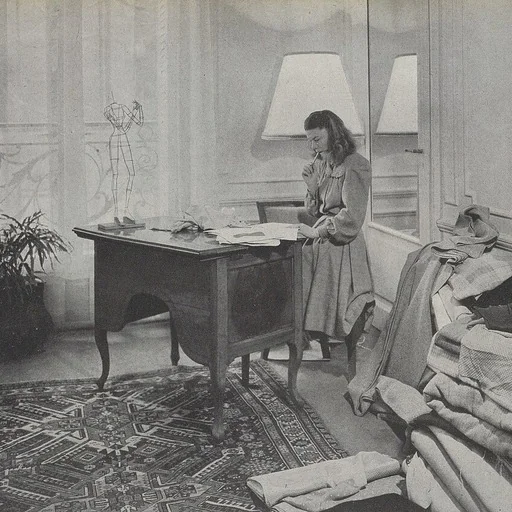
Marie-Louise Carven (31 August 1909 – 8 June 2015), born Carmen de Tommaso, was a French fashion designer who founded the house of Carven in 1945.
Museum
Palais Galliera - Musée de la Mode de la Ville de Paris
Continue through works from the same source collection.
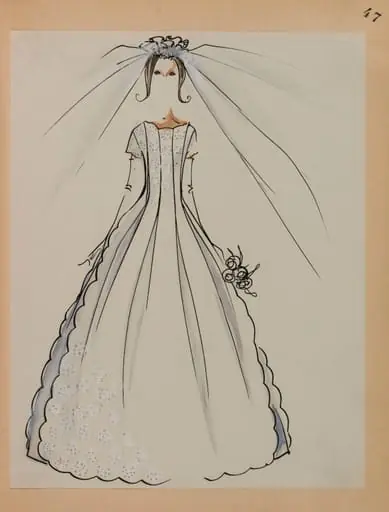 Robe de mariée festonnée et son voile
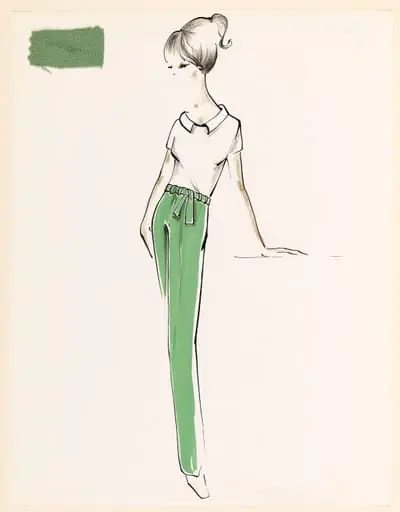 Haut blanc à manches courtes et pantalon vert à ceinture nouée
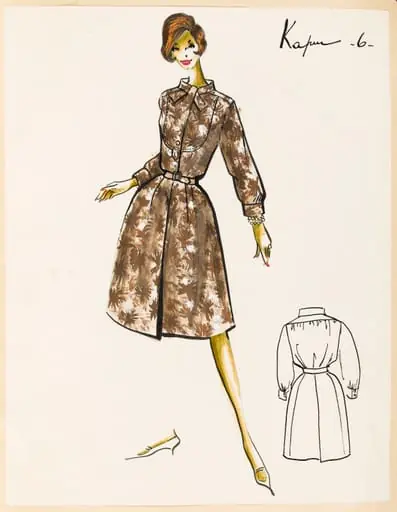 Kapur
Kapur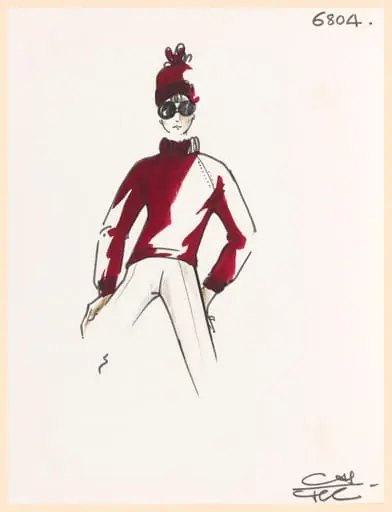 Pull-over à manches longues pourpre, bonnet assorti, pantalon et lunettes de soleil
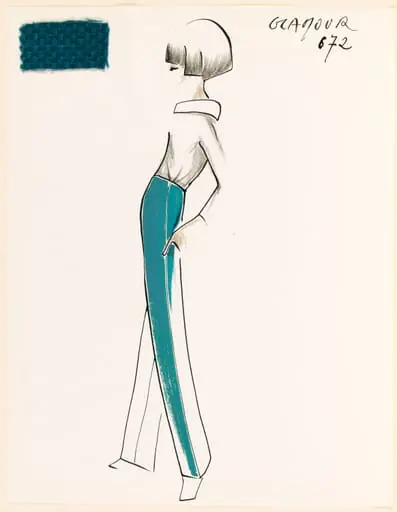 GLAMOUR
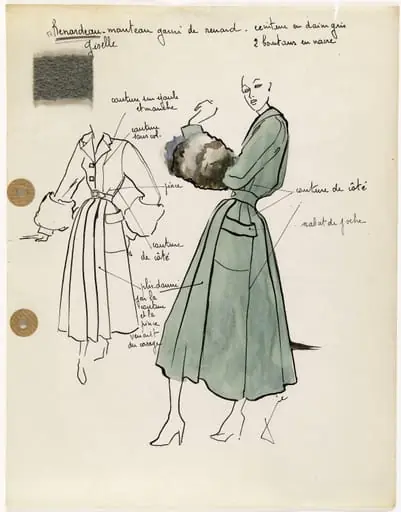 'Renardeau'
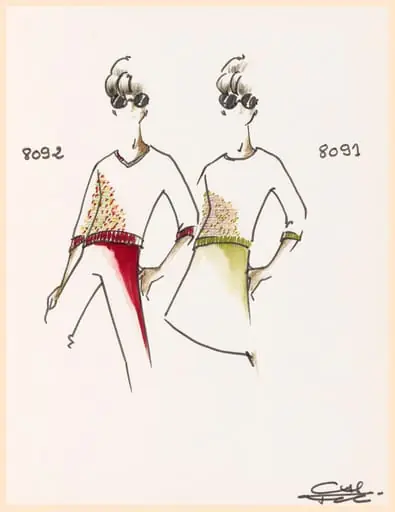 Pull-over à manches trois quarts et à encolure V à motifs multicolores, pantalon cerise et lunettes de soleil
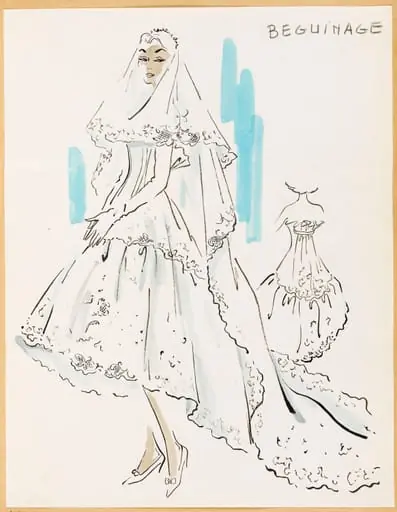 Béguinage