Artwork
'Paloma'
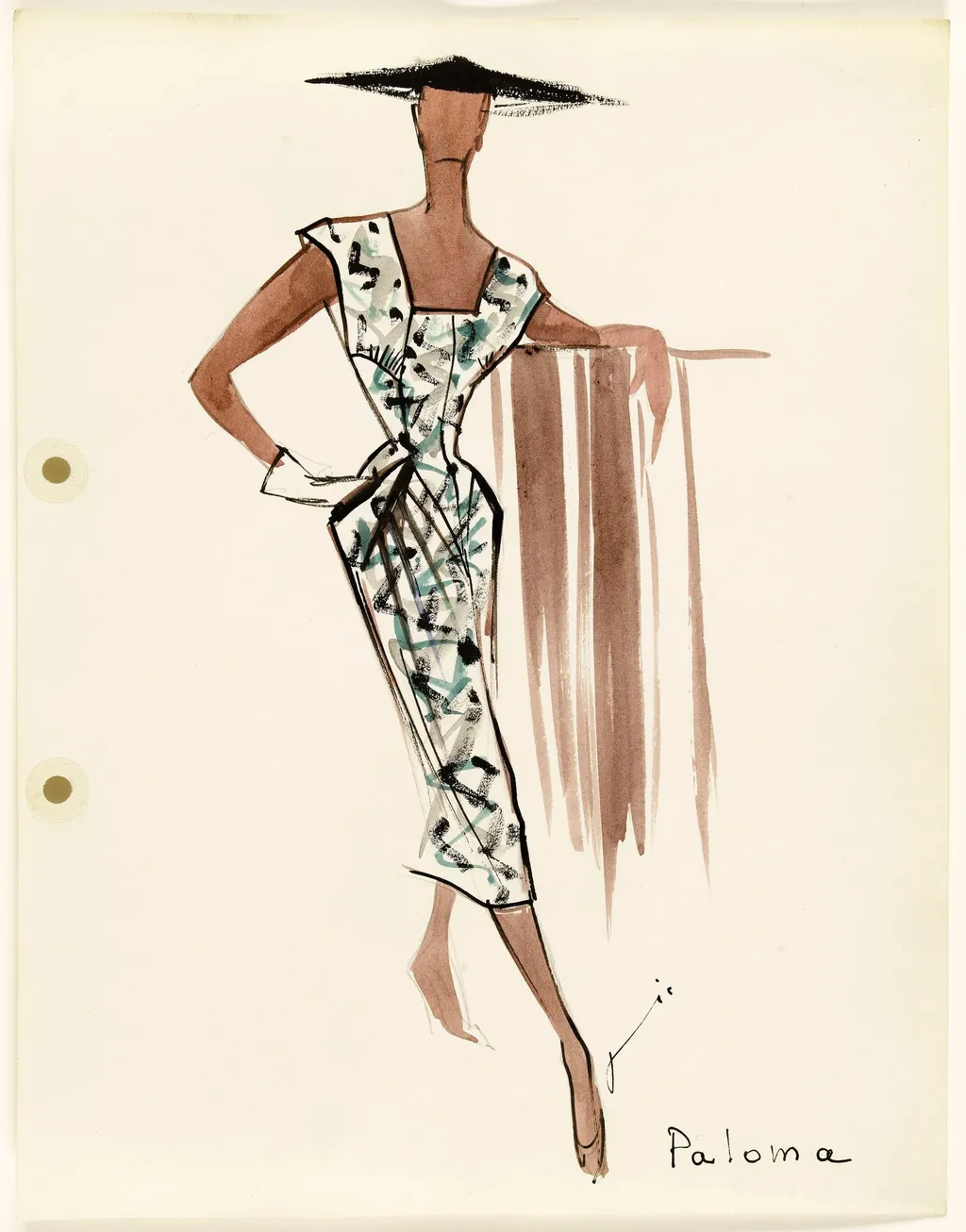
'Paloma' is a drawing by Marie-Louise Carven. It dates from 1951 and is held in the collection of the Palais Galliera - Musée de la Mode de la Ville de Paris.
About this work
If you're interested in learning more about the artist behind this drawing, you might want to look up Marie-Louise Carven.
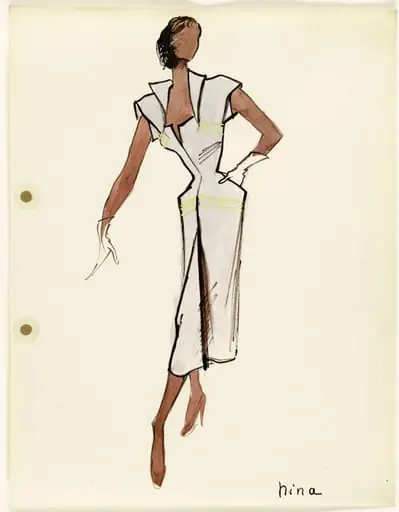
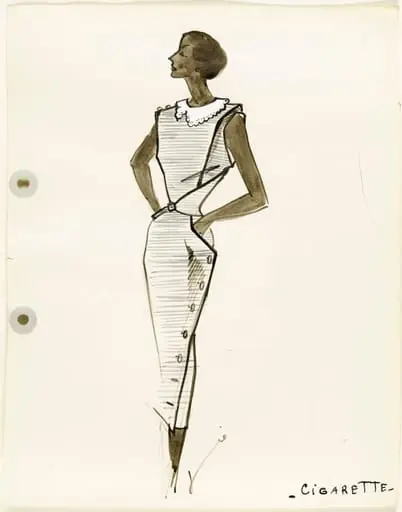
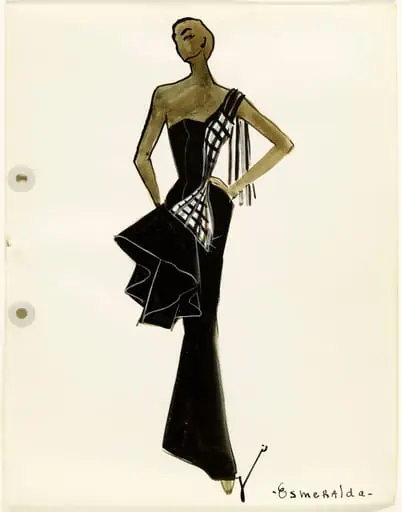
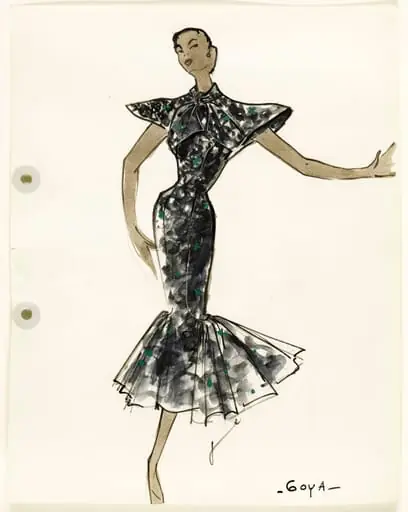
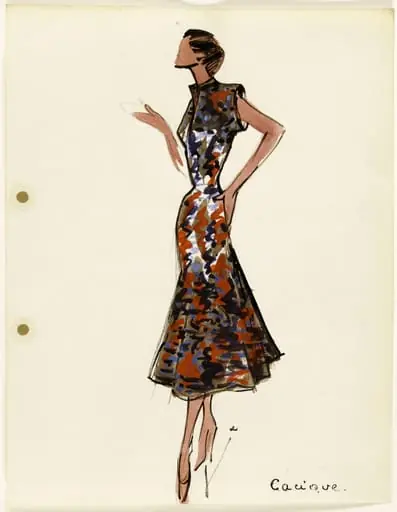
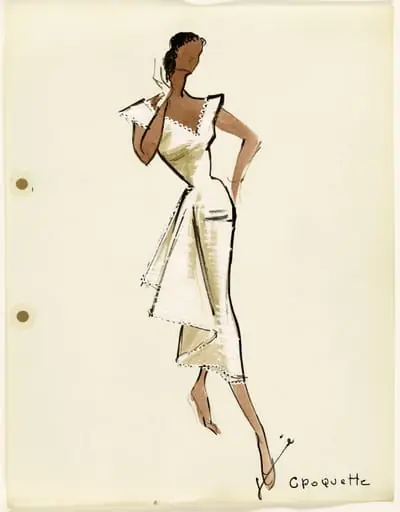
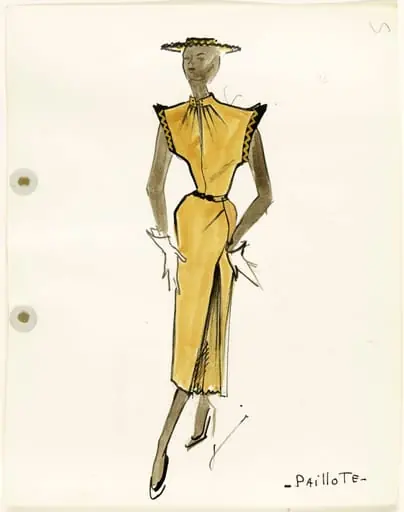
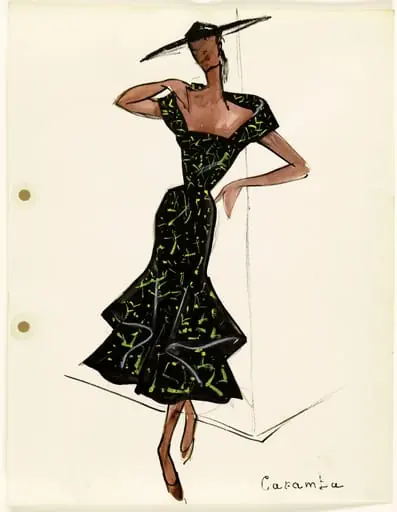
This is a drawing of a woman wearing a dress. The woman is standing with her left hand on her hip and her right arm resting on a railing. She is wearing a white dress with a black and green pattern, a wide-brimmed hat, and heels. The dress is sleeveless and has a square neckline. The background of the drawing is off-white.
The woman's pose and the style of her dress suggest that the drawing is from the mid-20th century. The artist has used bold lines and simple shapes to create a sense of elegance and sophistication.
If you're interested in learning more about the artist behind this drawing, you might want to look up Marie-Louise Carven.
Overview
Created in 1951, 'Paloma' is a fashion illustration by Marie-Louise Carven, founder of the Parisian label Carven established in 1945. The work captures a woman in a stylized pose, rendered with clean lines and minimal detail. Though often associated with textile design, Carven also produced drawings to communicate her aesthetic. This piece is part of the Museum of Ethnography’s collection, reflecting its cultural significance beyond fashion.
Subject & Meaning
The figure in 'Paloma' stands with one hand on her hip and the other resting on a railing, conveying quiet confidence. Her attire—a sleeveless white dress with black and green geometric patterns, a wide-brimmed hat, and heels—suggests a refined, urban woman of the early 1950s. The pose and dress together evoke an ideal of modern femininity: poised, independent, and effortlessly stylish, aligned with Carven’s vision of accessible elegance.
Technique & Style
Carven employed bold, simplified outlines and flat areas of color to define form, avoiding excessive detail. The off-white background isolates the figure, emphasizing silhouette and pattern. The dress’s geometric motifs and the hat’s structured brim reflect a modernist sensibility, while the overall composition prioritizes clarity and grace. This approach mirrors her design philosophy: elegance through restraint and precision.
History & Provenance
Carven, one of the first French couturiers to launch a prêt-à-porter line, used such illustrations to promote her collections. 'Paloma' likely served as a design study or promotional image. It entered the Museum of Ethnography’s holdings through acquisition or donation, possibly as part of a broader effort to document mid-century fashion as cultural artifact rather than mere clothing.
Context
In postwar Paris, fashion was redefining identity, and Carven’s work catered to a new generation of women seeking practical yet stylish attire. Her designs, often scaled for petite frames, challenged the dominance of voluminous silhouettes. 'Paloma' reflects this shift—its clean lines and wearable patterns align with the era’s move toward modernity, individuality, and democratized style.
Legacy
Though Carven is remembered for her contributions to ready-to-wear and innovations like the patented push-up bra, 'Paloma' endures as a visual record of her design language. The illustration’s presence in an ethnographic museum underscores how fashion drawings became cultural documents, preserving the aesthetics and social values of their time beyond the runway.
Artist & collection
Artist
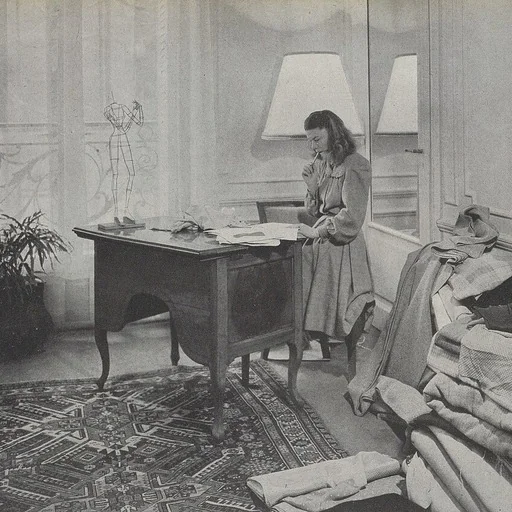
Marie-Louise Carven (31 August 1909 – 8 June 2015), born Carmen de Tommaso, was a French fashion designer who founded the house of Carven in 1945.
Museum
Palais Galliera - Musée de la Mode de la Ville de Paris
Continue through works from the same source collection.
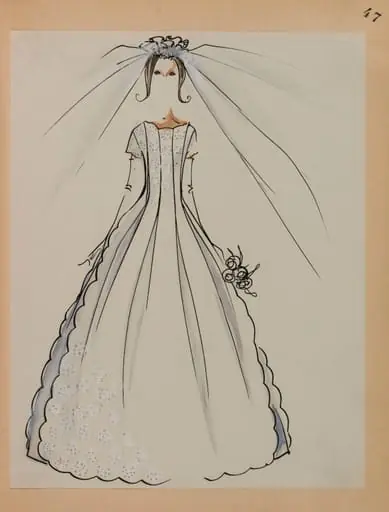 Robe de mariée festonnée et son voile
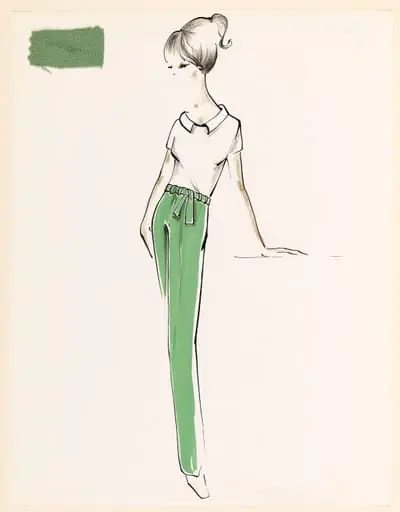 Haut blanc à manches courtes et pantalon vert à ceinture nouée
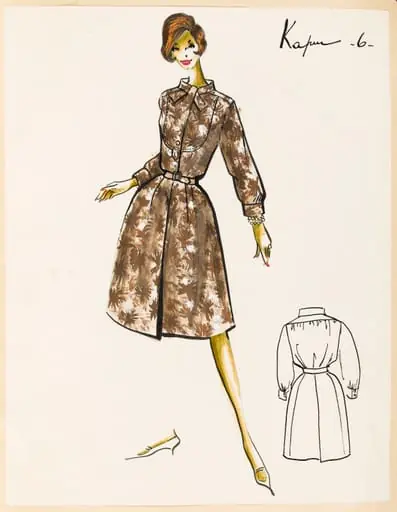 Kapur
Kapur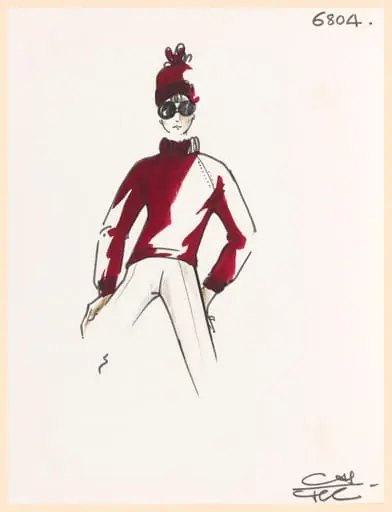 Pull-over à manches longues pourpre, bonnet assorti, pantalon et lunettes de soleil
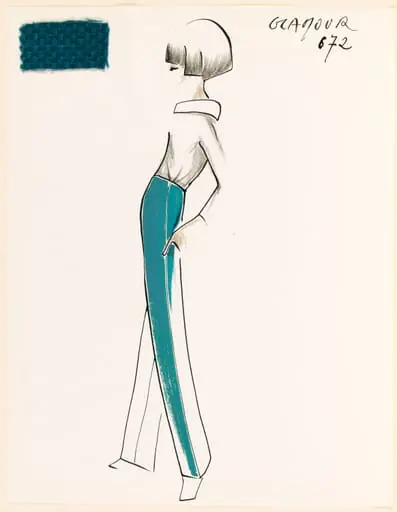 GLAMOUR
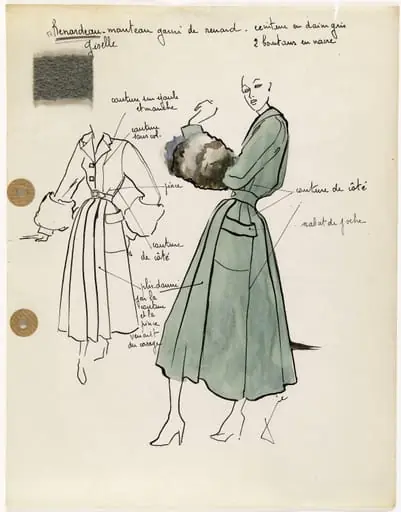 'Renardeau'
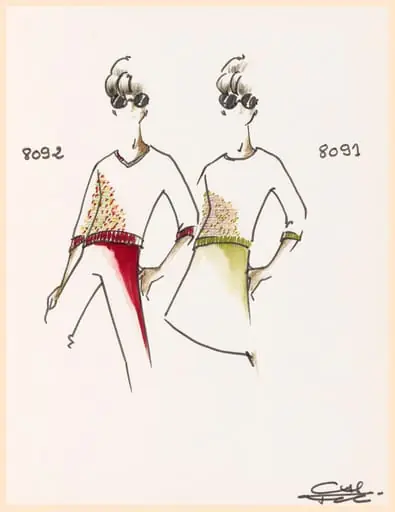 Pull-over à manches trois quarts et à encolure V à motifs multicolores, pantalon cerise et lunettes de soleil
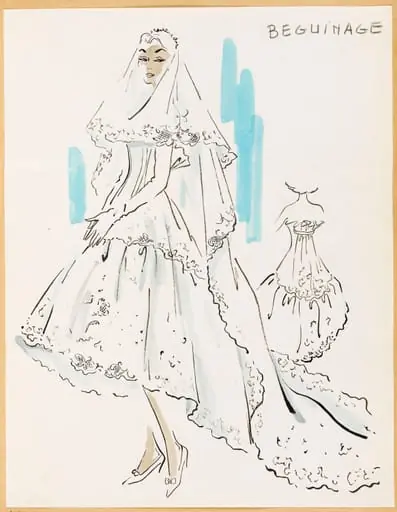 Béguinage