Artwork
Pantomime
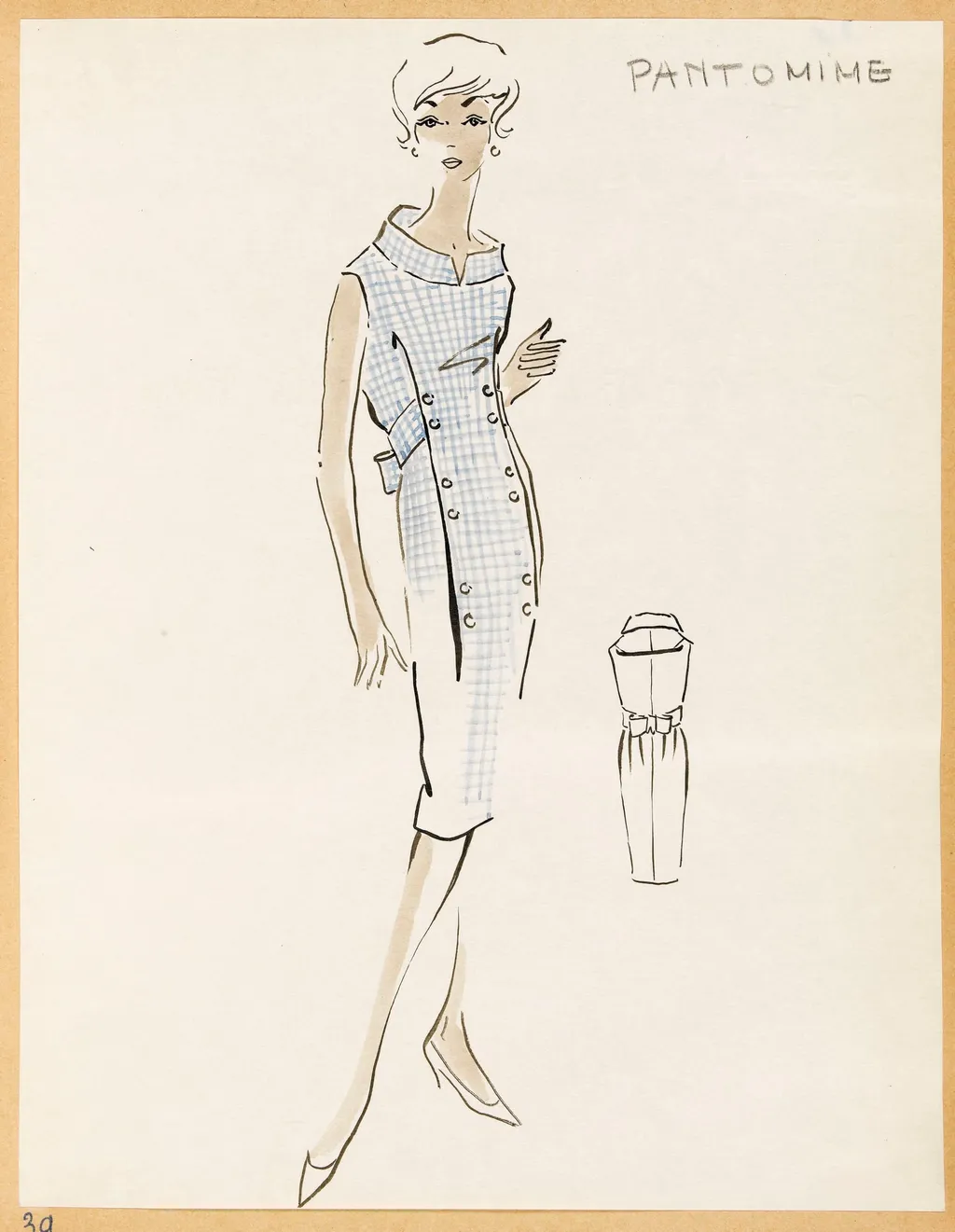
Pantomime is a drawing by Marie-Louise Carven. It dates from 1957 and is held in the collection of the Palais Galliera - Musée de la Mode de la Ville de Paris.
About this work
Overview
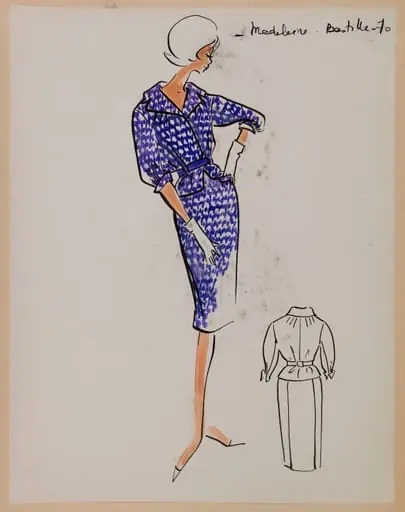
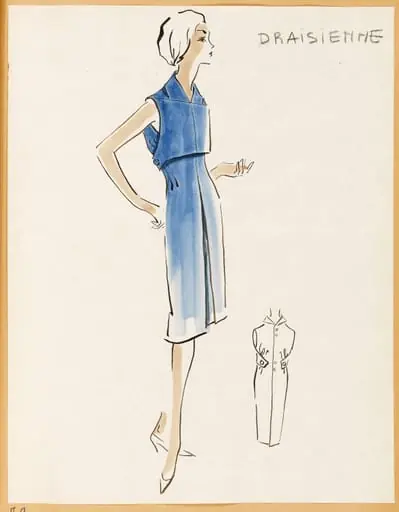
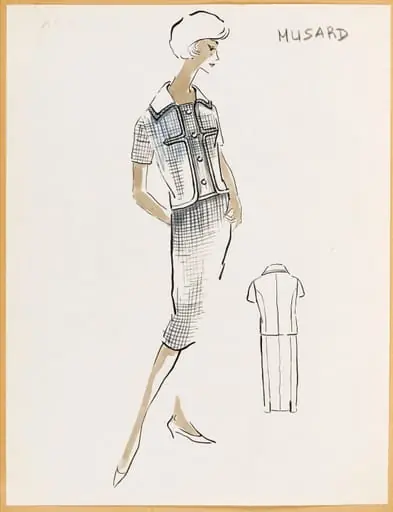
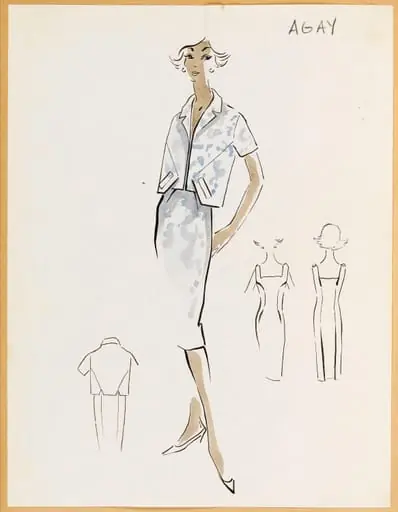
The composition includes a small auxiliary sketch of a dress form with a bow-tied waist, suggesting a connection to fashion design practice.
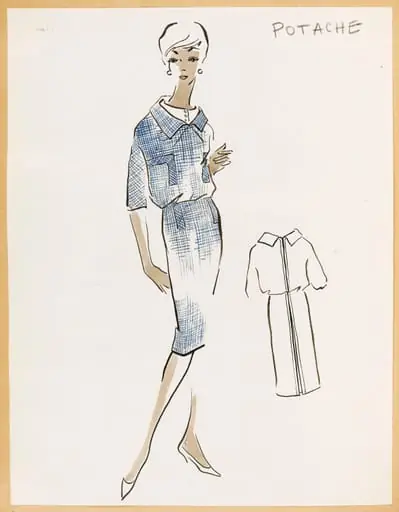
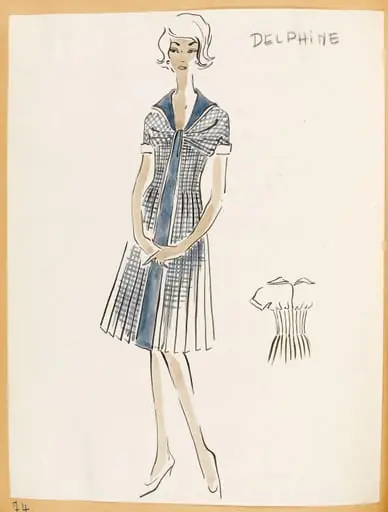
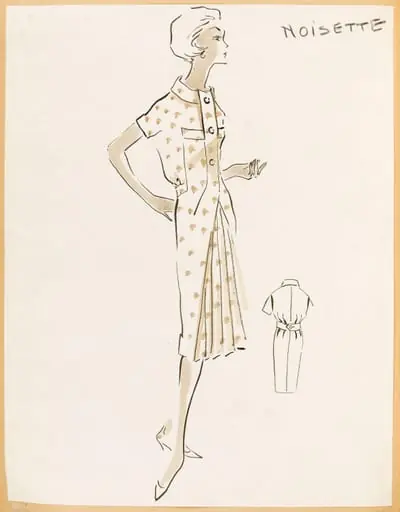
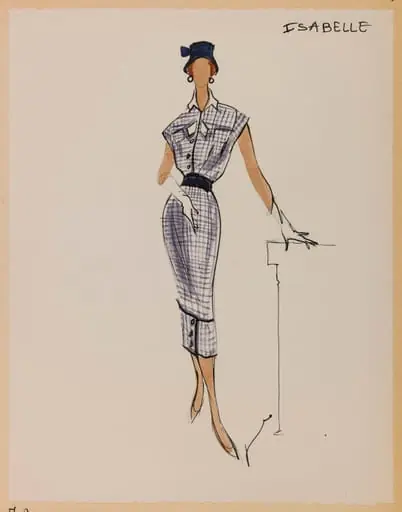
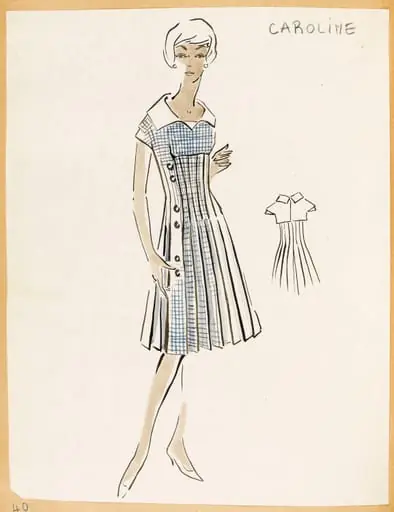
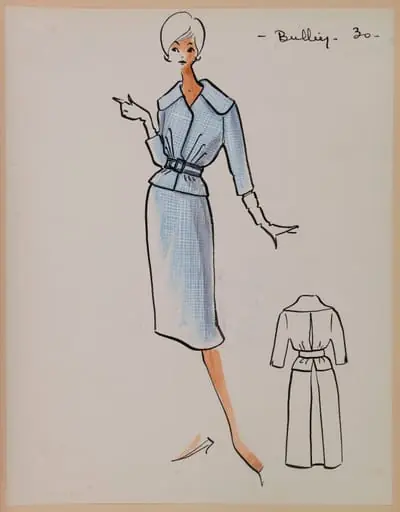
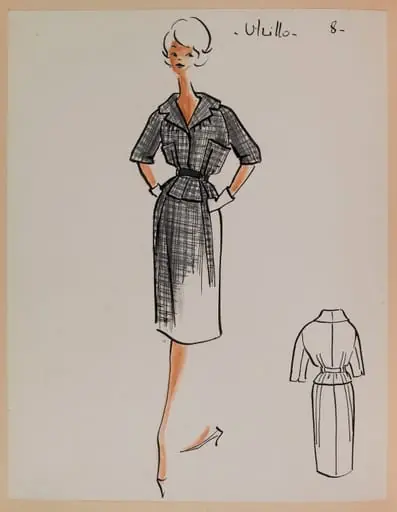
Pantomime is a painted portrait from circa 1957, depicting a woman dressed in a plaid, sleeveless garment with a collar and front buttons. Rendered in a restrained, linear style against a white field, the image is framed by a narrow brown border. The composition includes a small auxiliary sketch of a dress form with a bow-tied waist, suggesting a connection to fashion design practice. The work reflects the aesthetic sensibilities of its creator, Marie-Louise Carven, known for her refined approach to women’s wear.
Subject & Meaning
The central figure stands in a poised, casual posture—one hand on her hip, the other extended—conveying quiet confidence. Her short hair and high heels align with postwar feminine ideals of efficiency and elegance. The inclusion of the dress form implies a self-referential layer, positioning the woman as both wearer and muse. The image does not narrate a story but evokes the quiet dignity of everyday style, central to Carven’s vision of accessible, well-constructed clothing.
Technique & Style
The painting employs clean, unembellished lines and minimal shading, emphasizing form over texture. Colors are muted, with the plaid pattern rendered in subtle contrasts rather than vivid hues. The white background isolates the figure, focusing attention on silhouette and detail. The dress form sketch is rendered with similar precision but smaller scale, functioning as a conceptual footnote. The overall effect is one of understated clarity, mirroring the simplicity Carven valued in her garments.
History & Provenance
Created around 1957, Pantomime emerged during the height of Carven’s influence in Parisian fashion. As the founder of one of France’s earliest ready-to-wear labels, she often blurred boundaries between design and visual representation. This work likely served as a personal study or promotional sketch, though its exact origin within her studio remains undocumented. It has since been preserved as a rare visual artifact of her design philosophy beyond textiles.
Context
In postwar Paris, fashion was shifting from haute couture exclusivity toward accessible, well-made clothing for everyday women. Carven’s focus on petite proportions and lightweight fabrics like gingham and lace responded to this demand. Pantomime reflects that ethos—not as a garment, but as an image of one—capturing the quiet revolution in how women dressed and how their style was visually represented in design culture.
Legacy
Pantomime endures as a quiet testament to Carven’s integration of art and apparel. It illustrates how fashion designers of the era used visual art to articulate their ideals beyond the runway. While not widely exhibited, the work contributes to understanding the interdisciplinary nature of mid-century French fashion, where drawing, design, and identity converged in subtle, deliberate forms.
Artist & collection
Artist
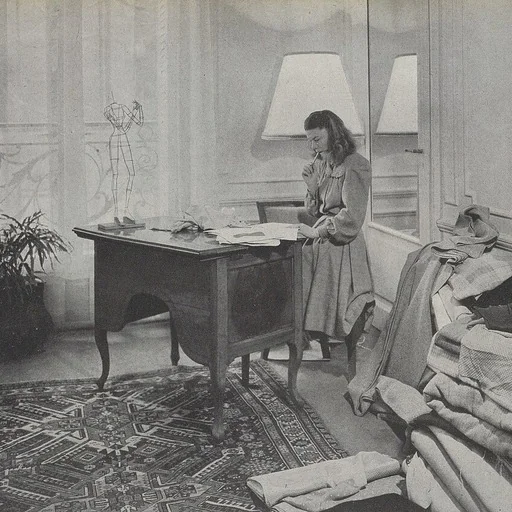
Marie-Louise Carven (31 August 1909 – 8 June 2015), born Carmen de Tommaso, was a French fashion designer who founded the house of Carven in 1945.
Museum
Palais Galliera - Musée de la Mode de la Ville de Paris
Continue through works from the same source collection.
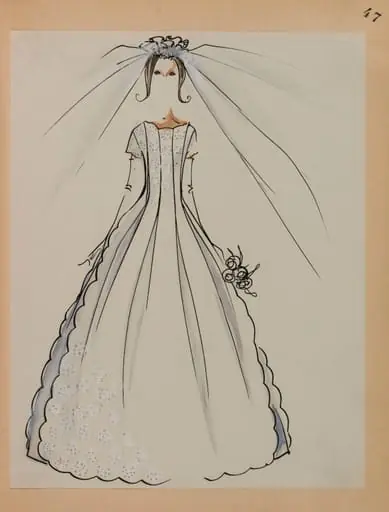 Robe de mariée festonnée et son voile
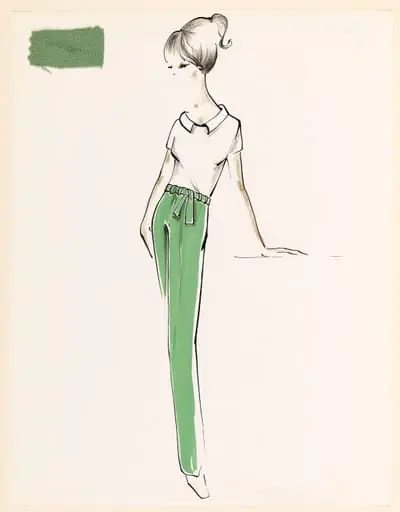 Haut blanc à manches courtes et pantalon vert à ceinture nouée
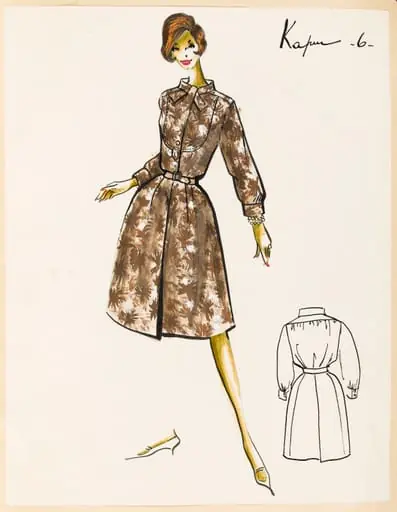 Kapur
Kapur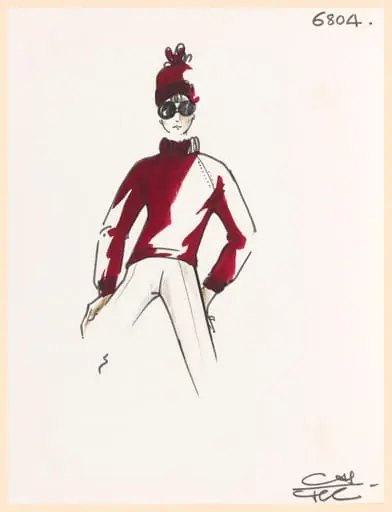 Pull-over à manches longues pourpre, bonnet assorti, pantalon et lunettes de soleil
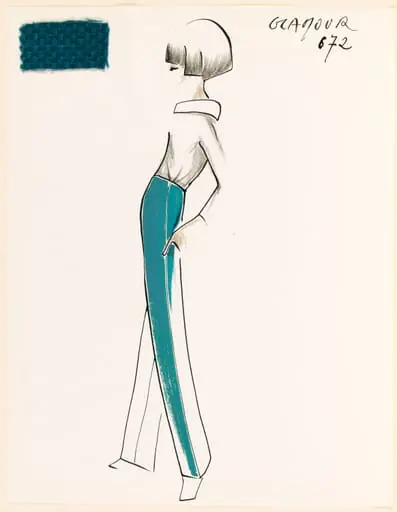 GLAMOUR
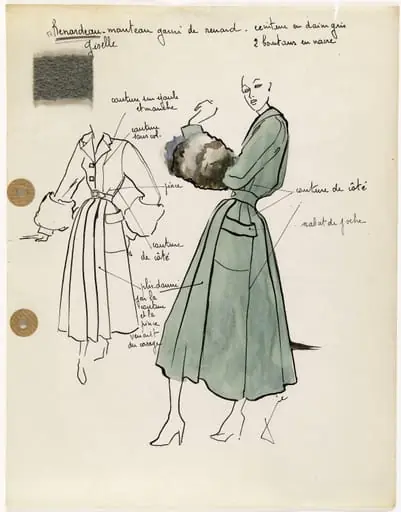 'Renardeau'
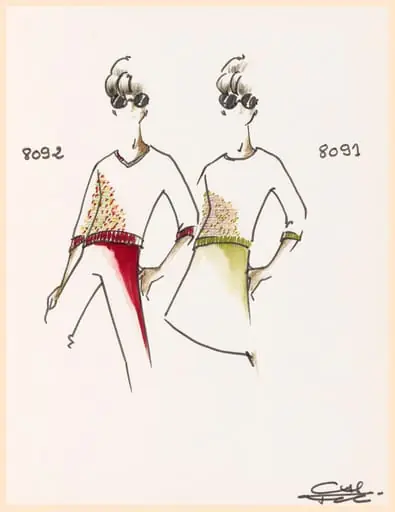 Pull-over à manches trois quarts et à encolure V à motifs multicolores, pantalon cerise et lunettes de soleil
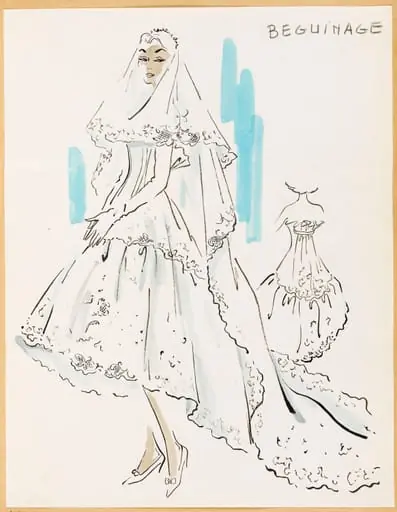 Béguinage