Artwork
Paradis
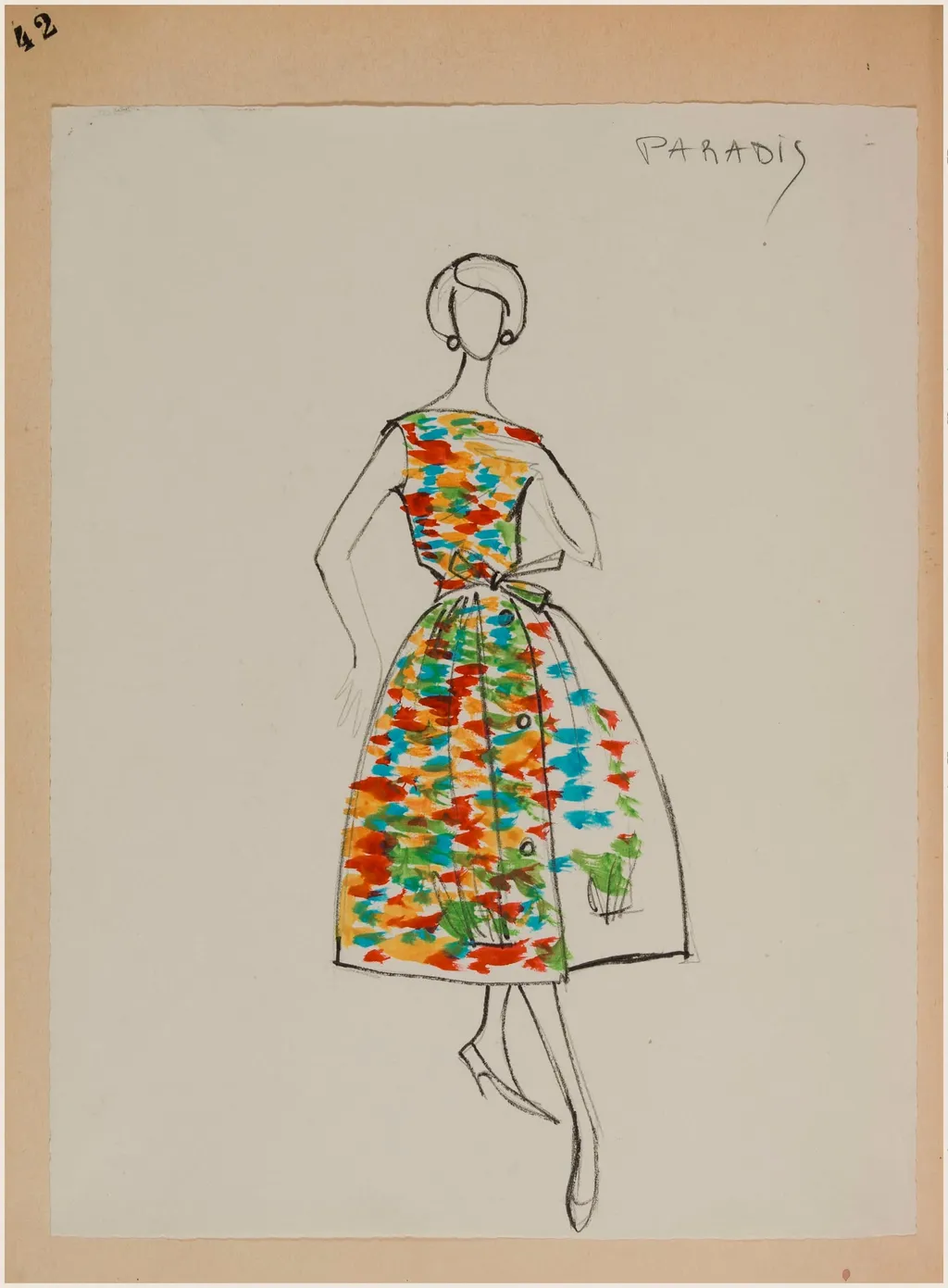
Paradis is a drawing by Marie-Louise Carven. It dates from 1958 and is held in the collection of the Palais Galliera - Musée de la Mode de la Ville de Paris.
About this work
Overview
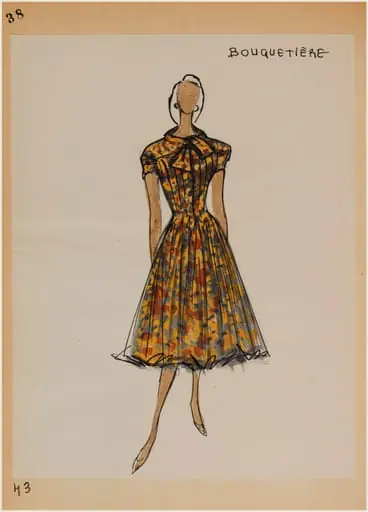
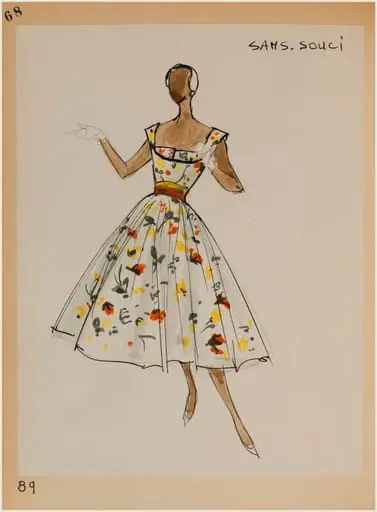
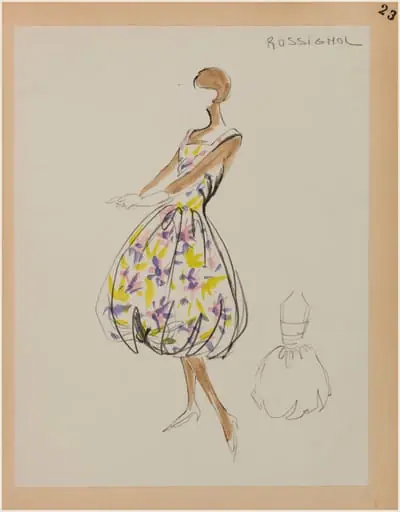
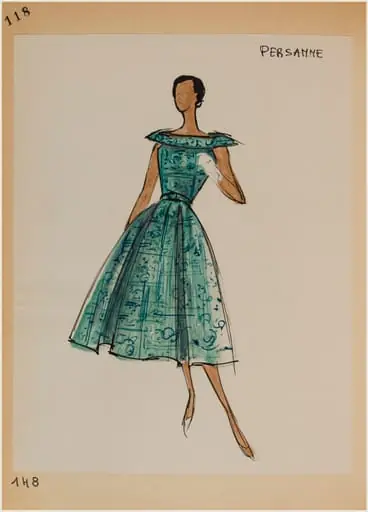
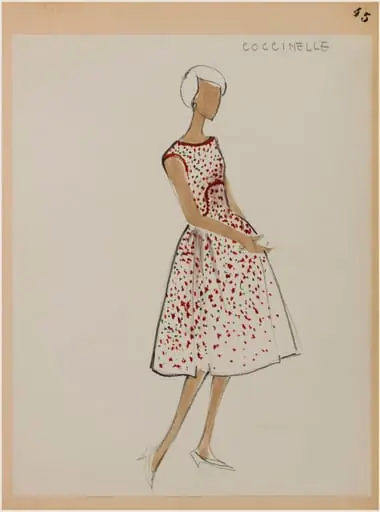
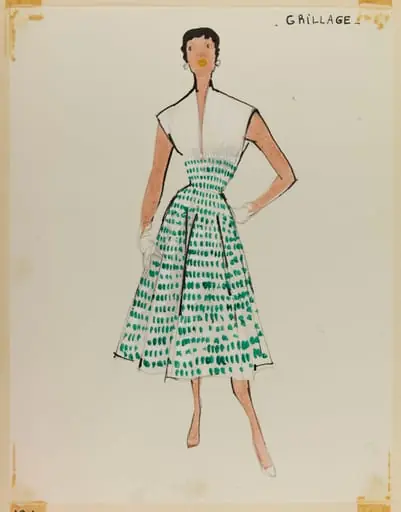
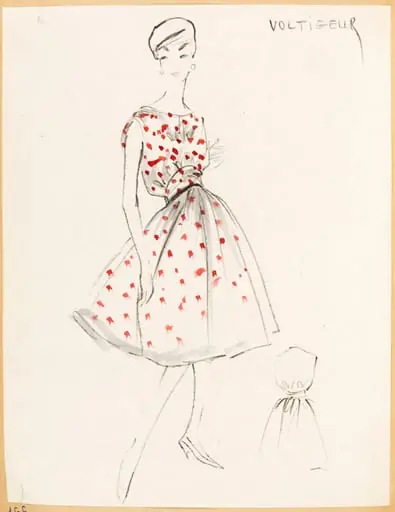
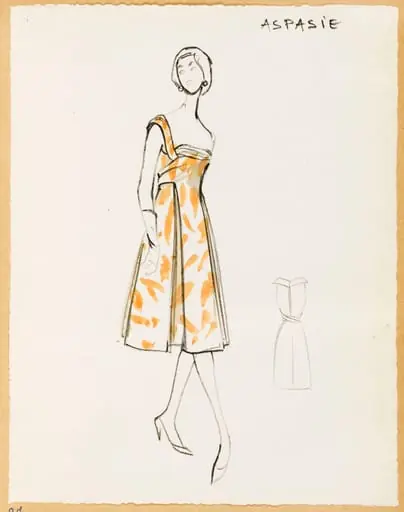
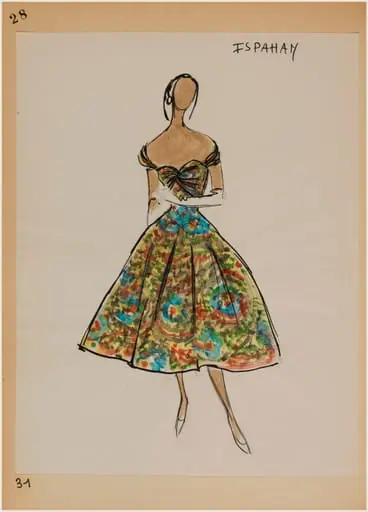
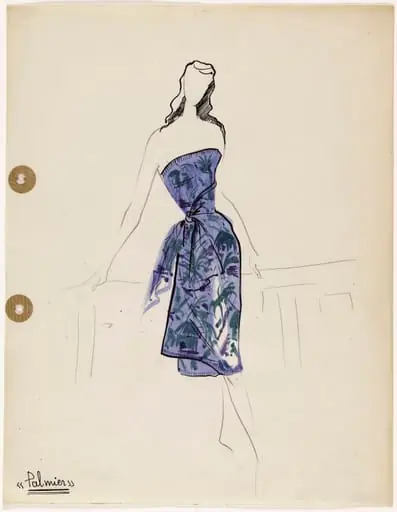
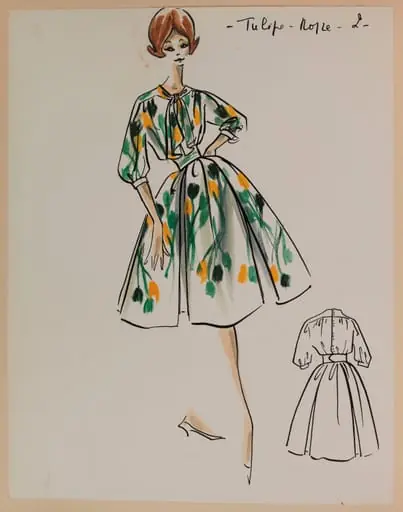
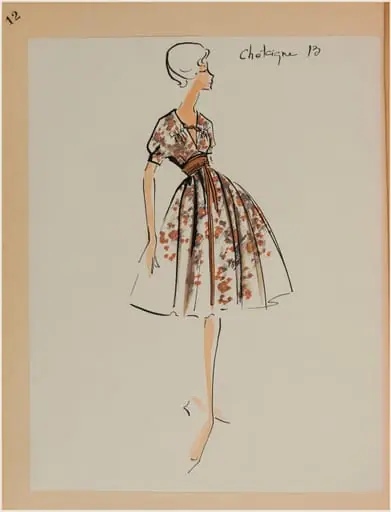
Executed in delicate brushwork, the piece captures a woman in a vibrant, full-skirted dress, embodying the lightness and movement Carven favored.
Created around 1958, *Paradis* is a fashion illustration by Marie-Louise Carven, founder of the Parisian label Carven established in 1945. The work reflects her pioneering role in bringing ready-to-wear design to high fashion. Executed in delicate brushwork, the piece captures a woman in a vibrant, full-skirted dress, embodying the lightness and movement Carven favored. It resides in the collection of the Museum of Ethnography, where it is preserved as a document of mid-century fashion design.
Subject & Meaning
The figure in *Paradis* is depicted in a poised, sideways glance, her body oriented forward, suggesting quiet confidence. The sleeveless dress with a defined waist and full skirt reflects Carven’s focus on flattering petite silhouettes. The multicolored strokes suggest a lively, textured fabric, evoking joy and ease rather than formality. The simplicity of the shoes and hair underscores the drawing’s emphasis on garment and movement over individual identity.
Technique & Style
Carven rendered the dress using small, expressive brushstrokes that build color and texture without outlining forms. This technique gives the fabric a sense of motion and airiness, aligning with her use of lightweight materials in actual garments. The lines defining the figure’s limbs and hair are minimal, prioritizing the dress as the central element. The style is illustrative yet intimate, blending fashion drawing with a painterly sensibility.
History & Provenance
Carven launched one of Paris’s earliest prêt-à-porter lines in the late 1940s, making her work accessible beyond elite clients. *Paradis*, dated to 1958, likely served as a design study or promotional piece for a seasonal collection. It entered the Museum of Ethnography’s holdings as part of a broader effort to document fashion as cultural expression, rather than merely luxury object.
Context
In the postwar era, Parisian fashion was redefining itself through accessibility and modernity. Carven’s designs responded to changing lifestyles, favoring practicality without sacrificing elegance. *Paradis* reflects this shift: its playful palette and fluid silhouette contrast with the rigid structures of earlier haute couture, aligning with broader trends toward casual, youthful aesthetics in late 1950s Europe.
Legacy
Though Carven’s name is less prominent today, her influence endures in the integration of ready-to-wear into the fashion system. *Paradis* stands as a quiet testament to her design philosophy—lightness, proportion, and movement. As a preserved illustration, it offers insight into how fashion was conceived and communicated before digital media, preserving the hand-drawn origins of modern garment design.
Artist & collection
Artist
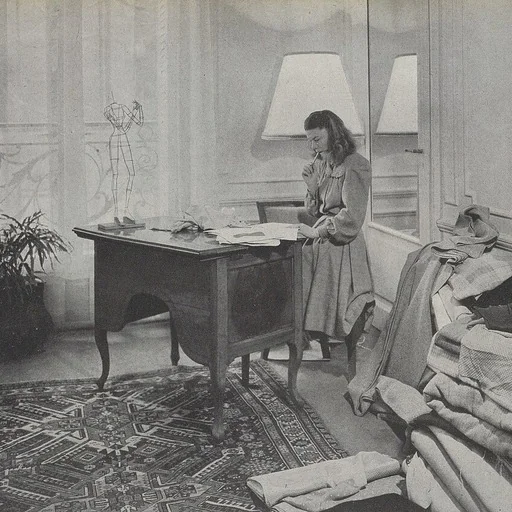
Marie-Louise Carven (31 August 1909 – 8 June 2015), born Carmen de Tommaso, was a French fashion designer who founded the house of Carven in 1945.
Museum
Palais Galliera - Musée de la Mode de la Ville de Paris
Continue through works from the same source collection.
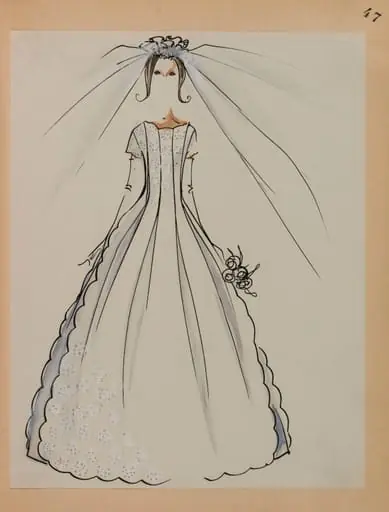 Robe de mariée festonnée et son voile
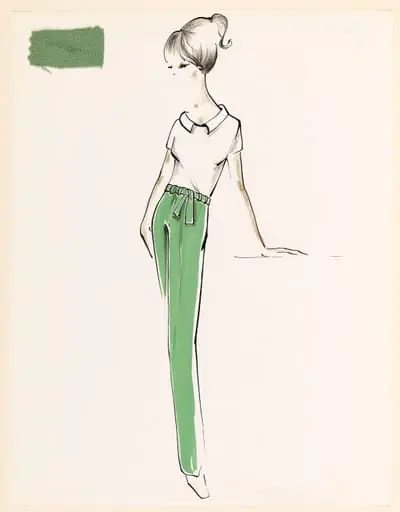 Haut blanc à manches courtes et pantalon vert à ceinture nouée
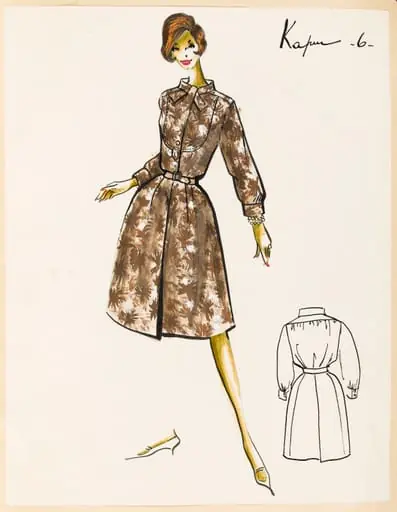 Kapur
Kapur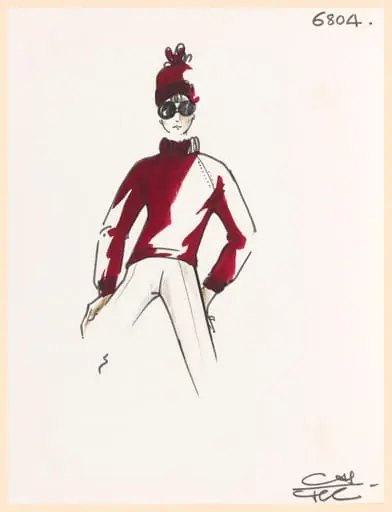 Pull-over à manches longues pourpre, bonnet assorti, pantalon et lunettes de soleil
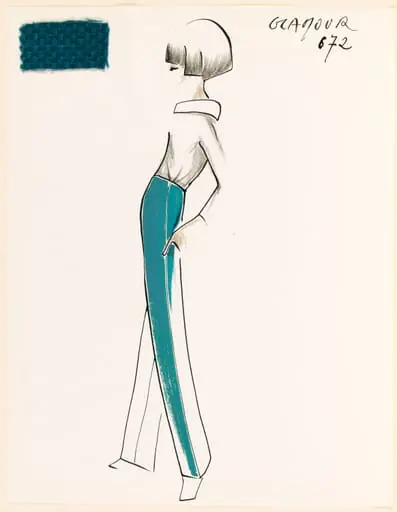 GLAMOUR
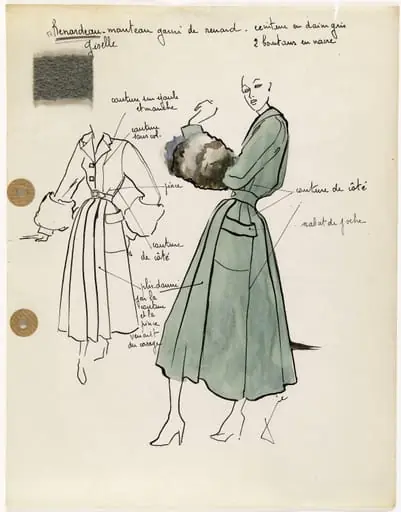 'Renardeau'
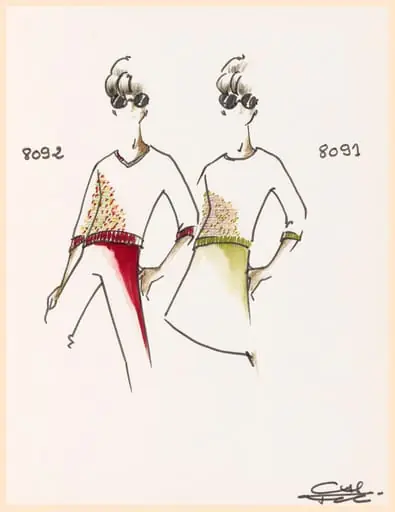 Pull-over à manches trois quarts et à encolure V à motifs multicolores, pantalon cerise et lunettes de soleil
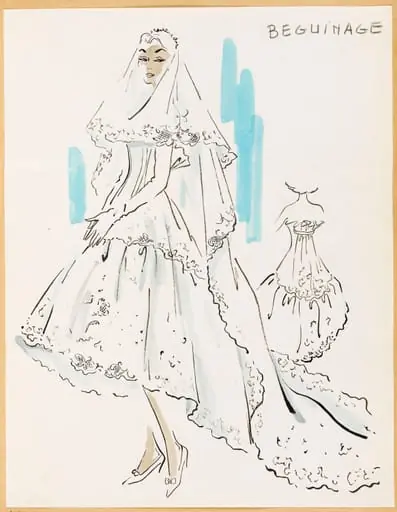 Béguinage