Artwork
Pomme d'or
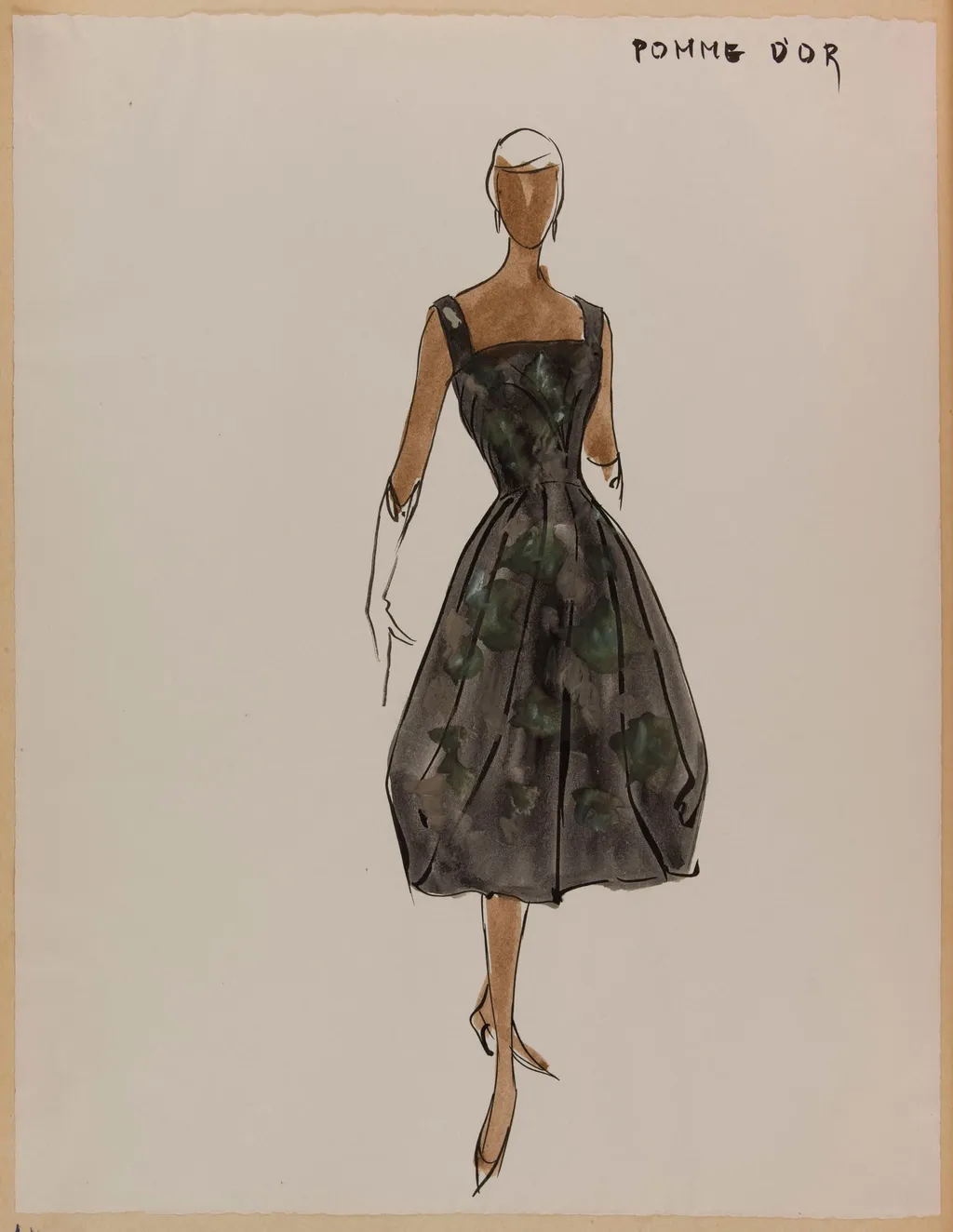
Pomme d'or is a drawing by Marie-Louise Carven. It dates from 1956 and is held in the collection of the Palais Galliera - Musée de la Mode de la Ville de Paris.
About this work
Overview
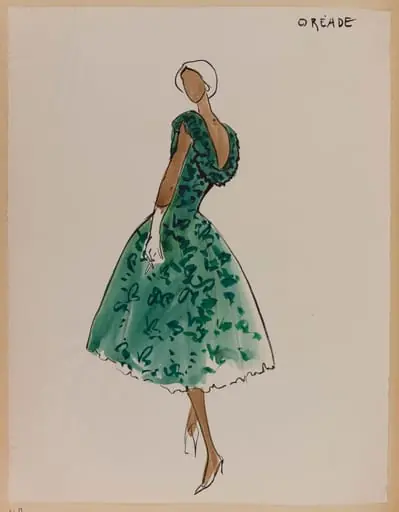
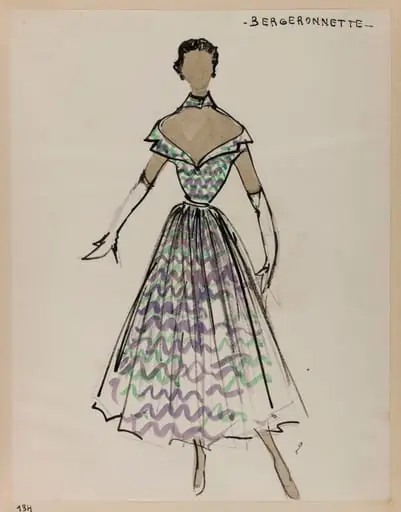
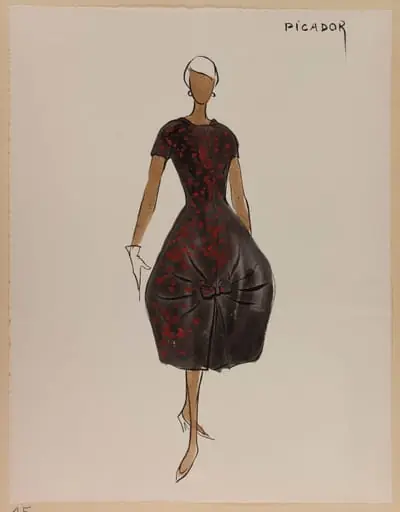
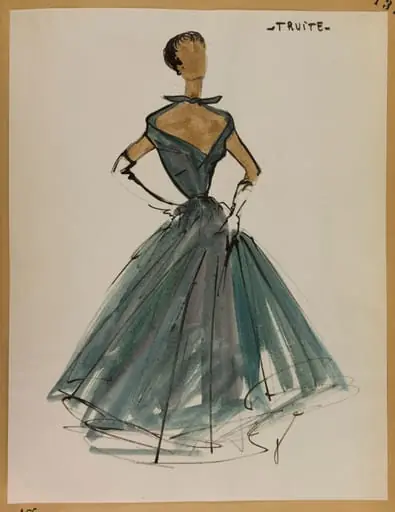
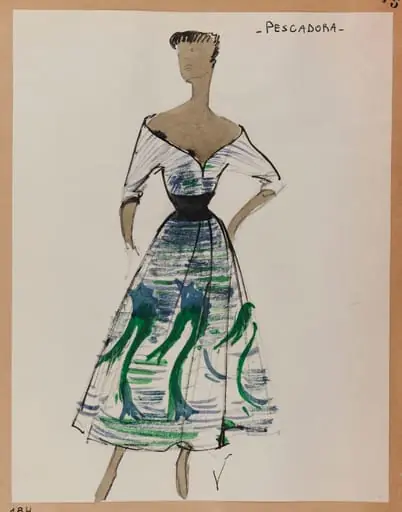
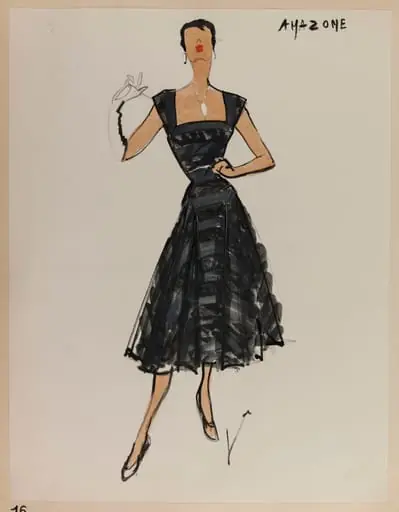
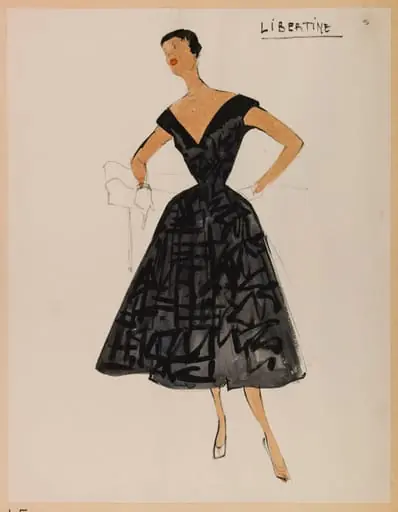
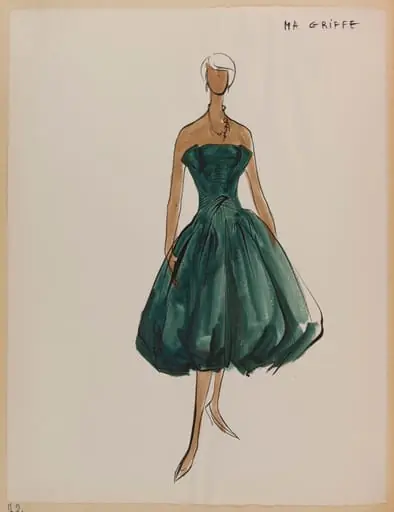
It depicts a woman in a dark, floral-patterned dress, rendered with precise linework and subtle shading.
Pomme d'or is a fashion illustration created around 1956 by French designer Marie-Louise Carven. It depicts a woman in a dark, floral-patterned dress, rendered with precise linework and subtle shading. The image, signed with its title above the figure, reflects Carven’s focus on refined, wearable design. Though presented as a standalone artwork, it originated as a design study for a garment in her ready-to-wear line, later preserved in the Museum of Ethnography’s collection.
Subject & Meaning
The figure in Pomme d'or is shown frontally, arms relaxed at her sides, with no facial features visible—emphasizing the garment over identity. The dress, adorned with a delicate floral motif, suggests a blend of femininity and restraint. The title, meaning 'golden apple,' may allude to elegance or a subtle nod to French cultural symbolism, though no explicit narrative is conveyed. The work centers the clothing as the primary subject, consistent with Carven’s design philosophy.
Technique & Style
The illustration employs fine, controlled lines to define the dress’s silhouette and fabric folds, suggesting lightweight material such as gingham or lace. Shading is minimal but effective, creating volume without heavy contrast. The style is restrained and elegant, avoiding theatricality in favor of clarity. This approach aligns with mid-century fashion drawing conventions, prioritizing accuracy and wearability over expressive flair, reflecting Carven’s practical aesthetic.
History & Provenance
Marie-Louise Carven established her fashion house in 1945 and became known for designing for smaller frames and pioneering accessible ready-to-wear. Pomme d'or was likely produced in the mid-1950s as part of her seasonal design portfolio. It entered the Museum of Ethnography’s collection as an artifact of postwar French fashion, valued for its representation of everyday elegance rather than haute couture spectacle.
Context
In the 1950s, French fashion was dominated by haute couture, but Carven stood apart by focusing on practical, affordable clothing for working women. Pomme d'or reflects this shift—its design is sophisticated yet unpretentious, suited to daily life. The illustration’s preservation in an ethnographic museum underscores its role as a cultural document, capturing how fashion intersected with ordinary female experience in postwar Europe.
Legacy
Pomme d'or endures as a quiet testament to Carven’s influence on democratizing fashion. Her emphasis on fit, fabric, and accessibility paved the way for modern ready-to-wear. Though not widely publicized, such illustrations remain in institutional collections as evidence of a design ethos that prioritized the wearer’s comfort and dignity over spectacle, influencing later generations of designers focused on inclusive, functional clothing.
Artist & collection
Artist
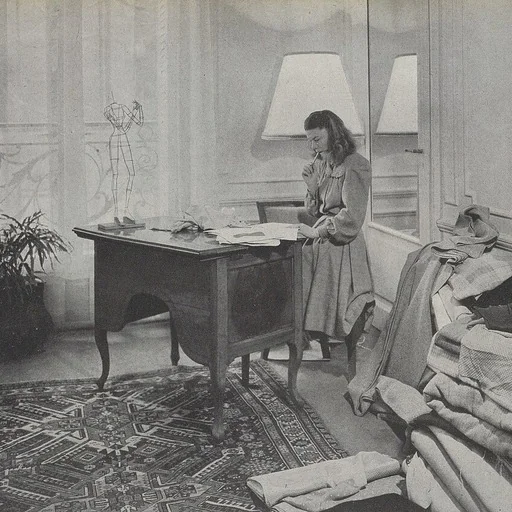
Marie-Louise Carven (31 August 1909 – 8 June 2015), born Carmen de Tommaso, was a French fashion designer who founded the house of Carven in 1945.
Museum
Palais Galliera - Musée de la Mode de la Ville de Paris
Continue through works from the same source collection.
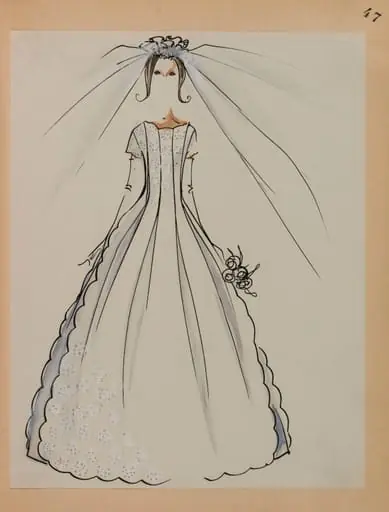 Robe de mariée festonnée et son voile
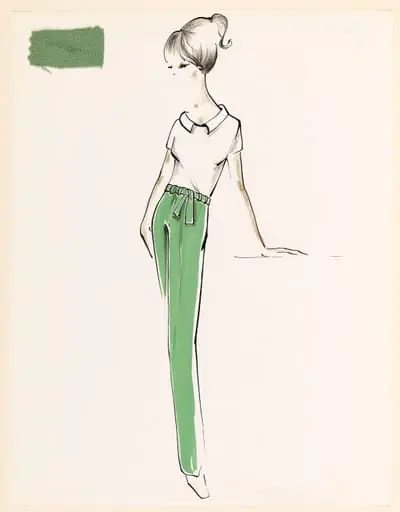 Haut blanc à manches courtes et pantalon vert à ceinture nouée
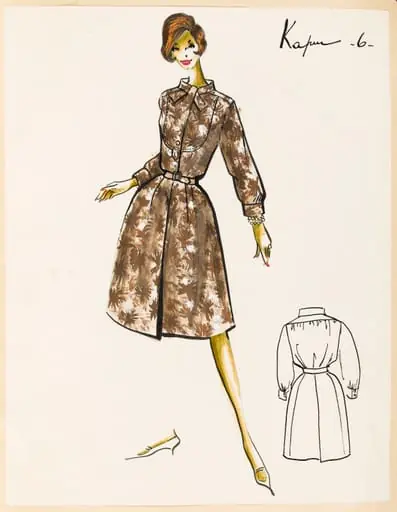 Kapur
Kapur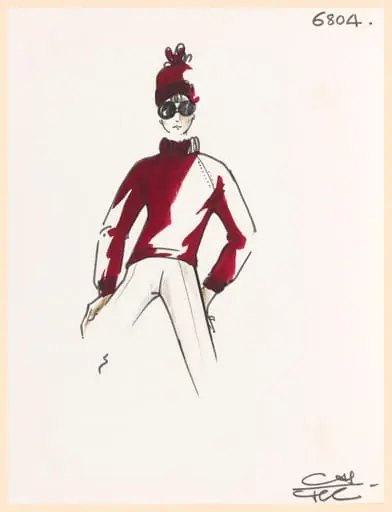 Pull-over à manches longues pourpre, bonnet assorti, pantalon et lunettes de soleil
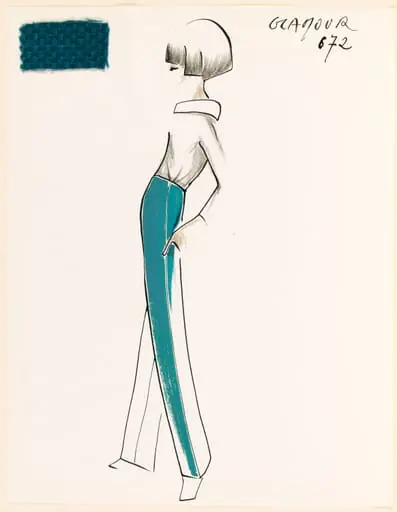 GLAMOUR
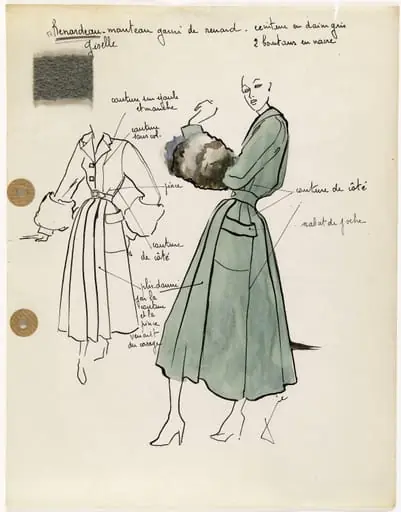 'Renardeau'
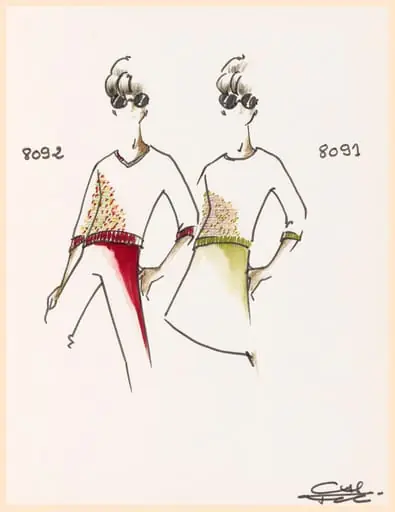 Pull-over à manches trois quarts et à encolure V à motifs multicolores, pantalon cerise et lunettes de soleil
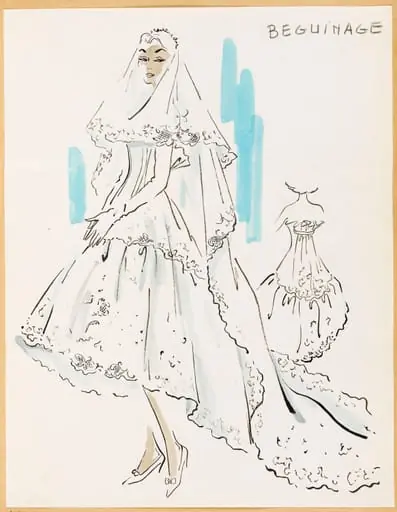 Béguinage