Artwork
Pomme de pin
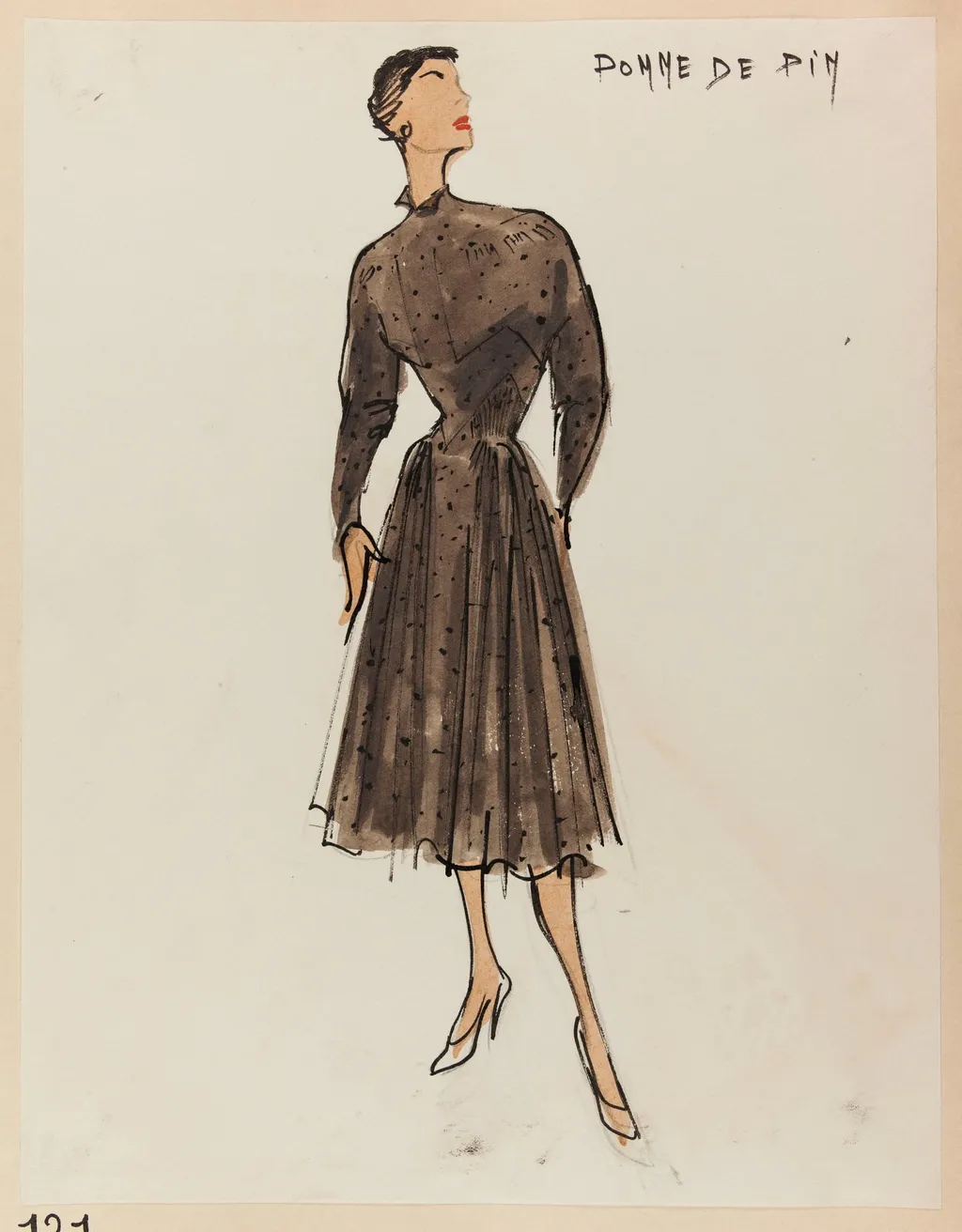
Pomme de pin is a drawing by Marie-Louise Carven. It dates from 1952 and is held in the collection of the Palais Galliera - Musée de la Mode de la Ville de Paris.
About this work
Overview
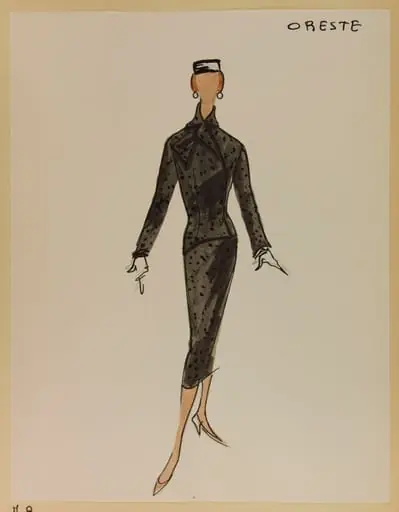
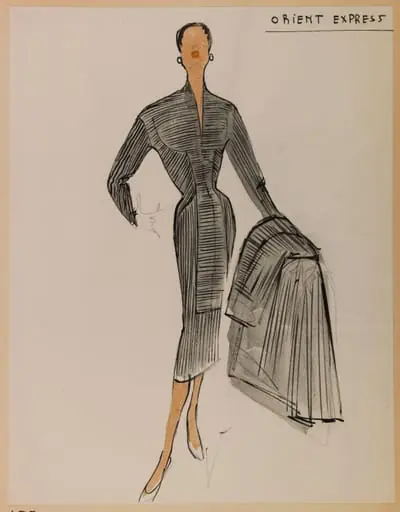
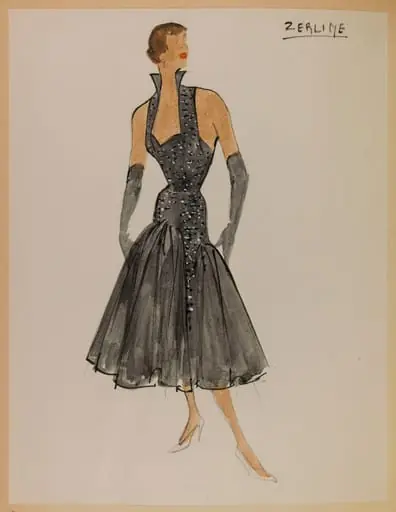
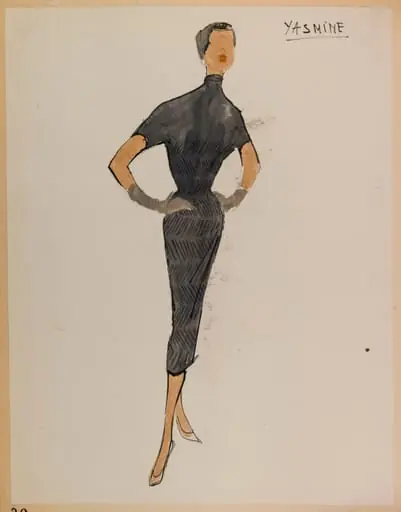
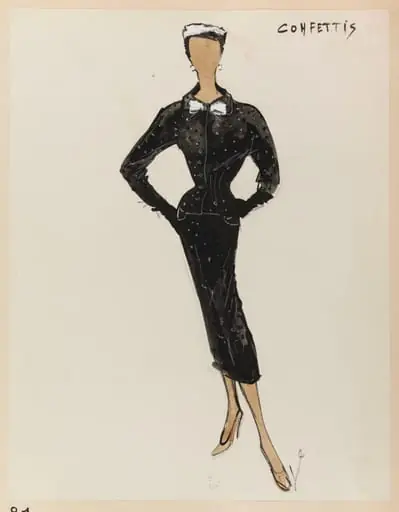
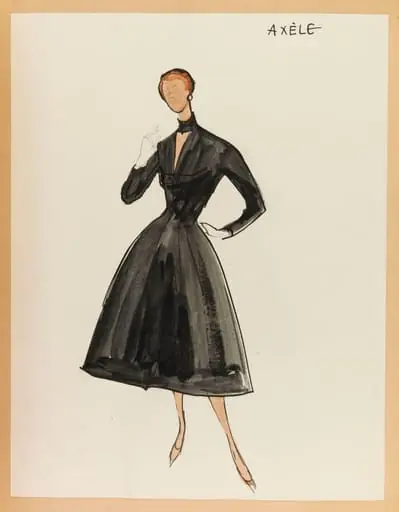
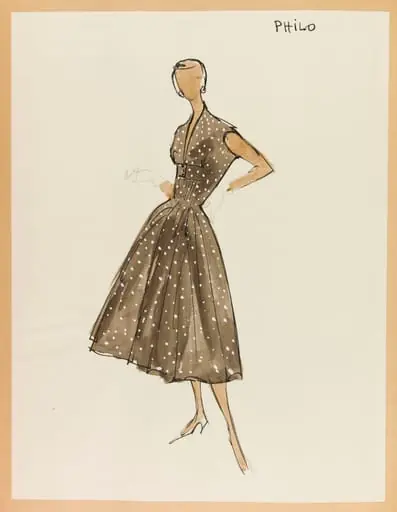
Executed in ink or pencil, the drawing captures a minimalist black dress with a tailored bodice and flared skirt, adorned with fine dotted patterning.
Pomme de pin is a fashion sketch created around 1952 by Marie-Louise Carven, founder of the French fashion house Carven. Executed in ink or pencil, the drawing captures a minimalist black dress with a tailored bodice and flared skirt, adorned with fine dotted patterning. The artist signed the work with the title, suggesting it was intended as a design identifier. Its informal, rapid execution reflects the sketchbook tradition of couture design, not a finished presentation piece.
Subject & Meaning
The figure depicted is a slender woman in a modest, youthful ensemble, her posture relaxed yet composed—one hand on the hip, gaze averted. The simplicity of the dress and the neat, pulled-back hairstyle suggest an ideal of understated elegance suited to postwar Parisian life. The title, Pomme de pin (pinecone), may allude to the textured dot pattern resembling pinecone scales, linking natural form to textile detail in a subtle, poetic way.
Technique & Style
Carven rendered the design with loose, economical lines, leaving areas intentionally sketchy to convey movement and texture rather than precision. The dotted fabric pattern is suggested through quick, repeated marks, avoiding heavy shading. The figure is simplified, with minimal anatomical detail, focusing attention on silhouette and garment structure. This approach aligns with the practical needs of design development, prioritizing clarity and adaptability over finish.
History & Provenance
Created during Carven’s early years as a couturier, the sketch predates her formal expansion into prêt-à-porter but reflects the same design ethos: accessible, petite-friendly silhouettes. It entered the collection of the Museum of Ethnography, likely through donation or acquisition tied to her influence on mid-century French fashion. Its presence in an ethnographic context signals recognition of fashion as cultural artifact, not merely luxury object.
Context
In the early 1950s, Parisian fashion was redefining itself after wartime austerity. Carven distinguished herself by designing for smaller frames and favoring light, breathable fabrics like gingham and lace. Her work responded to a growing demand for practical, wearable clothing among middle-class women. This sketch embodies that shift—unadorned, functional, and quietly modern, reflecting a broader movement toward democratized style.
Legacy
Pomme de pin stands as a quiet testament to Carven’s role in bridging haute couture and ready-to-wear. Its unpolished quality reveals the iterative nature of design, contrasting with the polished presentations of high fashion. Today, it contributes to scholarly understanding of how women designers translated everyday needs into aesthetic form, preserving a moment when fashion began to prioritize the wearer over the spectacle.
Artist & collection
Artist
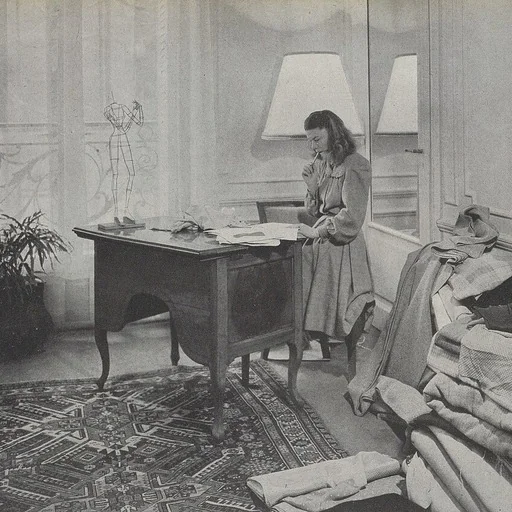
Marie-Louise Carven (31 August 1909 – 8 June 2015), born Carmen de Tommaso, was a French fashion designer who founded the house of Carven in 1945.
Museum
Palais Galliera - Musée de la Mode de la Ville de Paris
Continue through works from the same source collection.
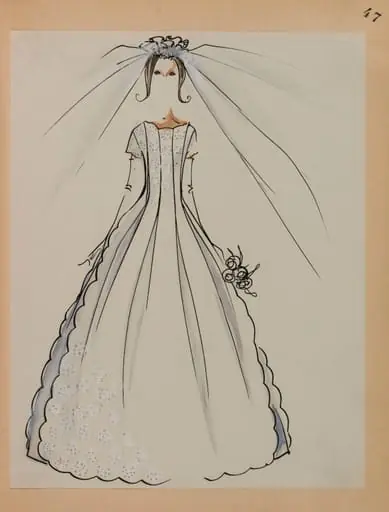 Robe de mariée festonnée et son voile
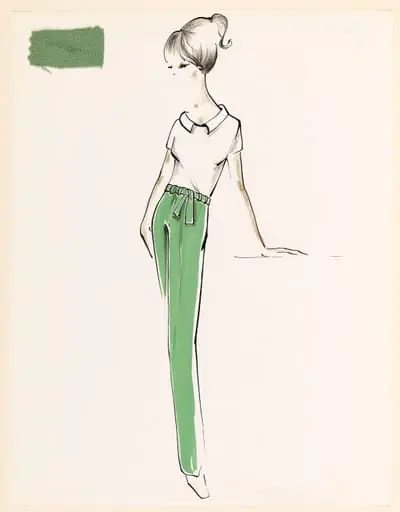 Haut blanc à manches courtes et pantalon vert à ceinture nouée
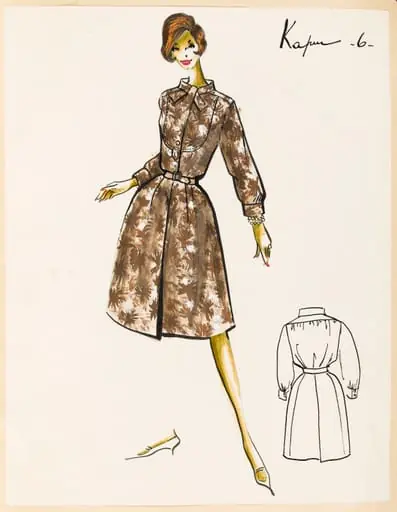 Kapur
Kapur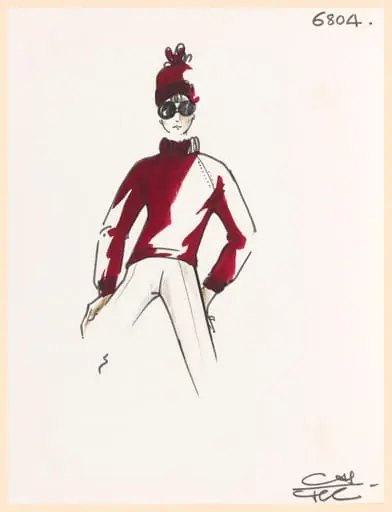 Pull-over à manches longues pourpre, bonnet assorti, pantalon et lunettes de soleil
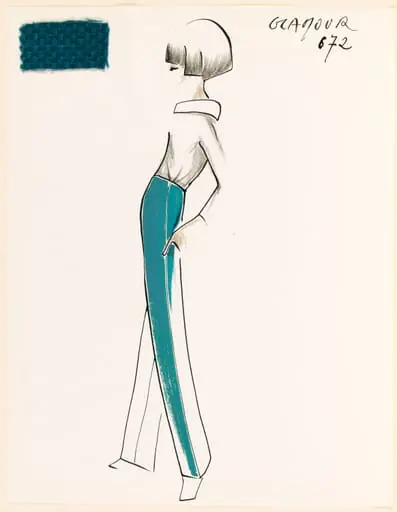 GLAMOUR
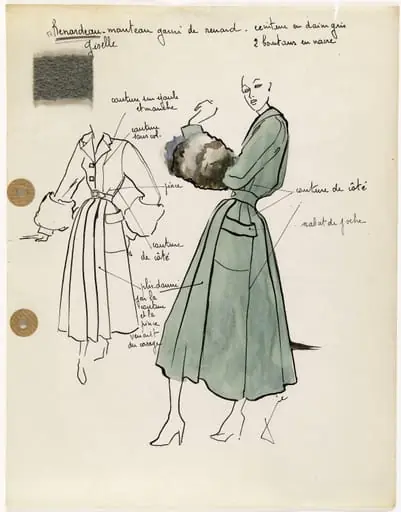 'Renardeau'
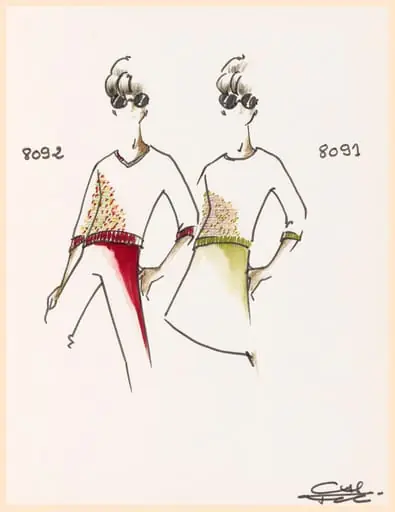 Pull-over à manches trois quarts et à encolure V à motifs multicolores, pantalon cerise et lunettes de soleil
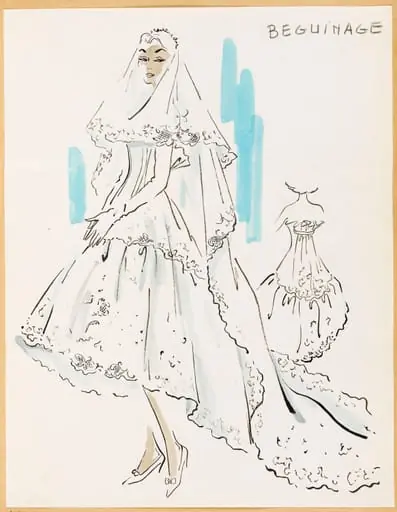 Béguinage