Artwork
Rappalo
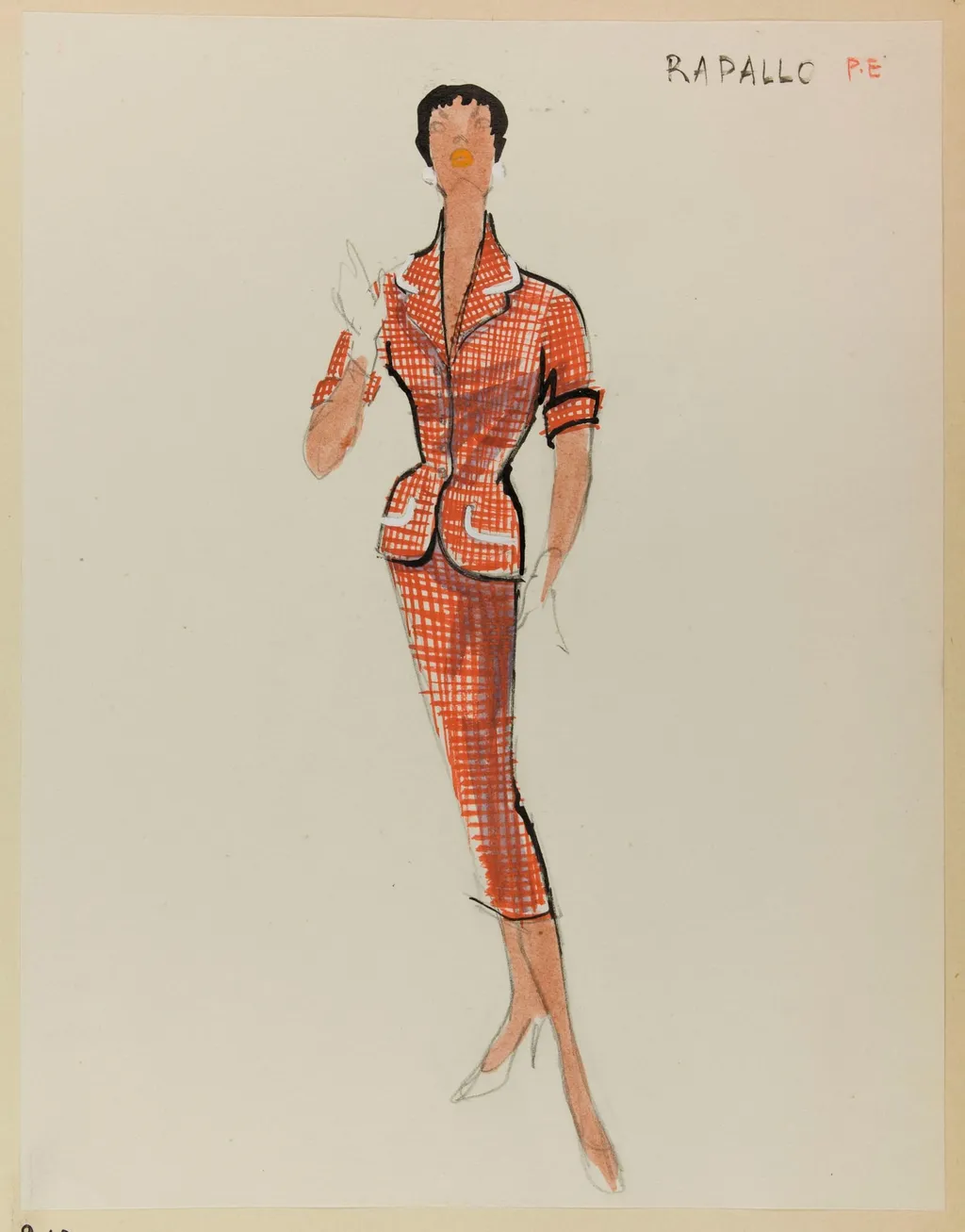
Rappalo is a drawing by Marie-Louise Carven. It dates from 1953 and is held in the collection of the Palais Galliera - Musée de la Mode de la Ville de Paris.
About this work
Overview
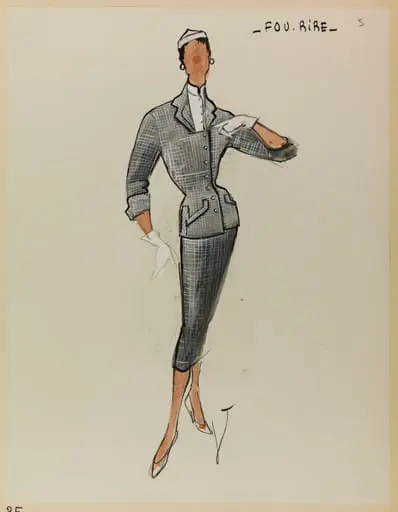
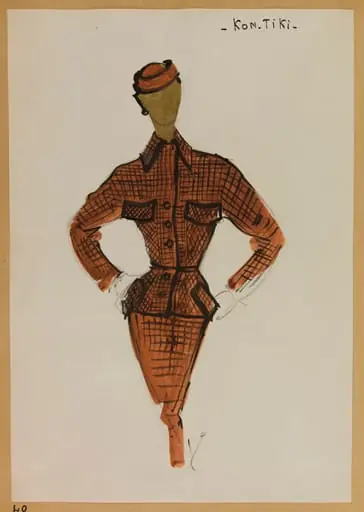
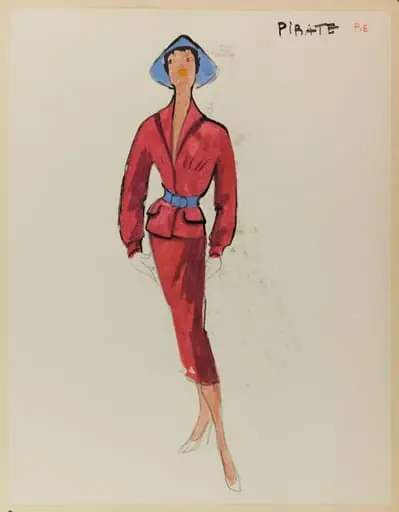
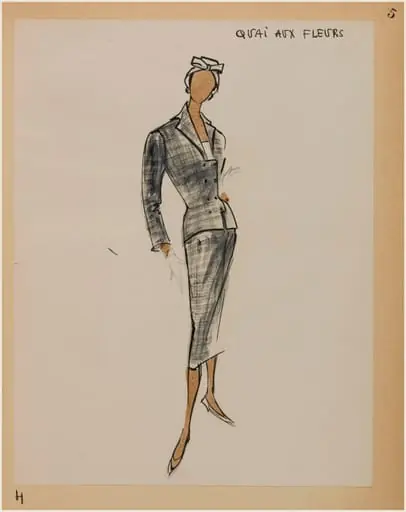
Created around 1953, *Rappalo* is a pencil sketch by French designer Marie-Louise Carven, capturing a casual yet distinctive outfit in loose, rapid strokes.
Created around 1953, *Rappalo* is a pencil sketch by French designer Marie-Louise Carven, capturing a casual yet distinctive outfit in loose, rapid strokes. The drawing reflects her approach to design as a fluid, iterative process rather than a polished final product. It resides in the collection of the Museum of Ethnography, where it is preserved not as a finished garment but as a record of creative thought in motion.
Subject & Meaning
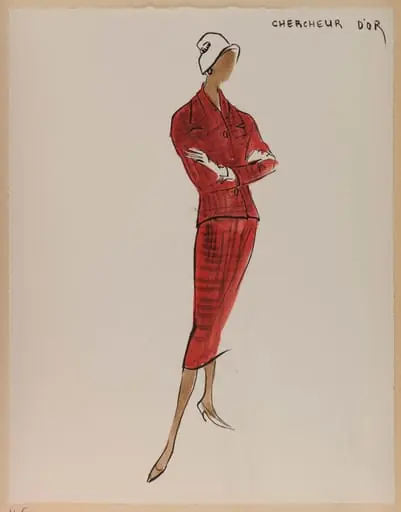
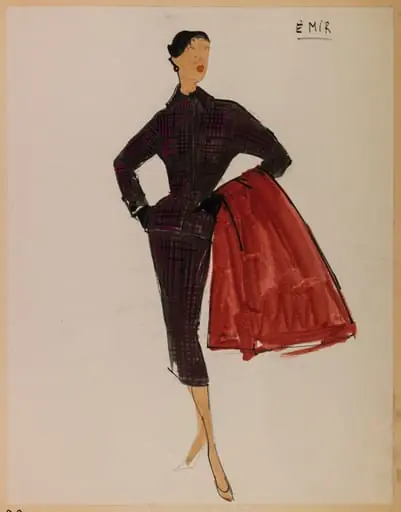
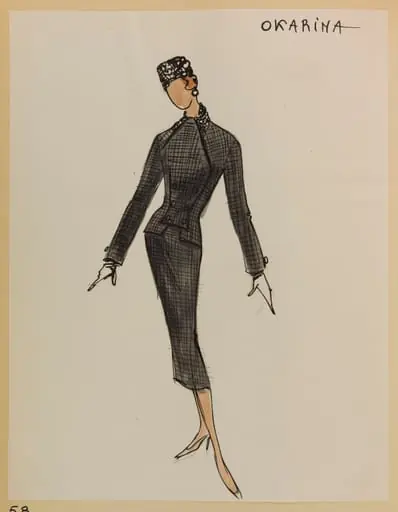
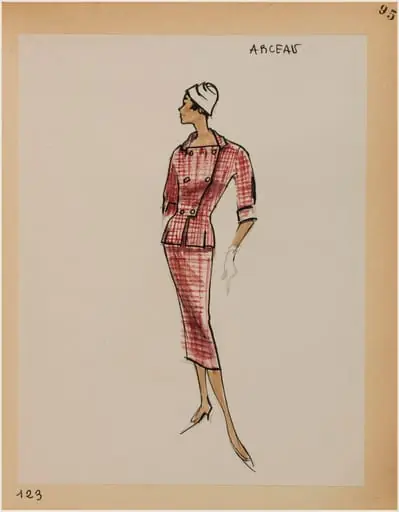
The sketch depicts a woman in a bright red checkered jacket and matching wide-leg pants, suggesting a relaxed, modern silhouette. The small object held in her right hand remains ambiguous—perhaps a purse, a book, or a gesture of daily life. The title *Rappalo*, scrawled in the corner, may indicate a working name or a personal reference, hinting at Carven’s habit of naming designs with evocative, non-literal terms.
Technique & Style
Carven rendered the figure with swift, unrefined lines and minimal shading, focusing on movement and form rather than detail. The absence of background or elaborate features emphasizes the garment’s structure. The sketch’s immediacy reflects a designer’s working method: capturing an idea quickly before it evolves. This approach aligns with her broader philosophy of simplicity and functionality in dress.
History & Provenance
Marie-Louise Carven founded her fashion house in 1945 and was among the earliest French couturiers to develop a ready-to-wear line, bridging haute couture and accessible fashion. *Rappalo* likely emerged during this period of innovation. Its presence in the Museum of Ethnography suggests its value as a cultural artifact of postwar French design practices, preserved for its insight into everyday creative processes.
Context
In the early 1950s, Parisian fashion was shifting toward practicality and youth-oriented styles. Carven’s designs catered to petite figures and emphasized comfort without sacrificing elegance. *Rappalo* embodies this trend—its loose fit and bold pattern reflect a move away from rigid postwar silhouettes, aligning with broader societal changes in women’s mobility and dress.
Legacy
Though *Rappalo* was never mass-produced, it stands as a testament to Carven’s influence on democratizing fashion. Her sketches, like this one, reveal how design thinking operated behind closed doors—informal, intuitive, and deeply personal. Today, such drawings are valued not for their finish, but for the insight they offer into the evolution of modern clothing.
Artist & collection
Artist
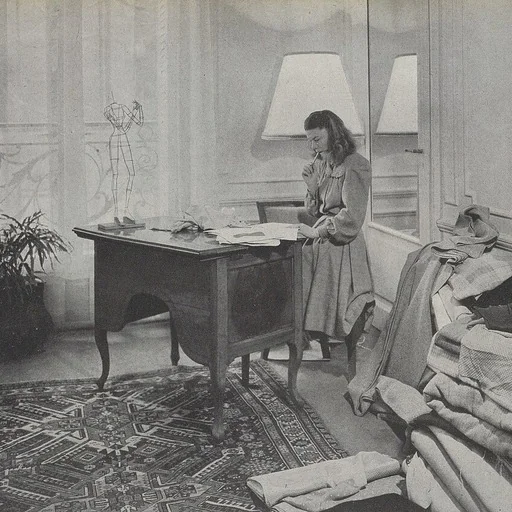
Marie-Louise Carven (31 August 1909 – 8 June 2015), born Carmen de Tommaso, was a French fashion designer who founded the house of Carven in 1945.

Museum
Palais Galliera - Musée de la Mode de la Ville de Paris
Continue through works from the same source collection.
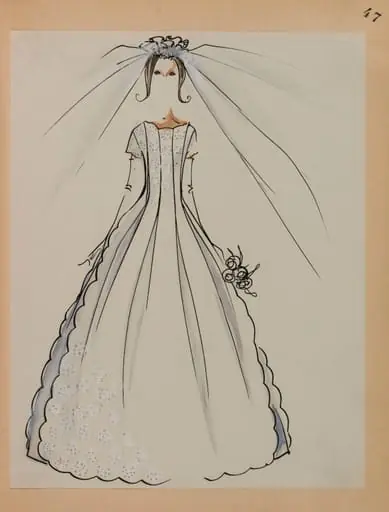 Robe de mariée festonnée et son voile
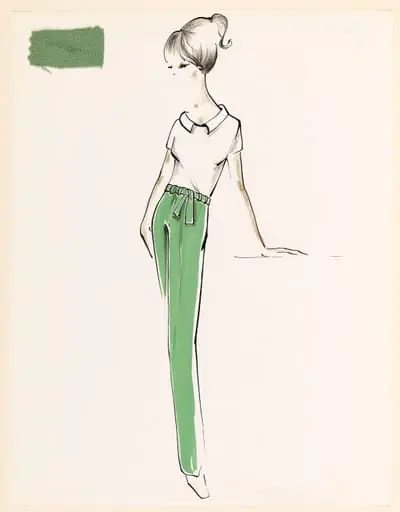 Haut blanc à manches courtes et pantalon vert à ceinture nouée
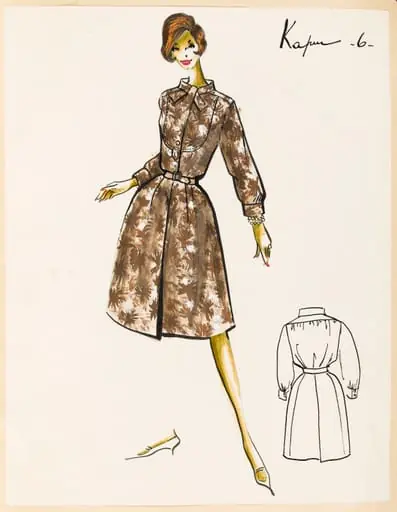 Kapur
Kapur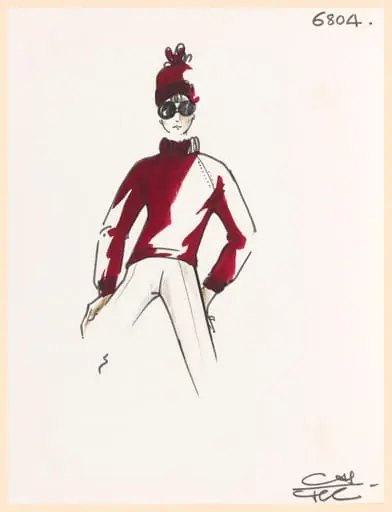 Pull-over à manches longues pourpre, bonnet assorti, pantalon et lunettes de soleil
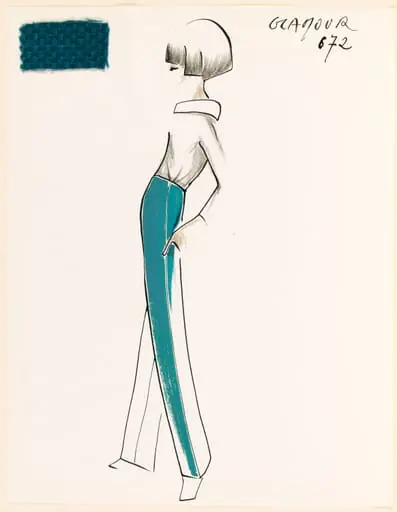 GLAMOUR
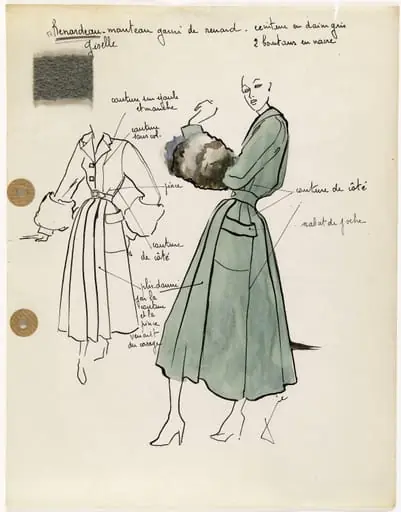 'Renardeau'
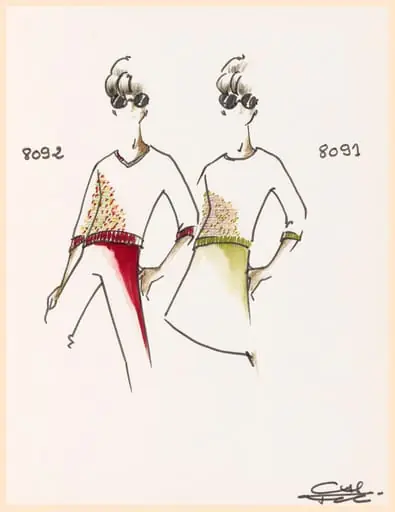 Pull-over à manches trois quarts et à encolure V à motifs multicolores, pantalon cerise et lunettes de soleil
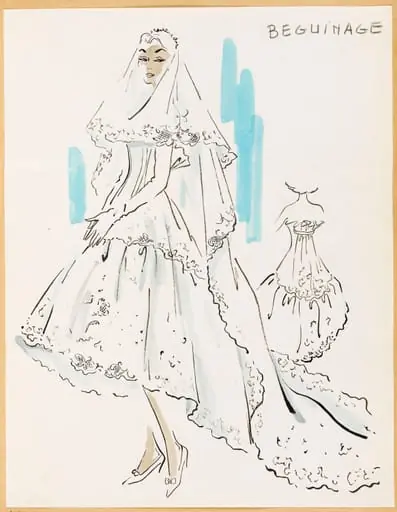 Béguinage