Artwork
Emir
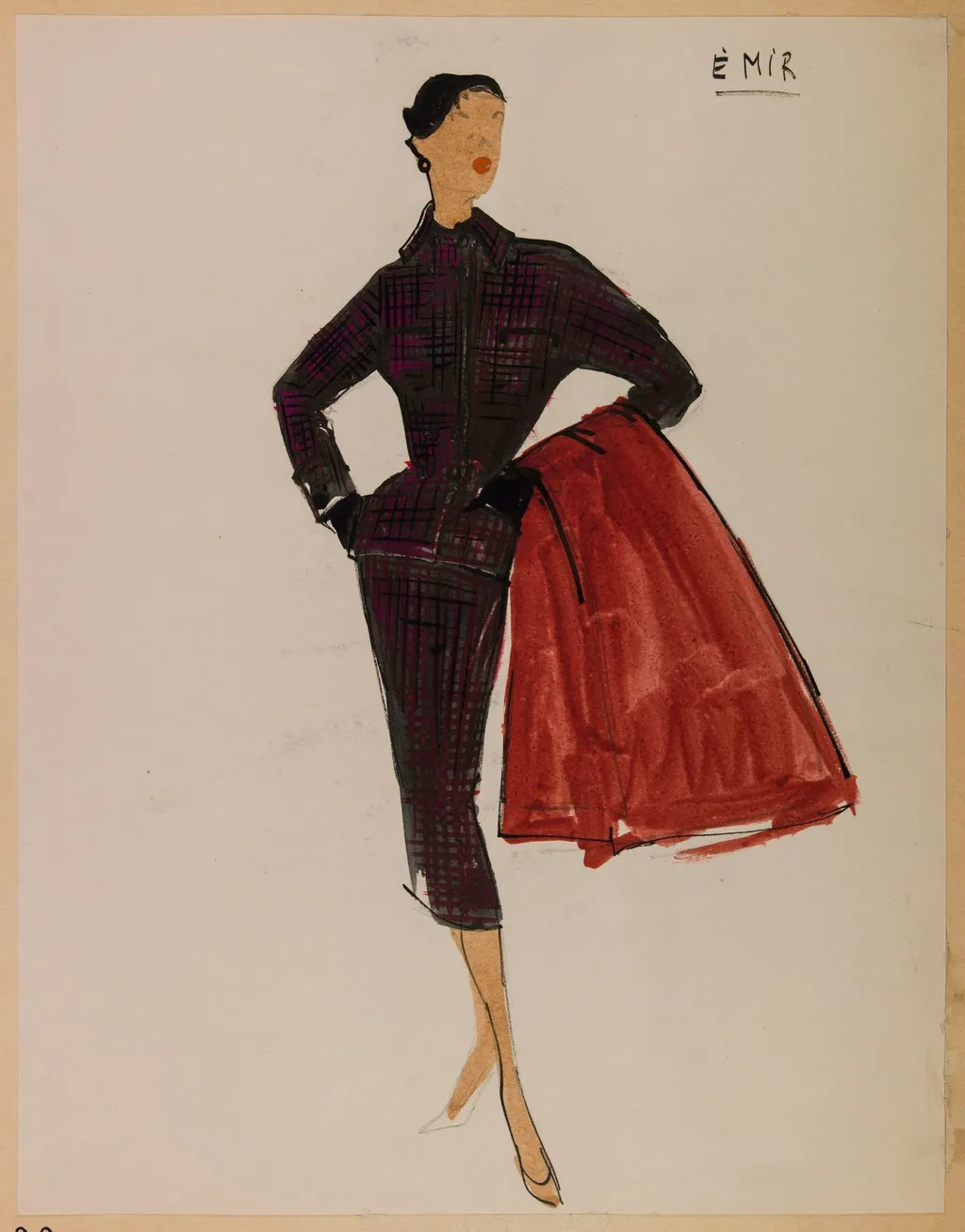
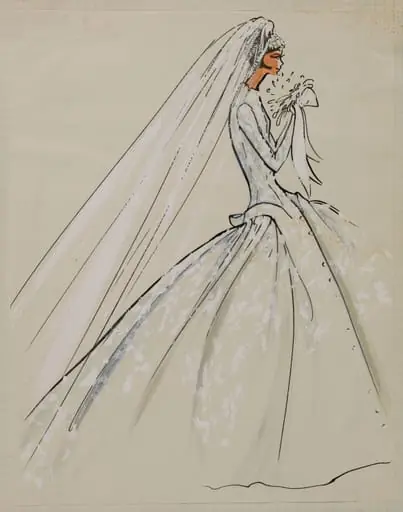
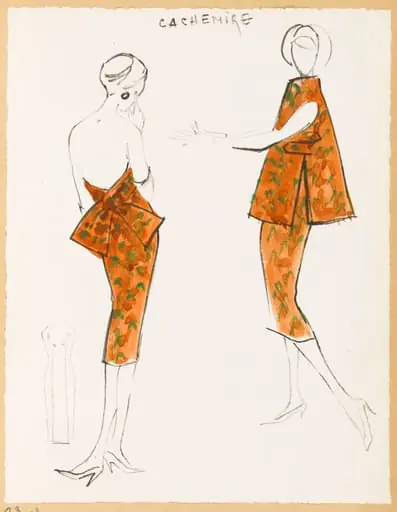
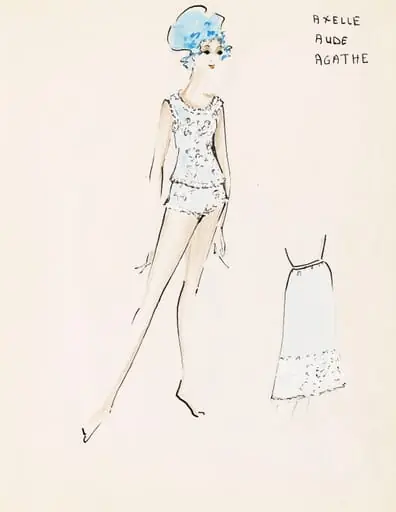
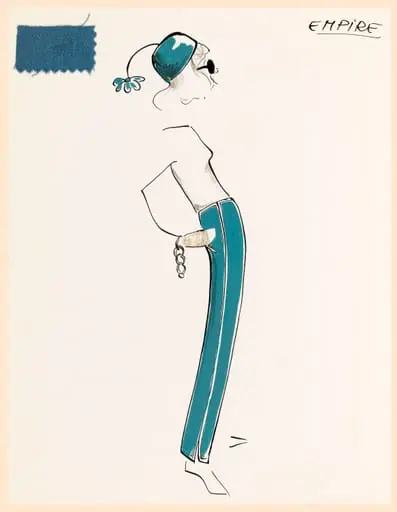
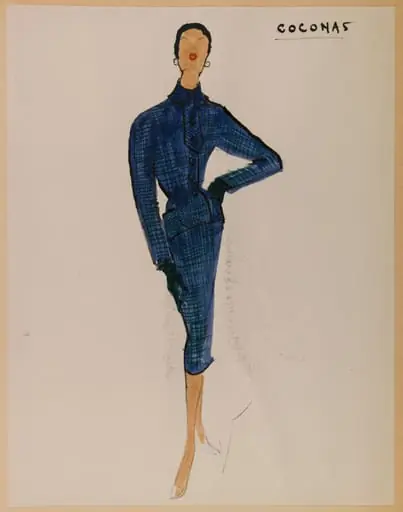
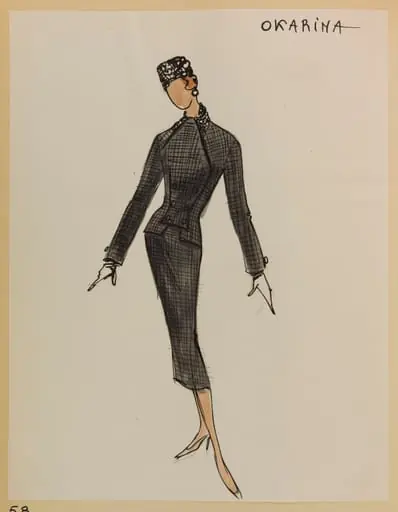
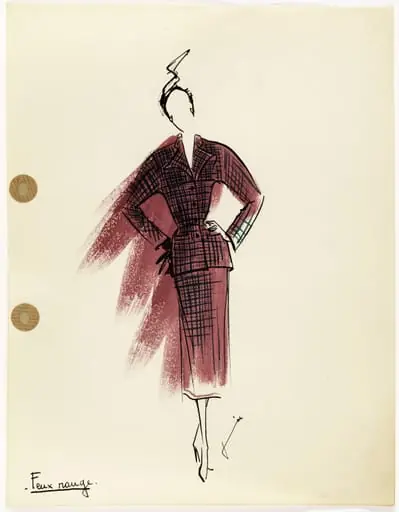
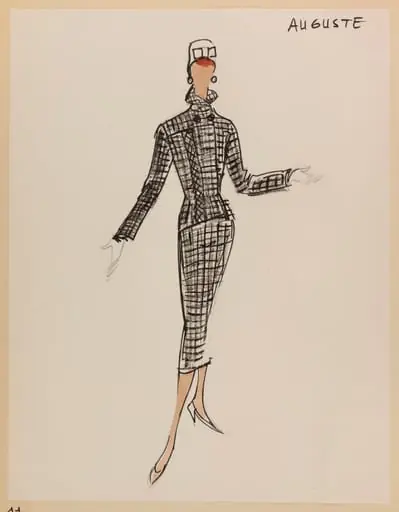
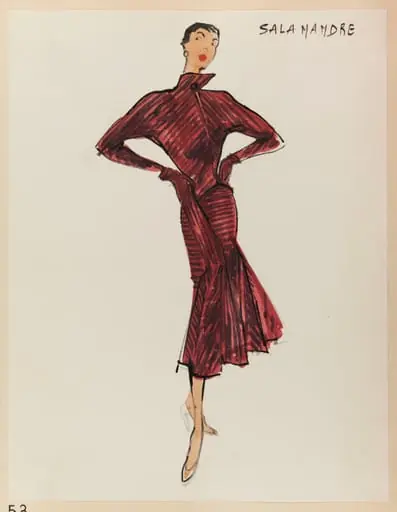
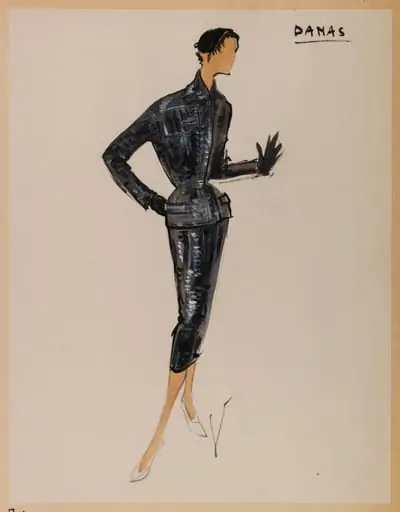
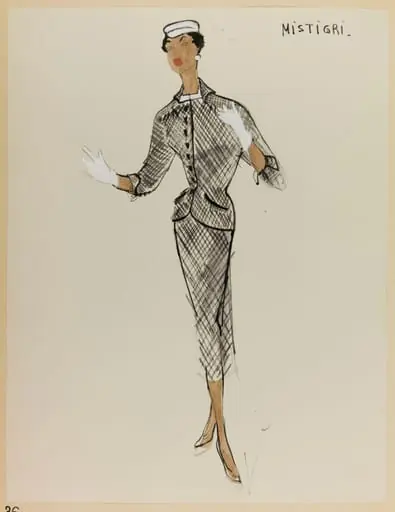
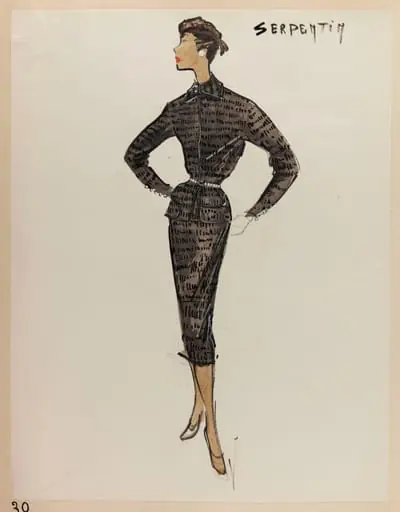
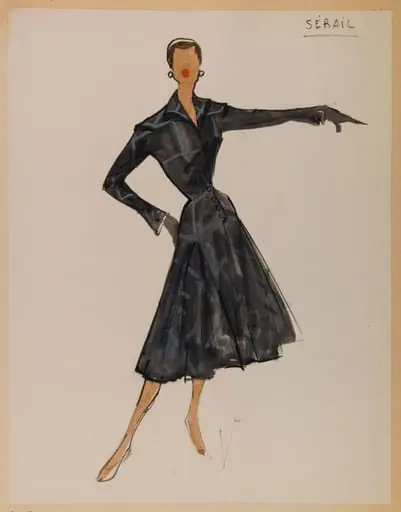
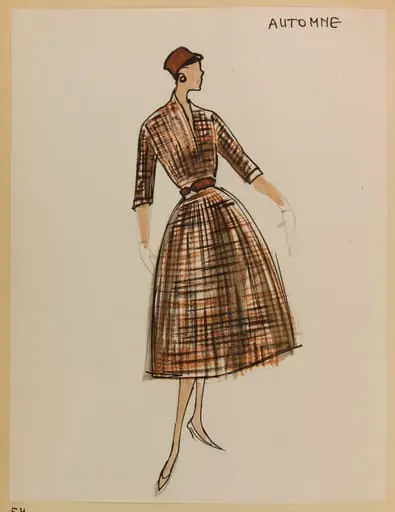
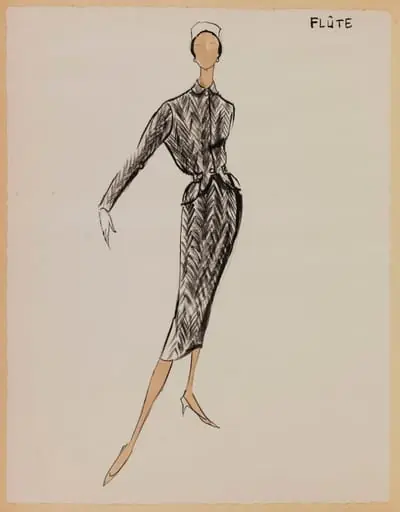
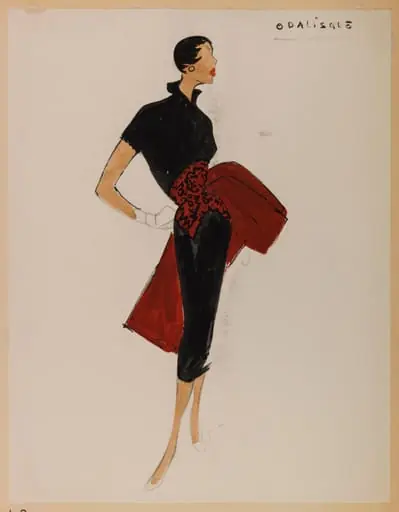
Emir is a drawing by Carven. It dates from 1953 and is held in the collection of the Palais Galliera - Musée de la Mode de la Ville de Paris.
About this work
Overview
The work resides in the collection of the Museum of Ethnography, where it is presented as a representation of mid-century fashion and personal bearing.
Created around 1953 by the designer and artist Carven, this portrait depicts a woman in formal attire, rendered in a painted medium. The work resides in the collection of the Museum of Ethnography, where it is presented as a representation of mid-century fashion and personal bearing. Though titled 'Emir,' the subject is not a ruler but a woman whose demeanor and dress reflect a cultivated sense of self-possession.
Subject & Meaning
The figure stands with hands on hips and one leg relaxed, conveying quiet authority rather than theatrical gesture. Her attire—dark plaid jacket, full skirt, and high heels—signals a deliberate alignment with urban, postwar femininity. The absence of ornamentation or symbolic props shifts focus to posture and clothing as expressions of identity, suggesting an emphasis on personal dignity over social status.
Technique & Style
The painting employs restrained brushwork and a muted palette dominated by deep tones, enhancing the texture of the plaid fabric and the sheen of the skirt. Facial features are simplified, prioritizing silhouette and form over individualized detail. The composition is centered and balanced, reinforcing the subject’s composure. Light is rendered subtly, avoiding dramatic contrast in favor of even, ambient illumination.
History & Provenance
The work entered the Museum of Ethnography’s collection in the latter half of the 20th century, likely through acquisition or donation tied to Carven’s broader engagement with cultural representation. Its classification as an image rather than a fashion illustration suggests its reception as a cultural artifact, valued for its depiction of everyday elegance rather than its association with haute couture.
Context
Emerging in the early 1950s, the piece reflects a moment when women’s fashion increasingly emphasized tailored silhouettes and controlled elegance. Carven, known for clothing design, extended this aesthetic into visual art, capturing the quiet confidence of modern women navigating public space. The work aligns with broader cultural shifts toward individual expression within structured social norms.
Legacy
Though not widely exhibited beyond institutional settings, the painting contributes to a lesser-known body of work by Carven that bridges fashion and portraiture. It remains a quiet reference point in studies of mid-century visual culture, offering insight into how personal style was rendered as a form of silent assertion in postwar society.
Artist & collection
Artist
These delicate ink-on-paper drawings capture the quiet poetry of everyday things: pinecones, reeds, apples.
Museum
Palais Galliera - Musée de la Mode de la Ville de Paris
Continue through works from the same source collection.