Artwork
Robe rose pâle
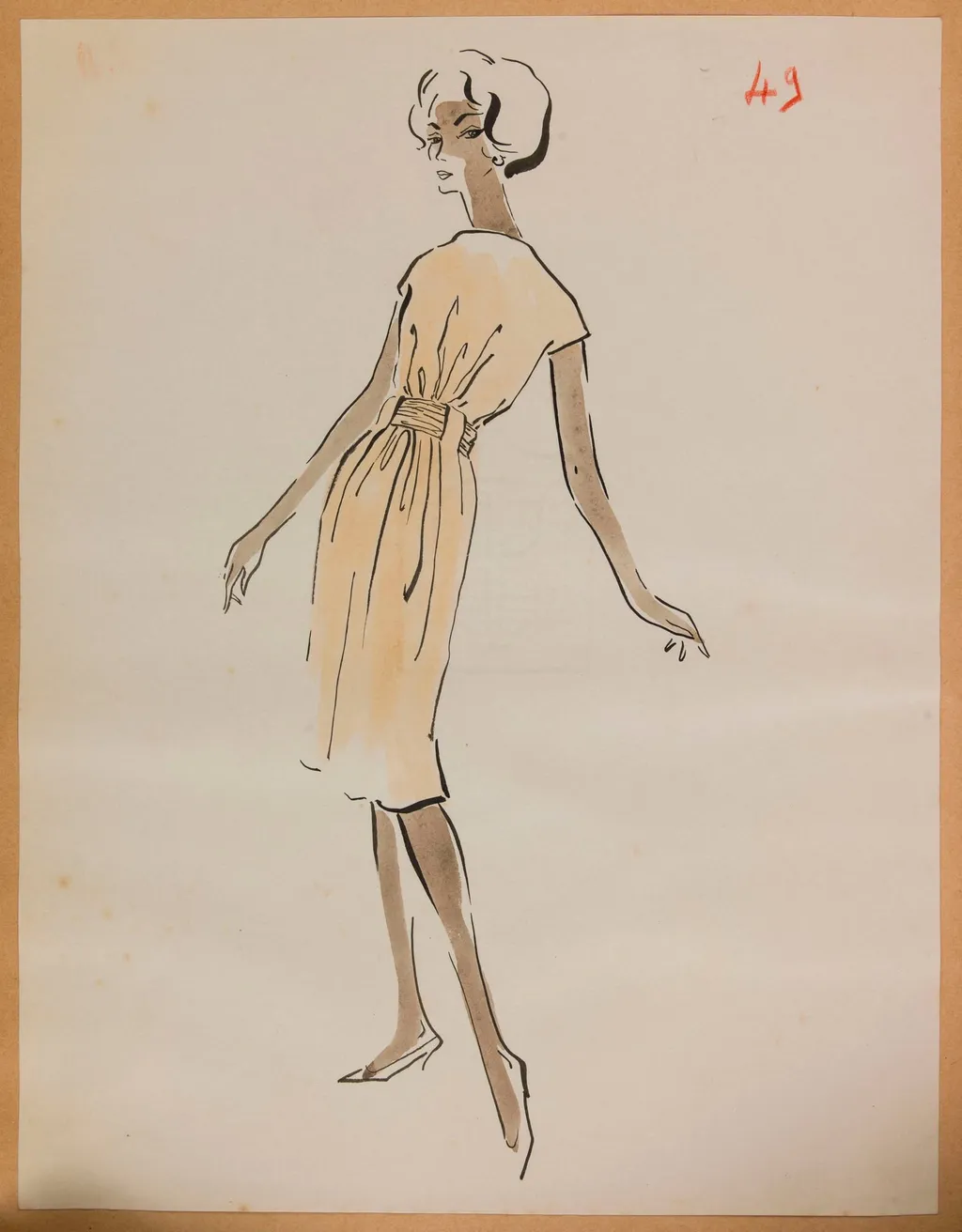
Robe rose pâle is a drawing by Marie-Louise Carven. It dates from 1957 and is held in the collection of the Palais Galliera - Musée de la Mode de la Ville de Paris.
About this work
Overview
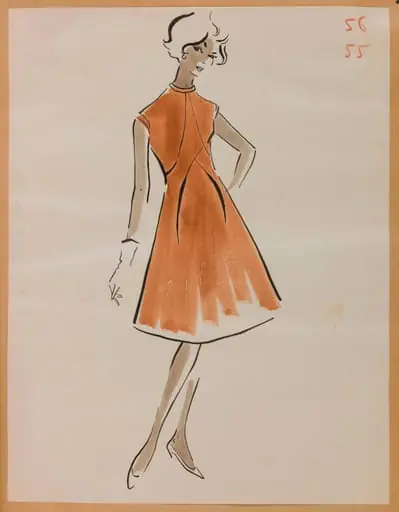
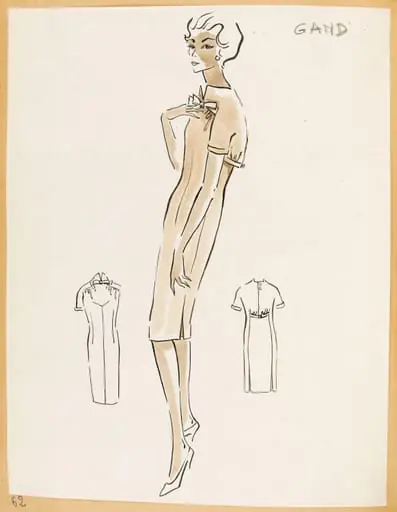
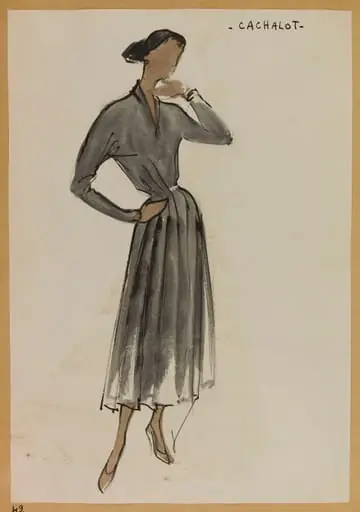
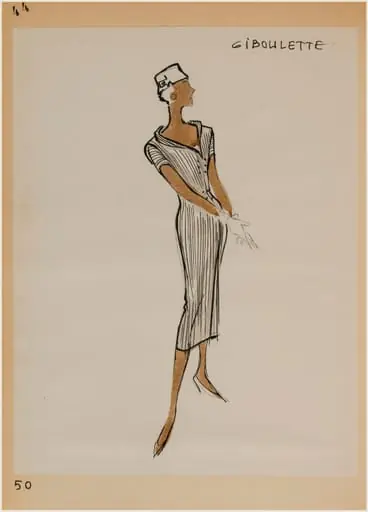
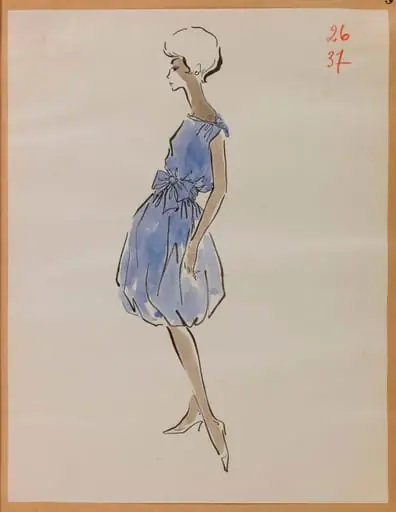
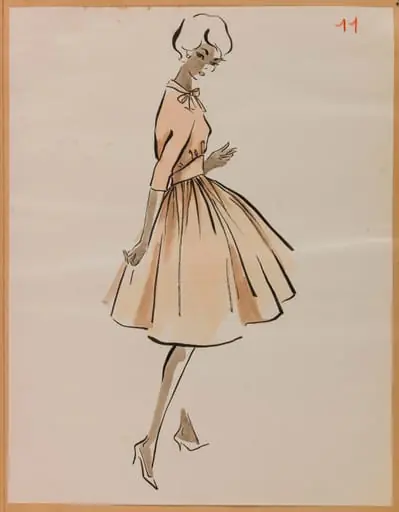
Created around 1957, *Robe rose pâle* is a lightweight dress in pale pink gingham, designed by French couturier Marie-Louise Carven.
Created around 1957, *Robe rose pâle* is a lightweight dress in pale pink gingham, designed by French couturier Marie-Louise Carven. It reflects her focus on modest, wearable silhouettes suited to smaller frames. The garment is part of the Museum of Ethnography’s collection and exemplifies her early commitment to blending couture sensibility with accessible design, a hallmark of her pioneering prêt-à-porter line.
Subject & Meaning
The dress is depicted on a woman in mid-stride, her short hair and low-heeled shoes suggesting practicality and quiet elegance. The loose, sketch-like rendering emphasizes motion and the natural drape of fabric, avoiding theatricality. The absence of background directs focus to the interplay between body and garment, underscoring Carven’s belief in clothing that enhances rather than dominates the wearer.
Technique & Style
The drawing employs loose, fluid lines and soft watercolor washes to suggest the lightness of the gingham fabric and the subtlety of skin tone. The waist is defined by a simple bow, a signature detail in Carven’s designs. The plain background isolates the figure, heightening attention to the dress’s volume and movement, mirroring the designer’s preference for clarity and restraint in form.
History & Provenance
Marie-Louise Carven founded her fashion house in 1945 and was among the first Paris designers to launch a ready-to-wear collection. *Robe rose pâle* dates from the height of her influence in the late 1950s. The garment entered the Museum of Ethnography’s holdings as part of a broader effort to document everyday fashion as cultural artifact, rather than solely as high art.
Context
In postwar France, there was a growing demand for functional, affordable clothing that retained aesthetic refinement. Carven responded by designing garments that balanced femininity with ease of movement, appealing to working women. Her use of cheerful patterns like gingham contrasted with the austerity of wartime fashion, signaling a return to personal expression through dress.
Legacy
Carven’s integration of couture detail into ready-to-wear helped redefine Parisian fashion’s accessibility. *Robe rose pâle* stands as a quiet example of this shift—unassuming in appearance but significant in its influence. The drawing preserves not just a garment, but a moment when fashion began to prioritize the lived experience of its wearers.
Artist & collection
Artist
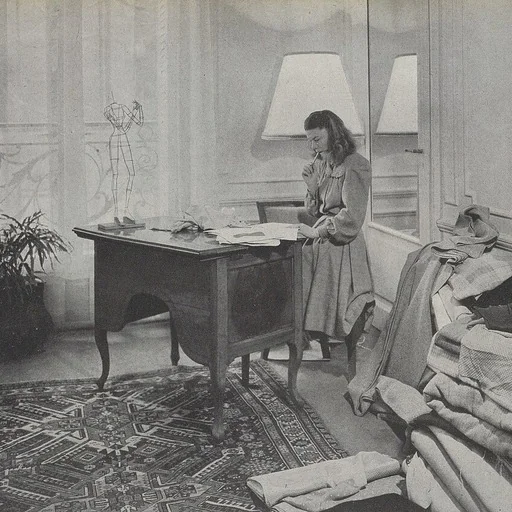
Marie-Louise Carven (31 August 1909 – 8 June 2015), born Carmen de Tommaso, was a French fashion designer who founded the house of Carven in 1945.
Museum
Palais Galliera - Musée de la Mode de la Ville de Paris
Continue through works from the same source collection.
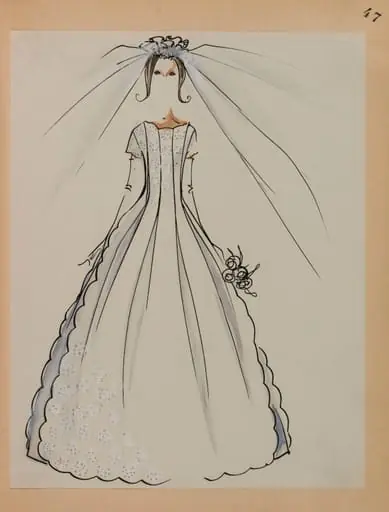 Robe de mariée festonnée et son voile
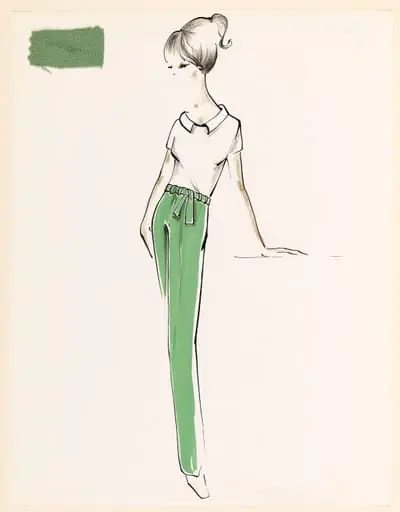 Haut blanc à manches courtes et pantalon vert à ceinture nouée
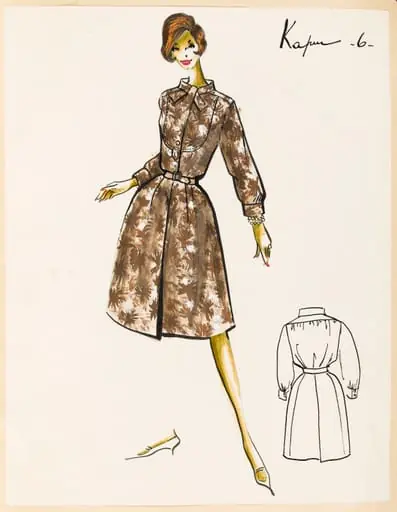 Kapur
Kapur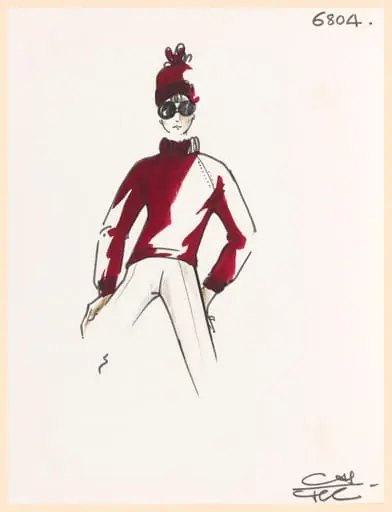 Pull-over à manches longues pourpre, bonnet assorti, pantalon et lunettes de soleil
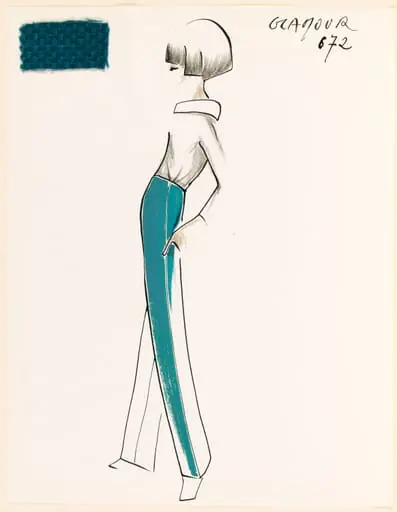 GLAMOUR
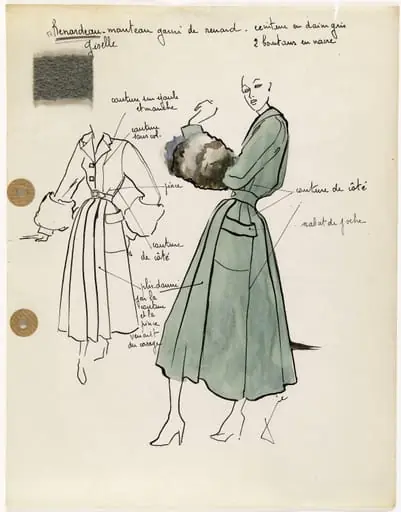 'Renardeau'
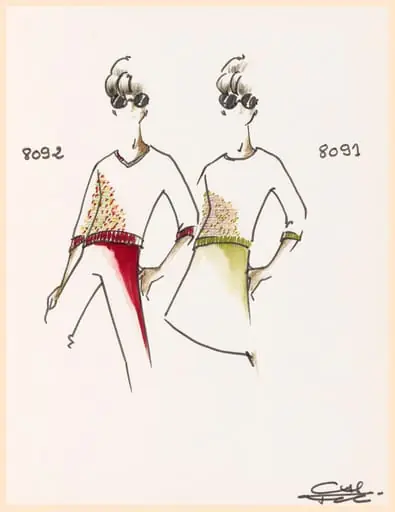 Pull-over à manches trois quarts et à encolure V à motifs multicolores, pantalon cerise et lunettes de soleil
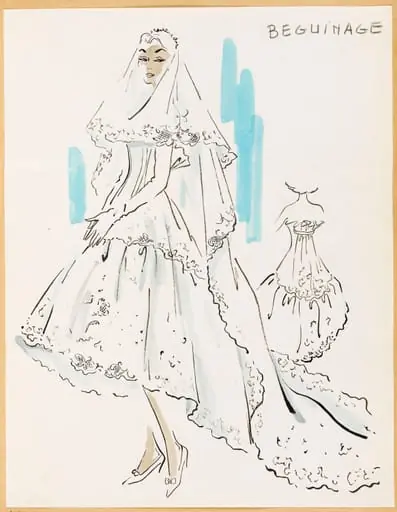 Béguinage