Artwork
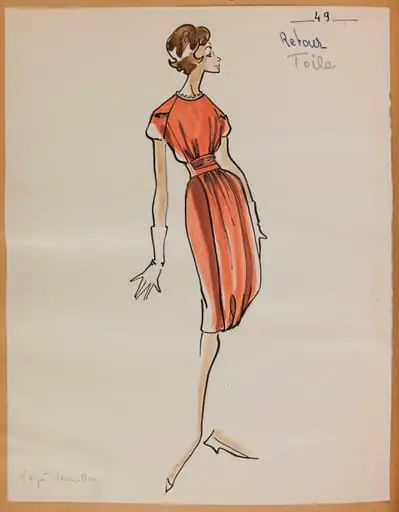
Robe sans manches rouille
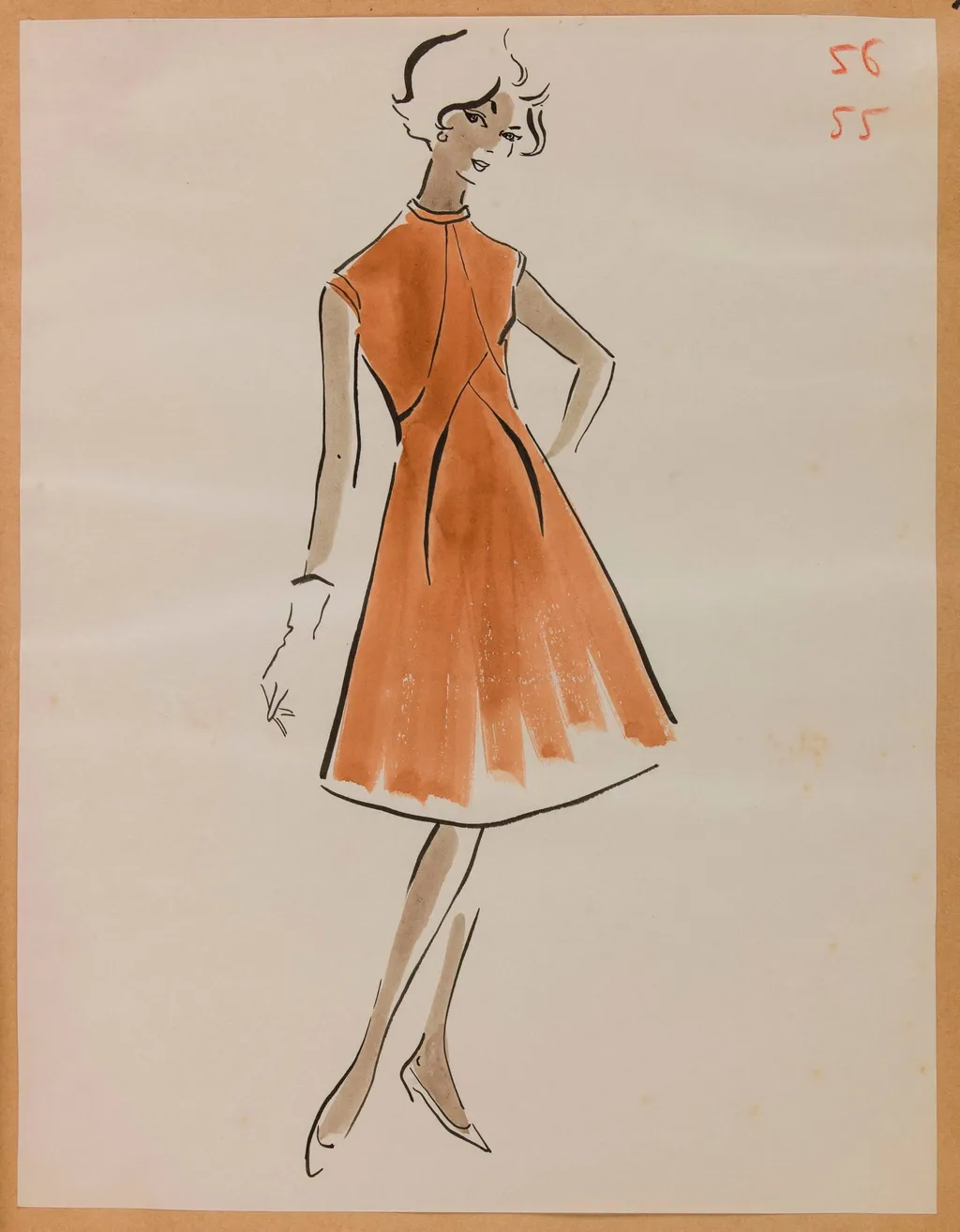
Robe sans manches rouille is a drawing by Marie-Louise Carven. It dates from 1957 and is held in the collection of the Palais Galliera - Musée de la Mode de la Ville de Paris.
About this work
Overview
Made from lightweight materials such as lace or gingham, the design caters to petite figures and reflects Carven’s early commitment to ready-to-wear clothing.
A sleeveless rust-colored dress, crafted around 1957 by French designer Marie-Louise Carven, exemplifies her approach to tailored, wearable fashion. Made from lightweight materials such as lace or gingham, the design caters to petite figures and reflects Carven’s early commitment to ready-to-wear clothing. The garment is preserved in the collection of the Museum of Ethnography, where it is presented as a representative artifact of mid-century French fashion.
Subject & Meaning
The dress is depicted on a woman standing with poised simplicity—left hand on hip, legs crossed, heels in place. Her short hair and restrained posture emphasize elegance without ornamentation. The focus remains on the garment’s cut and color, suggesting a vision of modern femininity rooted in practicality and quiet confidence, rather than theatrical display.
Technique & Style
The dress features a high neckline and a gently flared skirt, constructed to move lightly with the body. Carven favored fine, breathable textiles and precise tailoring, avoiding heavy embellishment. The rust hue, muted yet warm, complements the fabric’s texture, reinforcing a sense of understated sophistication. The illustration style captures form with minimal lines, prioritizing clarity over artistic flourish.
History & Provenance
Marie-Louise Carven founded her fashion house in 1945 and was among the first Parisian designers to launch a prêt-à-porter line, democratizing couture aesthetics. This dress, produced in the late 1950s, aligns with her expansion into accessible fashion. It entered the Museum of Ethnography’s collection as part of a broader effort to document everyday dress as cultural expression, not merely high fashion.
Context
In postwar France, fashion shifted toward functionality and affordability. Carven’s designs responded to changing lifestyles, particularly among working women. Her use of delicate fabrics in simple silhouettes contrasted with the more structured styles of contemporaries. This dress reflects a broader cultural move toward casual elegance and the normalization of ready-to-wear as a legitimate alternative to bespoke couture.
Legacy
Carven’s integration of couture sensibility into mass-produced garments influenced later designers who prioritized wearability. The preservation of this dress in an ethnographic context signals its significance beyond runway trends—it represents a moment when fashion became more inclusive and attuned to daily life, shaping how modern dress is understood as both art and utility.
Artist & collection
Artist
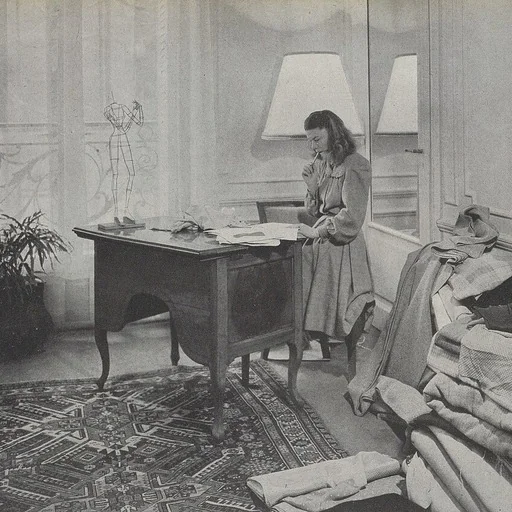
Marie-Louise Carven (31 August 1909 – 8 June 2015), born Carmen de Tommaso, was a French fashion designer who founded the house of Carven in 1945.
Museum
Palais Galliera - Musée de la Mode de la Ville de Paris
Continue through works from the same source collection.
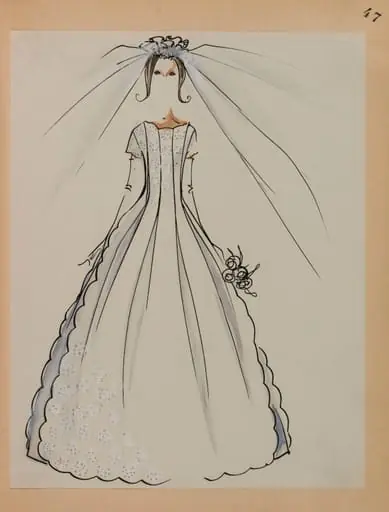 Robe de mariée festonnée et son voile
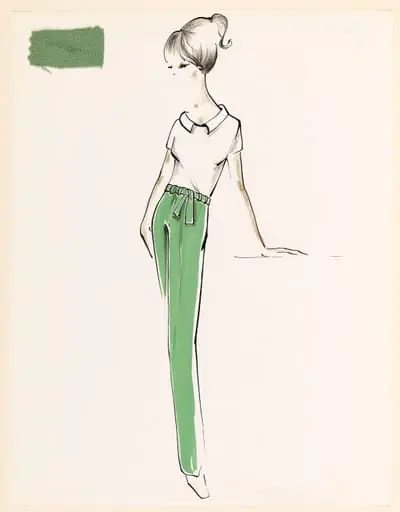 Haut blanc à manches courtes et pantalon vert à ceinture nouée
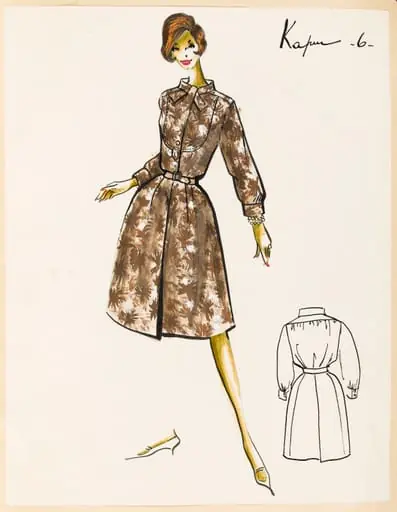 Kapur
Kapur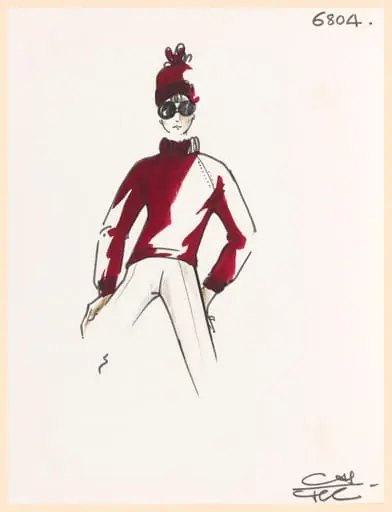 Pull-over à manches longues pourpre, bonnet assorti, pantalon et lunettes de soleil
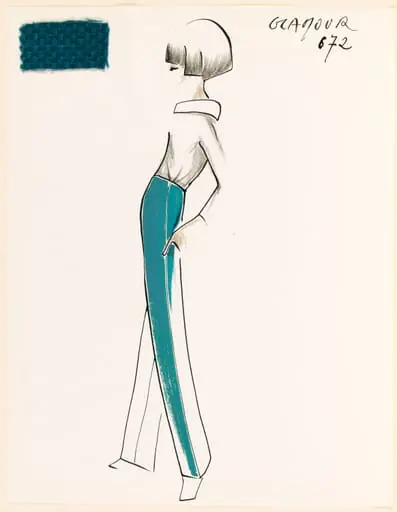 GLAMOUR
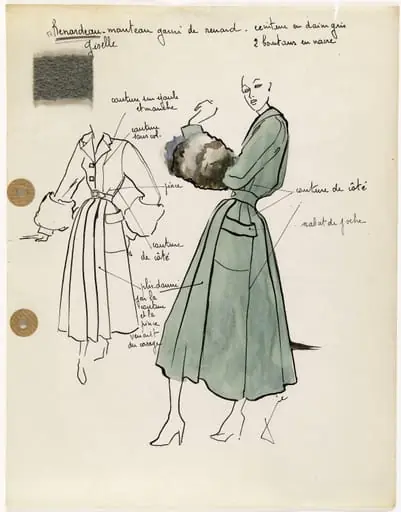 'Renardeau'
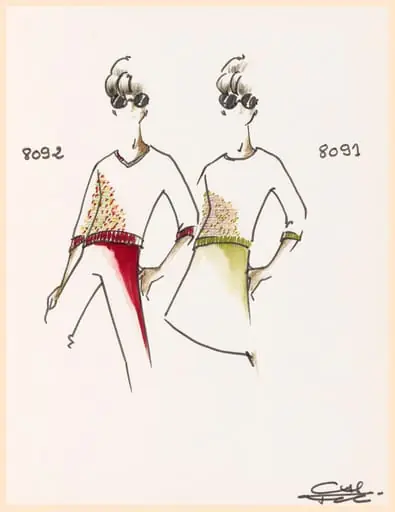 Pull-over à manches trois quarts et à encolure V à motifs multicolores, pantalon cerise et lunettes de soleil
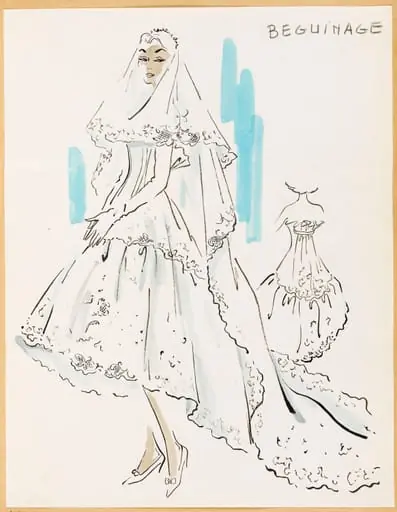 Béguinage