Artwork
Soufre
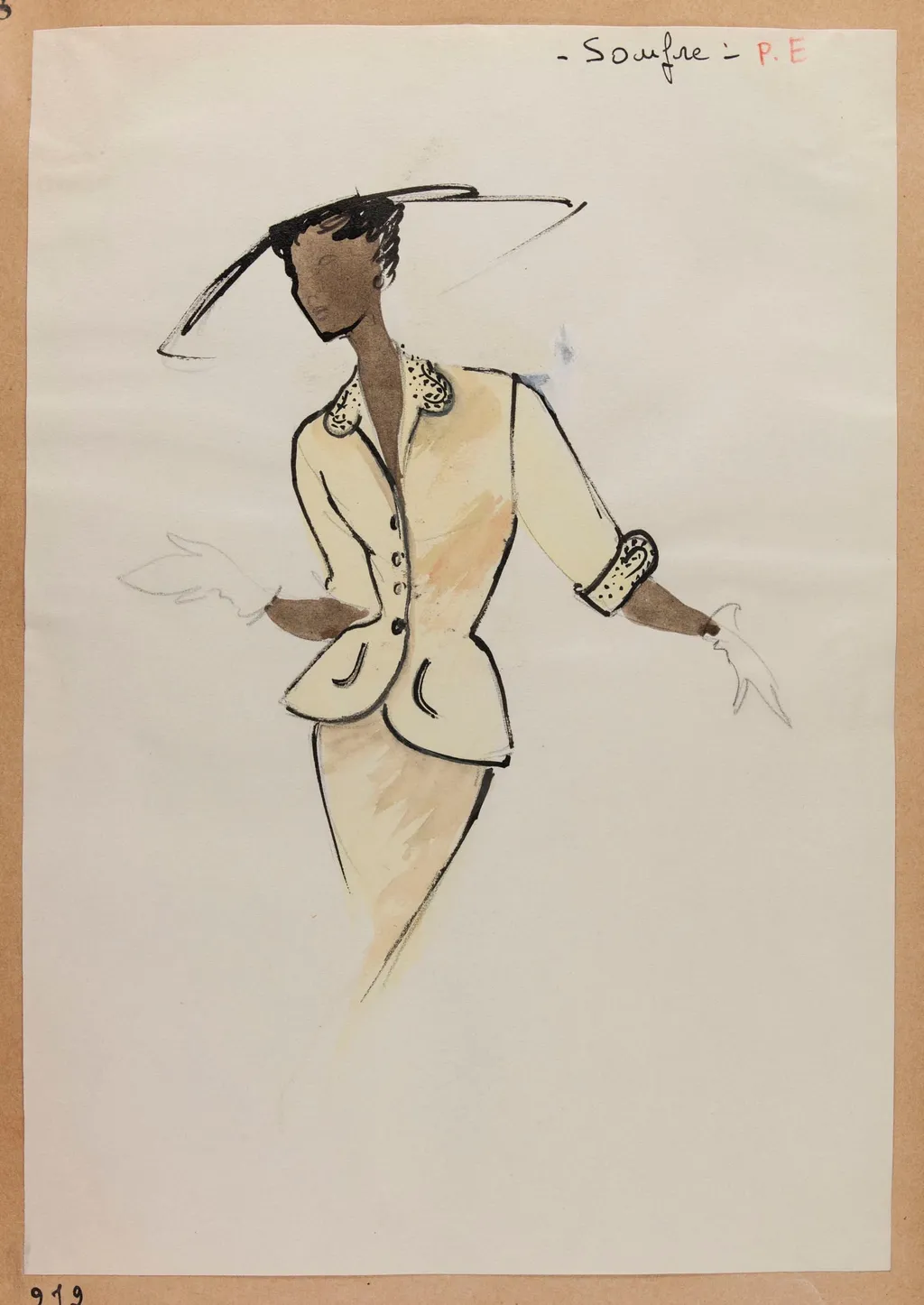
Soufre is a drawing by Marie-Louise Carven. It dates from 1951 and is held in the collection of the Palais Galliera - Musée de la Mode de la Ville de Paris.
About this work
Overview
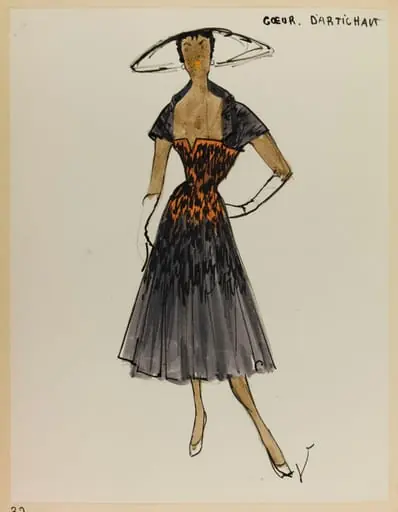
Executed in ink or pencil, the drawing captures a figure in a light, flowing ensemble with distinctive puffed sleeves and a tilted wide-brimmed hat.
Created around 1951, *Soufre* is a fashion sketch by Marie-Louise Carven, founder of the Parisian label Carven established in 1945. Executed in ink or pencil, the drawing captures a figure in a light, flowing ensemble with distinctive puffed sleeves and a tilted wide-brimmed hat. The work reflects Carven’s focus on wearable, petite-friendly designs and her role in advancing ready-to-wear fashion in postwar France. It resides in the Museum of Ethnography’s collection as a record of mid-century design practice.
Subject & Meaning
The figure in *Soufre* wears a loose, pale garment suggesting airiness and ease, consistent with Carven’s use of delicate fabrics like lace and gingham. The tilted hat and small object held in the hand imply a moment of casual elegance, possibly evoking a stroll or social outing. The title *Soufre*, meaning 'sulfur' in French, may reference color, texture, or an abstract mood, though its precise connection to the design remains unconfirmed. The sketch prioritizes atmosphere over narrative.
Technique & Style
Carven rendered the figure with swift, assured lines that convey movement and volume without heavy detail. Subtle shading suggests form and light, while the loose, uncluttered composition emphasizes the garment’s drape and silhouette. The style is characteristic of fashion studies—functional yet expressive—intended to communicate design intent rather than serve as a finished illustration. The sketch’s immediacy reflects the designer’s direct engagement with form and proportion.
History & Provenance
Carven founded her fashion house in 1945, quickly gaining recognition for democratizing Parisian style through accessible, petite-tailored garments. *Soufre* dates from the early years of her prêt-à-porter initiative, a pioneering effort in postwar France. The sketch entered the Museum of Ethnography’s holdings as part of a broader collection documenting 20th-century dress culture. Its preservation underscores its value as a primary artifact of design process, not merely finished product.
Context
In the early 1950s, Parisian fashion was transitioning from haute couture exclusivity toward ready-to-wear accessibility. Carven was among the first designers to prioritize practicality and fit for smaller frames, responding to changing lifestyles and consumer needs. *Soufre* exemplifies this shift: a personal, hand-drawn study that bridges artistic expression and commercial production, reflecting the evolving role of the designer as both creator and problem-solver.
Legacy
Though Carven’s name is less prominent today than some contemporaries, her contributions to ready-to-wear and inclusive sizing laid groundwork for modern fashion practices. *Soufre* survives as a quiet testament to her process—unadorned, focused, and human. It offers insight into how design ideas were cultivated before mass production, preserving the intimacy of a moment when fashion was still shaped by hand, not machine.
Artist & collection
Artist
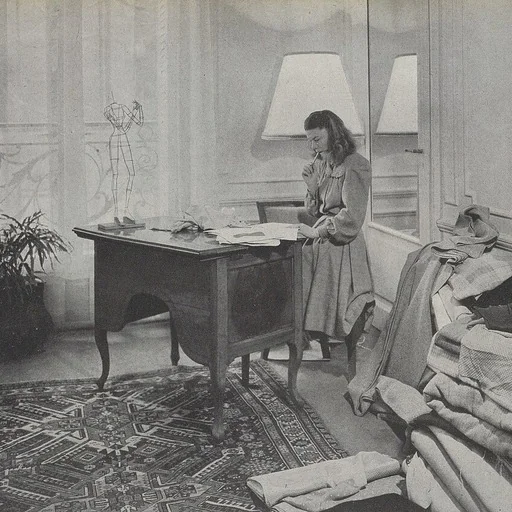
Marie-Louise Carven (31 August 1909 – 8 June 2015), born Carmen de Tommaso, was a French fashion designer who founded the house of Carven in 1945.
Museum
Palais Galliera - Musée de la Mode de la Ville de Paris
Continue through works from the same source collection.
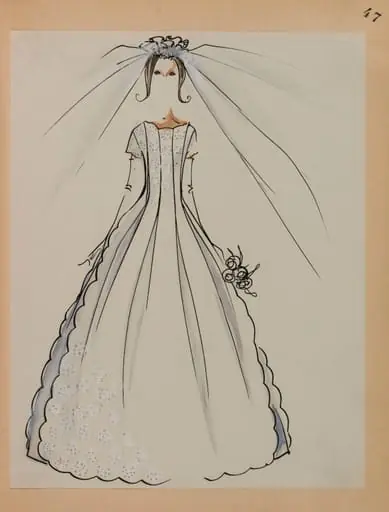 Robe de mariée festonnée et son voile
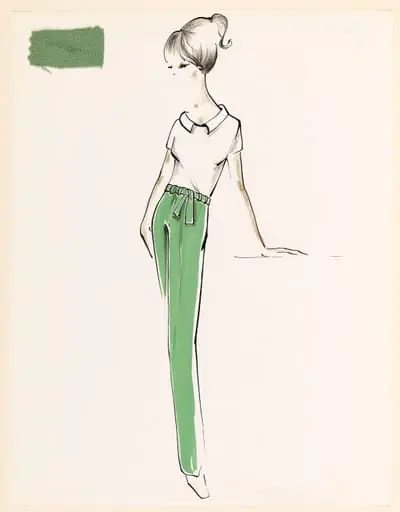 Haut blanc à manches courtes et pantalon vert à ceinture nouée
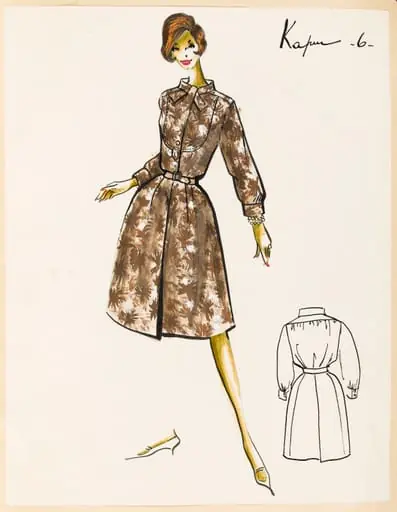 Kapur
Kapur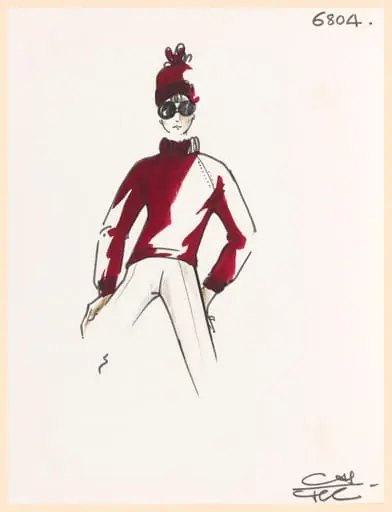 Pull-over à manches longues pourpre, bonnet assorti, pantalon et lunettes de soleil
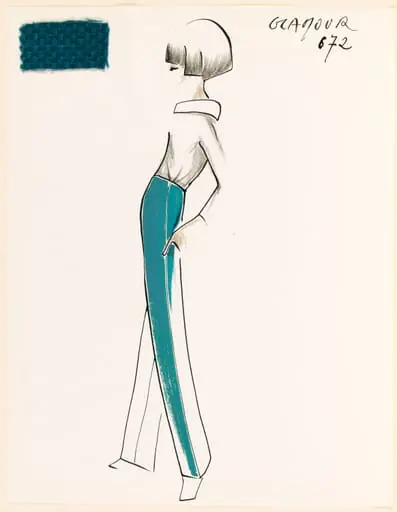 GLAMOUR
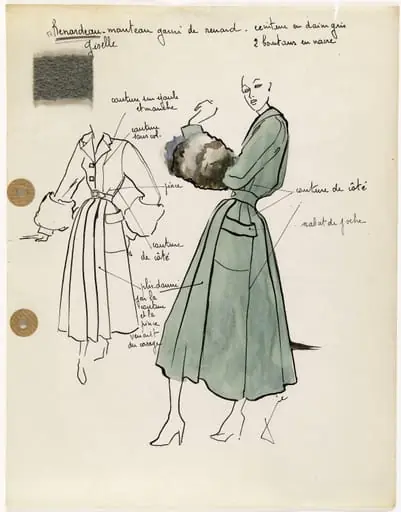 'Renardeau'
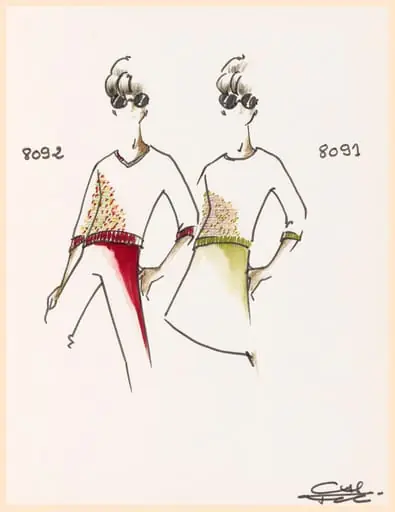 Pull-over à manches trois quarts et à encolure V à motifs multicolores, pantalon cerise et lunettes de soleil
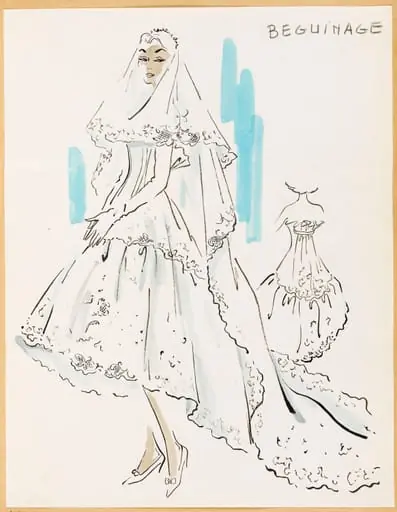 Béguinage