Artwork
Toupie
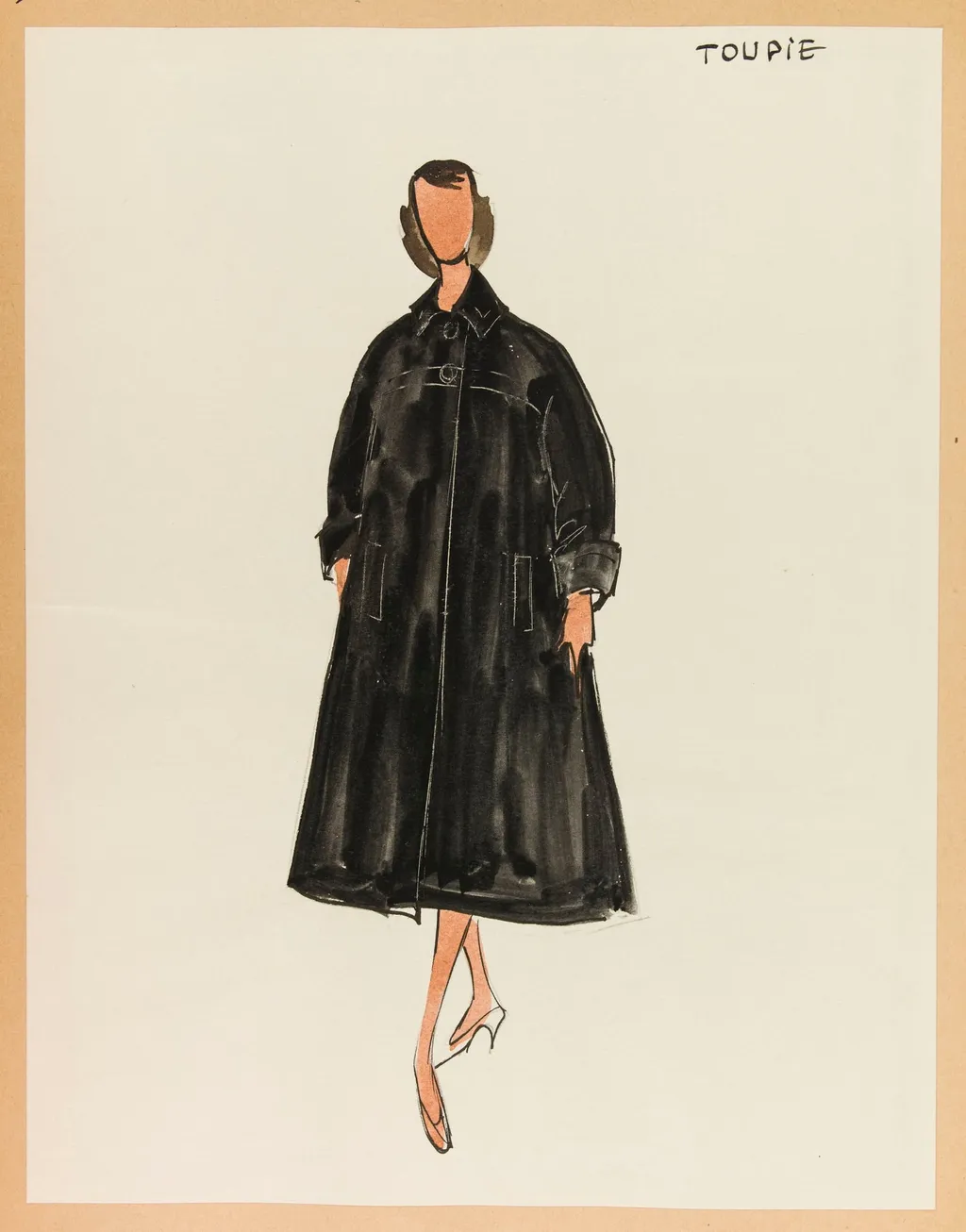
Toupie is a drawing by Marie-Louise Carven. It dates from 1955 and is held in the collection of the Palais Galliera - Musée de la Mode de la Ville de Paris.
About this work
Overview
Though primarily known for clothing design, Carven produced this work as a visual extension of her aesthetic principles.
Toupie is a painted portrait created around 1955 by Marie-Louise Carven, a French fashion designer. Though primarily known for clothing design, Carven produced this work as a visual extension of her aesthetic principles. The piece is part of the Museum of Ethnography’s collection, reflecting an interest in fashion as cultural artifact. It captures a single figure in a moment of quiet presence, emphasizing garment form over narrative.
Subject & Meaning
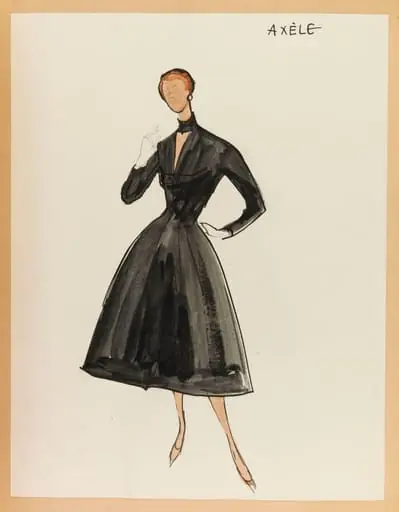
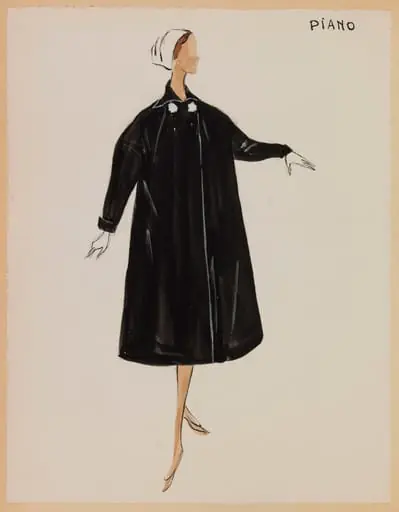
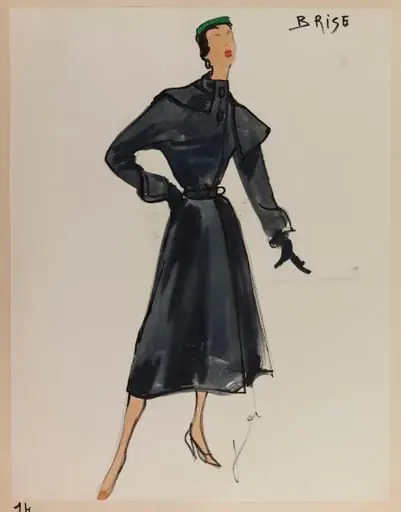
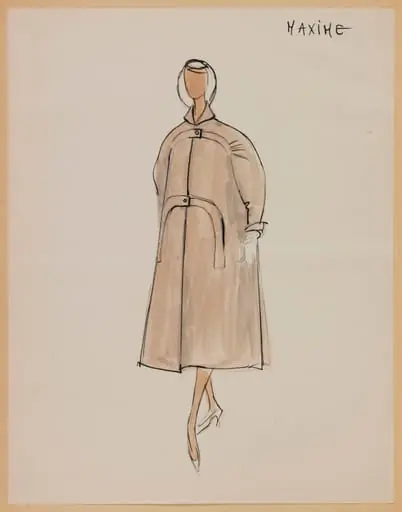
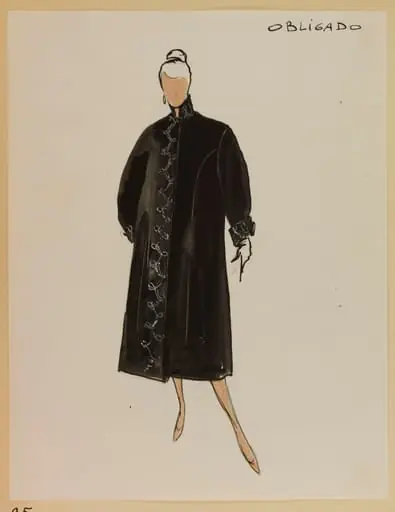
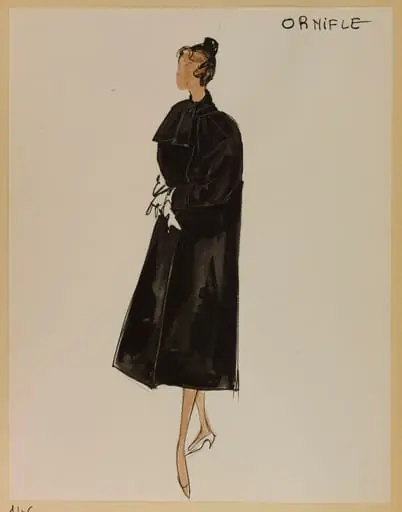
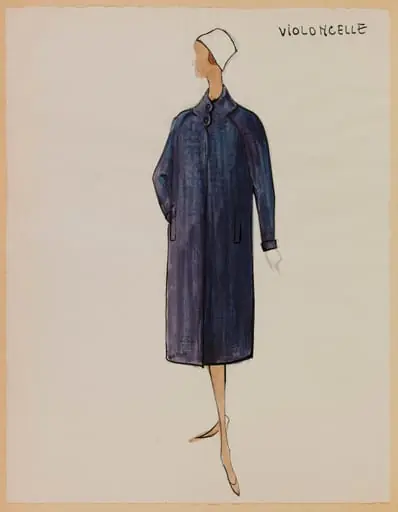
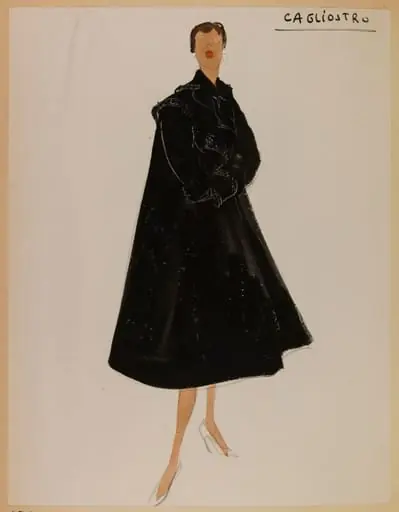
The subject is a woman dressed in a long black coat with a fitted belt and functional pockets, standing against a neutral beige background. Her short dark hair and white heels suggest a modern, urban sensibility. The composition avoids theatricality, focusing instead on the quiet dignity of everyday attire. The coat becomes the central symbol — not as costume, but as an extension of personal identity and refined practicality.
Technique & Style
Carven rendered the coat with restrained brushwork, using dark tones to model volume and texture without ornamentation. The background remains flat and unobtrusive, directing attention to the garment’s clean lines and subtle structure. There is no chiaroscuro or dramatic lighting; instead, the effect is achieved through tonal gradation and precise contouring. The style aligns with mid-century modernism, favoring clarity and restraint over embellishment.
History & Provenance
Created during Carven’s active years as a couturier, Toupie emerged from her studio in Paris, where she was pioneering ready-to-wear fashion. The painting entered the Museum of Ethnography’s collection as part of an effort to document fashion as material culture. Its acquisition reflects institutional recognition of design as a form of visual expression beyond the runway, though its exact provenance prior to museum acquisition remains undocumented.
Context
In the mid-1950s, Parisian fashion was transitioning from haute couture to accessible design. Carven, one of the first to launch a prêt-à-porter line, championed garments suited to petite figures and daily life. Toupie reflects this ethos — the coat is neither ceremonial nor extravagant, but designed for movement and ease. The painting serves as a quiet counterpart to her clothing, translating textile logic into visual art.
Legacy
Toupie remains a rare example of Carven’s non-textile work, offering insight into how her design philosophy extended beyond fabric. It contributes to broader discussions on fashion as visual art and the role of women designers in shaping modern aesthetics. While not widely exhibited, its presence in an ethnographic collection underscores its significance as a cultural document of postwar French style.
Artist & collection
Artist
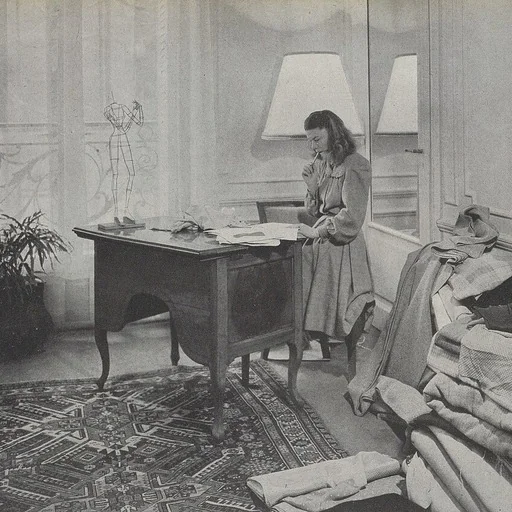
Marie-Louise Carven (31 August 1909 – 8 June 2015), born Carmen de Tommaso, was a French fashion designer who founded the house of Carven in 1945.
Museum
Palais Galliera - Musée de la Mode de la Ville de Paris
Continue through works from the same source collection.
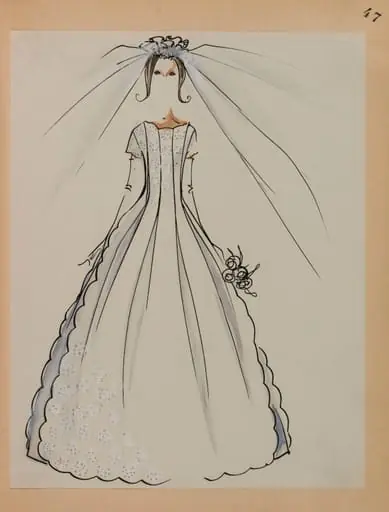 Robe de mariée festonnée et son voile
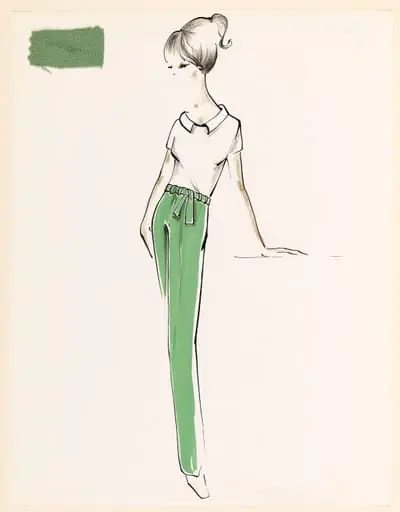 Haut blanc à manches courtes et pantalon vert à ceinture nouée
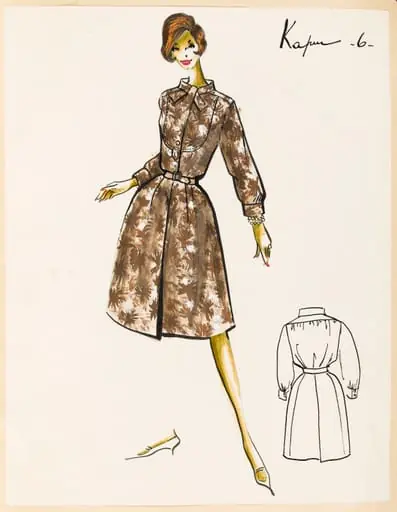 Kapur
Kapur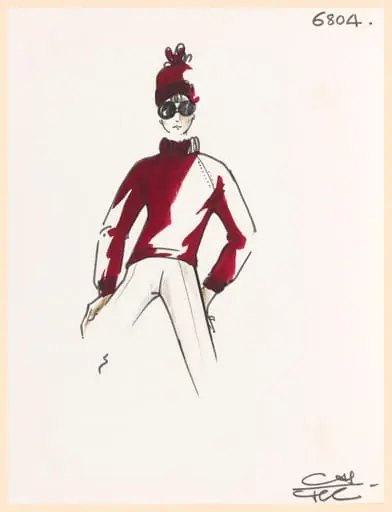 Pull-over à manches longues pourpre, bonnet assorti, pantalon et lunettes de soleil
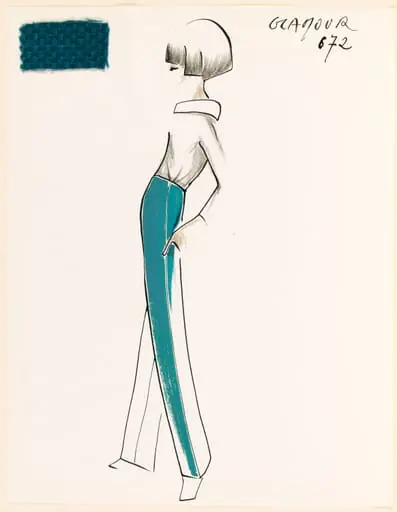 GLAMOUR
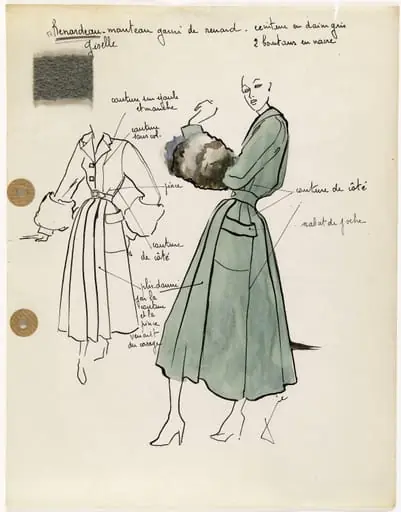 'Renardeau'
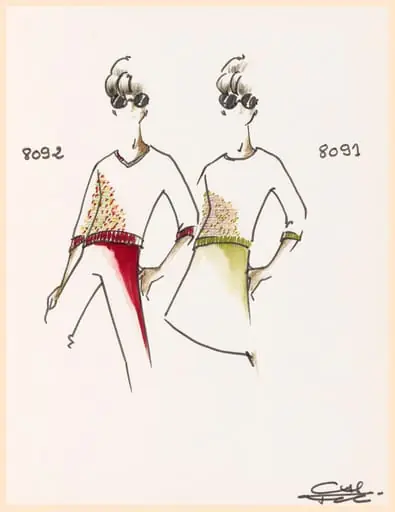 Pull-over à manches trois quarts et à encolure V à motifs multicolores, pantalon cerise et lunettes de soleil
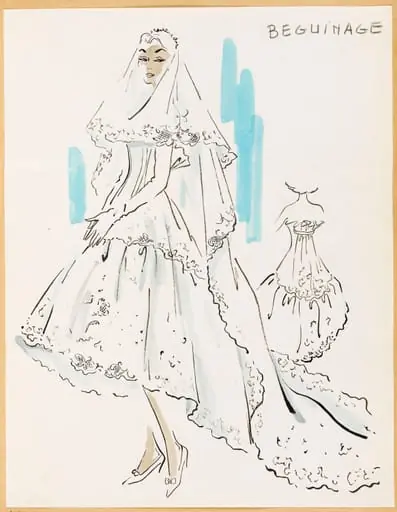 Béguinage