Artwork
'Trinité'
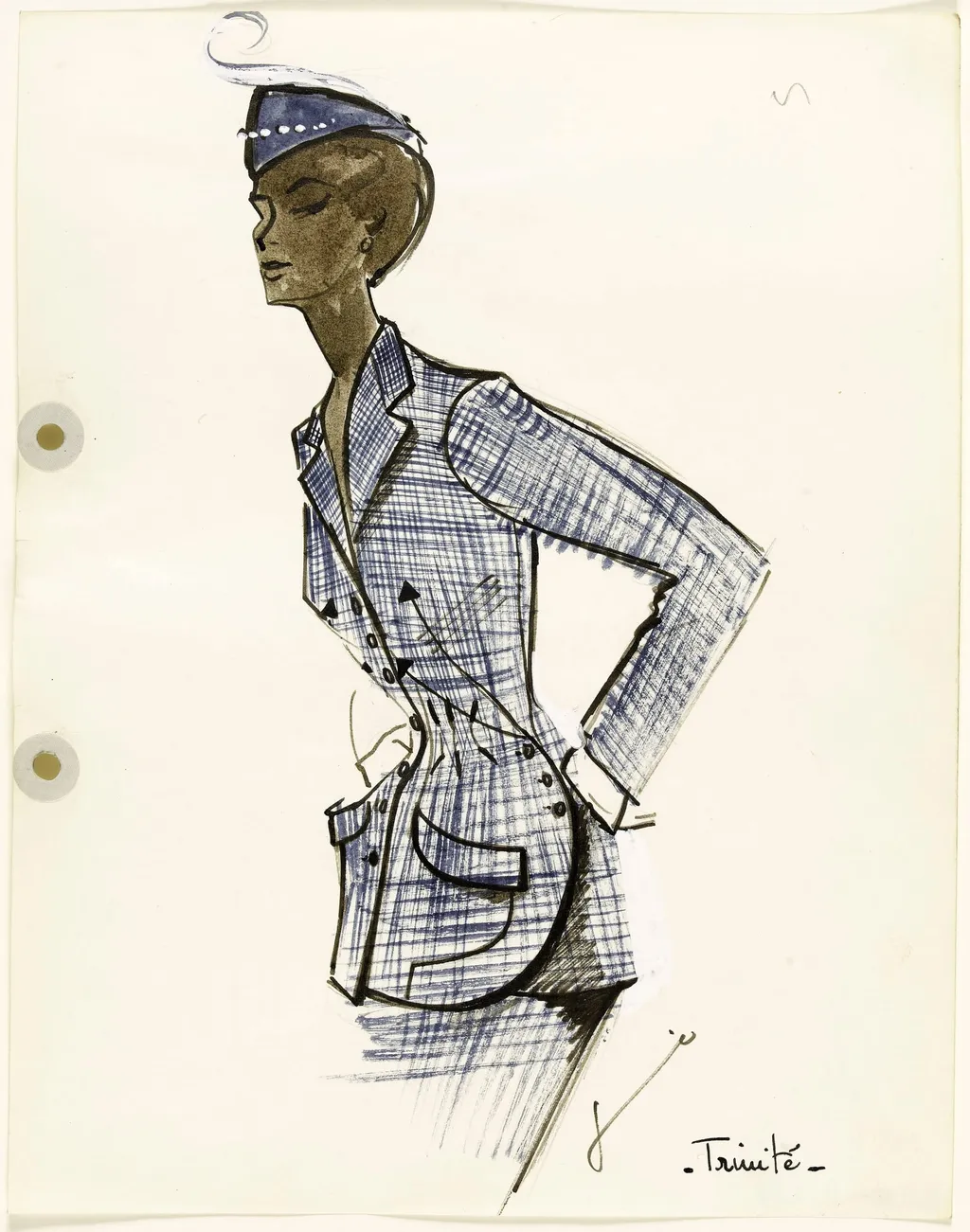
'Trinité' is a drawing by Marie-Louise Carven. It dates from 1951 and is held in the collection of the Palais Galliera - Musée de la Mode de la Ville de Paris.
About this work
Overview
This drawing, part of the Museum of Ethnography’s collection, captures a moment of refined simplicity, emphasizing structure and movement in everyday attire.
Created in 1951 by French designer Marie-Louise Carven, 'Trinité' is a fashion sketch that reflects her approach to wearable elegance. Carven, who founded her label in 1945, was among the early couturiers to bridge haute couture with ready-to-wear. This drawing, part of the Museum of Ethnography’s collection, captures a moment of refined simplicity, emphasizing structure and movement in everyday attire.
Subject & Meaning
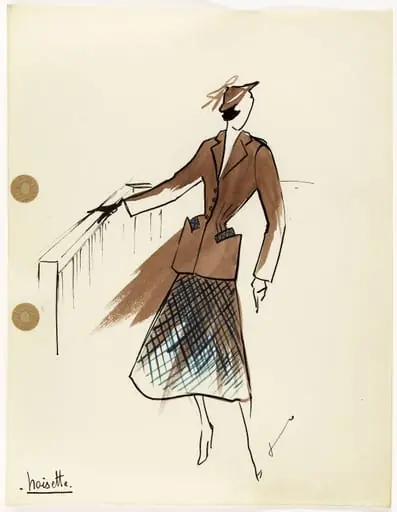
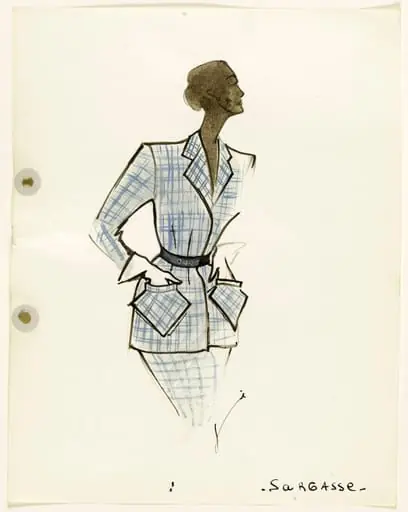
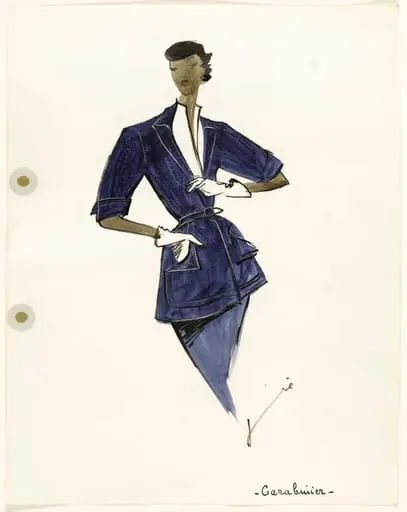
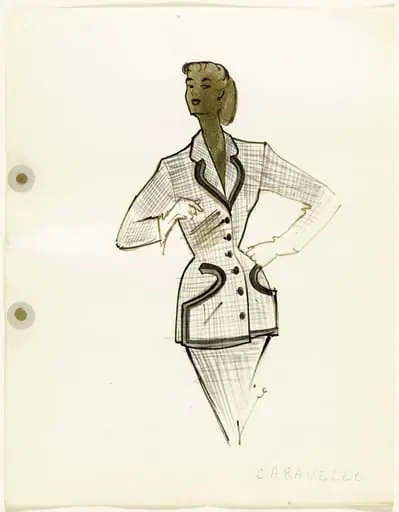
The sketch depicts a woman in a tailored checkered jacket, belted at the waist, with a dark hat adorned with a small pin. Her posture—hand on hip, hair neatly pulled back—suggests quiet confidence. The image conveys an ideal of postwar femininity: poised, practical, and subtly assertive. It reflects Carven’s focus on dressing the petite figure with dignity, avoiding excess while maintaining polish.
Technique & Style
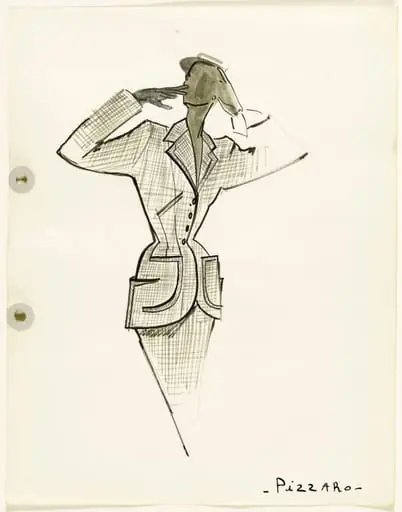
Carven employed rapid, fluid linework to suggest fabric texture and volume. Cross-hatching and layered strokes model the jacket’s checkered pattern, creating a sense of three-dimensionality without color. The loose handling of folds contrasts with the precise contours of the hat and silhouette, balancing spontaneity with structure. This method reveals the drawing’s function as both design record and artistic expression.
History & Provenance
The sketch entered the Museum of Ethnography’s collection as part of a broader effort to document 20th-century fashion as cultural artifact. Though Carven’s brand was commercially active in Paris, this particular drawing was preserved not for its commercial use but for its insight into design thinking. Its provenance traces back to Carven’s personal archive, later acquired by the museum in the late 20th century.
Context
In early 1950s Paris, fashion was shifting from wartime austerity toward renewed creativity. Carven’s work stood apart by prioritizing comfort and proportion over grandeur. Her embrace of ready-to-wear challenged the exclusivity of couture. 'Trinité' embodies this transition—offering a vision of fashion as accessible, thoughtful, and rooted in the lived experience of the wearer.
Legacy
Carven’s integration of practicality and style influenced later designers who sought to democratize fashion. 'Trinité' remains a quiet testament to her philosophy: elegance need not be elaborate. As a preserved sketch, it offers scholars a window into the design process of a pioneering woman in fashion, whose contributions extended beyond garments to redefine how women moved through the world.
Artist & collection
Artist
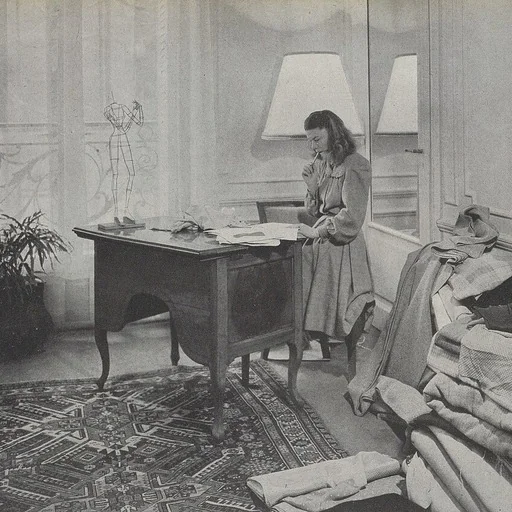
Marie-Louise Carven (31 August 1909 – 8 June 2015), born Carmen de Tommaso, was a French fashion designer who founded the house of Carven in 1945.

Museum
Palais Galliera - Musée de la Mode de la Ville de Paris
Continue through works from the same source collection.
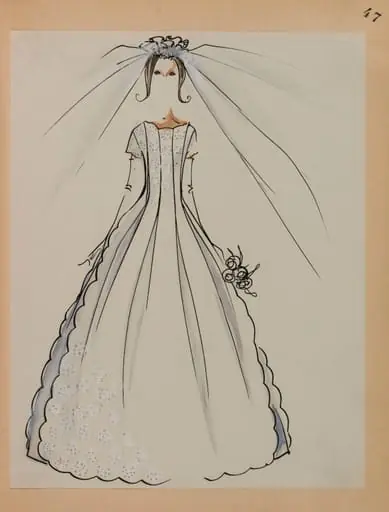 Robe de mariée festonnée et son voile
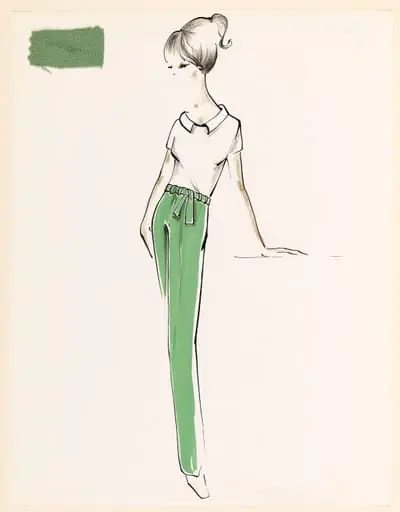 Haut blanc à manches courtes et pantalon vert à ceinture nouée
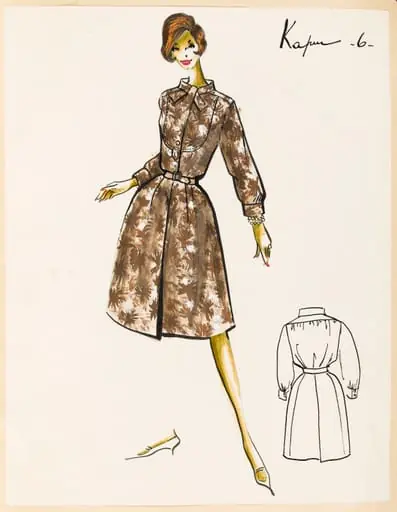 Kapur
Kapur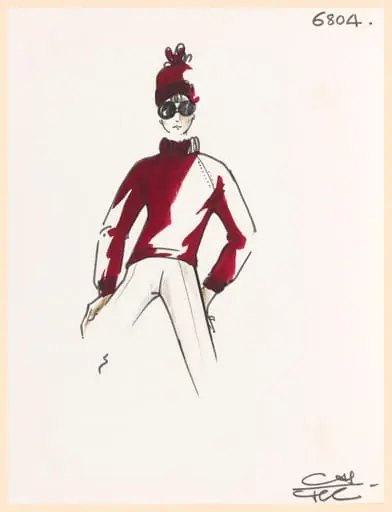 Pull-over à manches longues pourpre, bonnet assorti, pantalon et lunettes de soleil
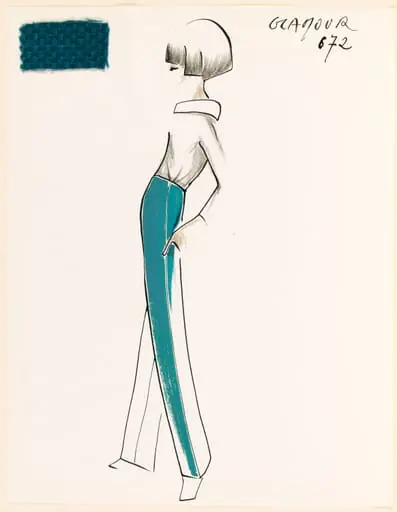 GLAMOUR
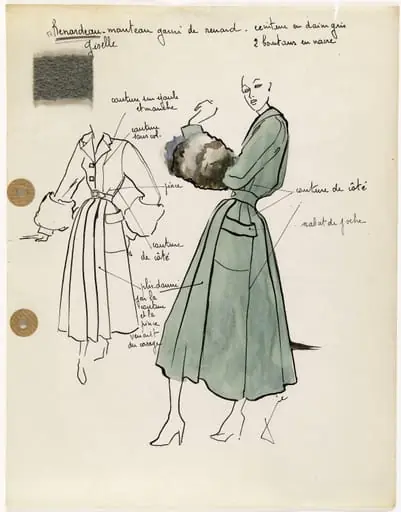 'Renardeau'
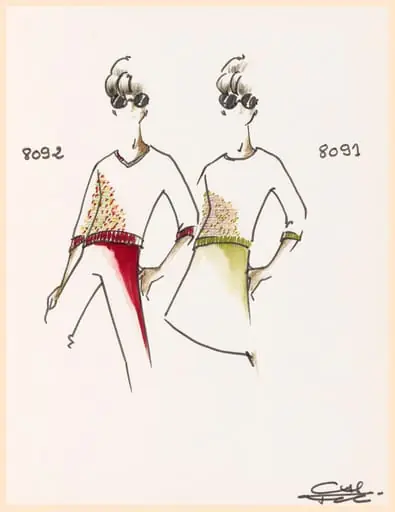 Pull-over à manches trois quarts et à encolure V à motifs multicolores, pantalon cerise et lunettes de soleil
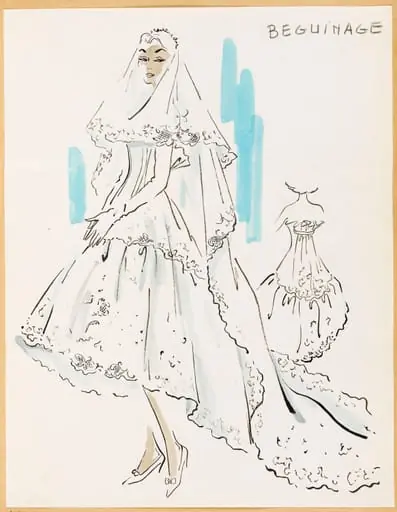 Béguinage