Artwork
Triton
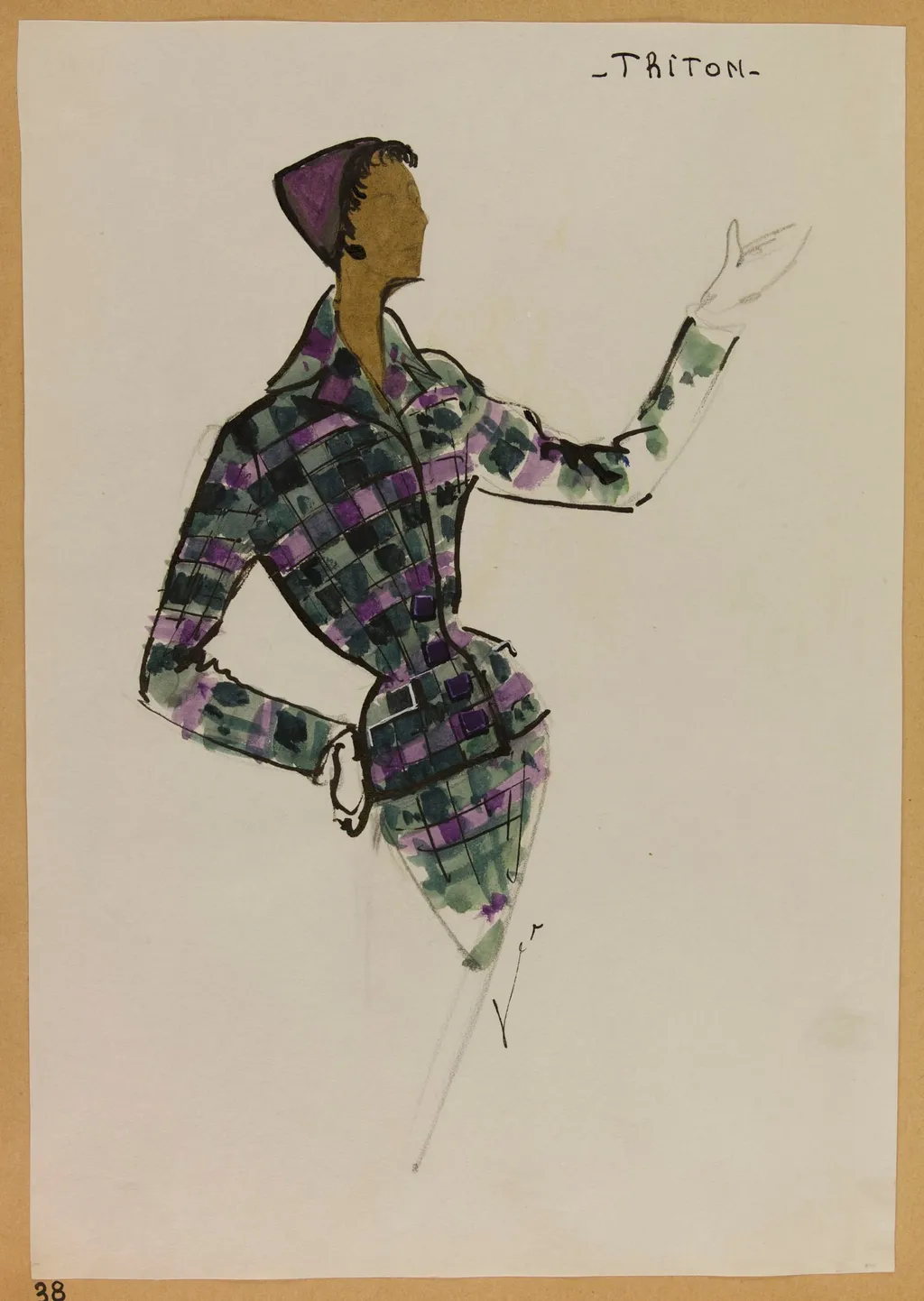
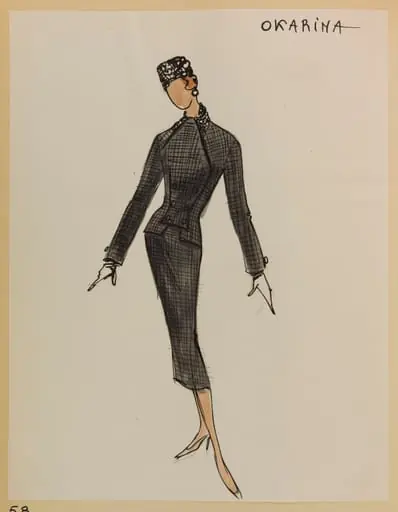
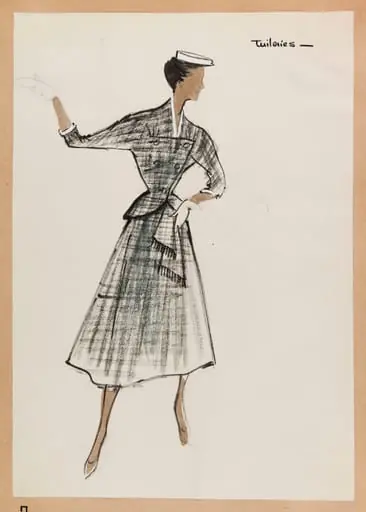
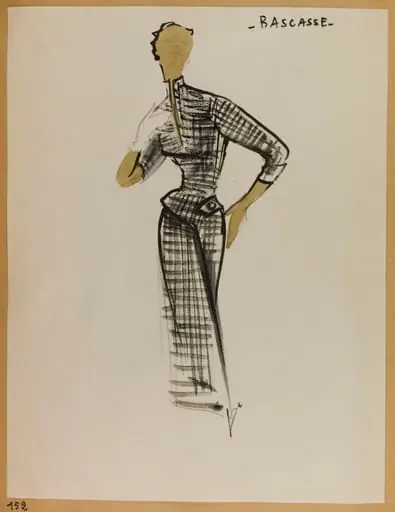
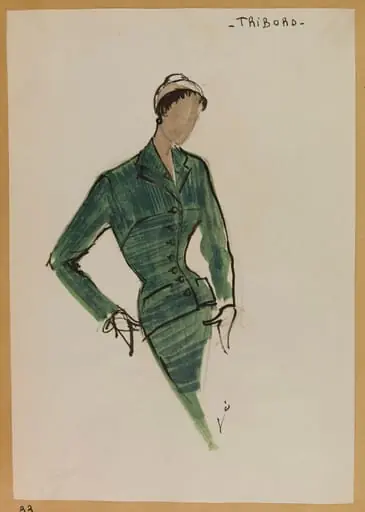
Triton is a drawing by Marie-Louise Carven. It dates from 1952 and is held in the collection of the Palais Galliera - Musée de la Mode de la Ville de Paris.
About this work
Overview
Created in 1952, *Triton* is a garment designed by Marie-Louise Carven, founder of the Parisian fashion house Carven established in 1945.
Created in 1952, *Triton* is a garment designed by Marie-Louise Carven, founder of the Parisian fashion house Carven established in 1945. Known for tailoring clothes for smaller frames and pioneering ready-to-wear collections in haute couture circles, Carven produced this piece as part of her broader effort to make refined design accessible beyond private fittings. The garment is now preserved in the Museum of Ethnography’s textile collection.
Subject & Meaning
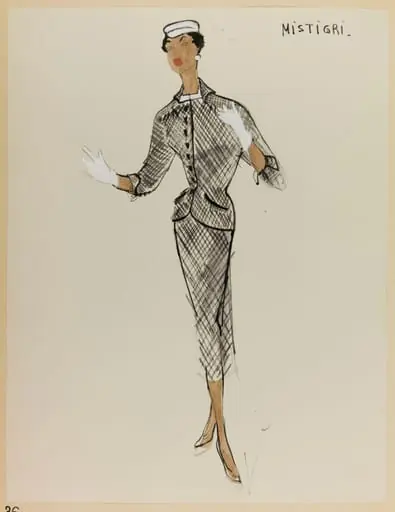
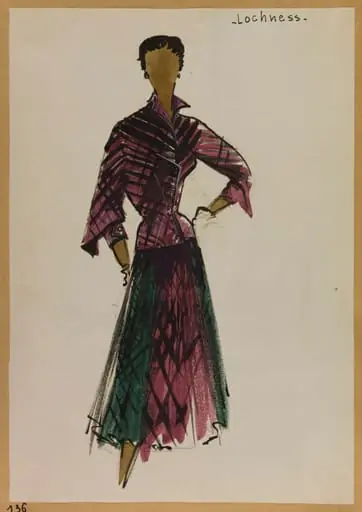
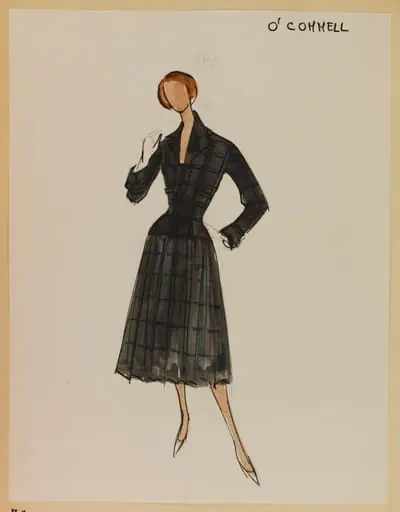
The image captures a woman in a poised stance—left hand raised, right resting on the hip—conveying quiet self-assurance. The outfit, though not worn by a specific individual, embodies an ideal of modern femininity: elegant yet unpretentious. The design avoids theatricality, instead emphasizing composure and everyday grace, reflecting Carven’s philosophy of clothing as an extension of personal dignity rather than spectacle.
Technique & Style
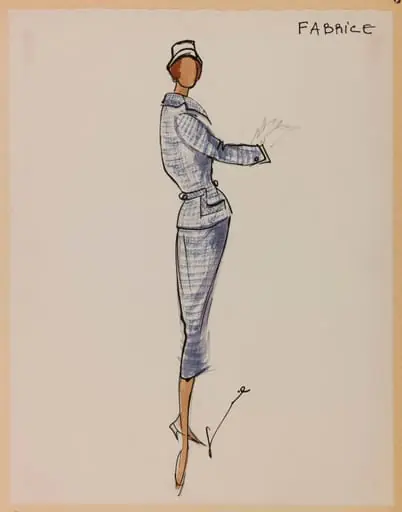
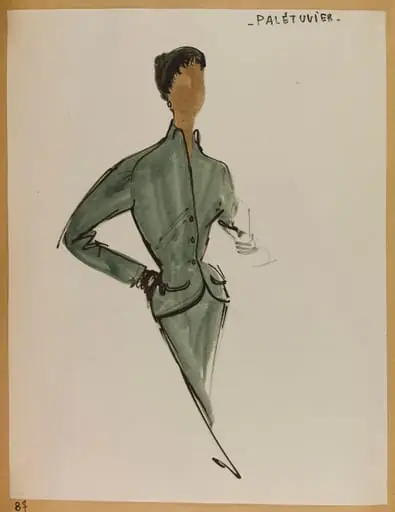
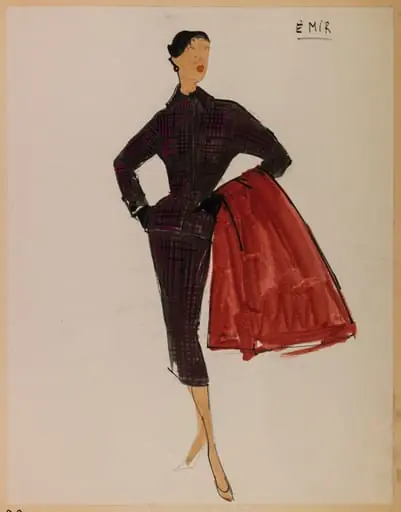
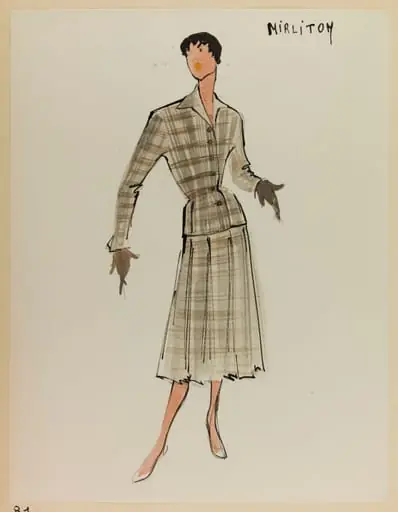
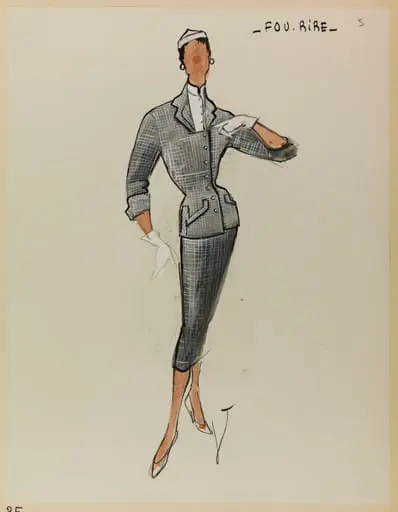
The garment features a geometric pattern of irregular squares in muted purples, greens, and blacks, arranged with deliberate asymmetry. Fabric choice and construction suggest lightweight wool or silk blend, allowing fluid movement while maintaining structure. The hat and jacket form a cohesive silhouette, with precise seaming and minimal embellishment, highlighting Carven’s preference for clean lines and subtle visual rhythm over overt decoration.
History & Provenance
Originally part of Carven’s 1952 collection, *Triton* entered the Museum of Ethnography’s holdings as an example of mid-century French fashion innovation. Its acquisition reflects institutional interest in postwar design that bridged couture craftsmanship with emerging ready-to-wear trends. The piece has remained in the museum’s care since the mid-20th century, documented in textile archives but rarely exhibited.
Context
In the early 1950s, Parisian fashion was dominated by grand ateliers, yet Carven stood apart by focusing on practical elegance for working women. *Triton* emerged during a period when ready-to-wear was gaining legitimacy, challenging the notion that only bespoke garments could be stylish. The design’s restrained palette and structured yet light form aligned with broader cultural shifts toward functional modernity in postwar Europe.
Legacy
Though not widely publicized, *Triton* exemplifies Carven’s influence on democratizing fashion without sacrificing quality. Her approach—prioritizing fit, subtlety, and wearability—paved the way for later designers who valued accessibility. The garment remains a quiet reference point in studies of 20th-century French dress, illustrating how innovation in fashion often resides in restraint rather than spectacle.
Artist & collection
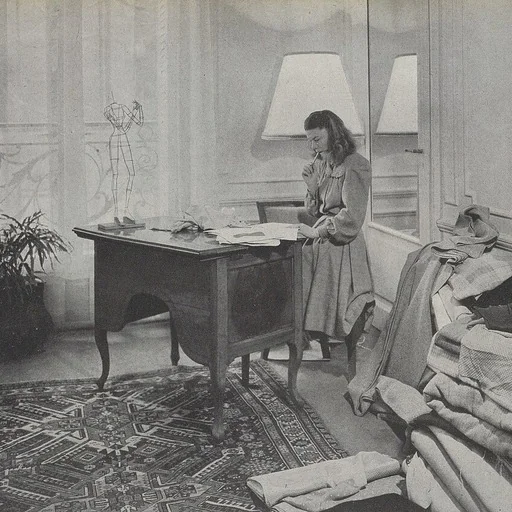
Artist
Marie-Louise Carven (31 August 1909 – 8 June 2015), born Carmen de Tommaso, was a French fashion designer who founded the house of Carven in 1945.
Museum
Palais Galliera - Musée de la Mode de la Ville de Paris
Continue through works from the same source collection.
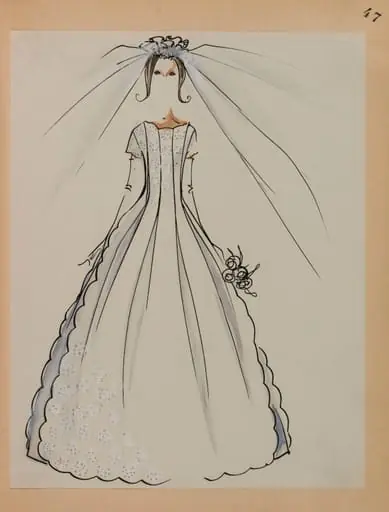 Robe de mariée festonnée et son voile
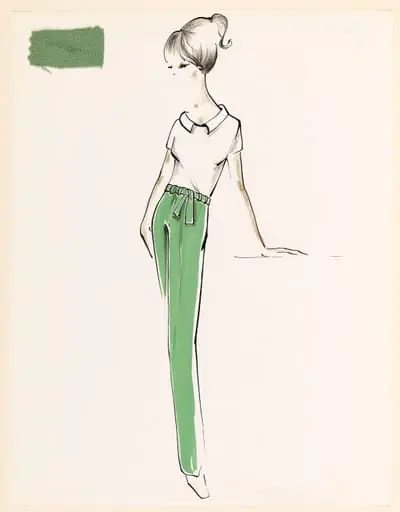 Haut blanc à manches courtes et pantalon vert à ceinture nouée
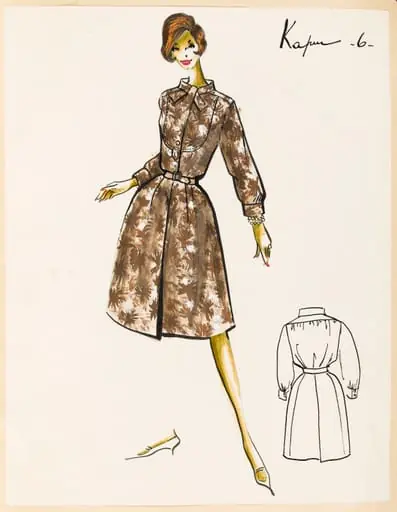 Kapur
Kapur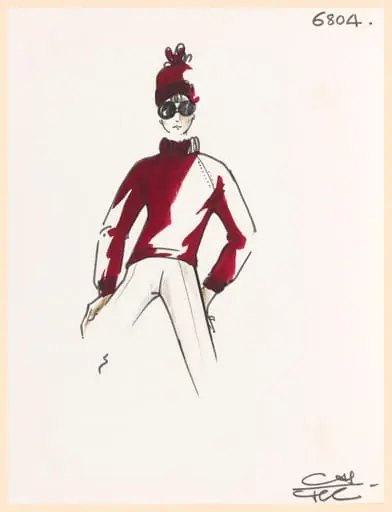 Pull-over à manches longues pourpre, bonnet assorti, pantalon et lunettes de soleil
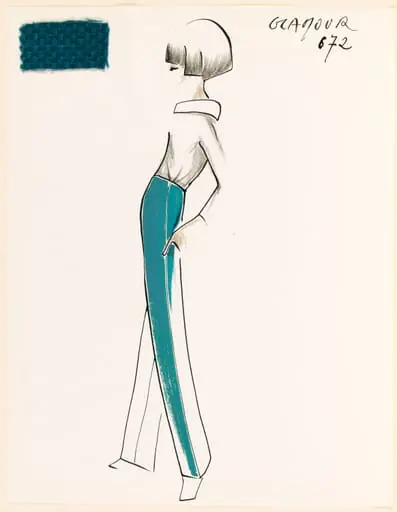 GLAMOUR
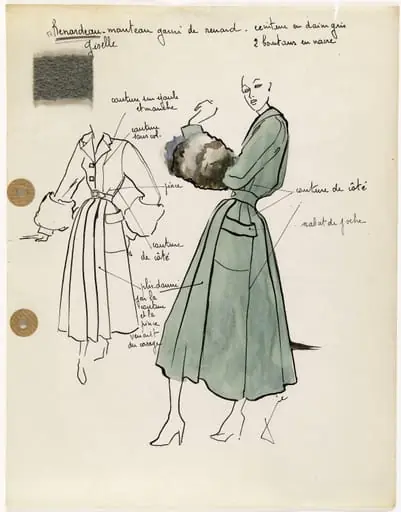 'Renardeau'
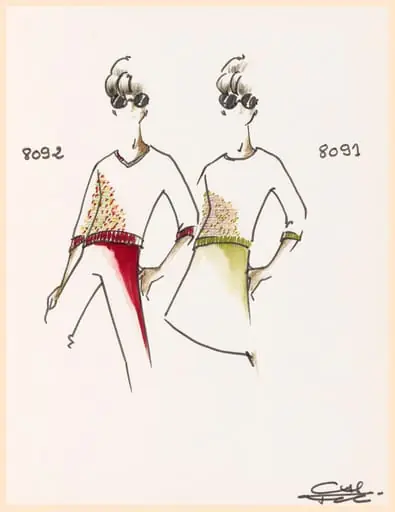 Pull-over à manches trois quarts et à encolure V à motifs multicolores, pantalon cerise et lunettes de soleil
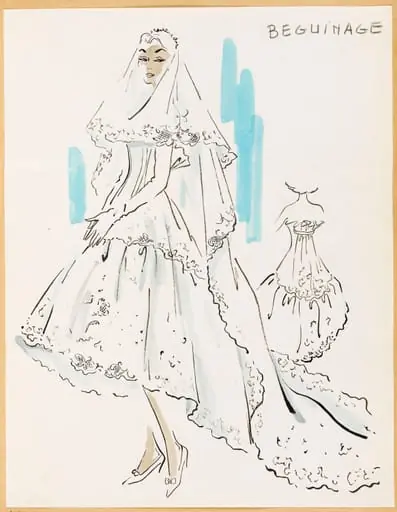 Béguinage