Artwork
Valberg
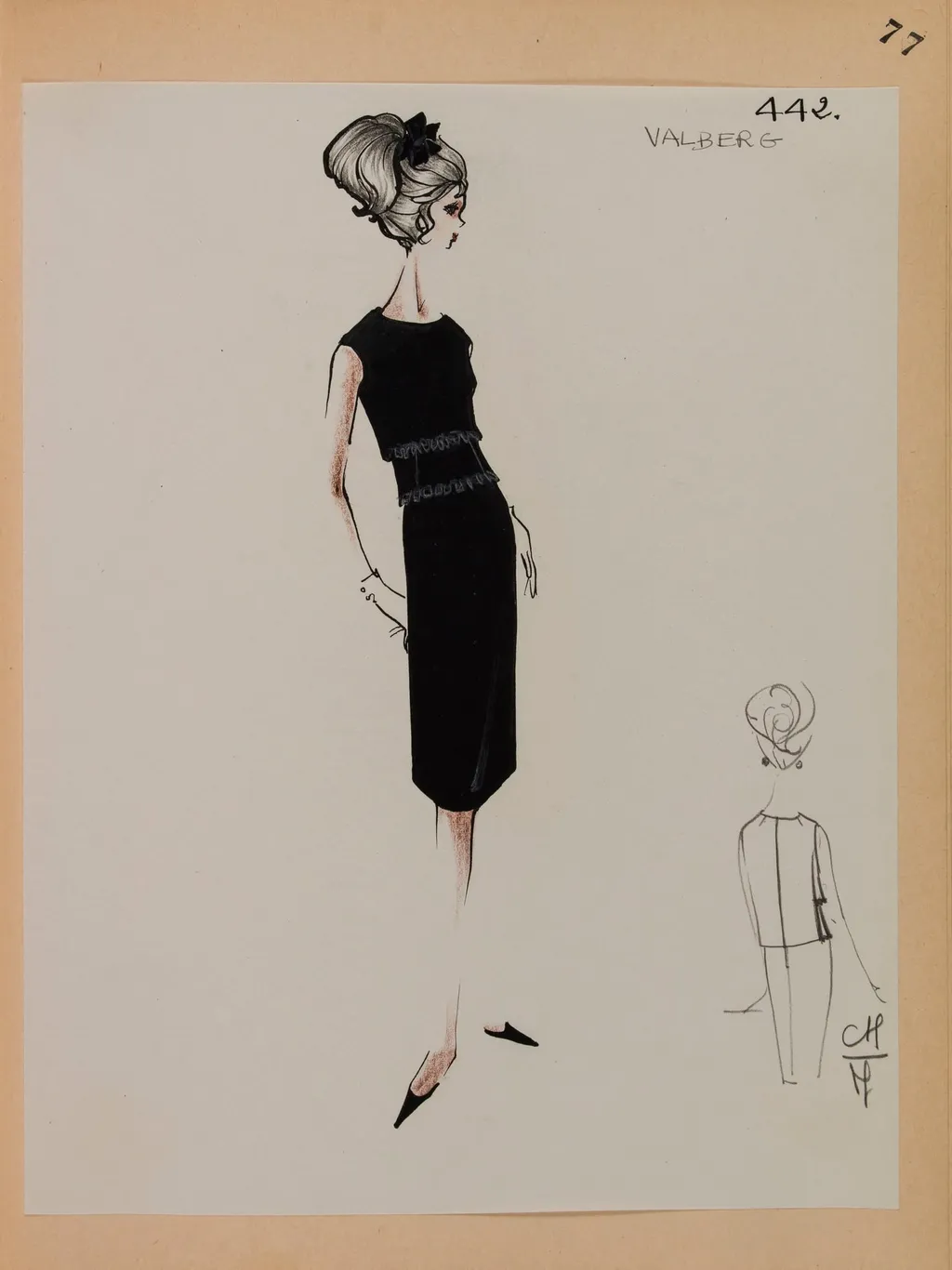
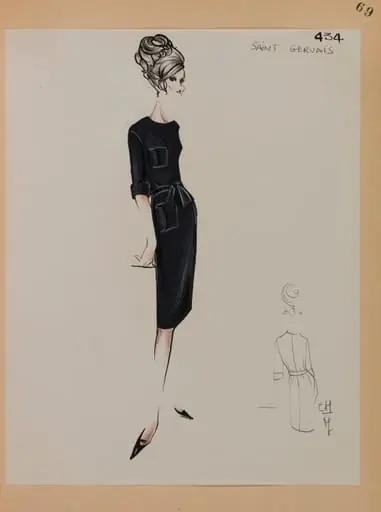
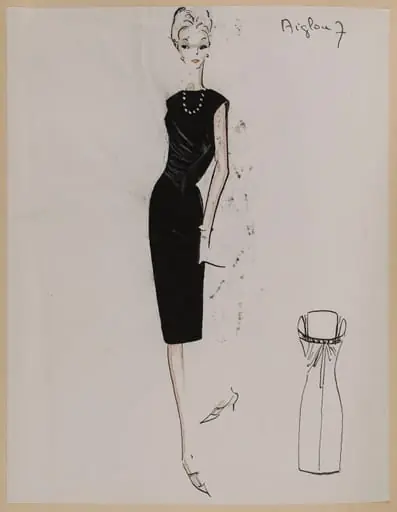
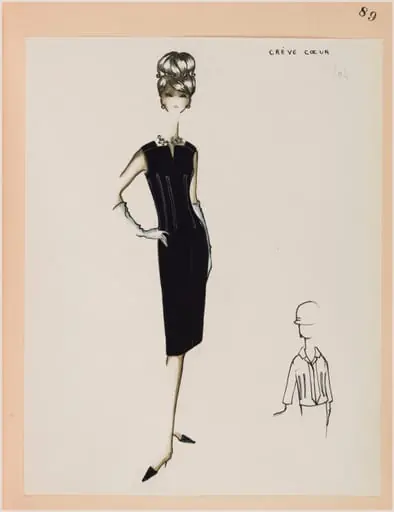
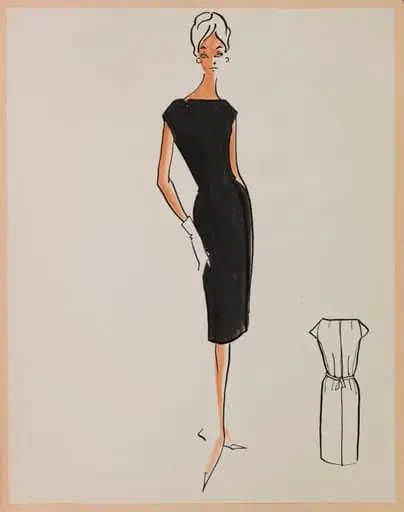
Valberg is a drawing by Marie-Louise Carven. It dates from 1963 and is held in the collection of the Palais Galliera - Musée de la Mode de la Ville de Paris.
About this work
Overview
The work is part of the Museum of Ethnography’s collection, reflecting Carven’s role in shaping mid-century French fashion through practical, wearable design.
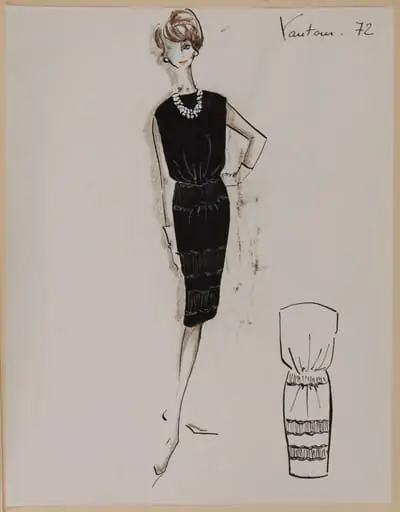
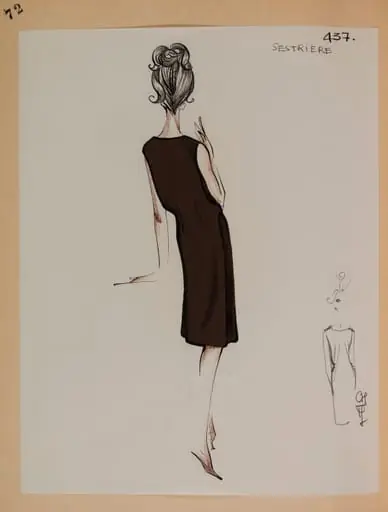
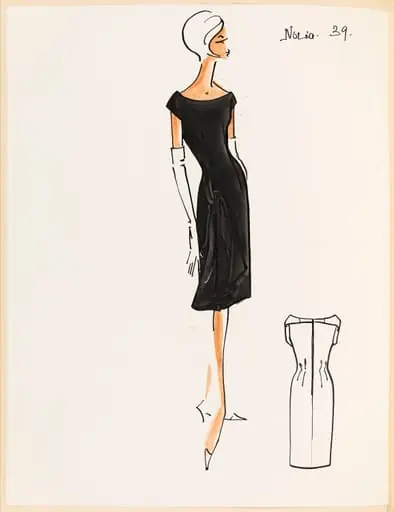
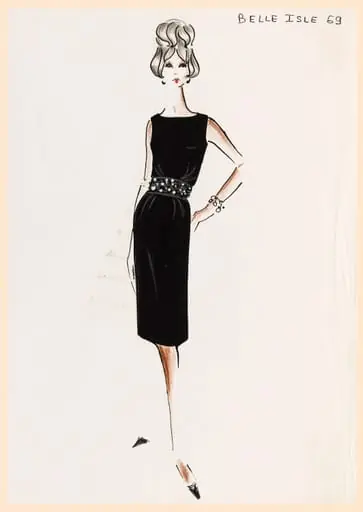
Valberg is a pencil sketch attributed to Marie-Louise Carven, created circa 1963. It depicts a woman in a minimalist black dress with a defined waist and a subtle ruffle at the collar, accompanied by a smaller, loosely rendered figure of a man. Executed with swift, assured lines, the drawing emphasizes silhouette and motion over detail. The work is part of the Museum of Ethnography’s collection, reflecting Carven’s role in shaping mid-century French fashion through practical, wearable design.
Subject & Meaning
The sketch centers on a woman’s attire, presenting a quiet, confident posture with one hand on her hip, suggesting ease and self-possession. The accompanying male figure, minimally defined, serves as a contextual anchor rather than a focal point. The composition reflects Carven’s design philosophy: clothing as an extension of daily life, intended for real women who moved through the world with grace and efficiency, not theatricality.
Technique & Style
Carven employed rapid, fluid pencil strokes to convey form and fabric without over-rendering. The loose lines capture the drape of the dress and the crispness of the waistline, while the absence of shading keeps focus on outline and proportion. The sketch’s spontaneity reveals a designer thinking in motion—translating ideas from mind to paper with immediacy, prioritizing clarity and wearability over decorative flourish.
History & Provenance
Created around 1963, Valberg emerged during the height of Carven’s influence in Parisian fashion. Though her label was founded in 1945, this sketch reflects her later commitment to accessible, petite-friendly design. The work entered the Museum of Ethnography’s holdings as part of a broader effort to document everyday fashion as cultural artifact, aligning with the institution’s interest in clothing as social practice rather than haute couture.
Context
In the early 1960s, Parisian fashion was shifting toward ready-to-wear, and Carven was among the pioneers who championed this movement. Her designs rejected excessive ornamentation in favor of clean lines and lightweight materials like cotton and lace. Valberg embodies this ethos—its simplicity mirrors the changing lifestyles of urban women seeking practical, elegant clothing that accommodated active lives.
Legacy
Valberg stands as a quiet testament to Carven’s enduring impact on modern dress. Her emphasis on proportion, comfort, and accessibility for smaller frames influenced generations of designers who prioritized real bodies over idealized silhouettes. The sketch’s preservation in an ethnographic museum underscores its value not as a fashion artifact of spectacle, but as a record of everyday aesthetic choices in postwar France.
Artist & collection
Artist
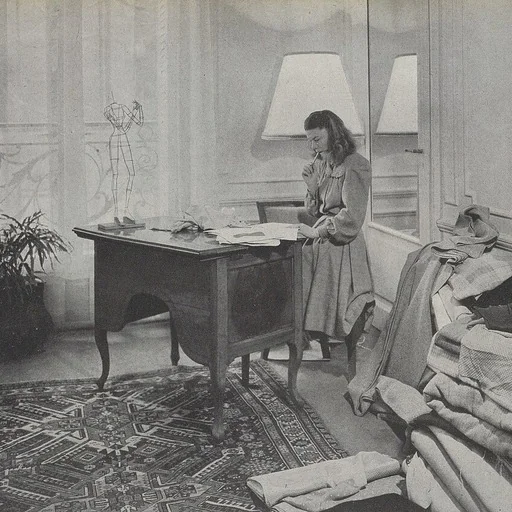
Marie-Louise Carven (31 August 1909 – 8 June 2015), born Carmen de Tommaso, was a French fashion designer who founded the house of Carven in 1945.
Museum
Palais Galliera - Musée de la Mode de la Ville de Paris
Continue through works from the same source collection.
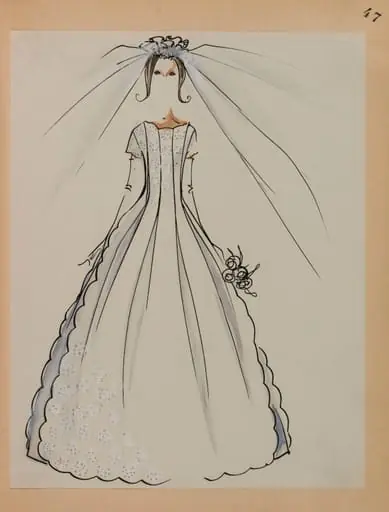 Robe de mariée festonnée et son voile
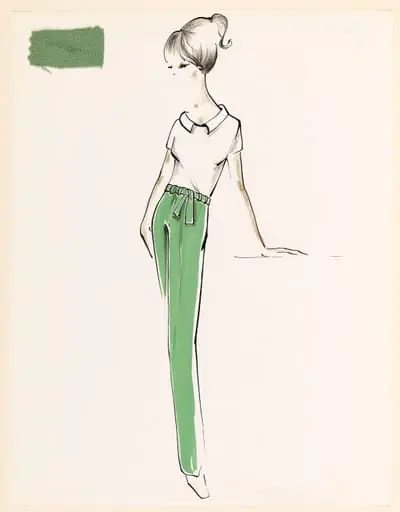 Haut blanc à manches courtes et pantalon vert à ceinture nouée
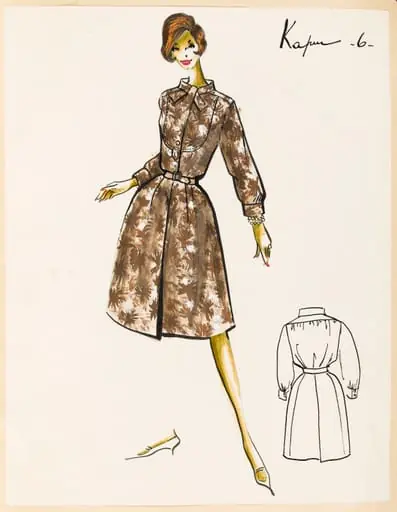 Kapur
Kapur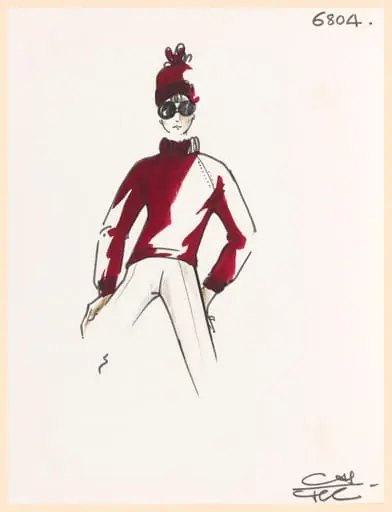 Pull-over à manches longues pourpre, bonnet assorti, pantalon et lunettes de soleil
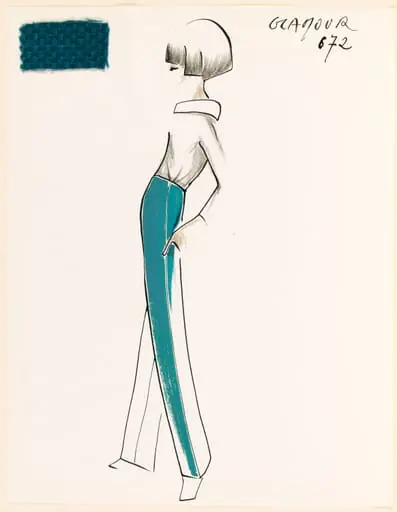 GLAMOUR
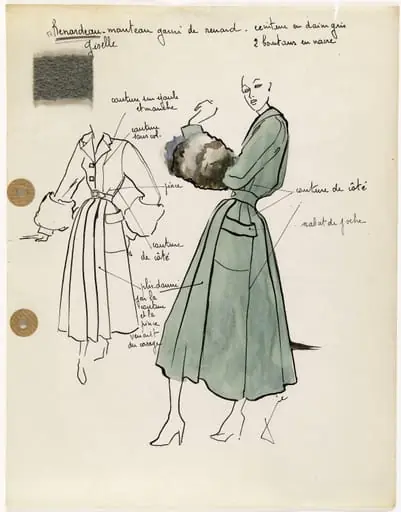 'Renardeau'
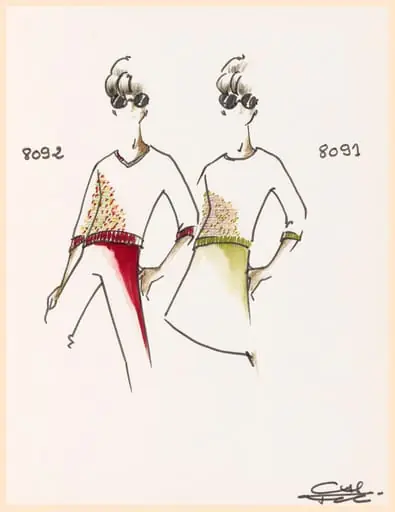 Pull-over à manches trois quarts et à encolure V à motifs multicolores, pantalon cerise et lunettes de soleil
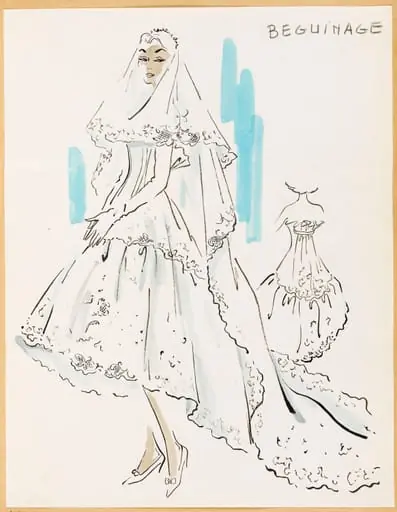 Béguinage