Artwork
Young
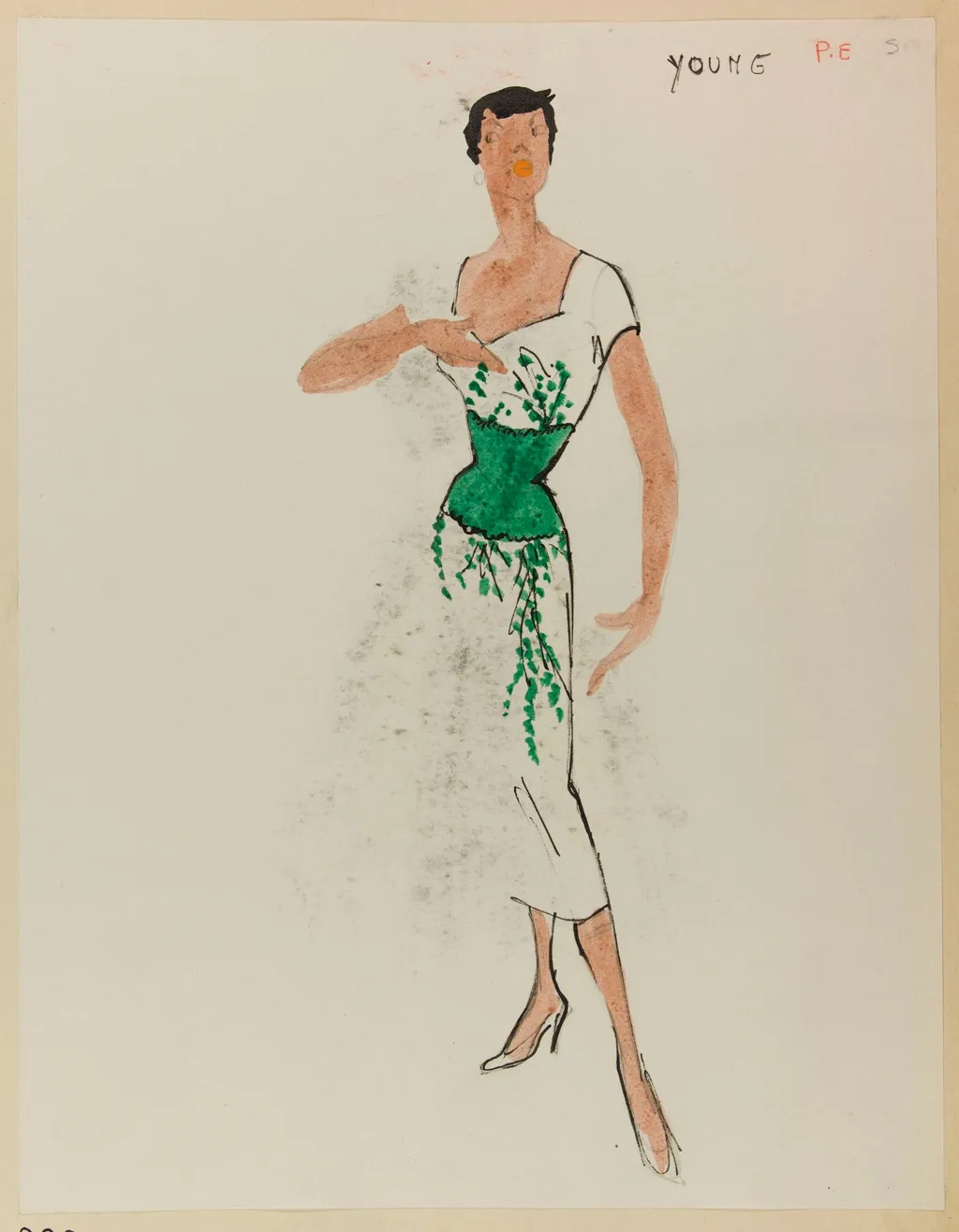
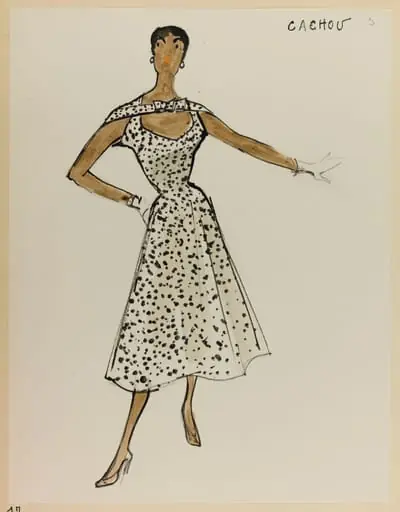
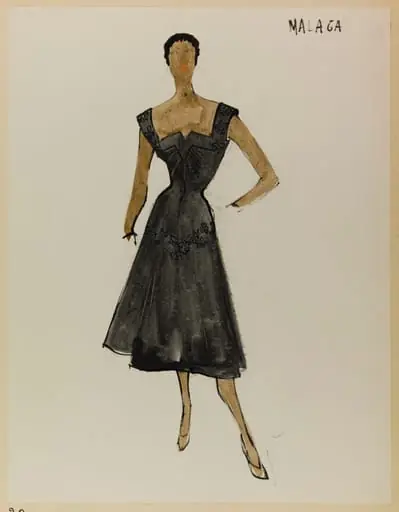
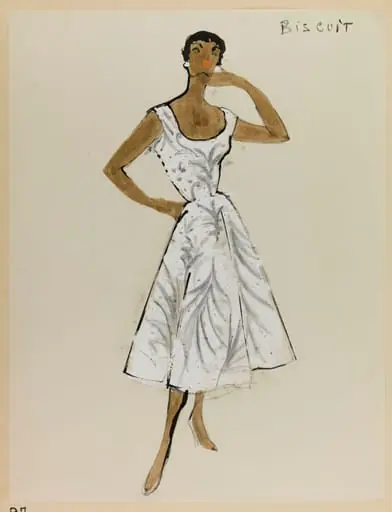
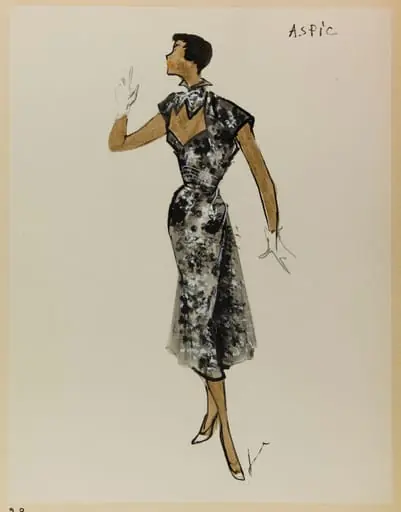
Young is a drawing by Marie-Louise Carven. It dates from 1953 and is held in the collection of the Palais Galliera - Musée de la Mode de la Ville de Paris.
About this work
Overview
Though not a finished garment, the drawing serves as a design study, revealing her approach to movement and fabric in early prêt-à-porter fashion.
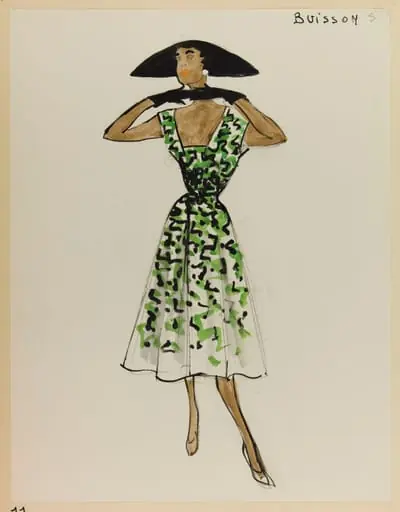
Created around 1953 by French designer Marie-Louise Carven, this sketch captures a woman in motion, dressed in a sleeveless white top and a patterned green skirt. Executed in loose, rapid strokes with minimal shading, it reflects Carven’s interest in lightweight, wearable designs. Though not a finished garment, the drawing serves as a design study, revealing her approach to movement and fabric in early prêt-à-porter fashion.
Subject & Meaning
The figure is depicted mid-stride, suggesting ease and everyday life. Her simple attire—white top, green skirt, bare feet—avoids ornamentation, aligning with Carven’s focus on practical elegance for petite frames. The absence of facial detail universalizes the subject, emphasizing posture and garment flow over individual identity, reinforcing the design’s accessibility and democratic spirit.
Technique & Style
The sketch employs swift, fluid lines with light cross-hatching to suggest texture, particularly in the skirt’s leaf-like pattern. Shading is sparse, used only to imply shadow and volume. The rough, uneven strokes in the green fabric mimic natural forms, evoking foliage without literal representation. The overall effect is spontaneous, as if drawn in real time, capturing the immediacy of a creative thought.
History & Provenance
Marie-Louise Carven founded her fashion house in 1945 and was among the first French couturiers to develop a ready-to-wear line. This sketch, part of the Museum of Ethnography’s collection, likely originated in her studio during the early years of her prêt-à-porter experimentation. Its preservation suggests recognition of its value as a document of postwar design innovation, not merely as fashion illustration.
Context
In the early 1950s, Parisian fashion was shifting from exclusive haute couture toward more accessible clothing. Carven’s focus on lightweight fabrics and movement-responsive silhouettes responded to changing lifestyles and postwar economic realities. This sketch reflects that transition—prioritizing function and fluidity over rigid structure, aligning with broader cultural moves toward simplicity and practicality.
Legacy
Though modest in scale, the sketch embodies Carven’s influence on democratizing fashion. Her integration of movement, light materials, and informal elegance paved the way for modern ready-to-wear aesthetics. The drawing’s unpolished quality underscores its role as a working tool, preserving the raw process behind designs that helped redefine women’s wardrobes in mid-century Europe.
Artist & collection
Artist
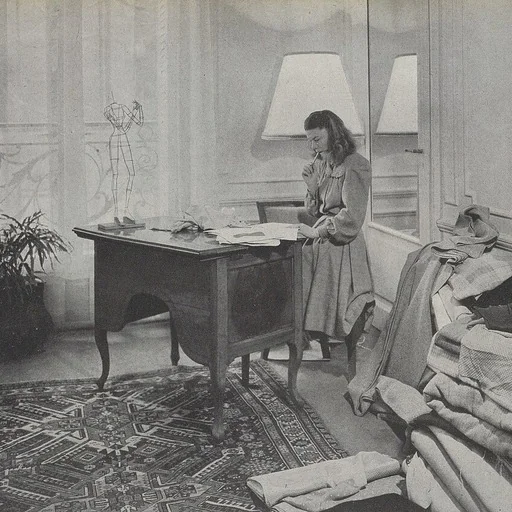
Marie-Louise Carven (31 August 1909 – 8 June 2015), born Carmen de Tommaso, was a French fashion designer who founded the house of Carven in 1945.
Museum
Palais Galliera - Musée de la Mode de la Ville de Paris
Continue through works from the same source collection.
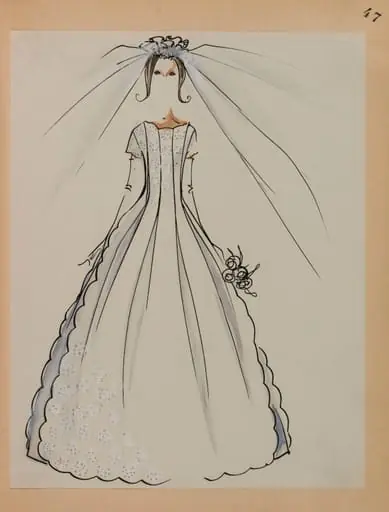 Robe de mariée festonnée et son voile
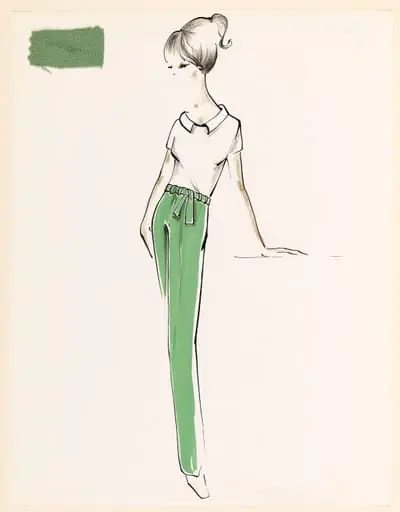 Haut blanc à manches courtes et pantalon vert à ceinture nouée
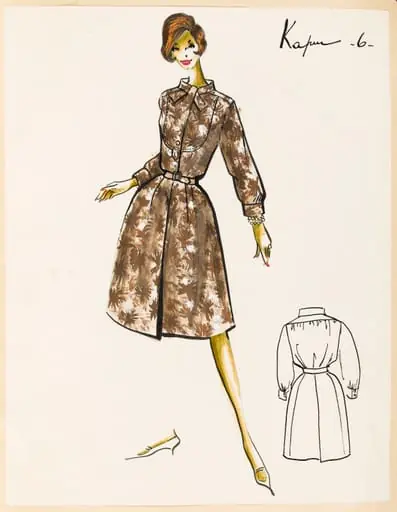 Kapur
Kapur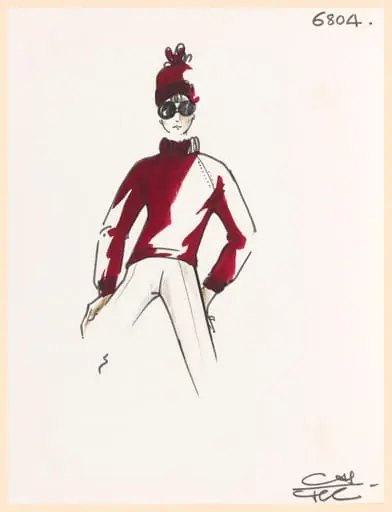 Pull-over à manches longues pourpre, bonnet assorti, pantalon et lunettes de soleil
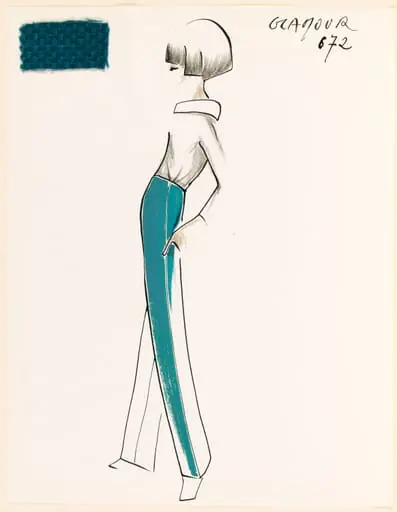 GLAMOUR
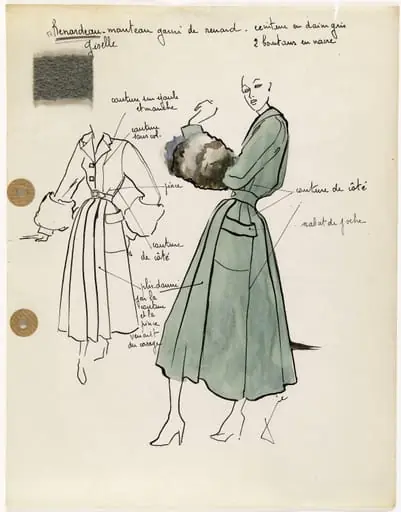 'Renardeau'
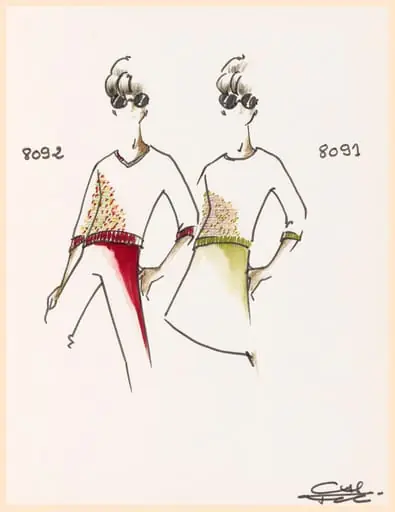 Pull-over à manches trois quarts et à encolure V à motifs multicolores, pantalon cerise et lunettes de soleil
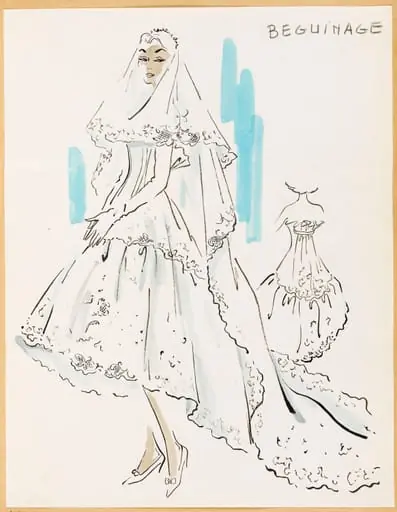 Béguinage