Artwork
Mercédès
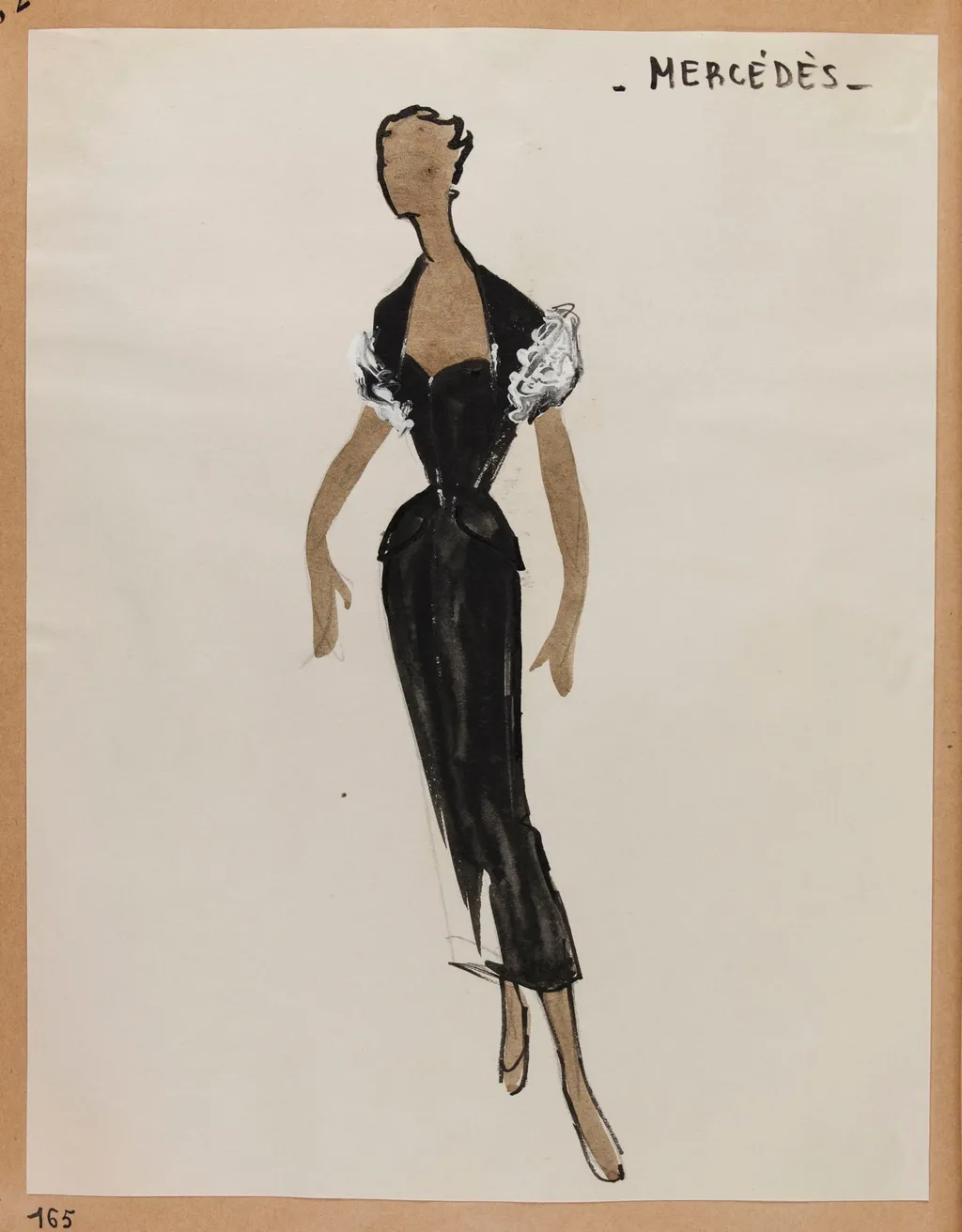
Mercédès is a drawing by Marie-Louise Carven. It dates from 1951 and is held in the collection of the Palais Galliera - Musée de la Mode de la Ville de Paris.
About this work
Overview
Created around 1951, *Mercédès* is a drawing by French designer Marie-Louise Carven, reflecting her approach to feminine silhouettes and refined simplicity.
Created around 1951, *Mercédès* is a drawing by French designer Marie-Louise Carven, reflecting her approach to feminine silhouettes and refined simplicity. Though produced as a fashion illustration, it functions as a standalone study in form and proportion. The piece resides in the Museum of Ethnography’s collection, where it is valued for its quiet articulation of mid-century French dress aesthetics rather than as a garment prototype.
Subject & Meaning
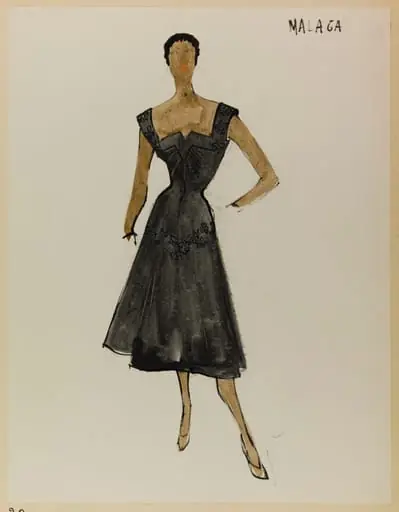
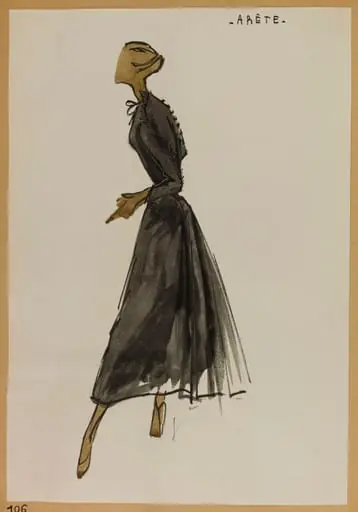
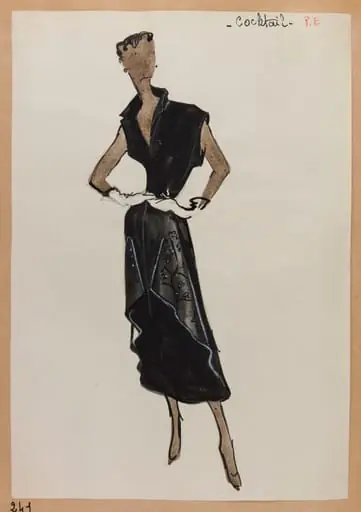
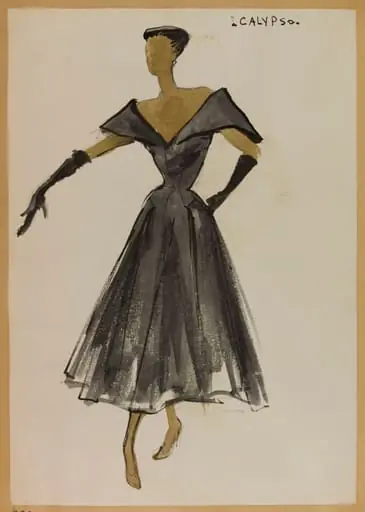
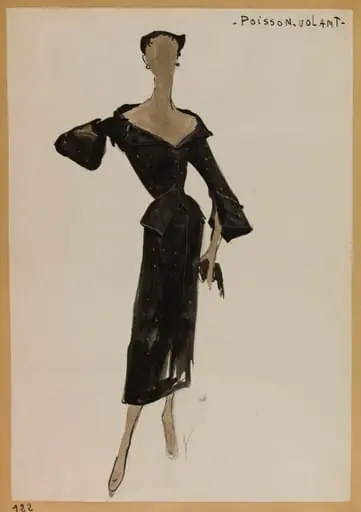
The figure in *Mercédès* is depicted in a black dress with white ruffled sleeves, a low neckline, and a softly flared peplum waist. Her arms rest naturally at her sides, and her face is omitted, shifting focus to the structure of the garment. The absence of facial features universalizes the figure, emphasizing the dress as an object of quiet elegance rather than a portrait of an individual.
Technique & Style
Carven rendered *Mercédès* with restrained linework and minimal shading, using ink or graphite on paper. The plain beige background isolates the figure, enhancing the clarity of the dress’s contours. The contrast between the dark bodice and crisp white ruffles creates visual rhythm, while the loose, unposed stance conveys ease—hallmarks of Carven’s design philosophy that prioritized comfort without sacrificing refinement.
History & Provenance
Marie-Louise Carven founded her fashion house in 1945 and was among the earliest French designers to develop a ready-to-wear line. *Mercédès* likely originated as a design study during this period of innovation. Its inclusion in the Museum of Ethnography suggests recognition of its cultural significance as a representation of postwar French women’s fashion, distinct from haute couture traditions.
Context
In the early 1950s, Parisian fashion was transitioning from wartime austerity toward renewed elegance. Carven’s work stood apart by focusing on petite figures and lightweight materials like gingham and lace. *Mercédès* reflects this ethos—its modest scale, practical silhouette, and emphasis on movement align with a broader shift toward wearable, everyday sophistication in postwar dress.
Legacy
Though Carven is remembered for pioneering prêt-à-porter and innovations like the patented push-up bra, *Mercédès* endures as a subtle testament to her design intelligence. The drawing’s understated grace influenced later generations of designers who valued restraint over ornament. Its preservation in an ethnographic context underscores its role as a cultural artifact of everyday femininity in mid-century France.
Artist & collection
Artist
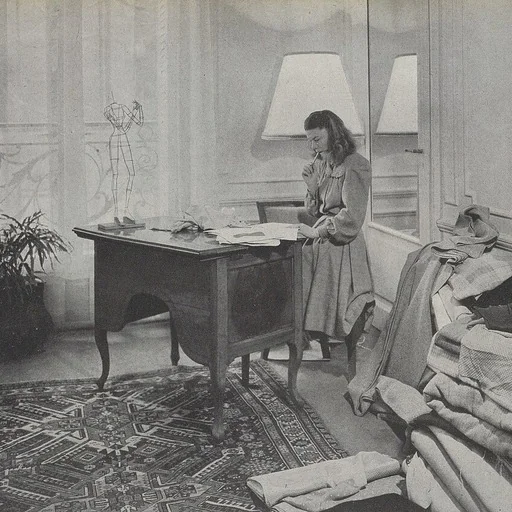
Marie-Louise Carven (31 August 1909 – 8 June 2015), born Carmen de Tommaso, was a French fashion designer who founded the house of Carven in 1945.
Museum
Palais Galliera - Musée de la Mode de la Ville de Paris
Continue through works from the same source collection.
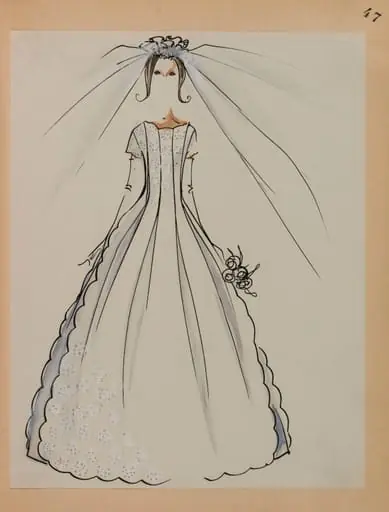 Robe de mariée festonnée et son voile
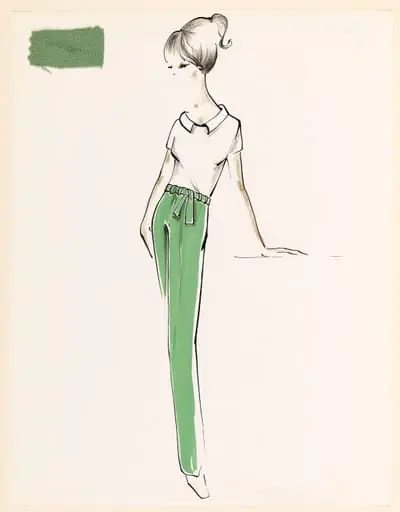 Haut blanc à manches courtes et pantalon vert à ceinture nouée
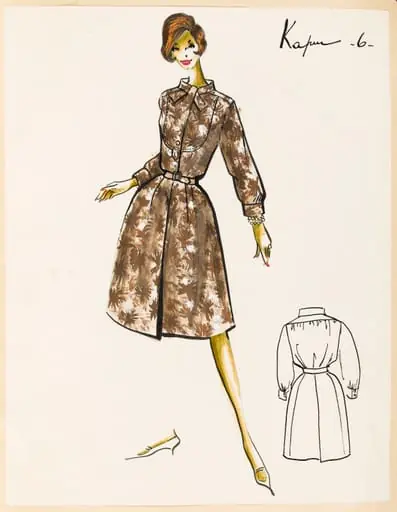 Kapur
Kapur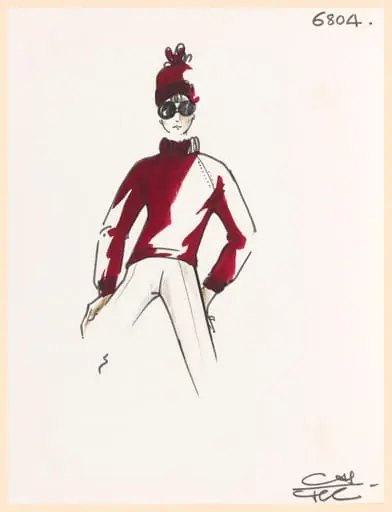 Pull-over à manches longues pourpre, bonnet assorti, pantalon et lunettes de soleil
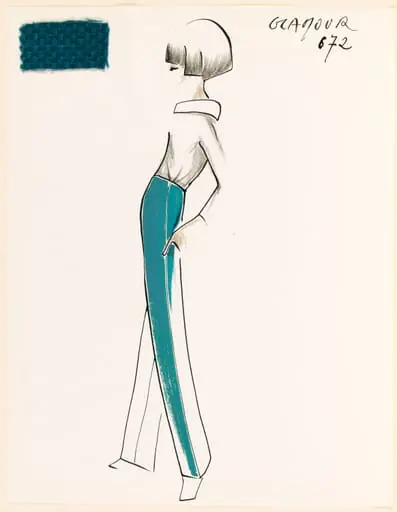 GLAMOUR
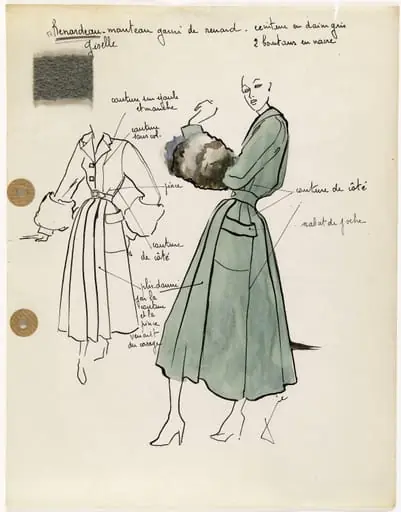 'Renardeau'
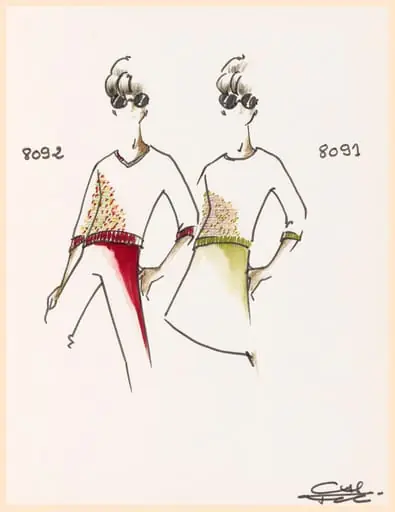 Pull-over à manches trois quarts et à encolure V à motifs multicolores, pantalon cerise et lunettes de soleil
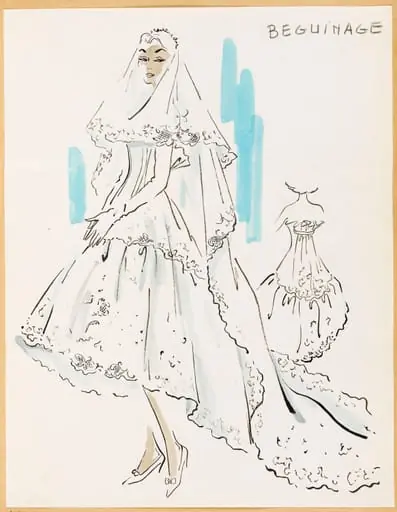 Béguinage