Artwork
The Pietà
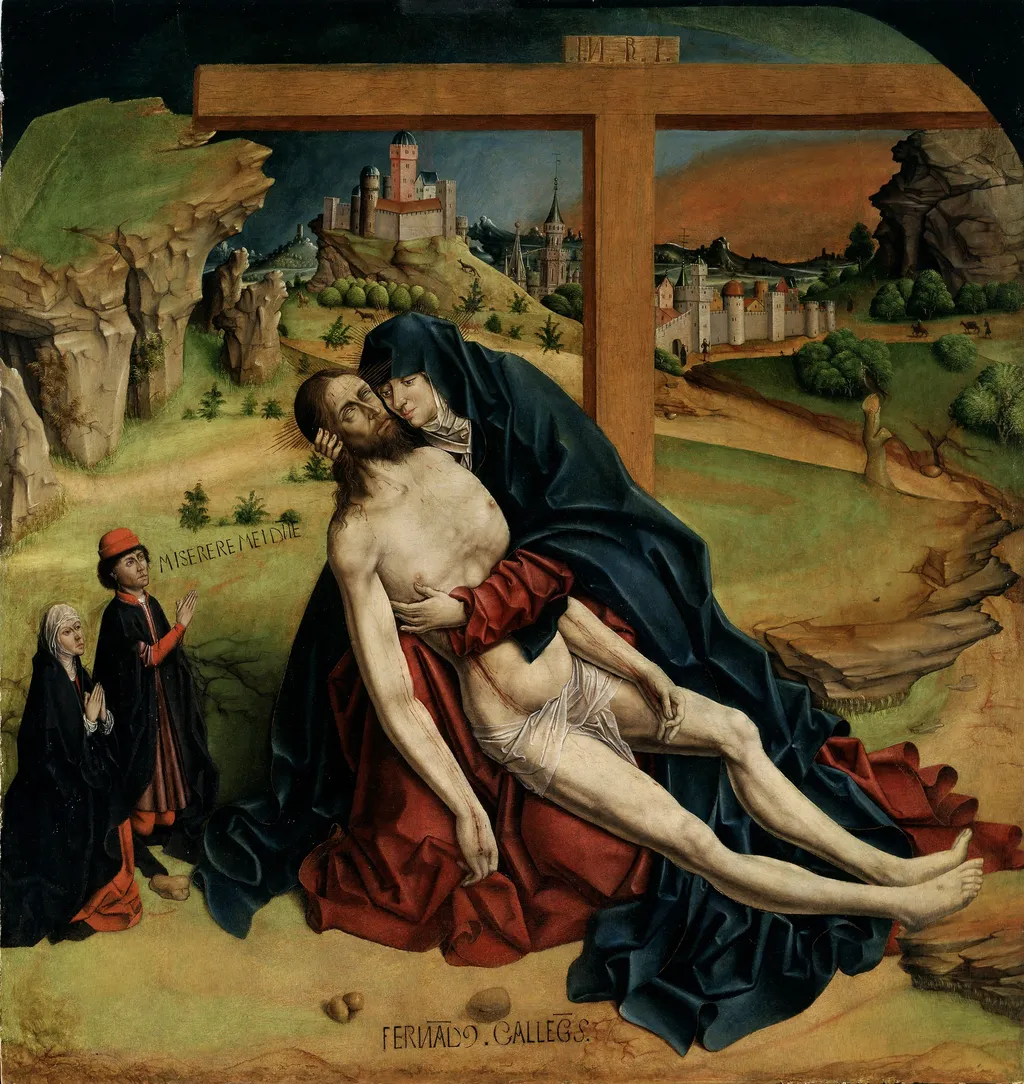
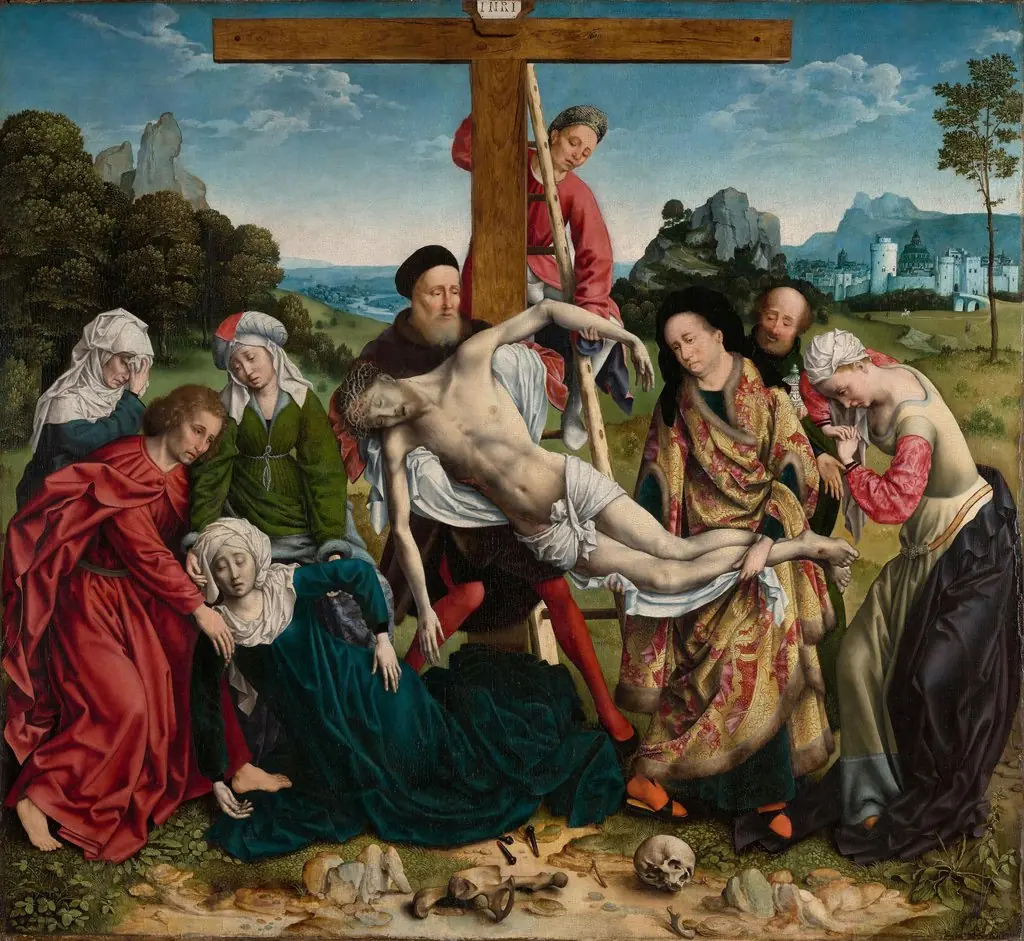
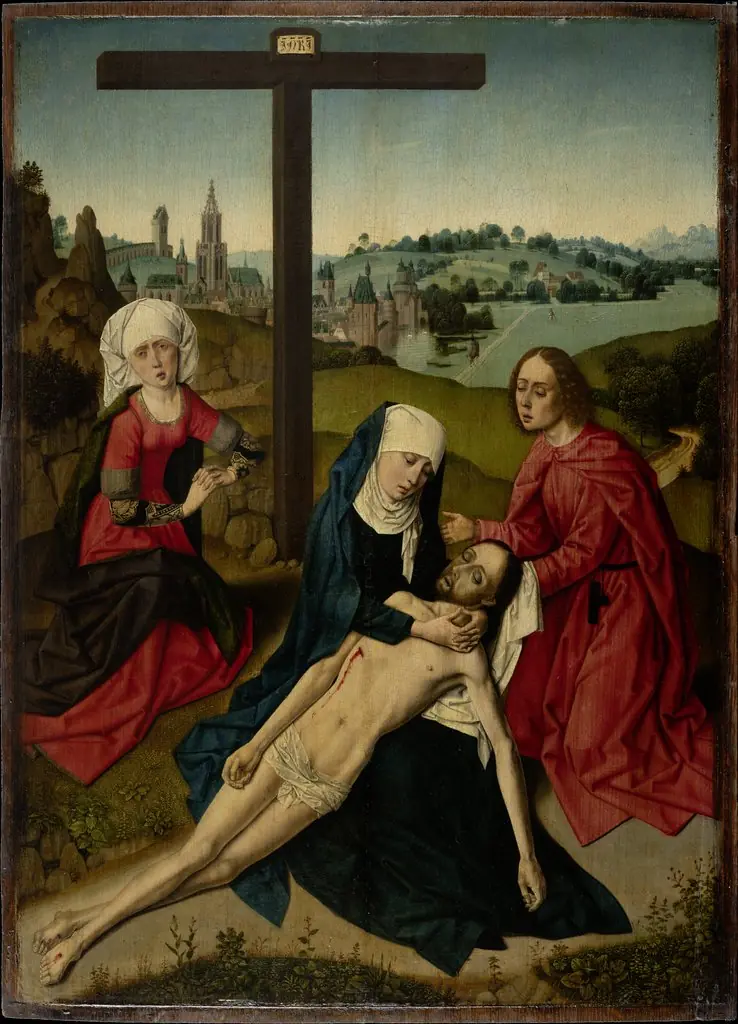
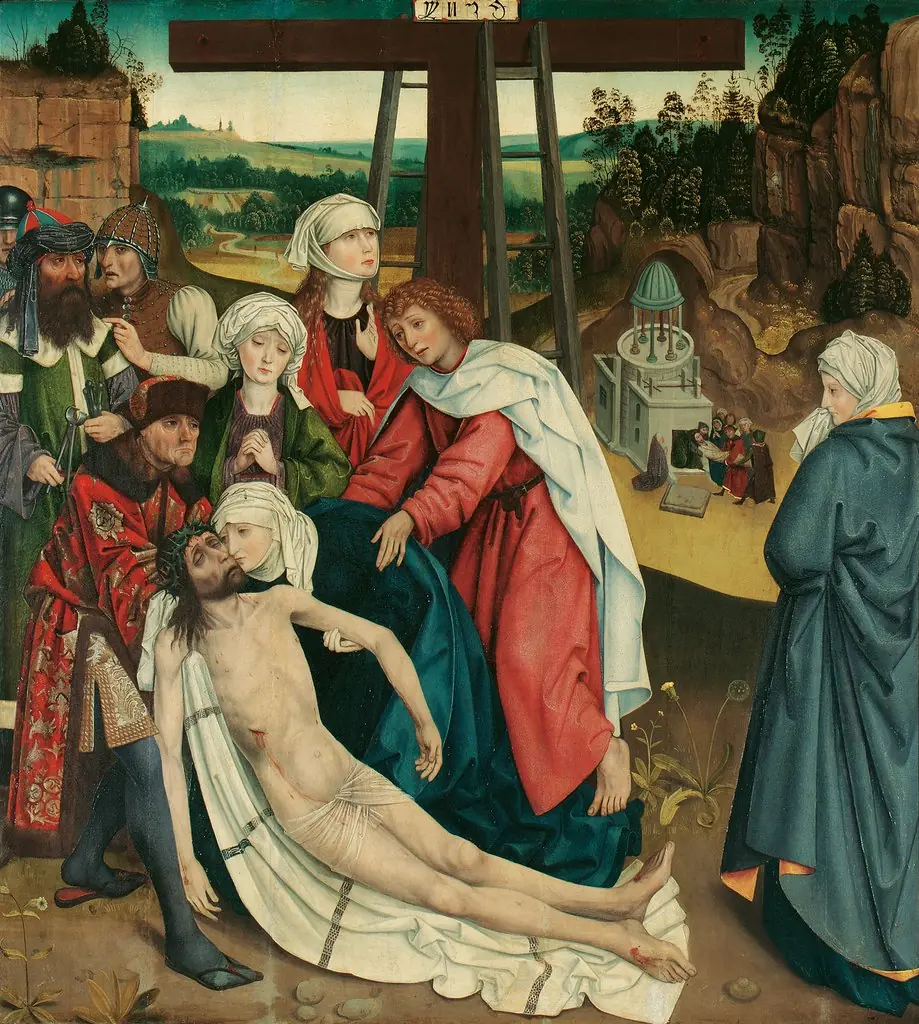
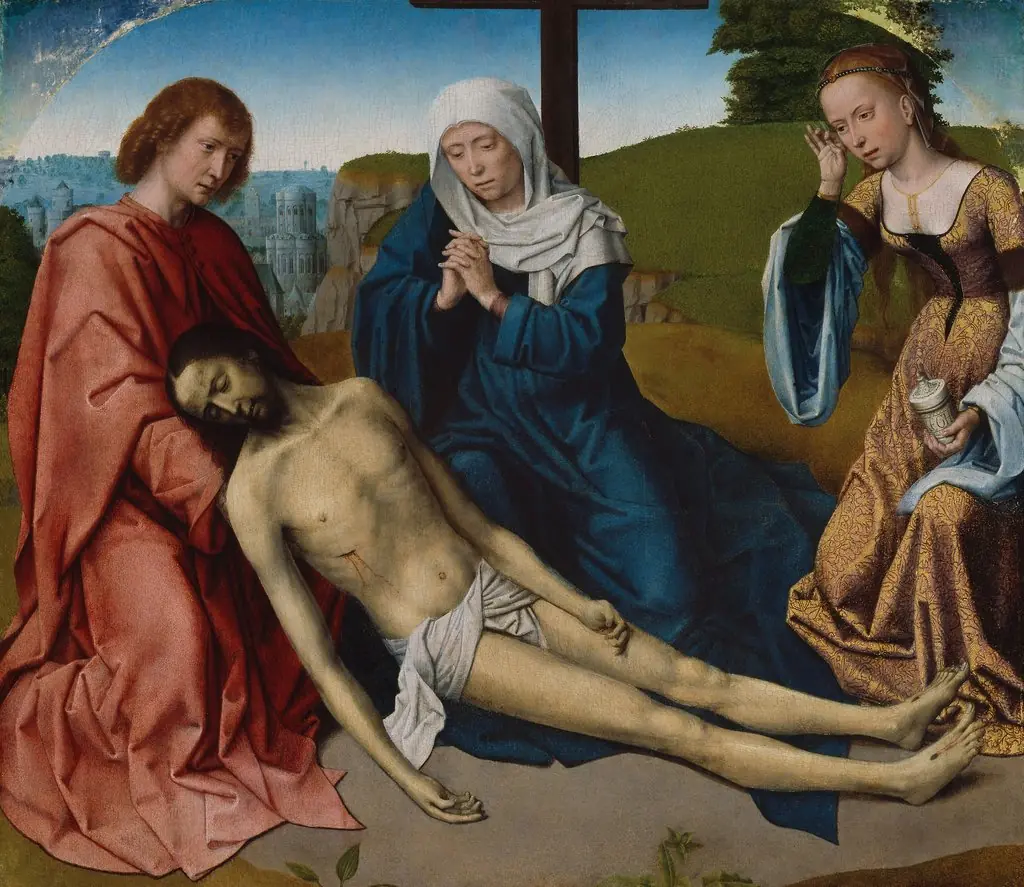
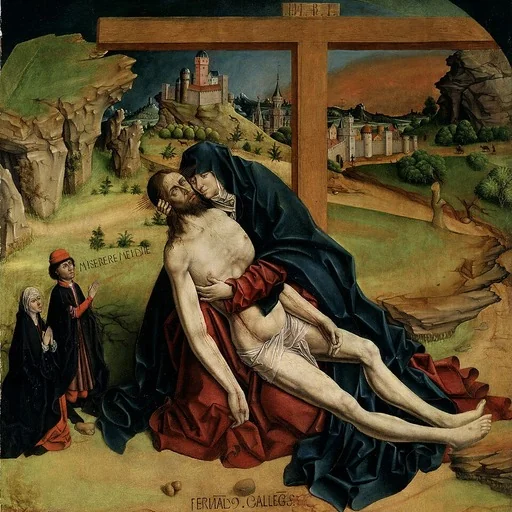
The Pietà is an unspecified painting by the Early Renaissance artist Fernando Gallego. It dates from 1465 and is held in the collection of the Museo del Prado.
About this work
Overview
Created in 1465, *The Pietà* is an oil painting by Castilian artist Fernando Gallego, representative of the early Renaissance Hispano‑Flemish tradition. The work is part of the collection of the Museo del Prado in Madrid and bears the artist’s signature in the lower corner.
Subject & Meaning
The composition presents a lifeless, pale‑skinned man with a long beard—identified as the dead Christ—reclining on the lap of a serene woman, traditionally understood as the Virgin Mary. Their quiet intimacy, set against a distant landscape, conveys a contemplative moment of mourning and devotion.
Technique & Style
Gallego employs a restrained palette of reds, whites, and earth tones, using fine brushwork to render the delicate folds of the red burial cloth and the soft flesh of the figures. The background features a stylised rocky hill and a far‑off castle under a muted green sky, reflecting the blend of Northern realism and Iberian decorative motifs characteristic of the Hispano‑Flemish style.
History & Provenance
The painting entered the Prado’s holdings in the 19th century, though its earlier ownership is not fully documented. Records of Gallego’s activity are scarce; the artist is known to have worked in Castile and Extremadura, with the last archival mention of him alive dating to 1507.
Context
*The Pietà* belongs to a period when Spanish painters incorporated Flemish techniques—such as detailed naturalism and layered glazes—into local devotional imagery. Gallego’s work exemplifies this synthesis, offering a regional interpretation of a subject popular throughout European Christian art.
Artist & collection
Artist
Fernando Gallego (c. 1440 – 1507) was a Castillan painter, and his art is generally regarded as Hispano-Flemish in style. Gallego was likely born in Salamanca, Spain, and worked throughout Castile and Extremadura, most…