Artwork
Visverkoopster
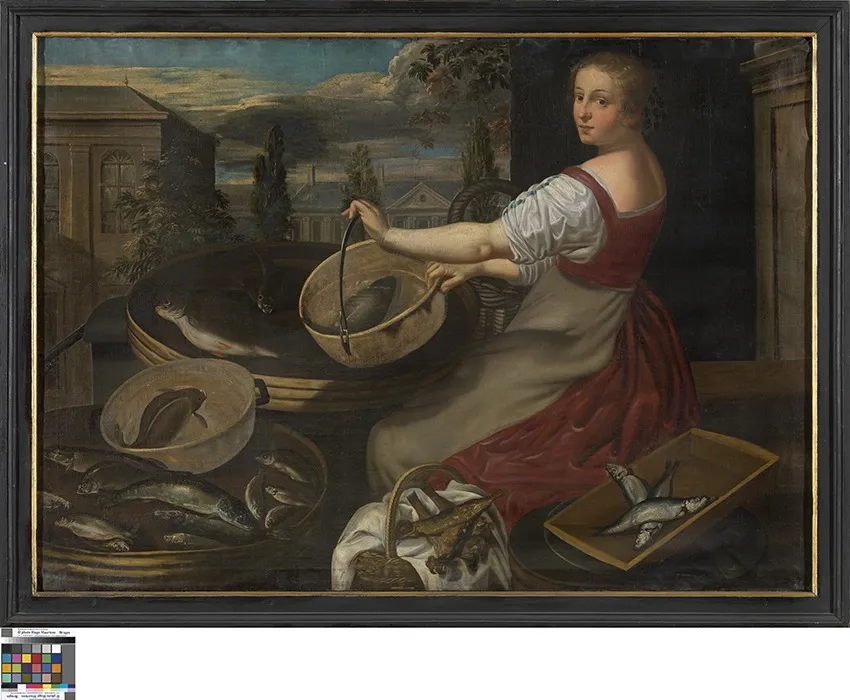
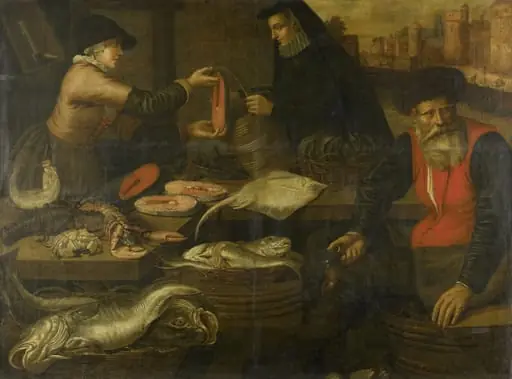
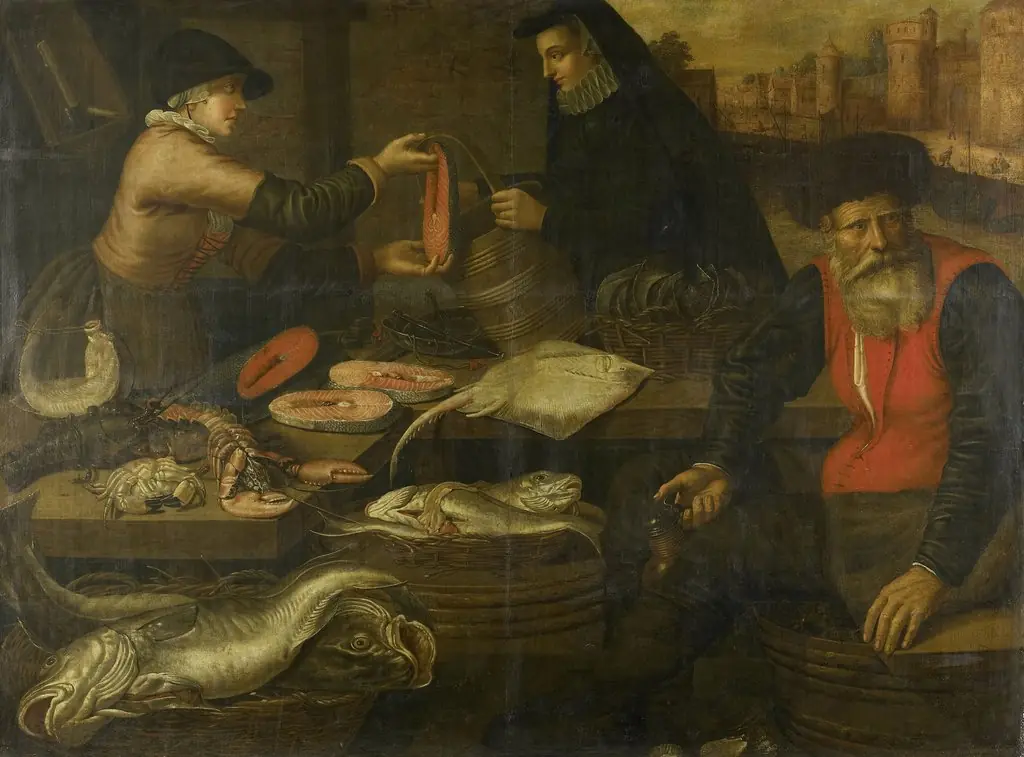
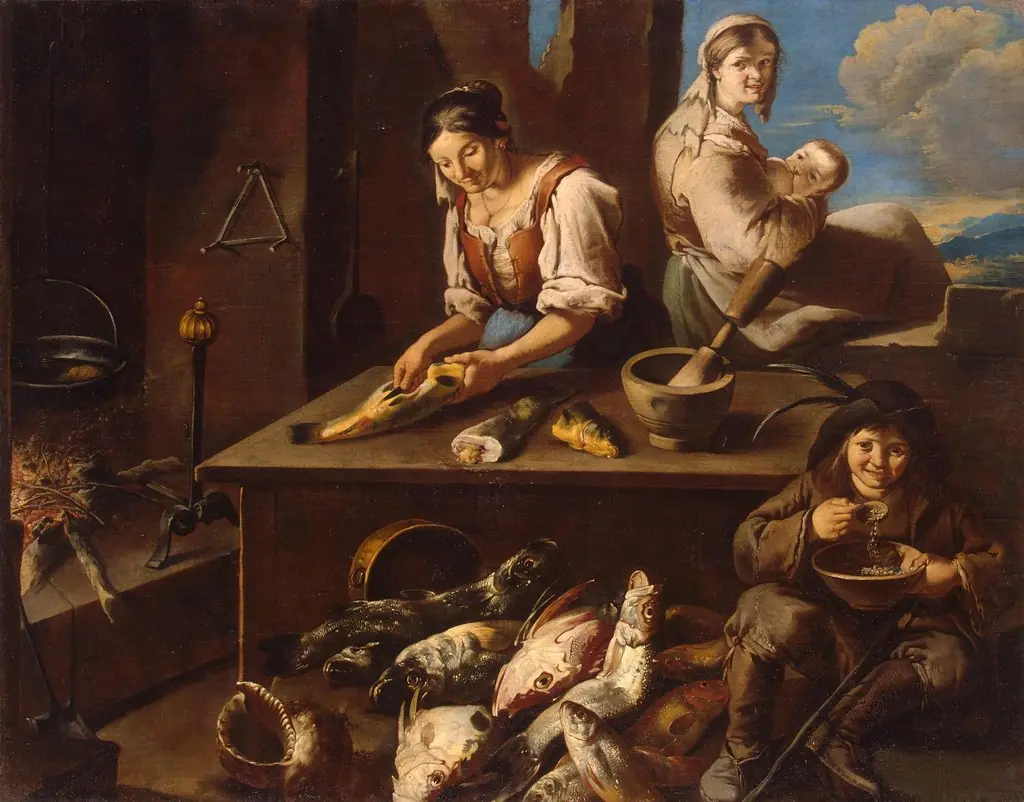
Visverkoopster is an oil painting by the Flemish Baroque painting artist Unknown. It dates from 1651 and is held in the collection of the Groeningemuseum. This oil painting depicts a woman in a courtyard, engaged in the sale of fish.
About this work
Overview
The setting includes modest buildings and trees in the background, suggesting an everyday urban or semi-rural market space.
This oil painting depicts a woman in a courtyard, engaged in the sale of fish. She stands with a basket in hand, surrounded by additional fish arranged in baskets and bowls. The setting includes modest buildings and trees in the background, suggesting an everyday urban or semi-rural market space. The composition emphasizes quiet activity rather than spectacle, grounded in careful observation of light and form.
Subject & Meaning
The figure is a fish vendor, likely a working-class woman, captured mid-task in a moment of routine labor. Her presence, surrounded by her wares, reflects the economic realities of domestic trade in early modern Europe. The scene holds no overt symbolism; its significance lies in the unembellished portrayal of commerce and gendered labor, offering a glimpse into the daily lives of non-elite women.
Technique & Style
The artist employs a realistic approach with meticulous attention to textures: the weave of the woman’s apron, the glisten of fish scales, the roughness of wooden baskets. Chiaroscuro is used to model forms, enhancing the three-dimensionality of the figures and objects. Light falls naturally across the scene, creating subtle contrasts that define volume without dramatic intensity, aligning with northern European traditions of quiet realism.
History & Provenance
The painting’s origin is not documented in public records, and its early ownership remains unknown. It likely dates to the late 16th or early 17th century, given its stylistic traits and subject matter. No significant exhibition or collection history is recorded prior to its modern appearance, suggesting it may have remained in private hands for much of its existence.
Context
During the period this work was likely created, market scenes were common in Dutch and Flemish art, often portraying women as central figures in domestic economies. Fish markets were vital urban spaces, and their depiction reflected both economic function and social observation. This painting aligns with a broader trend of genre scenes that valued everyday life over mythological or religious narratives.
Legacy
Though not widely known or reproduced, the painting contributes to a body of work that elevated ordinary laborers as worthy subjects of art. Its quiet realism, free from idealization, reflects a shift in artistic priorities during the early modern period. It stands as a modest but authentic record of gendered labor and market culture in northern Europe.
Artist & collection

 Domestic Scene
 Giacomo and Cardinal Marco, investing Andrea, Abbot of San Zeno, with his Benefice
 The Nymph of Fontainebleau
 Portrait of a Woman
 Madonna and Child with Saints in the Enclosed Garden
 Venus and Minerva
 Family Group of Four on Sofa
 Wall painting from Room H of the Villa of P. Fannius Synistor at Boscoreale