Artwork
Fishmongers
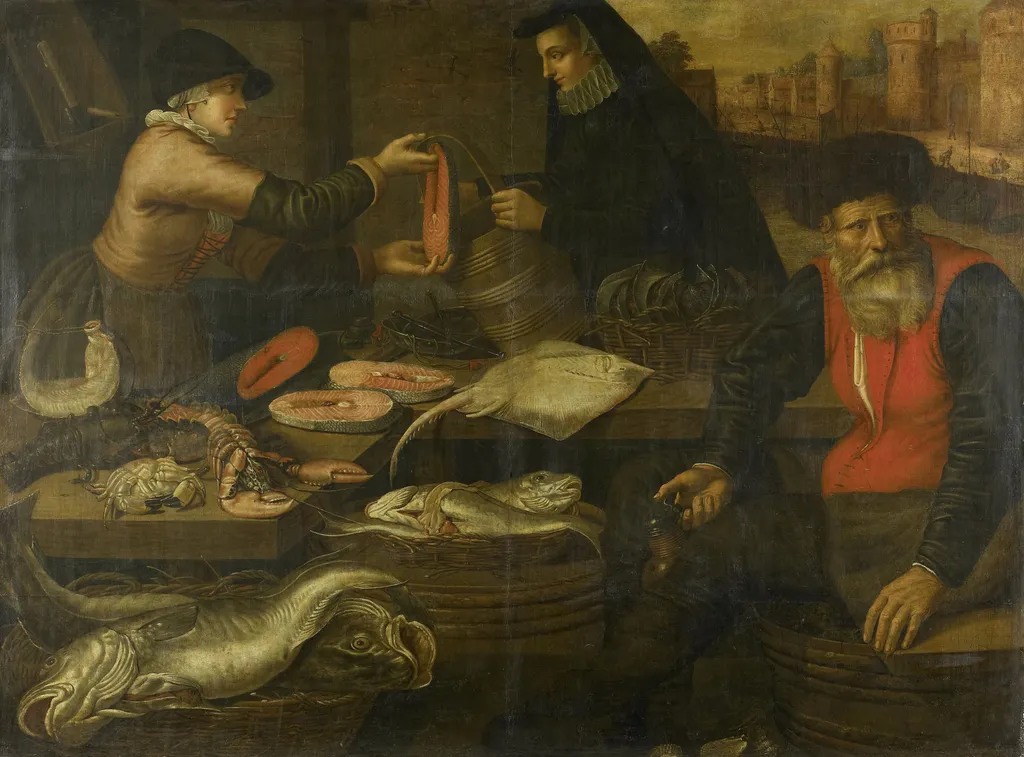
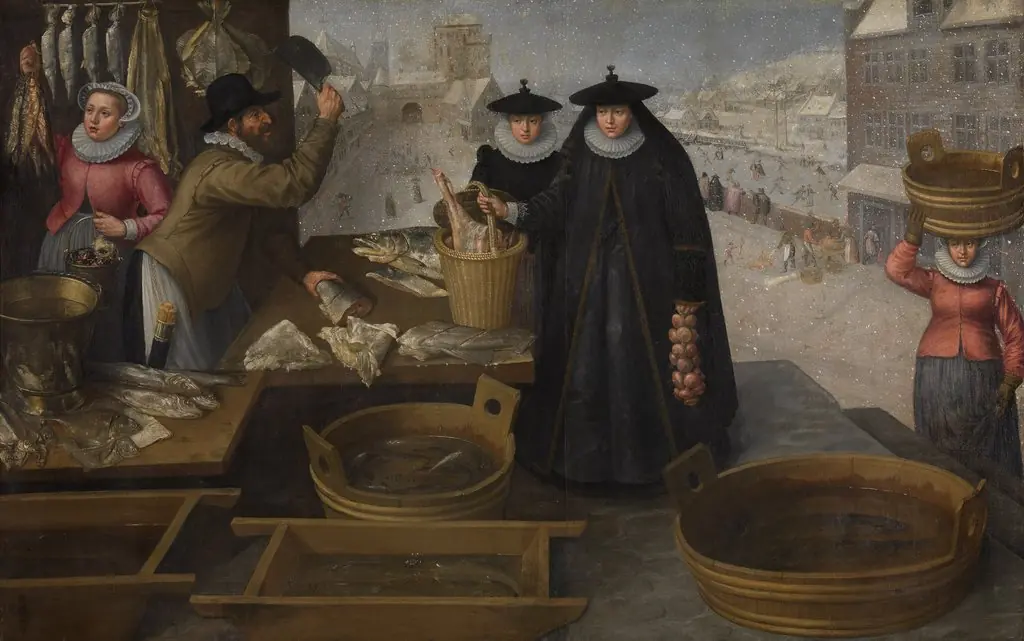
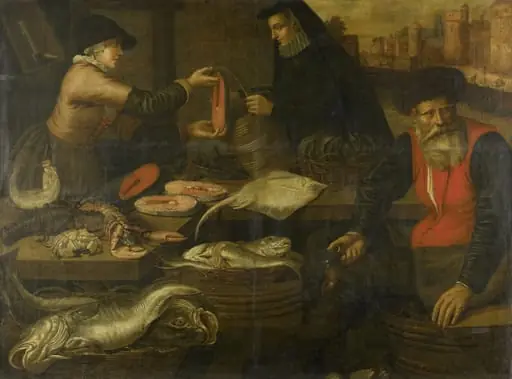
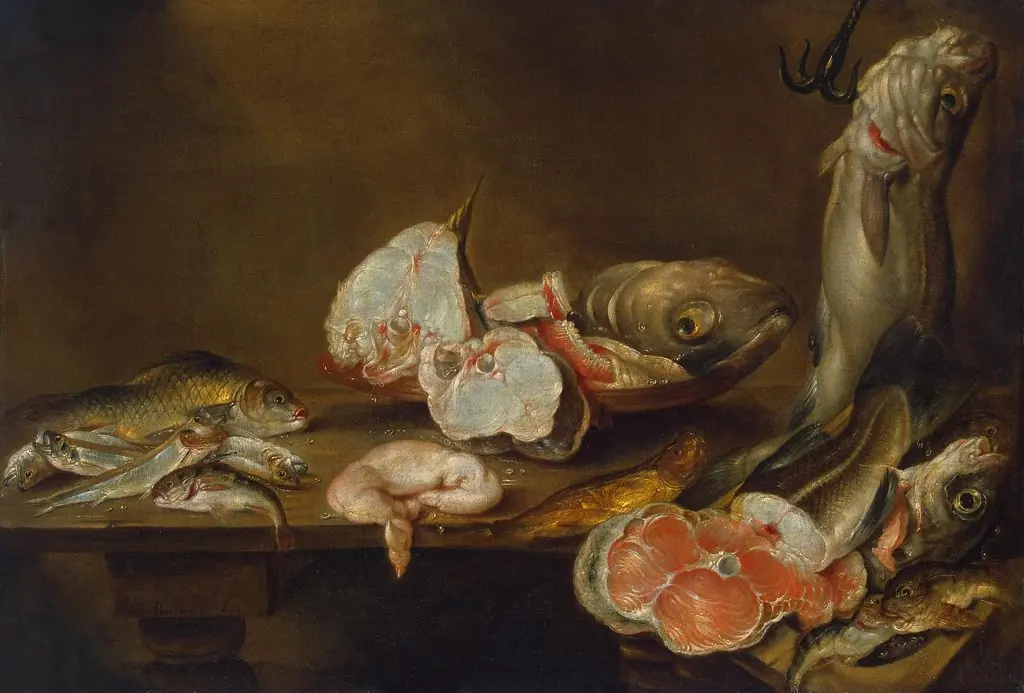
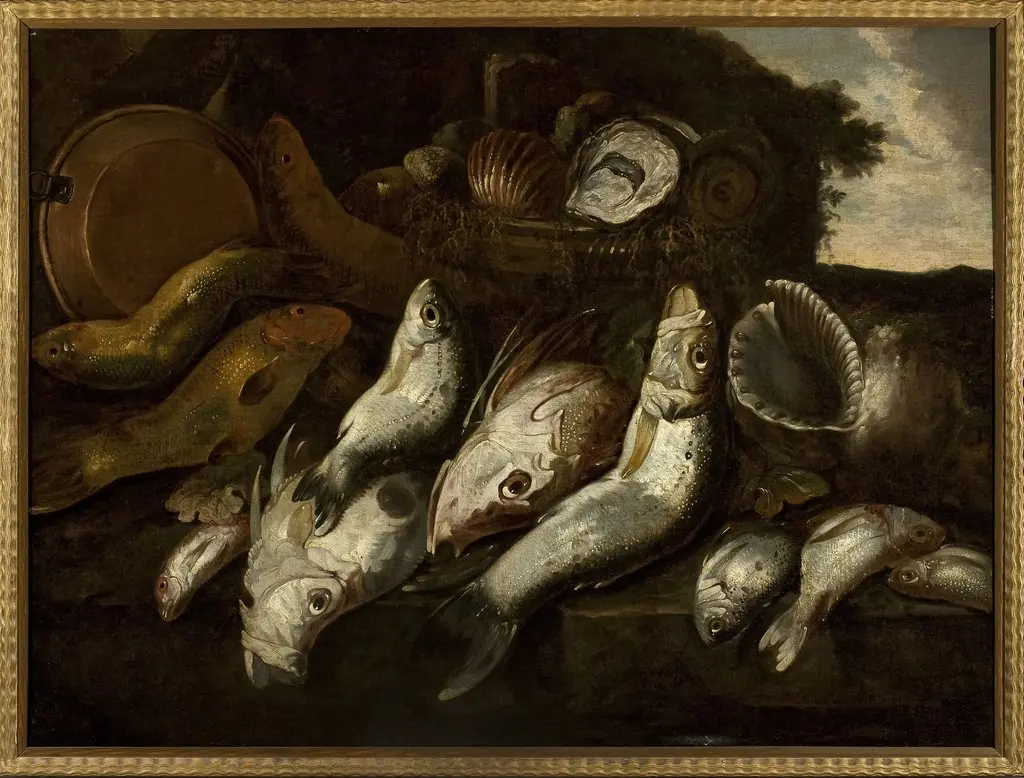
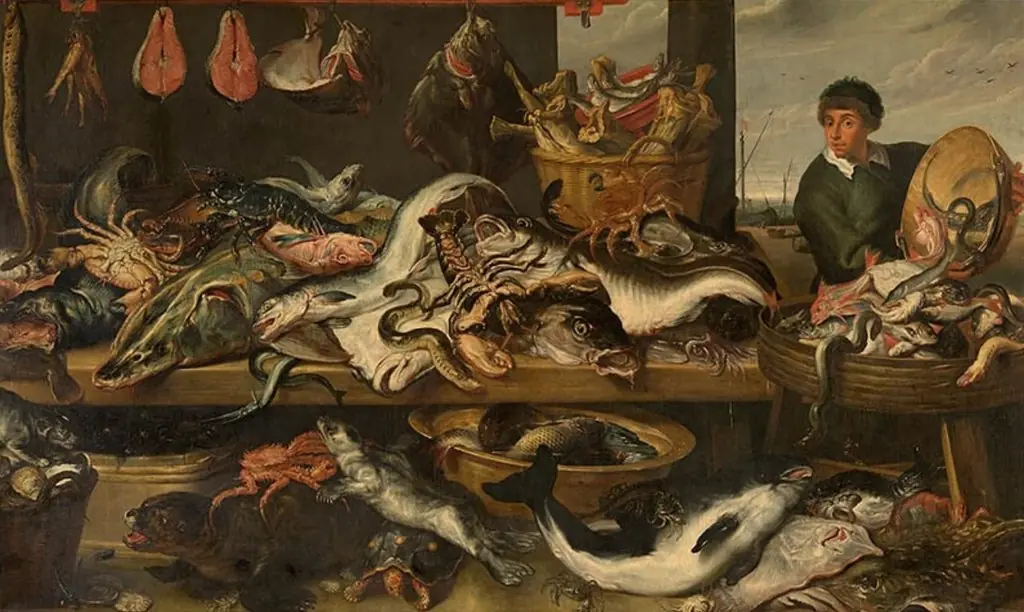
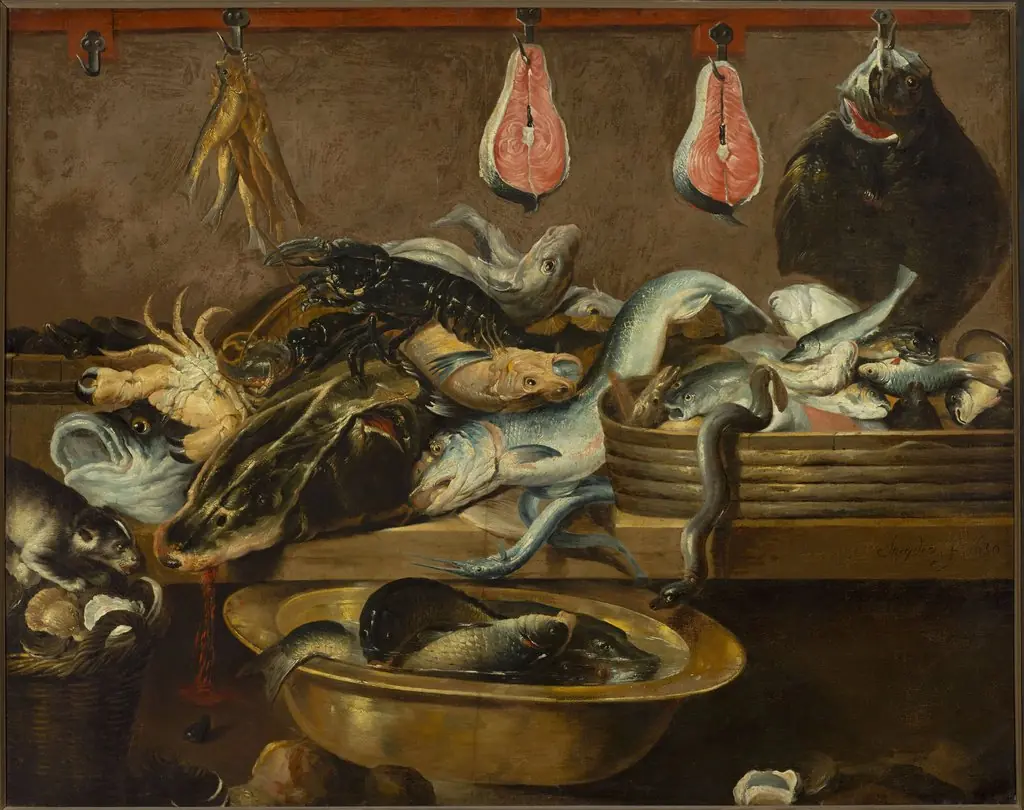
Fishmongers is an oil painting by the Dutch Golden Age artist Jacob van Nieulandt. It dates from 1617 and is held in the collection of the Rijksmuseum.
About this work
Overview
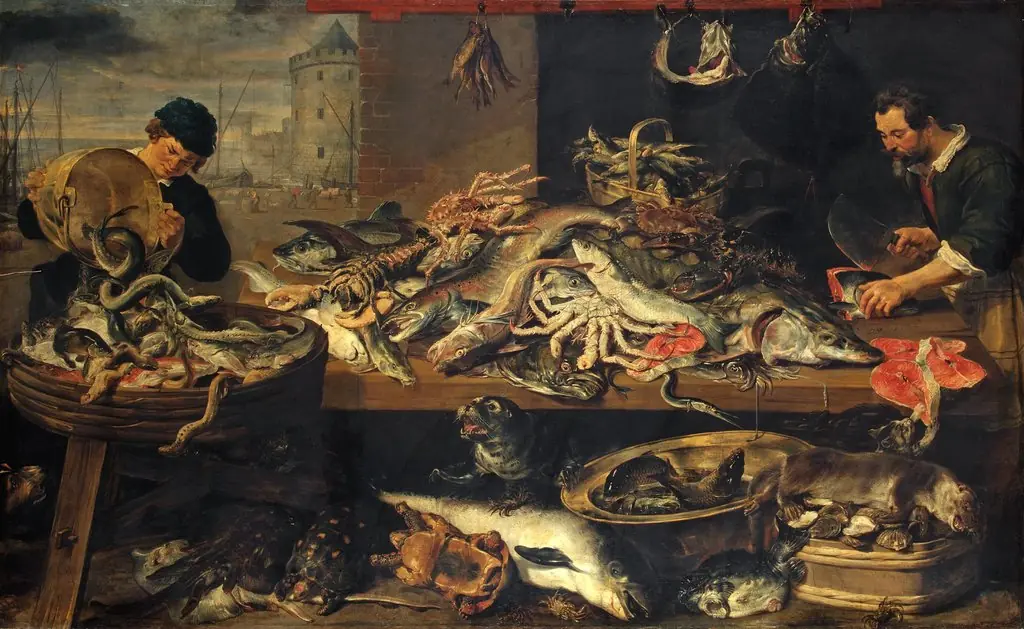
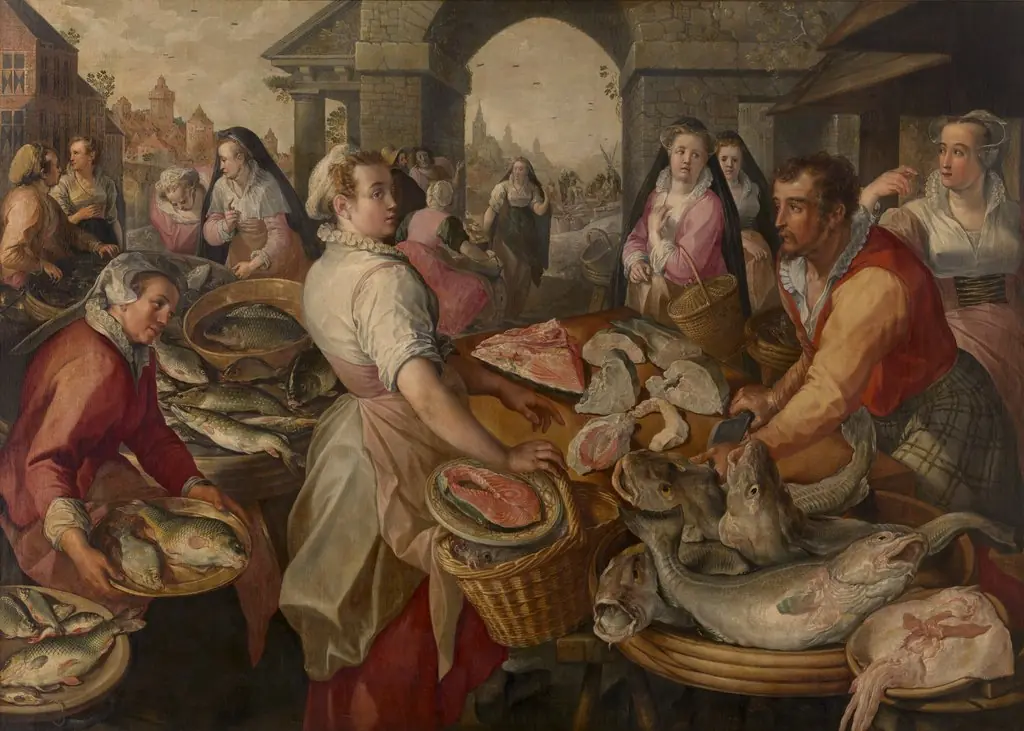
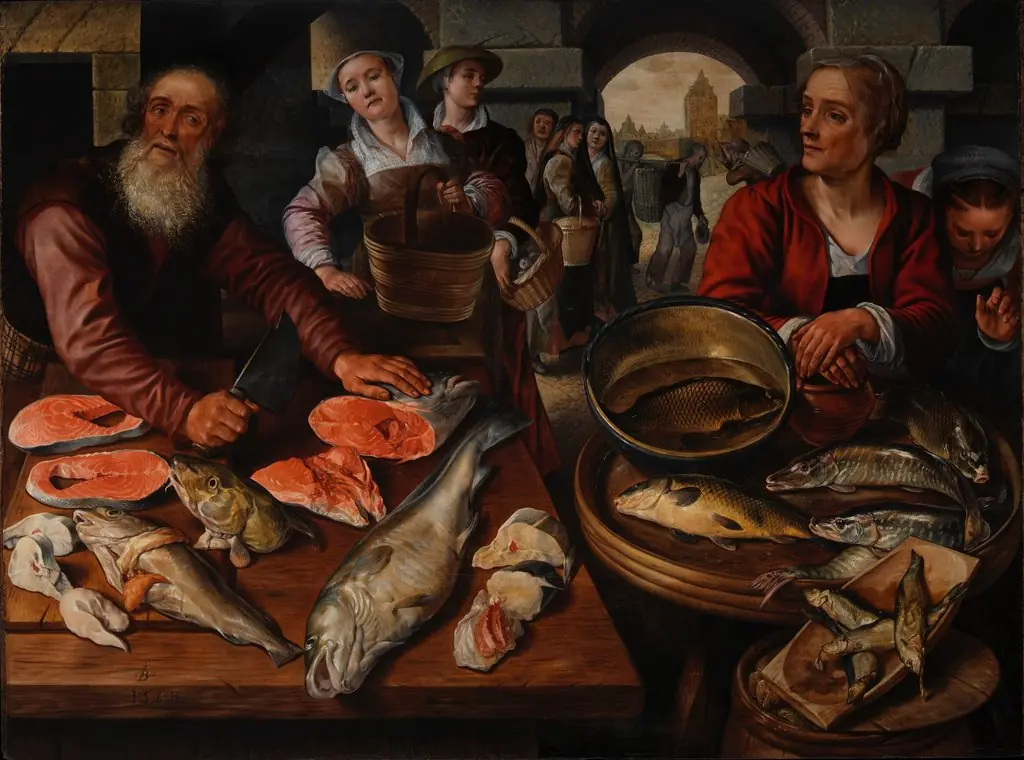
Jacob van Nieulandt’s 1617 oil painting titled *Fishmongers* presents a domestic market scene rendered in a compact interior. The composition centers on three figures—two men and a woman—engaged in the handling of a variety of seafood laid out on a low table. The work is part of the Rijksmuseum’s collection and exemplifies early‑17th‑century Dutch still‑life combined with genre elements.
Subject & Meaning
The tableau captures a moment of everyday commerce: a shirtless vendor lifts a bright red fish by its tail while a woman in a dark gown reaches toward the same catch, and an older man observes from a nearby seat. The assortment of eels, crabs, flatfish and shellfish, together with empty baskets, suggests abundance and the routine labor of fishmongering, reflecting the period’s interest in depicting honest work.
Technique & Style
The subtle background hints at a landscape beyond a small window, adding depth without detracting from the focal activity.
Van Nieulandt employs strong chiaroscuro, allowing a narrow light source to illuminate the glistening scales and the hands that grasp them, while the surrounding space recedes into deep shadow. The subtle background hints at a landscape beyond a small window, adding depth without detracting from the focal activity. The brushwork balances fine detail on the fish with broader, softer modeling of the figures and interior.
History & Provenance
Executed in 1617, *Fishmongers* has remained in the Netherlands, eventually entering the Rijksmuseum’s holdings where it is displayed among other Dutch genre works. Documentation traces its acquisition to the museum’s early 20th‑century purchases, confirming its attribution to van Nieulandt and its status as a representative example of his still‑life practice.
Own this work as a print
Artist & collection