Artwork
“A tasty morsel”
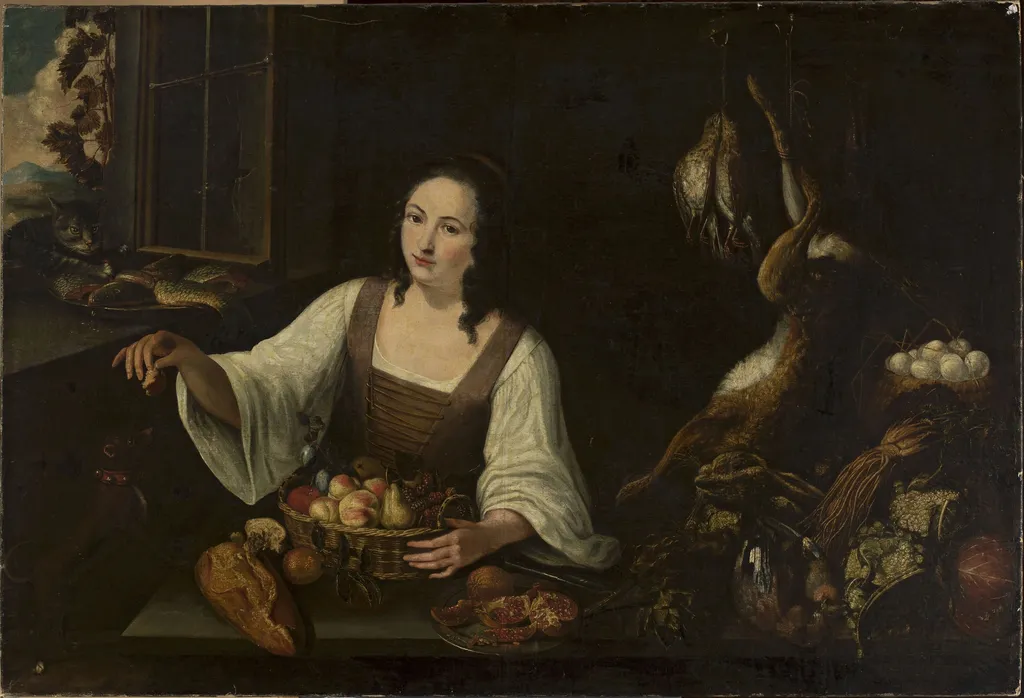
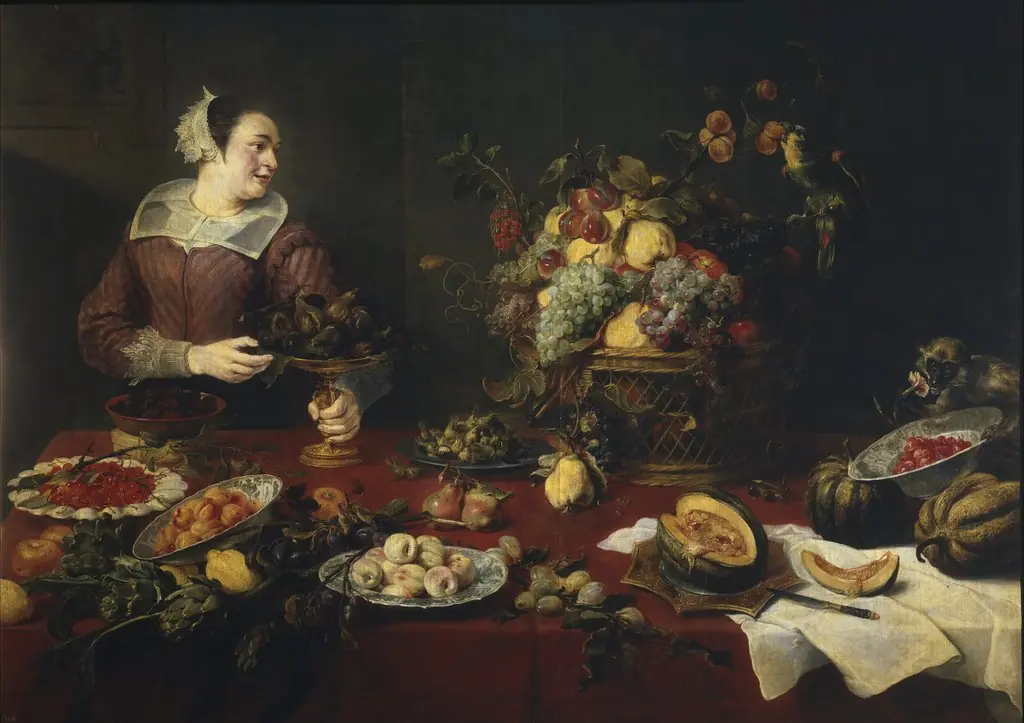
“A tasty morsel” is an oil painting by Philipp Sauerland. It dates from 1727 and is held in the collection of the National Museum in Warsaw.
About this work
Overview
The composition centers on stillness and quiet observation, with natural light filtering through a window to illuminate the scene.
Painted around 1727 by Philipp Sauerland, this oil work is part of the National Museum in Warsaw’s collection. It depicts a solitary woman in a dim interior, engaged with a modest spread of food. The composition centers on stillness and quiet observation, with natural light filtering through a window to illuminate the scene. The painting’s restrained palette and focused lighting suggest a moment of pause in daily life.
Subject & Meaning
The woman, dressed in a white gown and brown apron, gazes toward the window, her attention directed outward rather than toward the food before her. A cat rests on the sill, adding a note of domestic calm. The abundance of fruit and bread implies plenty, yet her disengagement hints at introspection or distraction. The scene resists narrative clarity, instead evoking a private, contemplative mood.
Technique & Style
Sauerland employs chiaroscuro to define form and space, with soft shadows deepening the room’s intimacy and light carving out the woman’s figure and the table’s contents. Brushwork is subtle, avoiding flourish; textures of fabric, fruit, and wood are rendered with quiet precision. The contrast between the dark interior and the illuminated window enhances spatial depth without dramatic tension.
History & Provenance
The painting entered the National Museum in Warsaw’s holdings in the early 20th century, though its earlier ownership remains undocumented. It was likely created in northern Europe, possibly in the Dutch or German-speaking regions, where such intimate domestic scenes were common in the early 18th century. No records of exhibition or commission survive, suggesting it was a private work.
Context
This painting aligns with the tradition of Dutch and Flemish genre scenes that elevated ordinary domestic moments into subjects of quiet dignity. While not overtly moralizing, it reflects a cultural interest in the rhythms of home life, the symbolism of food, and the interplay of light and shadow. Unlike grander historical works, it finds significance in stillness rather than action.
Legacy
Though not widely reproduced or studied, the painting contributes to the understanding of lesser-known artists working in the wake of the Dutch Golden Age. Its understated composition and emotional restraint offer a counterpoint to more theatrical contemporaries. It remains a quiet example of how everyday scenes could be rendered with sensitivity and depth in early 18th-century painting.
Own this work as a print
Artist & collection

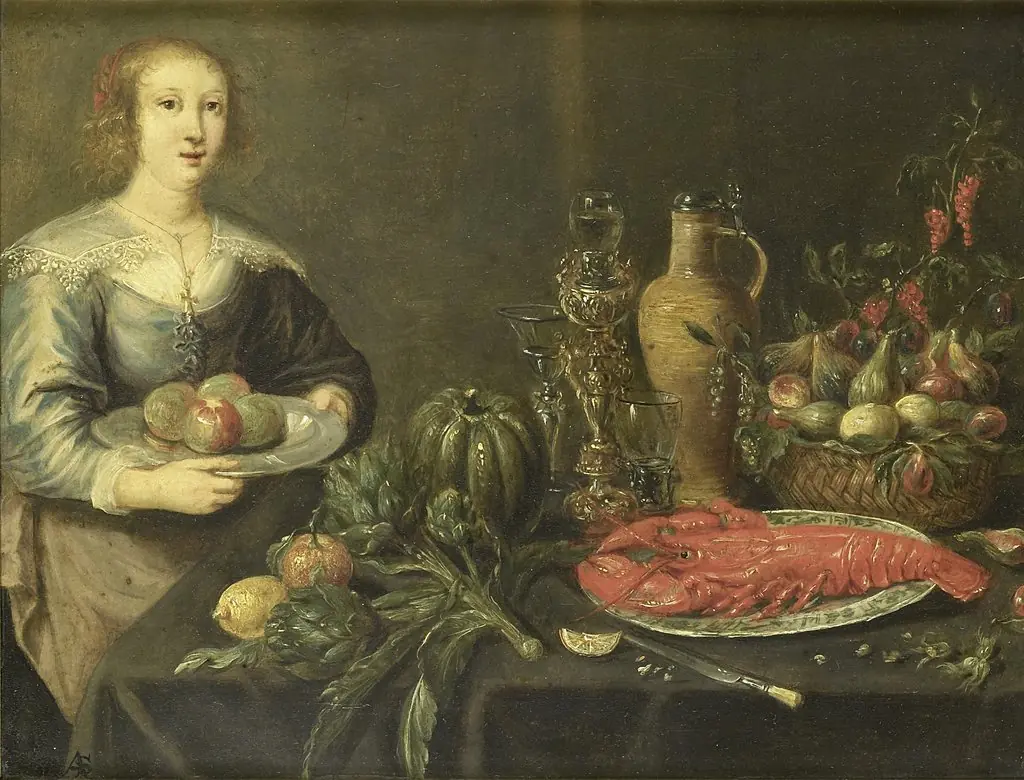 A young woman near a table with fruits
 Still Life with Fruit and Vegetables, with Christ at Emmaus in the background
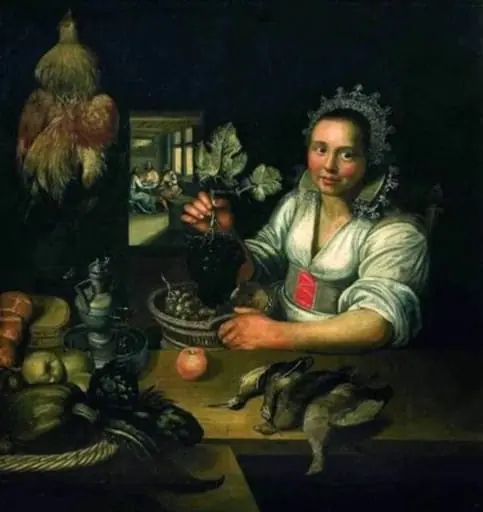 Pelerinii din Emaus
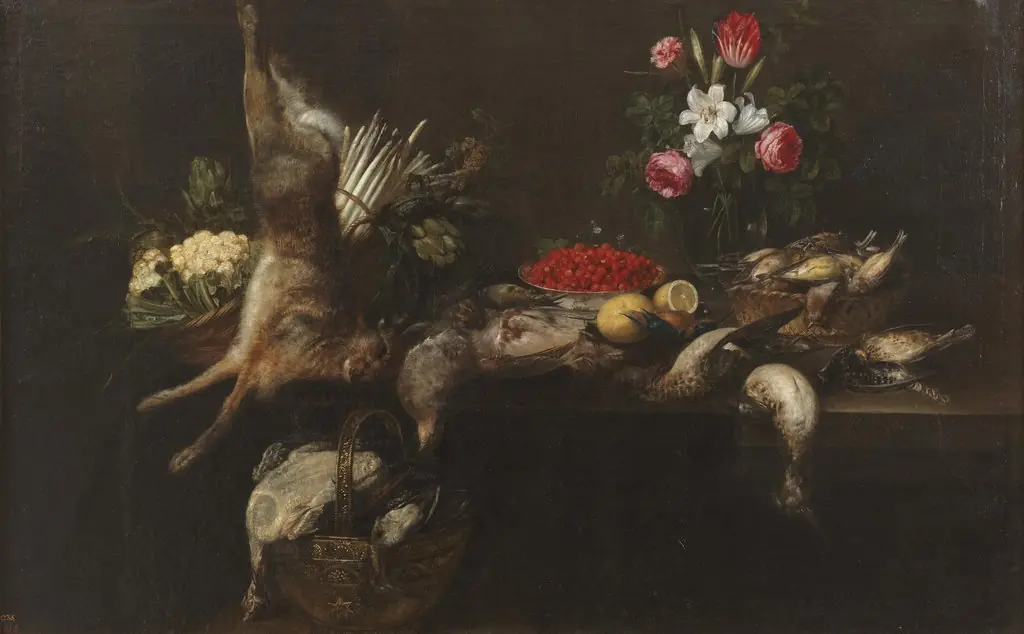 Pantry
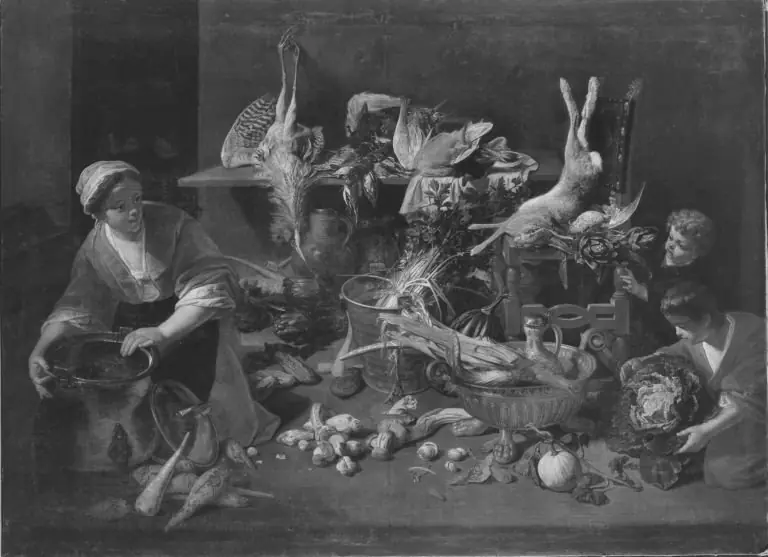 Speisekammer (zugeschrieben)
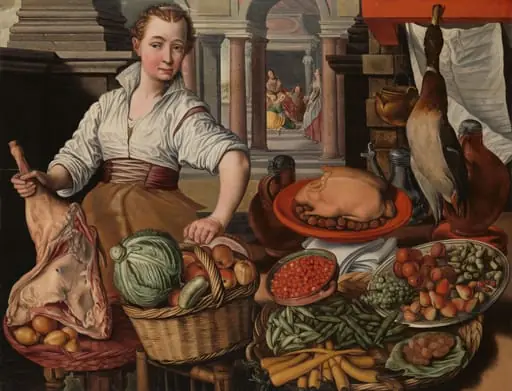 Kitchen Scene, with Jesus in the House of Martha and Mary in the background
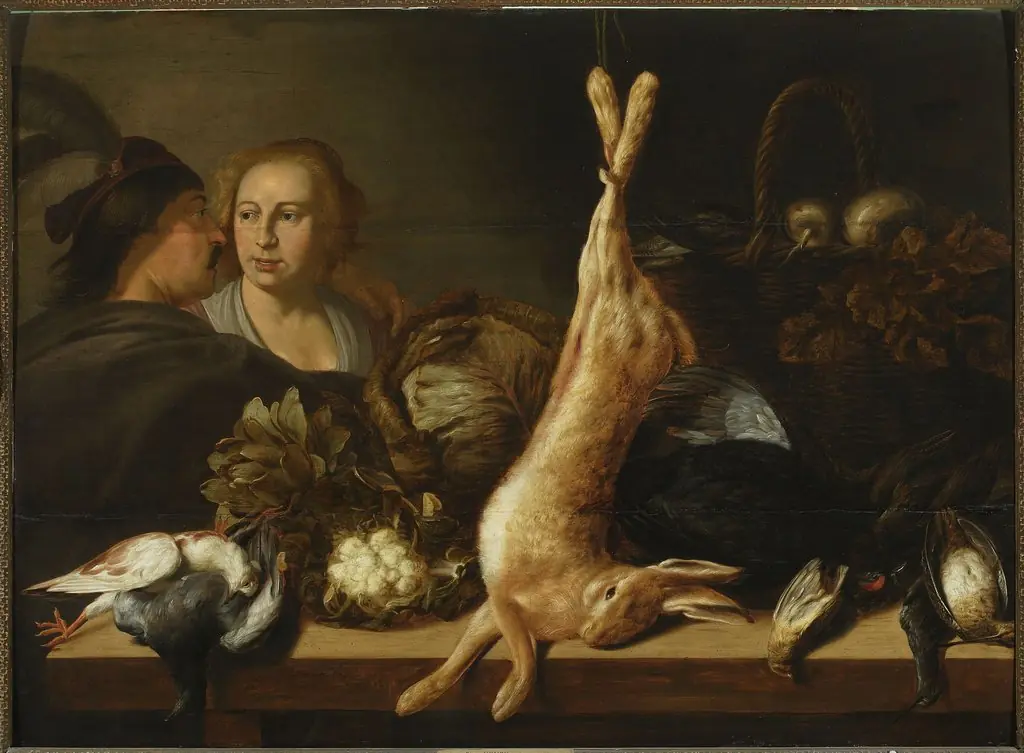 Stand with vegetables and a hare
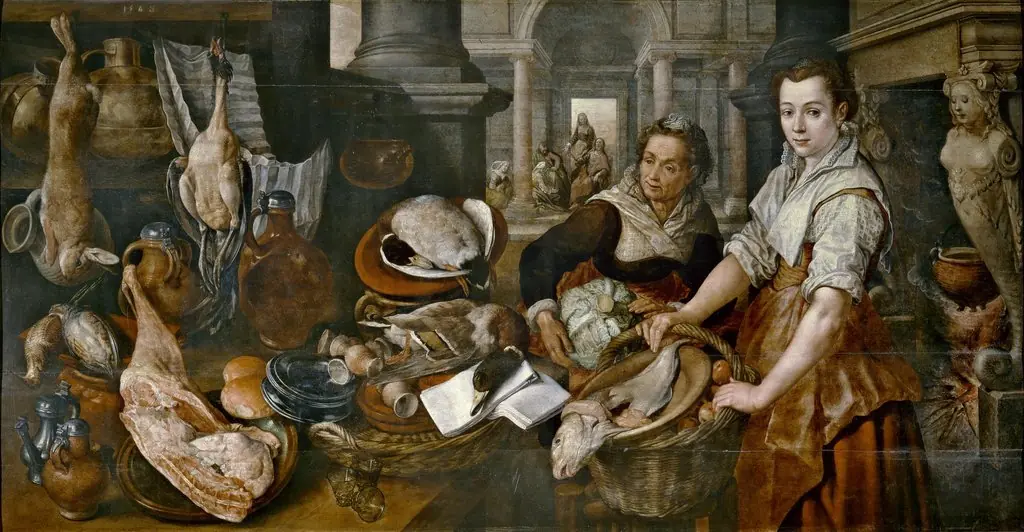 Christ at home with Martha and Mary
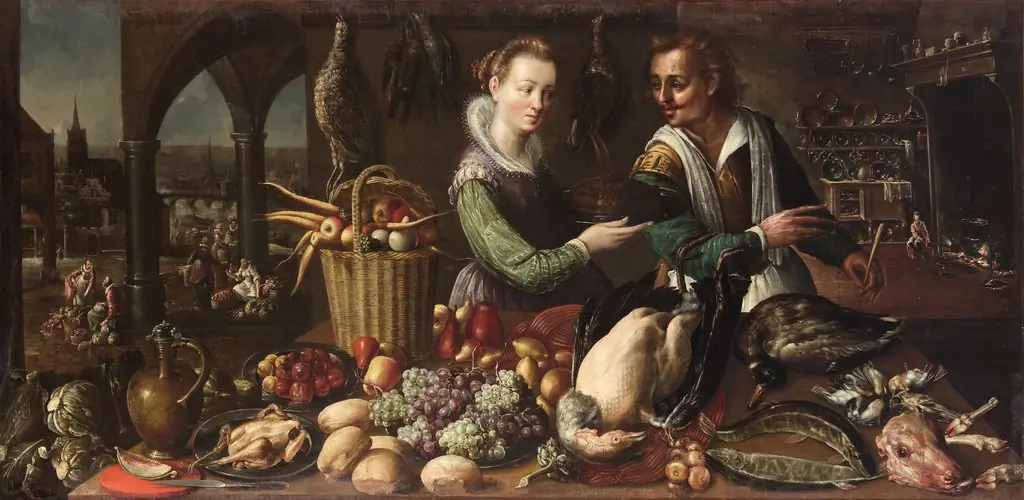 Küchenstück
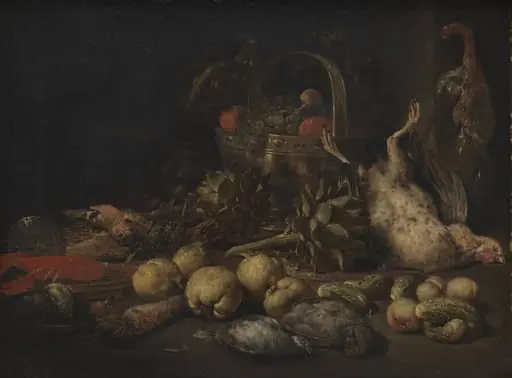 Still Life with Fruit and Birds
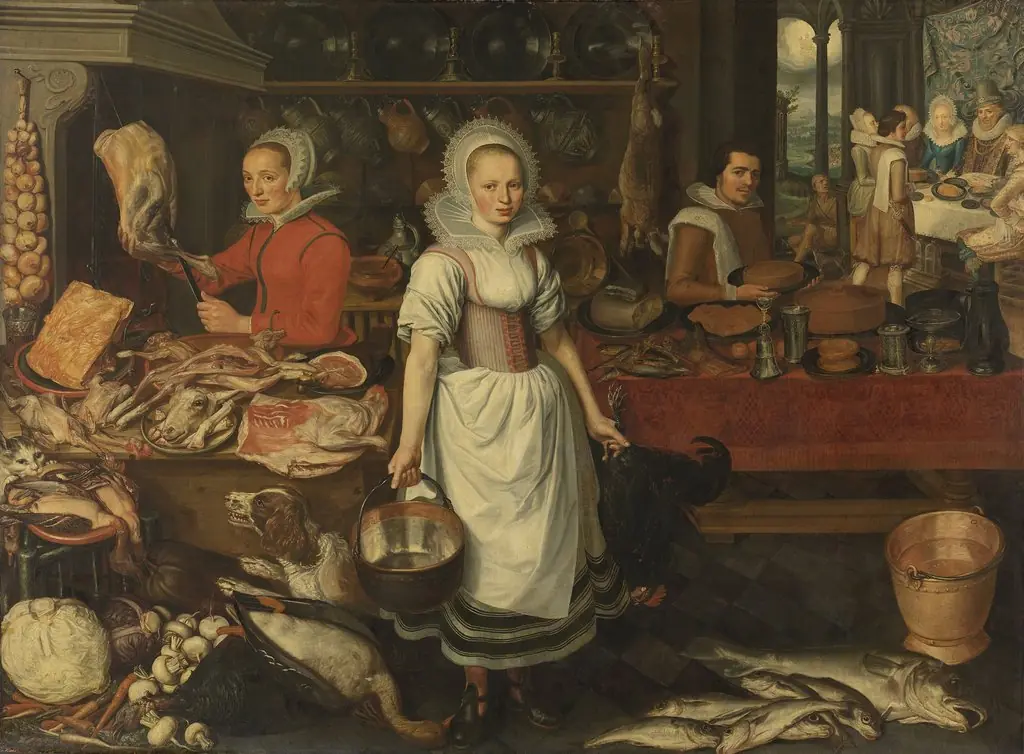 Kitchen Scene with the Parable of the Rich Man and Poor Lazarus
 Still Life with a Maid