Artwork
Tantric Manuscript "Sangrahani Sutra"
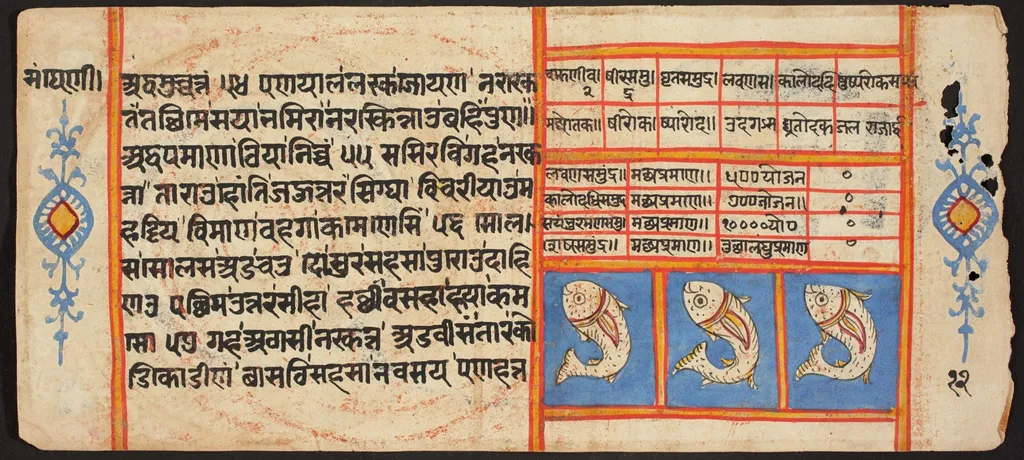
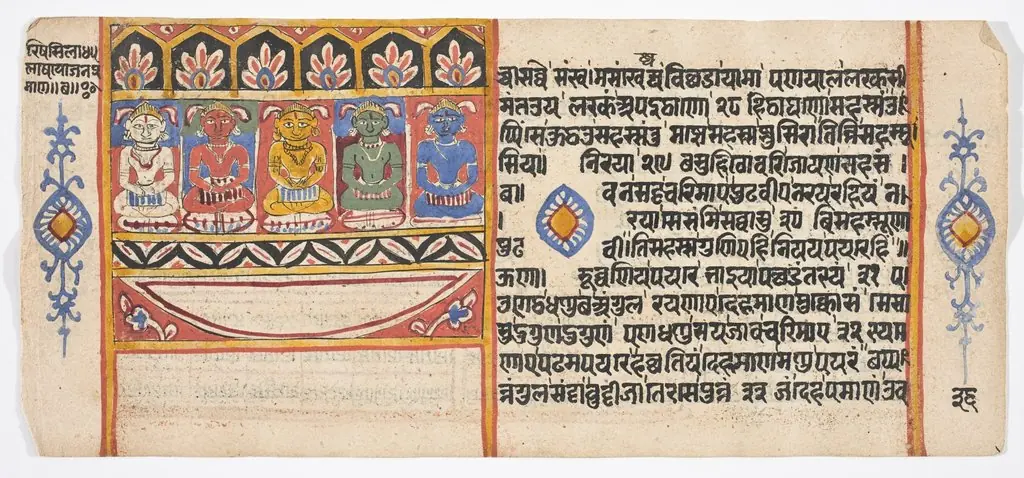
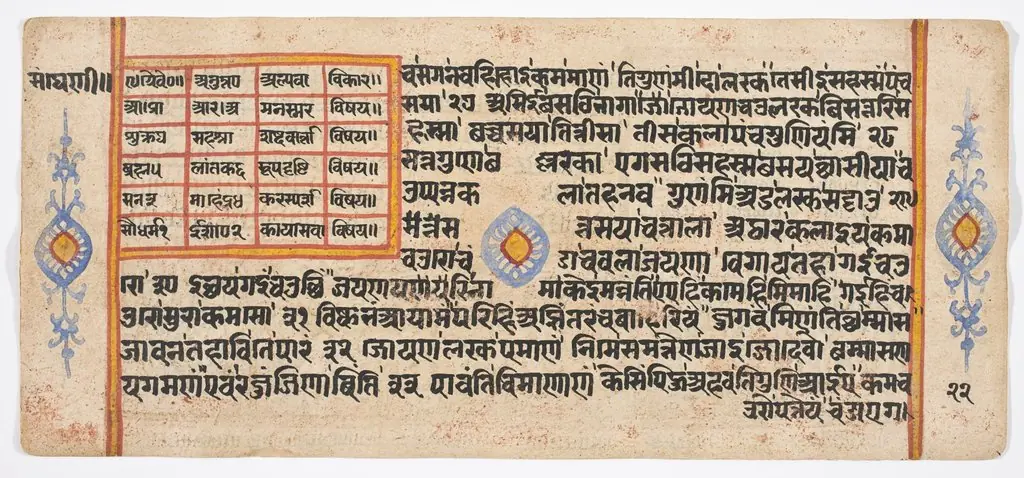
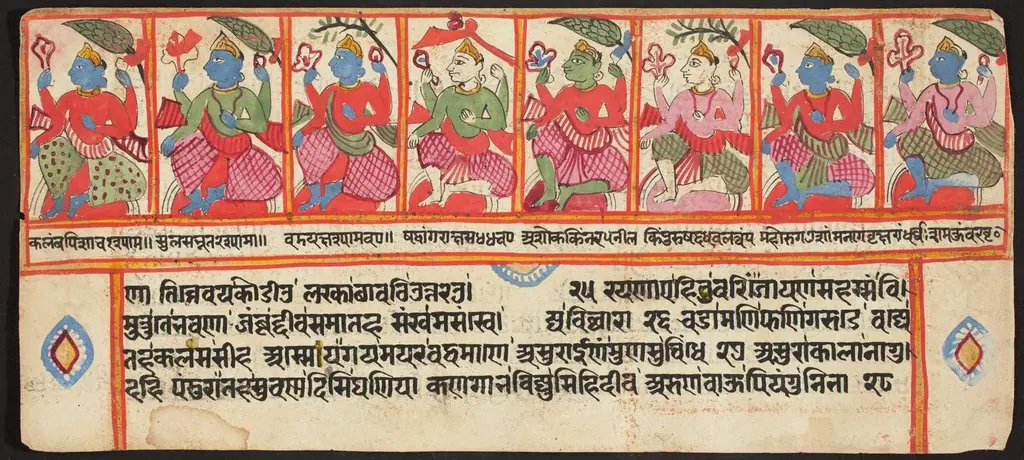
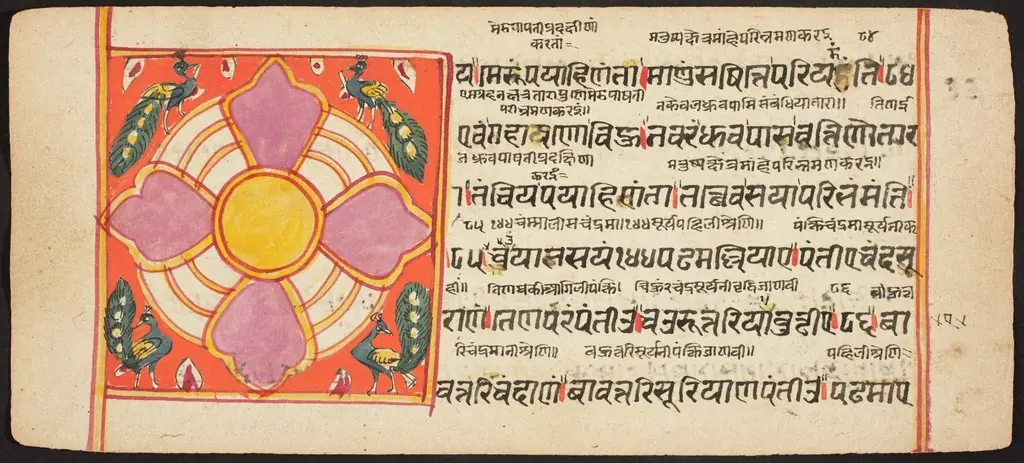
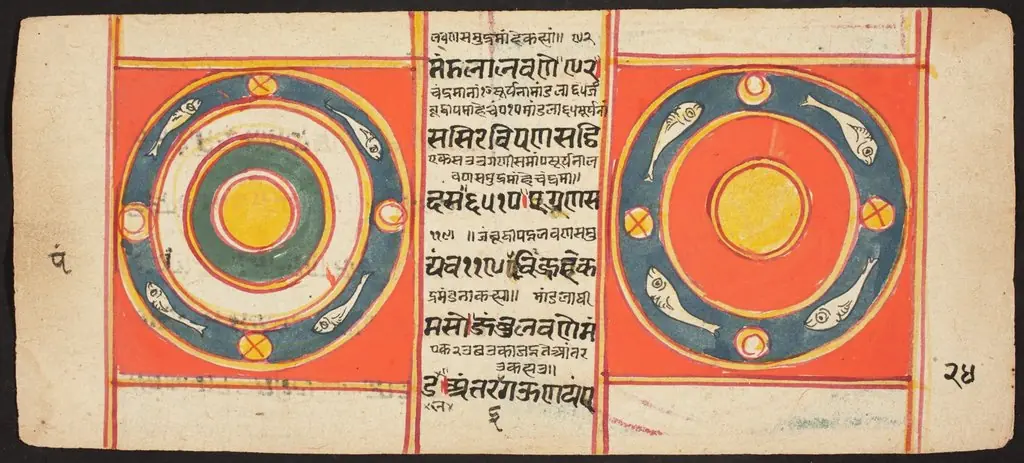
Tantric Manuscript "Sangrahani Sutra" is an unspecified painting by Unknown. It is held in the collection of the Detroit Institute of Arts. This page comes from a handwritten Tantric Buddhist manuscript known as the Sangrahani Sutra, produced in medieval India.
About this work
Overview
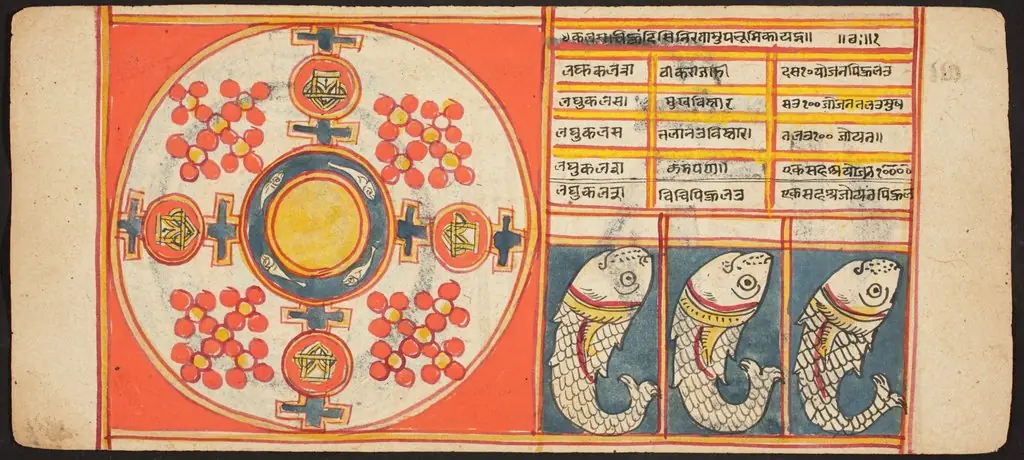
Decorative elements frame the margins, and a small group of fish appears in the lower right corner, rendered in pale blue, white, and accents of red and yellow.
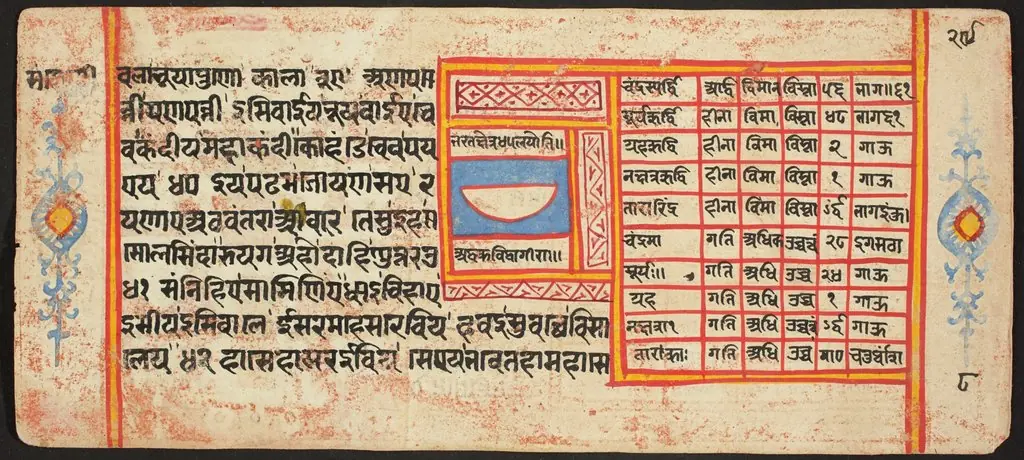
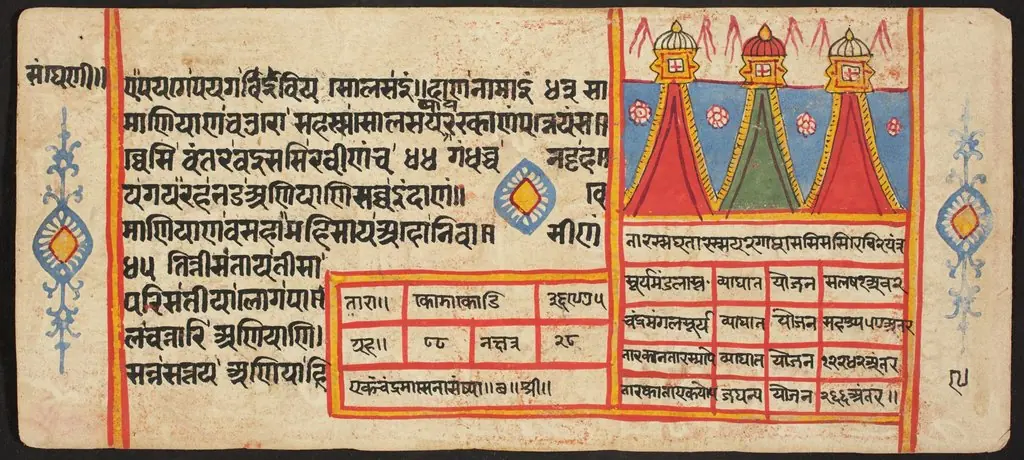
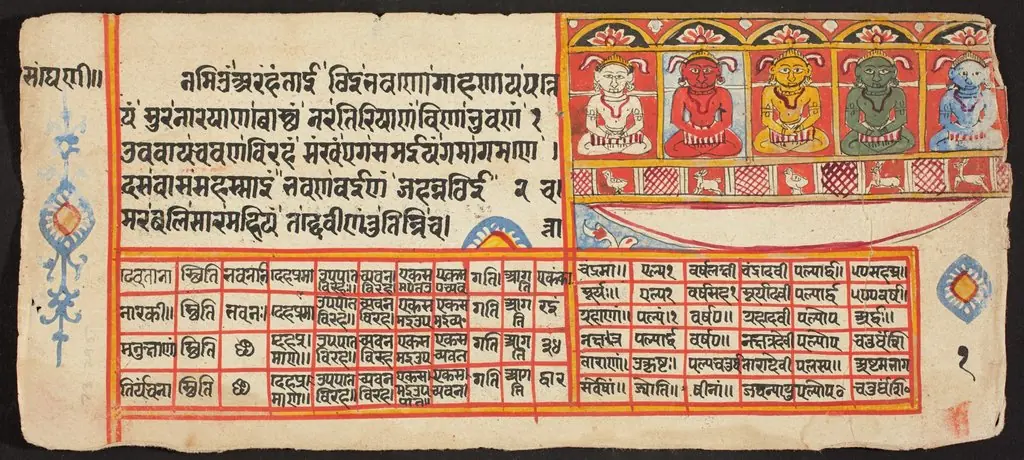
This page comes from a handwritten Tantric Buddhist manuscript known as the Sangrahani Sutra, produced in medieval India. The text is inscribed in a regional script using black ink on a surface aged to a soft yellow-brown hue. Decorative elements frame the margins, and a small group of fish appears in the lower right corner, rendered in pale blue, white, and accents of red and yellow. The composition reflects the disciplined aesthetics of religious scribal traditions.
Subject & Meaning
The three fish depicted in the lower right are symbolic within Buddhist iconography, often representing freedom from suffering, abundance, or the transcendence of worldly constraints. Their divergent swimming directions may allude to spiritual movement beyond linear paths. As part of a sacred text, the imagery functions not as decoration alone but as a visual aid to contemplation, reinforcing the sutra’s teachings through subtle metaphor.
Technique & Style
The manuscript employs fine brushwork typical of pre-modern Indian scribal practices, with ink lines precise and legible. The fish are rendered with minimal strokes, using diluted pigments to suggest form and movement. Background tones are achieved through natural earth pigments and aging, while marginal embellishments use restrained color—avoiding excess to maintain liturgical solemnity. The style prioritizes clarity and spiritual resonance over ornamental flourish.
History & Provenance
The Sangrahani Sutra was likely copied by monastic scribes in eastern India between the 8th and 12th centuries, a period when Tantric Buddhist texts flourished in regions like Bengal and Bihar. Such manuscripts were preserved in temple libraries or monastic collections. The survival of this page suggests it was carefully handled and stored, possibly in a climate-controlled environment, avoiding the decay common to organic materials in humid regions.
Context
This manuscript belongs to a tradition of esoteric Buddhist literature that emerged in medieval India, blending ritual practice with philosophical instruction. Tantric texts like the Sangrahani Sutra were often transmitted orally and then transcribed for ritual use. The inclusion of symbolic imagery, such as the fish, aligns with broader Indian artistic conventions where natural elements carried layered spiritual meanings, serving both devotional and mnemonic functions.
Legacy
Surviving fragments of such manuscripts offer insight into the material culture of medieval Indian Buddhism. They illustrate how sacred knowledge was preserved through meticulous craftsmanship and symbolic language. Today, these pages are studied for their linguistic, artistic, and religious significance, contributing to broader understandings of how spiritual traditions encoded meaning across text and image.
Artist & collection

 Domestic Scene
 Giacomo and Cardinal Marco, investing Andrea, Abbot of San Zeno, with his Benefice
 The Nymph of Fontainebleau
 Portrait of a Woman
 Madonna and Child with Saints in the Enclosed Garden
 Venus and Minerva
 Family Group of Four on Sofa
 Wall painting from Room H of the Villa of P. Fannius Synistor at Boscoreale
 Tantric Manuscript "Sangrahani Sutra"
 Tantric Manuscript "Sangrahani Sutra"
 Tantric Manuscript "Sangrahani Sutra"
 Tantric Manuscript "Sangrahani Sutra"
 Tantric Manuscript "Sangrahani Sutra"
 Tantric Manuscript "Sangrahani Sutra"
 Tantric Manuscript "Sangrahani Sutra"
 Tantric Manuscript "Sangrahani Sutra"
 Tantric Manuscript "Sangrahani Sutra"
 Tantric Manuscript "Sangrahani Sutra"
 Tantric Manuscript "Sangrahani Sutra"
 Tantric Manuscript "Sangrahani Sutra"