Artwork
Tantric Manuscript "Sangrahani Sutra"
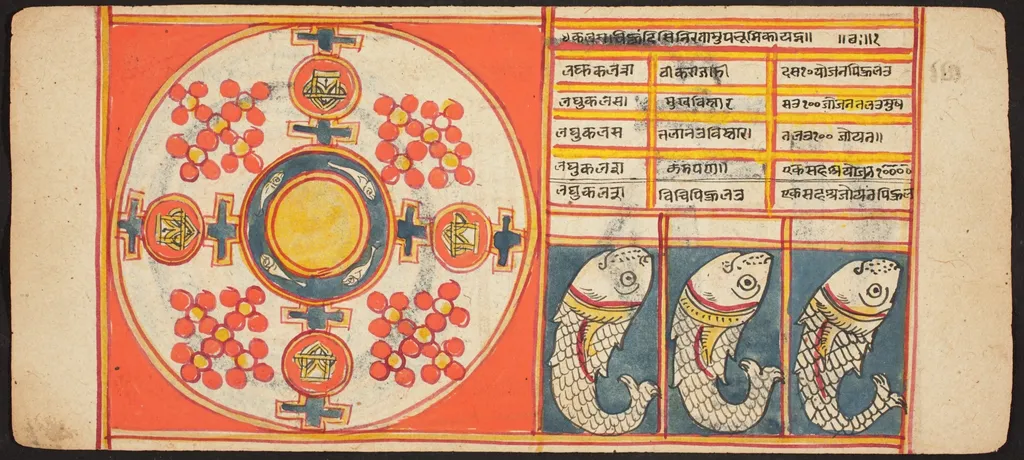
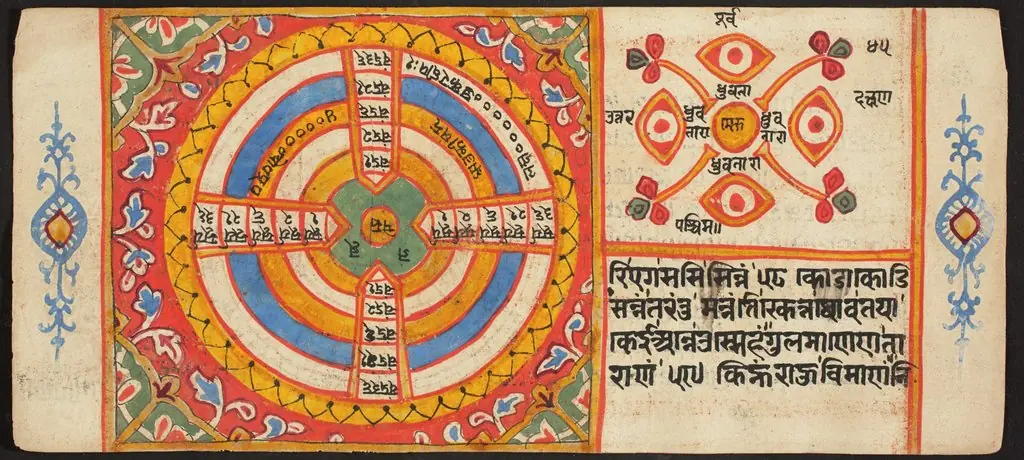
Tantric Manuscript "Sangrahani Sutra" is an unspecified painting by Unknown. It is held in the collection of the Detroit Institute of Arts. The 'Sangrahani Sutra' is a handwritten Buddhist text accompanied by painted illustrations, produced in medieval India.
About this work
Overview
The 'Sangrahani Sutra' is a handwritten Buddhist text accompanied by painted illustrations, produced in medieval India. It belongs to the tantric tradition, blending doctrinal content with visual symbolism. The work was created on palm leaf or paper, typical of manuscript culture in eastern India, and served both ritual and pedagogical purposes within esoteric Buddhist communities.
Subject & Meaning
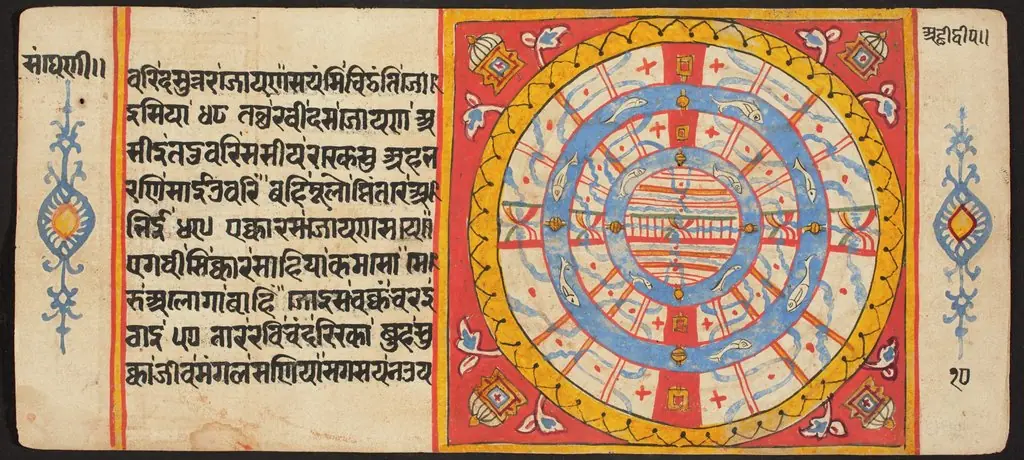
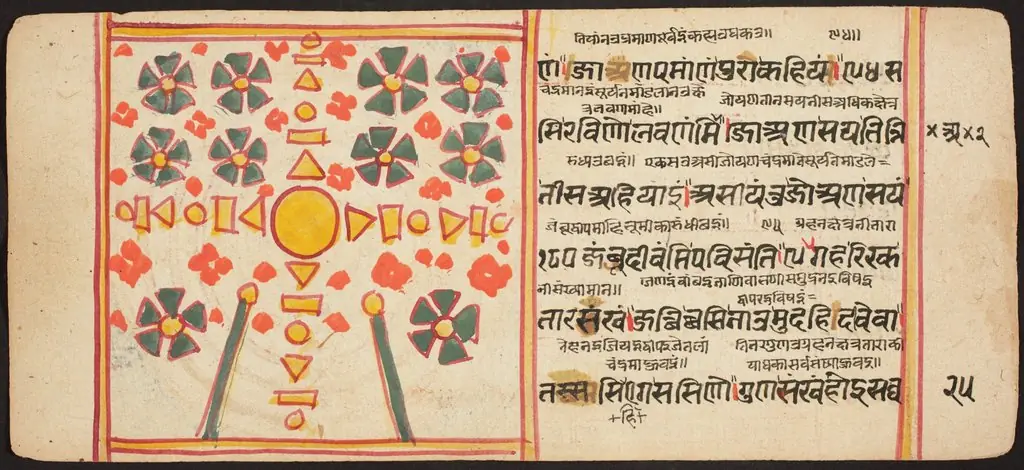
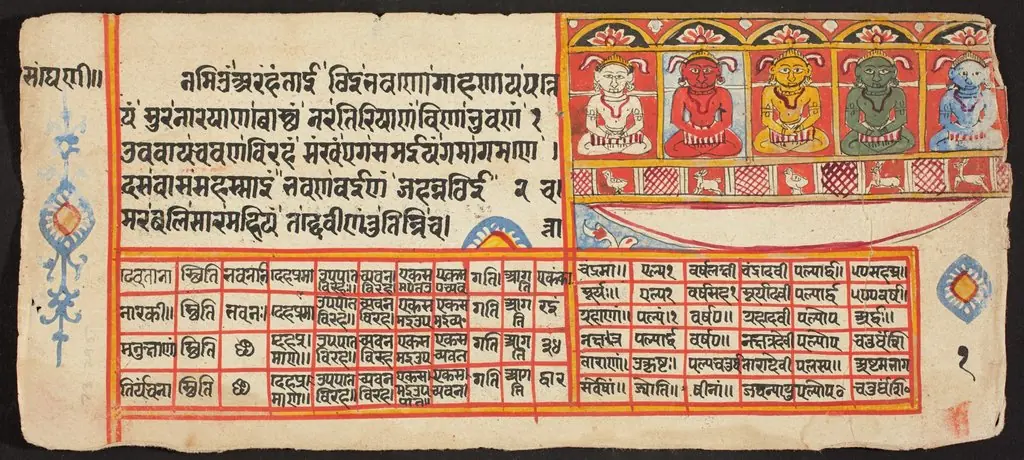
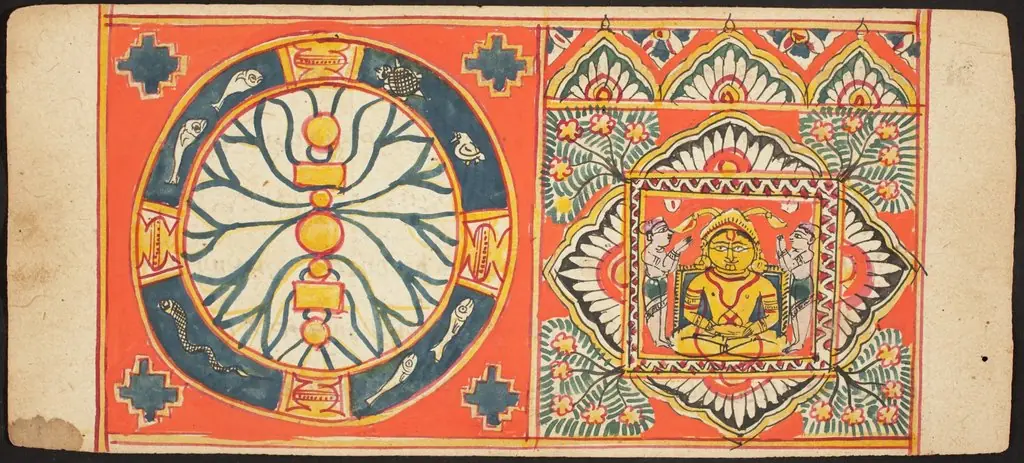
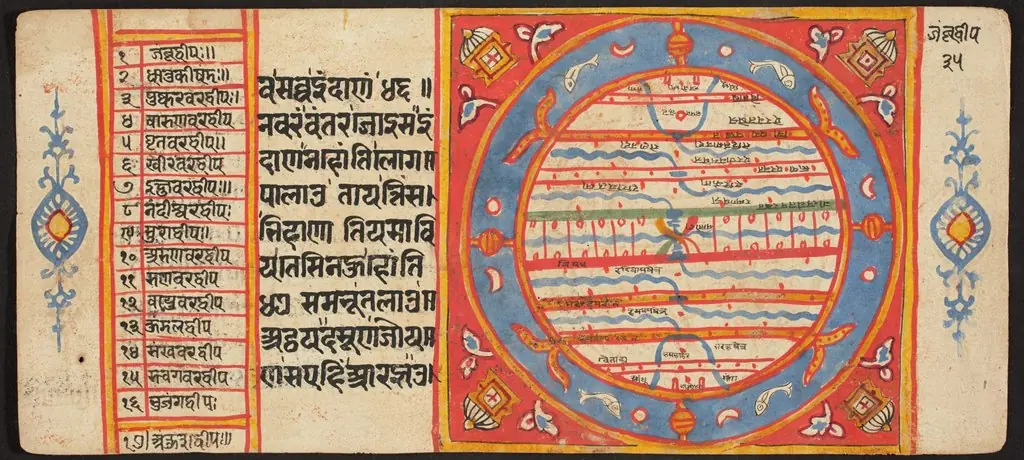
Its paintings depict deities, mandalas, and symbolic figures drawn from tantric cosmology, intended to guide practitioners through visualization and ritual.
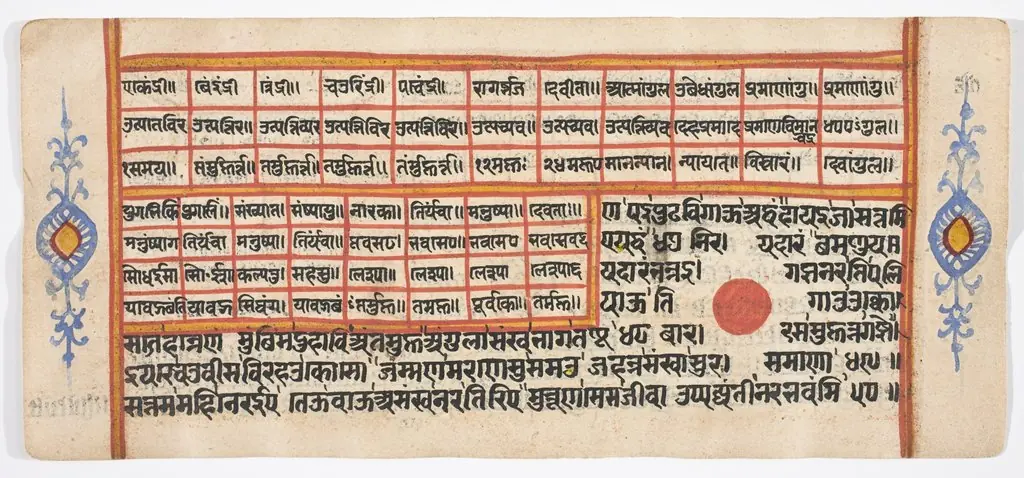
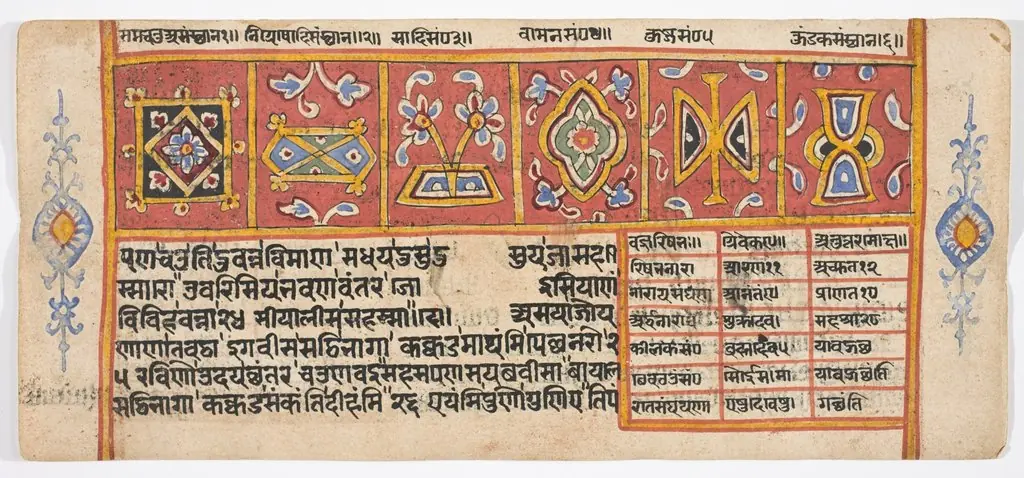
The manuscript contains passages from the Sangrahani Sutra, a text outlining meditative practices and protective formulas. Its paintings depict deities, mandalas, and symbolic figures drawn from tantric cosmology, intended to guide practitioners through visualization and ritual. Each image functions as a mnemonic device, encoding spiritual concepts in visual form to aid concentration and initiation.
Technique & Style
The illustrations employ fine brushwork and mineral pigments, with outlines rendered in ink and colors applied in flat, saturated planes. Figures are stylized, with elongated limbs and detailed ornamentation, reflecting regional conventions of eastern Indian painting. The composition is tightly structured, prioritizing symbolic clarity over spatial depth, consistent with devotional manuscript traditions of the period.
History & Provenance
Created likely between the 10th and 12th centuries in Bihar or Bengal, the manuscript was preserved in monastic libraries. Its survival suggests continuous ritual use or scholarly study. Later, it entered private or institutional collections, possibly through colonial-era acquisitions. Exact provenance prior to modern cataloging remains partially undocumented, though its material and script align with known eastern Indian manuscript groups.
Context
This manuscript emerged during a flourishing of tantric Buddhism in eastern India, when monastic centers like Nalanda and Vikramashila produced extensive textual and artistic works. Tantric practices emphasized direct experience through ritual and imagery, making illustrated manuscripts vital tools. The Sangrahani Sutra reflects a broader trend of integrating visual art into spiritual instruction, distinct from earlier narrative Buddhist art.
Legacy
The manuscript contributes to understanding how esoteric Buddhist teachings were transmitted visually in pre-modern South Asia. Its survival offers insight into the material culture of tantric practice and the role of manuscripts as living ritual objects. Though not widely known outside scholarly circles, it remains a key reference for studies on Indian Buddhist art and the interplay of text and image in religious traditions.
Artist & collection

 Domestic Scene
 Giacomo and Cardinal Marco, investing Andrea, Abbot of San Zeno, with his Benefice
 The Nymph of Fontainebleau
 Portrait of a Woman
 Madonna and Child with Saints in the Enclosed Garden
 Venus and Minerva
 Family Group of Four on Sofa
 Wall painting from Room H of the Villa of P. Fannius Synistor at Boscoreale
 Tantric Manuscript "Sangrahani Sutra"
 Tantric Manuscript "Sangrahani Sutra"
 Tantric Manuscript "Sangrahani Sutra"
 Tantric Manuscript "Sangrahani Sutra"
 Tantric Manuscript "Sangrahani Sutra"
 Tantric Manuscript "Sangrahani Sutra"
 Tantric Manuscript "Sangrahani Sutra"
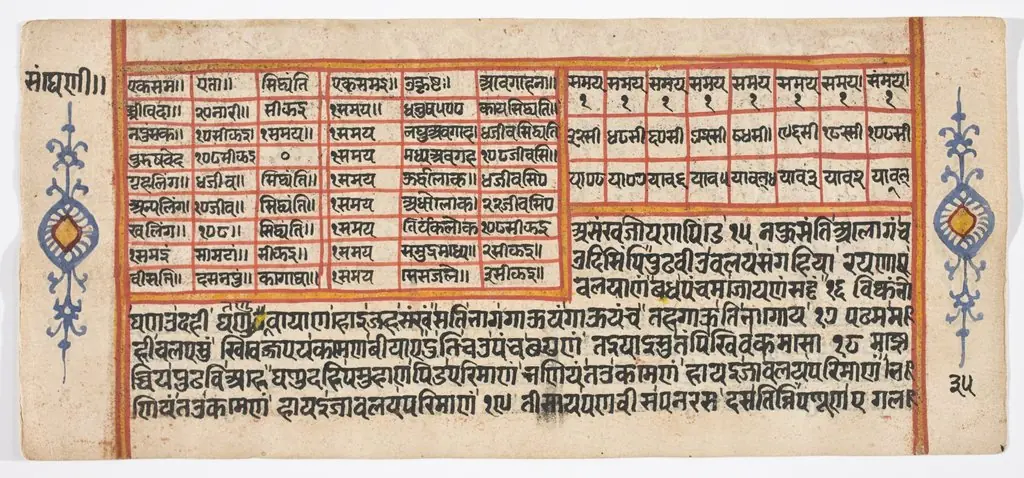 Tantric Manuscript "Sangrahani Sutra"
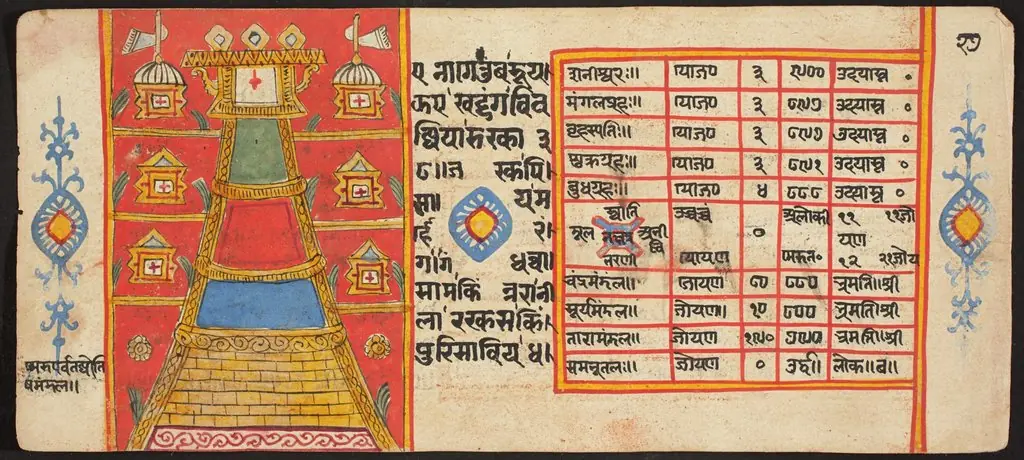 Tantric Manuscript "Sangrahani Sutra"
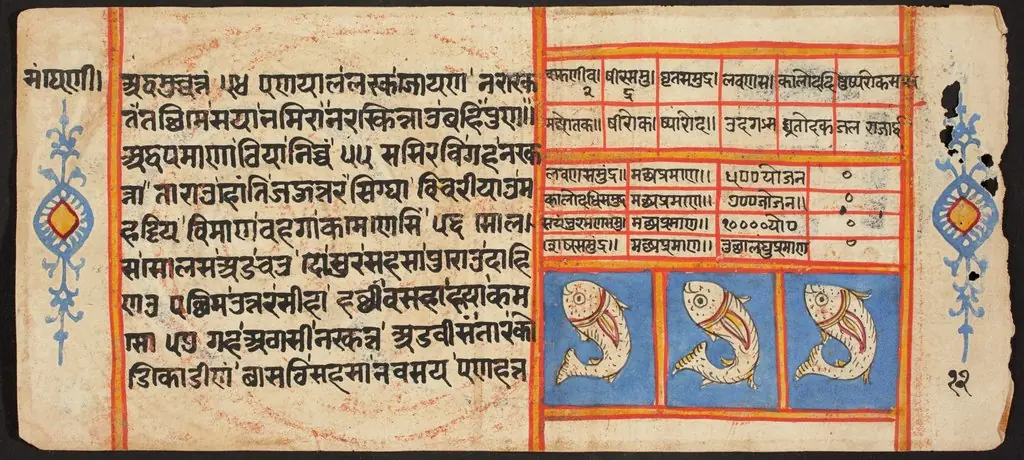 Tantric Manuscript "Sangrahani Sutra"
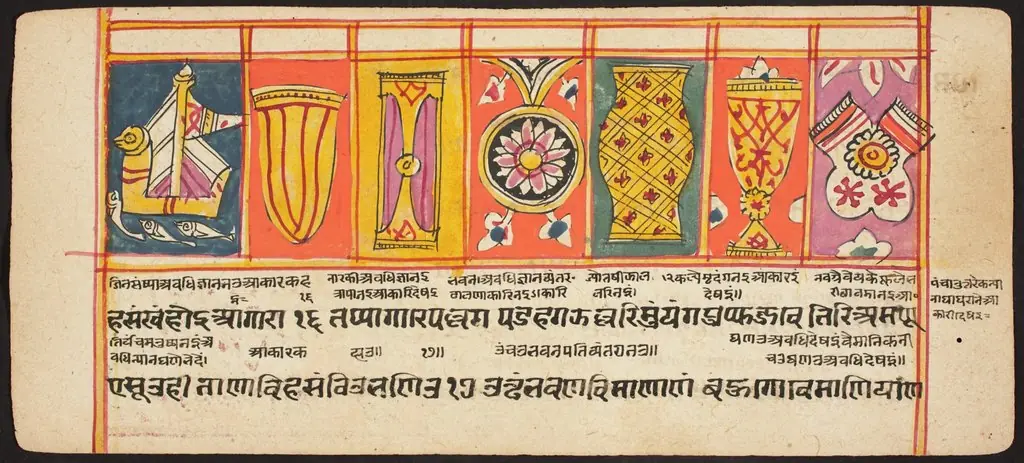 Tantric Manuscript "Sangrahani Sutra"
 Tantric Manuscript "Sangrahani Sutra"