Artwork
The Emperor Charles V (1500 - 1558) as a Child
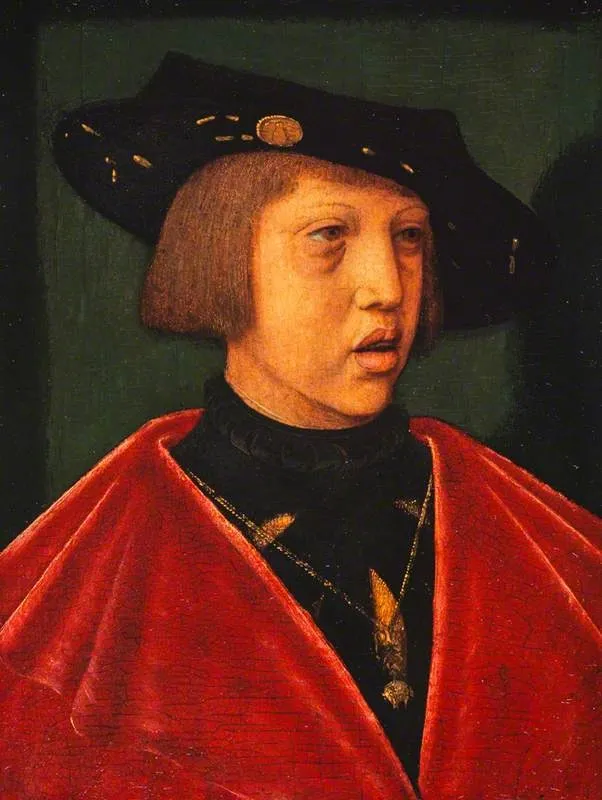
The Emperor Charles V (1500 - 1558) as a Child is an oil painting by the Early Baroque Italian artist Unknown. It dates from 1550 and is held in the collection of the National Galleries Scotland. This oil painting depicts Charles V of the Holy Roman Empire during his childhood, likely between the ages of five and ten.
About this work
Overview
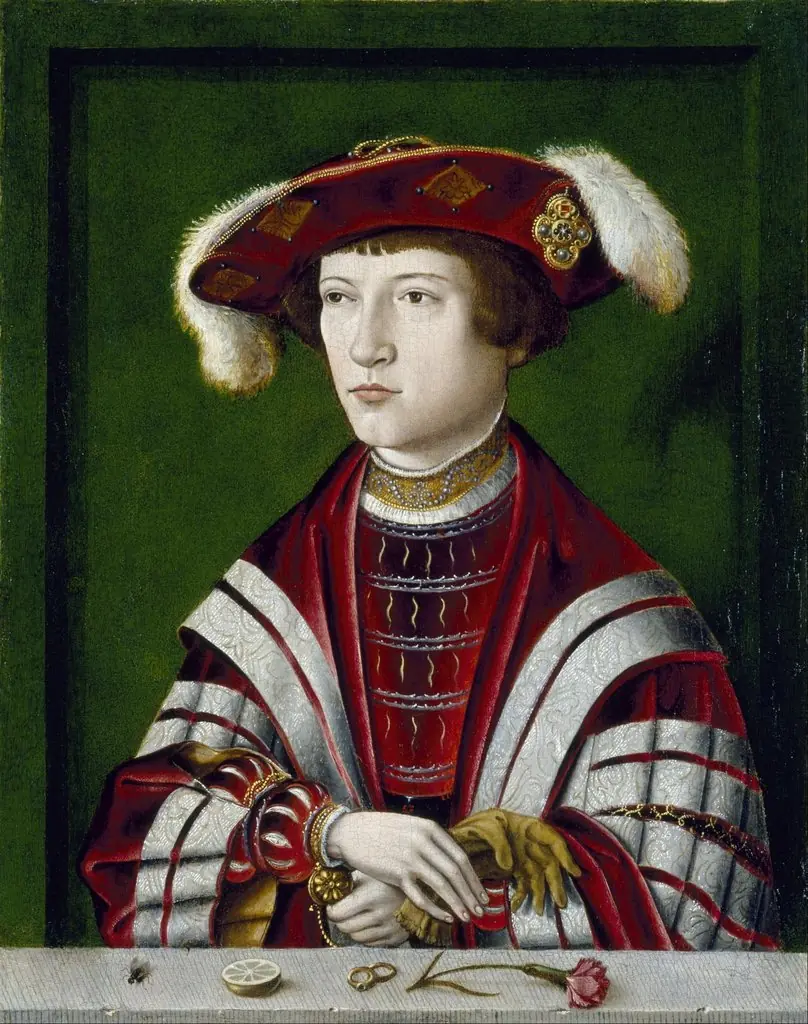
The dark background isolates the figure, drawing attention to his garments and facial expression, characteristic of early 16th-century court portraiture.
This oil painting depicts Charles V of the Holy Roman Empire during his childhood, likely between the ages of five and ten. Rendered with formal precision, the portrait emphasizes his royal status through elaborate attire and a composed, solemn demeanor. The dark background isolates the figure, drawing attention to his garments and facial expression, characteristic of early 16th-century court portraiture.
Subject & Meaning
The child portrayed is Charles V, heir to vast European territories, including Spain, the Netherlands, and Austria. His attire—rich red velvet, gold-adorned hat, and ornate chain—signals dynastic privilege and political significance. His gaze, averted from the viewer, conveys a restrained maturity expected of future rulers, reflecting the gravity of his inherited role rather than youthful innocence.
Technique & Style
The artist employs controlled chiaroscuro to model the boy’s face and fabric, enhancing volume and texture without dramatic contrast. Fine brushwork captures the sheen of silk, the weight of gold embroidery, and the softness of fur trim. The composition is frontal and symmetrical, prioritizing clarity of status over emotional expression, typical of Habsburg portraiture of the period.
History & Provenance
Commissioned during Charles’s early years in the Low Countries, the painting likely originated in the court of his guardian, Archduke Philip. It may have served as a diplomatic gift or family record. Its survival suggests continued value within Habsburg collections, though its exact early ownership remains undocumented in public records.
Context
Painted in the early 1500s, the portrait reflects the Habsburg strategy of visually asserting dynastic continuity. Childhood images of rulers were rare; most portraits emphasized adult authority. This work stands as an early example of using visual culture to reinforce legitimacy, aligning with broader European trends of princely self-representation during the Renaissance.
Legacy
The portrait contributes to the visual archive of Habsburg power, illustrating how even young heirs were presented as figures of state. It influenced later court portraits that balanced youth with gravitas. Though not widely reproduced, it remains a key reference for understanding early representations of imperial succession in Northern European art.
Artist & collection

 Domestic Scene
 Giacomo and Cardinal Marco, investing Andrea, Abbot of San Zeno, with his Benefice
 The Nymph of Fontainebleau
 Portrait of a Woman
 Madonna and Child with Saints in the Enclosed Garden
 Venus and Minerva
 Family Group of Four on Sofa
 Wall painting from Room H of the Villa of P. Fannius Synistor at Boscoreale
 Porträt des König Philipp I. des Schönen
 König Albrecht II. (1397-1439), Brustbild
 Kaiser Ferdinand I. (1503-1564), Profilbildnis
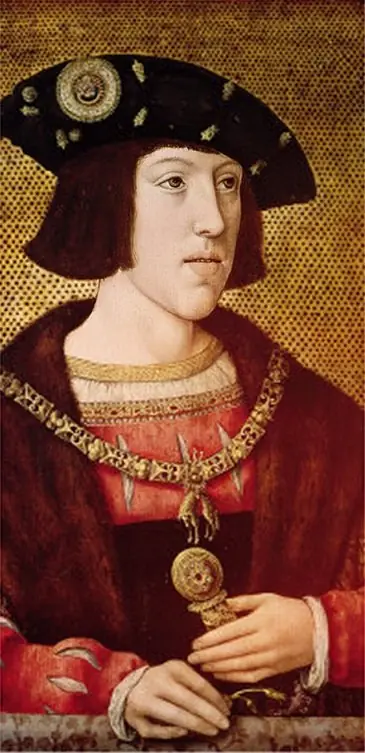 Portrait of Charles V
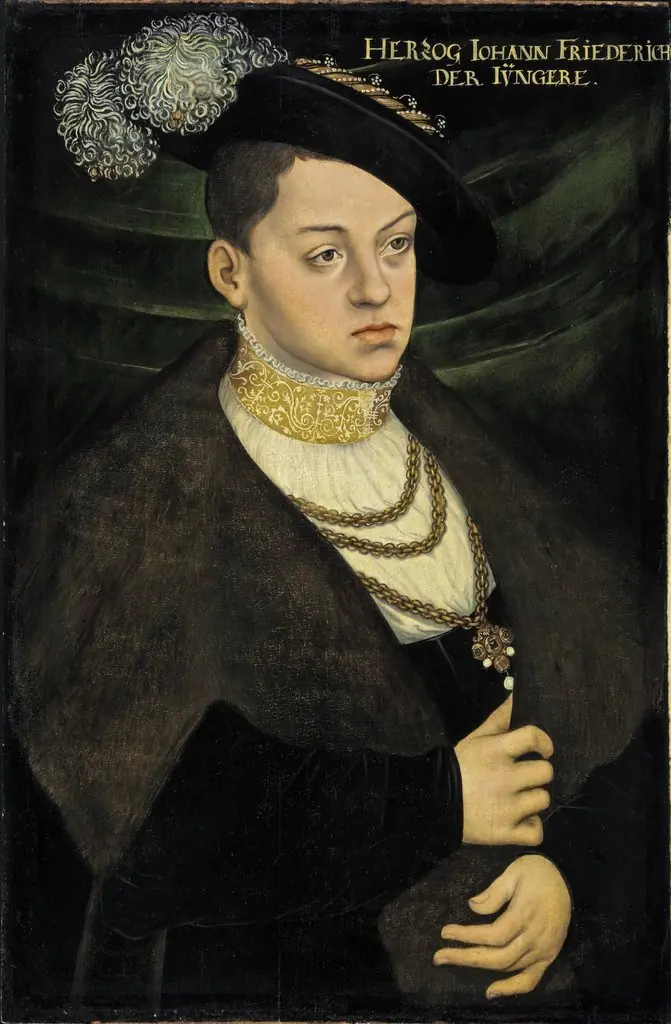 Johann Ernst, Duke of Saxe-Coburg
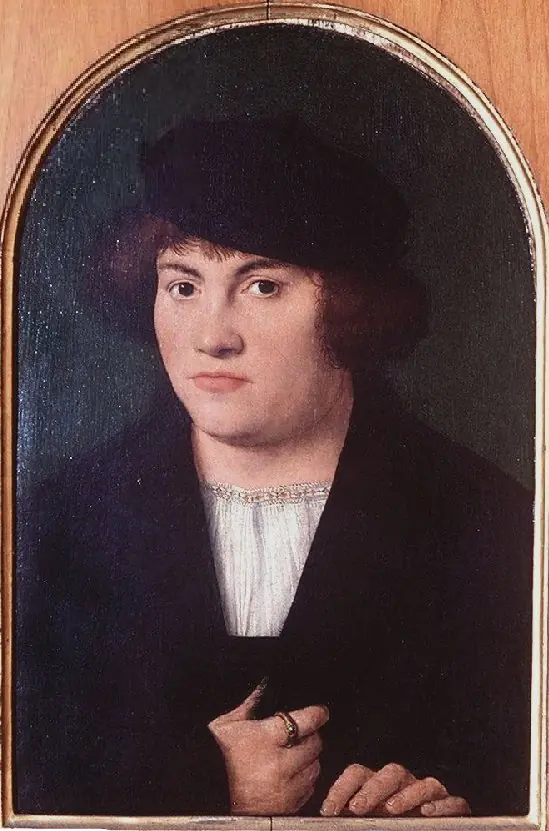 Portrait of an Unknown Man
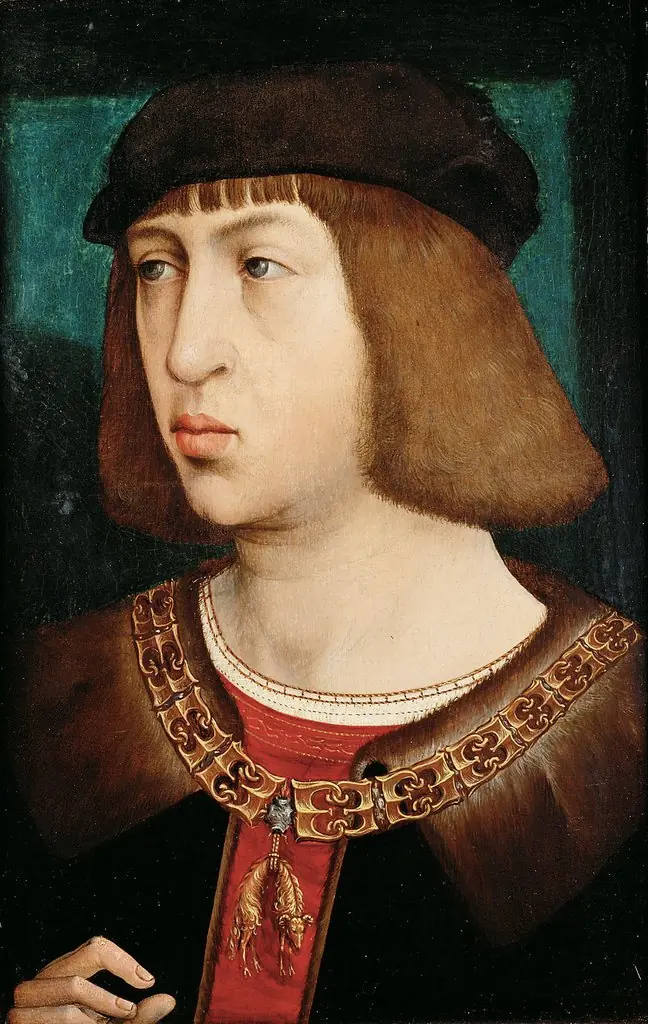 Philip the Handsome (1478-1506)
 Portrait of a Nobleman
 Portrait of hertog Adolf van Kleef (1425-1492)
 Anna of Bohemia, 2nd wife of Otto the Merry